
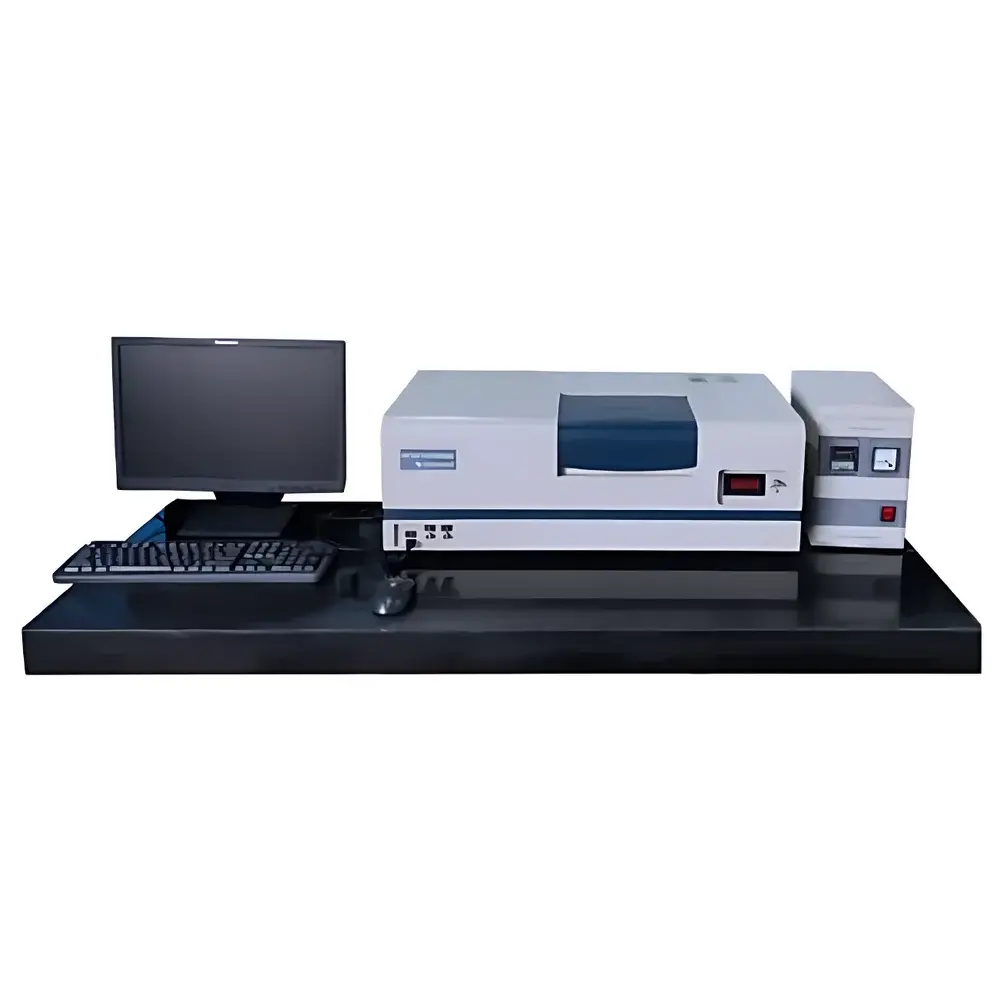
WSZ-5A Single-Photon Counting Experimental System
| Brand | TOP / TP |
|---|---|
| Origin | Tianjin, China |
| Manufacturer Type | OEM Manufacturer |
| Region | Domestic (China) |
| Model | WSZ-5A |
| Pricing | Upon Request |
| Spectral Range | 360–650 nm |
| HV Control | Digital Adjustable |
| Integration Time | Digitally Adjustable |
| Maximum Count Rate | 1×10⁷ counts per second |
| Discrimination Threshold | Digitally Adjustable |
| Dark Count Rate | ≤30 CPS at −20°C |
| Detector | CR110 Photomultiplier Tube (PMT) |
| Cooling | Integrated Water-Circulated Thermoelectric Cooler (No External Water Supply Required) |
| Interface | USB 2.0 |
Overview
The WSZ-5A Single-Photon Counting Experimental System is a compact, education- and research-oriented benchtop instrument engineered for quantitative detection and statistical analysis of ultra-low-light optical signals. It operates on the principle of time-resolved photon counting via pulse-height discrimination and digital event accumulation—enabling precise measurement of weak luminescence, fluorescence decay kinetics, quantum yield estimation, and basic quantum optics demonstrations. The system integrates a high-sensitivity CR110 side-on photomultiplier tube (PMT), digitally controlled high-voltage bias supply, thermoelectric cooling with closed-loop water circulation, and real-time pulse processing electronics. Its architecture supports both stand-alone operation and computer-controlled acquisition, making it suitable for undergraduate physics laboratories, graduate-level photonics courses, and preliminary quantum sensing investigations where signal-to-noise ratio, temporal resolution, and thermal stability are critical.
Key Features
- Integrated thermoelectric cooling system with recirculating water jacket: achieves stable detector temperature down to −20°C without reliance on external chillers or tap water—minimizing dark current drift and enabling reproducible low-background measurements.
- Digital pulse-height discrimination circuitry: allows user-defined threshold adjustment to reject noise pulses while preserving true photon events, improving signal fidelity across variable gain conditions.
- Fully programmable acquisition parameters via USB 2.0 interface: integration time, high-voltage level, and discrimination threshold are all software-configurable in real time, supporting adaptive experimental protocols.
- High-dynamic-range pulse counter: capable of sustained counting up to 10⁷ counts per second with linear response and <0.1% dead-time correction error under typical operating conditions.
- Front-panel BNC outputs for TTL-compatible pulse trains and analog monitor signals: facilitates synchronization with external equipment such as function generators, delay generators, or time-correlated single-photon counting (TCSPC) modules.
- Modular mechanical design: optical mounting platform accommodates standard kinematic mounts (e.g., SM1-threaded components), enabling straightforward integration of filters, monochromators, or fiber-coupled excitation sources.
Sample Compatibility & Compliance
The WSZ-5A is optimized for use with solid-state and liquid-phase samples emitting in the visible spectrum (360–650 nm), including organic fluorophores, quantum dots, rare-earth-doped phosphors, and scintillation materials. Its PMT spectral response and cooling performance align with common educational and calibration standards such as NIST-traceable LED reference sources and ISO 17025-compliant fluorescence intensity transfer protocols. While not certified for regulated GMP/GLP environments, the system supports audit-ready data logging when used with compliant third-party software; timestamped count records, acquisition metadata (HV, integration time, threshold), and raw pulse logs can be exported in CSV or HDF5 format for traceability. All electrical subsystems comply with GB/T 18268.1–2010 (IEC 61326-1 equivalent) for laboratory electromagnetic compatibility.
Software & Data Management
The system ships with cross-platform acquisition software (Windows/macOS/Linux) built on Qt and libusb, providing intuitive control of all hardware parameters and real-time histogramming of count rates. Software features include multi-channel time-tagged recording, background subtraction routines, exponential decay fitting (single- and bi-exponential models), and batch export with embedded metadata. Raw pulse timestamps (with 10 ns resolution) are accessible via API for custom analysis pipelines in Python (NumPy/SciPy), MATLAB, or LabVIEW. Data files adhere to FAIR principles—machine-readable headers, standardized units, and versioned schema definitions—supporting integration into institutional LIMS or electronic lab notebooks compliant with 21 CFR Part 11 when paired with appropriate validation documentation.
Applications
- Undergraduate teaching labs: demonstration of Poisson statistics, photon antibunching (with Hanbury Brown–Twiss configuration), and lifetime spectroscopy fundamentals.
- Fluorescence quantum yield determination using integrating sphere-coupled setups.
- Time-resolved emission studies of nanomaterials and biological chromophores under pulsed LED or laser excitation.
- Calibration of low-light imaging sensors (EMCCD, sCMOS) using known photon flux standards.
- Preliminary evaluation of scintillator light output and afterglow characteristics in radiation detection research.
- Development platform for student-designed TCSPC extensions or FPGA-based real-time correlation logic.
FAQ
What is the minimum detectable photon flux under optimal cooling conditions?
At −20°C, with 360–450 nm bandpass filtering and 500 V PMT bias, the system achieves a signal-to-noise ratio ≥10 for incident fluxes ≥0.1 photons per millisecond—limited primarily by dark count statistics.
Can the CR110 PMT be replaced with another model?
Yes—the socket is compatible with standard 1-inch diameter side-on PMTs with 10-stage dynode structure and B10 base pinout; however, recalibration of HV–gain and thermal management parameters is required.
Is firmware update capability supported?
Firmware updates are delivered via USB DFU mode and require manufacturer-provided utility; revision history and checksums are published in the technical documentation portal.
Does the system support gated counting or time-windowed acquisition?
Not natively—but external TTL gating signals can be applied to the “Count Enable” BNC input, allowing synchronization with pulsed sources or delay generators for time-gated measurements.
What is the long-term thermal stability of the cooled detector?
Temperature drift is ≤±0.2°C over 8 hours at −20°C setpoint, verified using calibrated thermistor feedback and monitored via software readout.





