
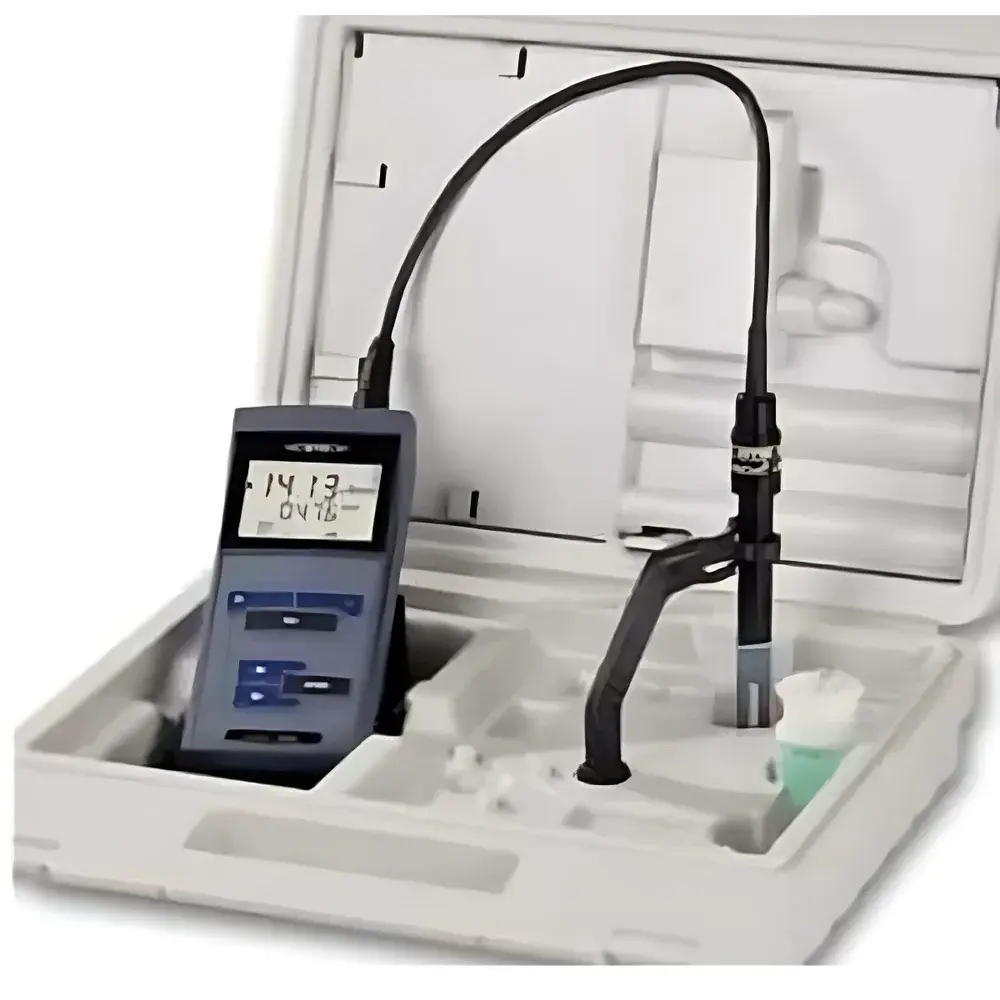
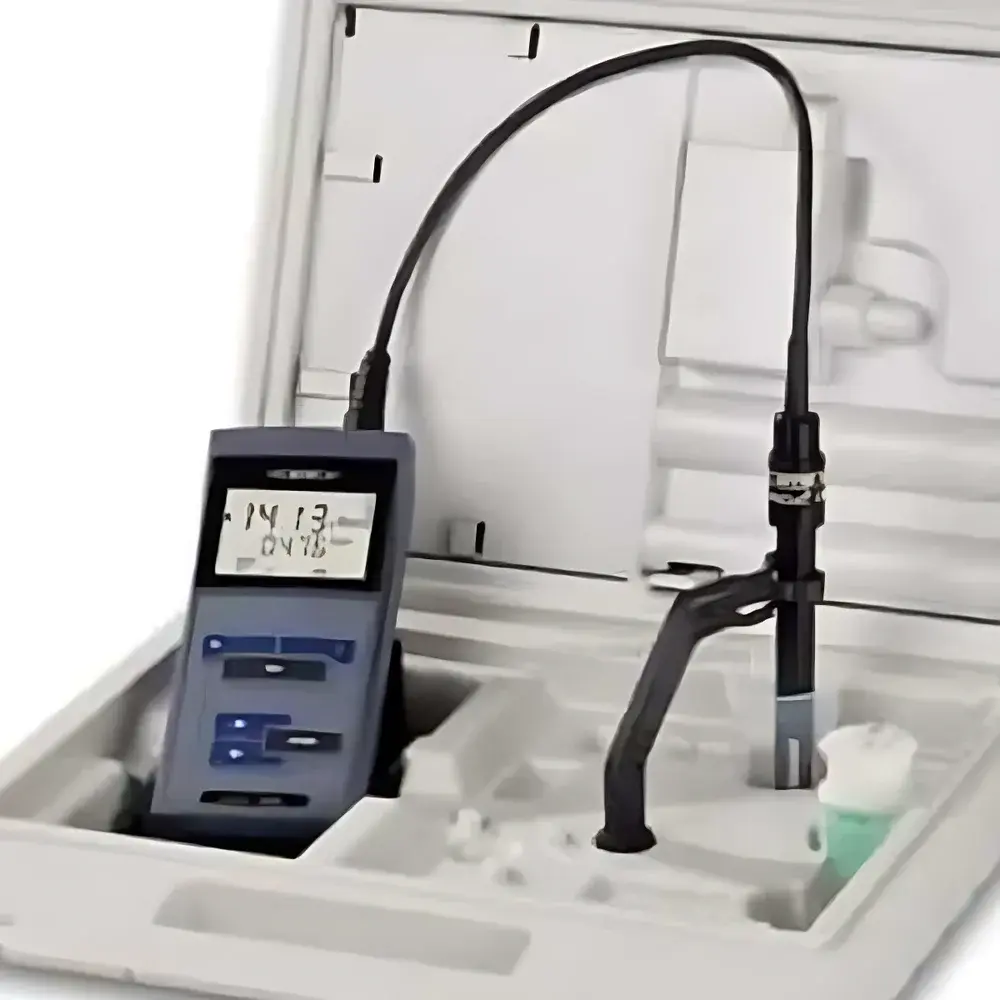
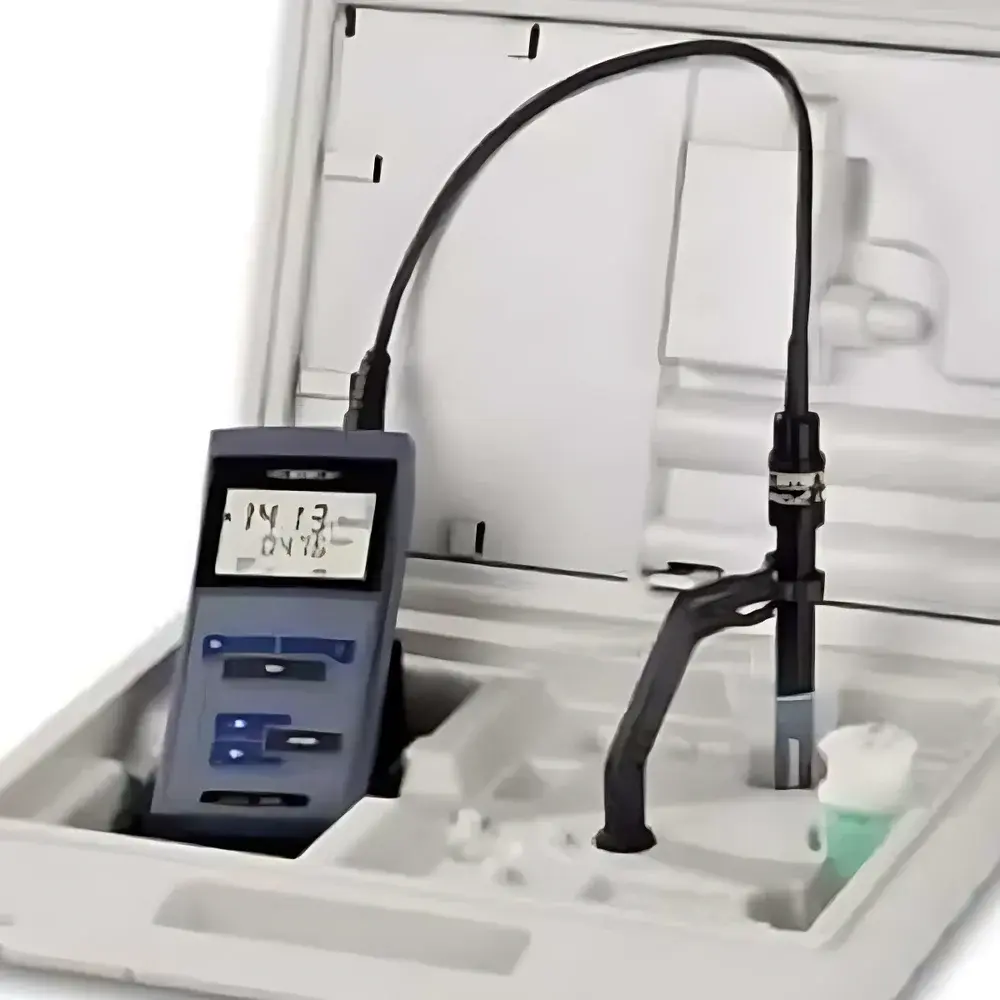
WTW Cond 3310 Portable Conductivity Meter
| Brand | WTW |
|---|---|
| Origin | Germany |
| Model | Cond 3310 |
| Portability | Portable |
| Application | Laboratory & Field Use |
| Conductivity Range | 0.0 – 1000 mS/cm |
| TDS Range | 0 – 1999 mg/L, 0 – 199.9 g/L |
| Resistivity Range | 0.00 – 20 MΩ·cm |
| Salinity Range | 0.0 – 70.0 (IOT-based) |
| Temperature Range | –5.0 – 105.0 °C |
| Accuracy | ±0.5% of reading |
| Minimum Resolution | 0.001 µS/cm |
| Calibration | 1–5 point, auto-buffer recognition (DIN/NIST), electrode constant adjustment range: 0.090–25.000 cm⁻¹ |
| Data Storage | 200 manual + 5000 interval-logged entries |
| IP Rating | IP66/IP67 |
| Auto-Temperature Compensation (ATC) | Yes |
| Display | Backlit graphical LCD |
| Power | Up to 1000 h battery life (non-backlit), 100 h (backlit continuous) |
| USB Interface | Waterproof, PC data transfer compliant |
Overview
The WTW Cond 3310 Portable Conductivity Meter is an engineered solution for high-reliability, field-deployable electrochemical measurement in environmental monitoring, wastewater treatment, aquaculture, and laboratory quality control applications. Based on four-wire conductivity measurement principles with automatic temperature compensation (ATC), the Cond 3310 delivers traceable, reproducible readings across five interrelated parameters: conductivity, resistivity, salinity, total dissolved solids (TDS), and temperature. Its dual-range architecture supports both ultra-low-conductivity measurements (down to 0.000 µS/cm using K = 0.01 cm⁻¹ electrodes) and high-salinity environments (up to 1000 mS/cm), making it suitable for applications ranging from ultrapure water validation to seawater analysis. The instrument complies with fundamental metrological requirements outlined in ISO 7888 (electrical conductivity of water) and supports reference temperature selection (20 °C or 25 °C) with selectable temperature compensation models (linear, nonlinear, or none), ensuring alignment with regional regulatory reporting conventions.
Key Features
- Robust IP66/IP67-rated housing with fully sealed silicone keypad—designed for extended outdoor operation under rain, dust, and thermal cycling conditions.
- Graphical backlit LCD display with intuitive text-based menu navigation—enabling rapid parameter selection and real-time trend visualization even in low-light field settings.
- Automatic endpoint detection (Auto-Read) with configurable response stabilization threshold; typical response time ≤10 seconds at steady-state conditions.
- Continuous Measurement Control (CMC) function: real-time validation of measurement integrity—visual indicators confirm whether readings fall within calibrated operating bounds; audible/visual alerts trigger upon deviation.
- Electrode-agnostic configuration: supports interchangeable conductivity cells (K = 0.01, 0.1, 1.0, or custom values); each electrode profile stores dedicated calibration constants, temperature coefficients, and unit preferences.
- Integrated calibration timer and full calibration history logging—records date, time, buffer ID, electrode constant, slope, offset, and stability metrics for the last five calibrations.
- Waterproof USB interface (100% sealed) enabling direct, cable-based data export to Windows-based PCs or mobile workstations without requiring proprietary docking hardware.
Sample Compatibility & Compliance
The Cond 3310 accommodates standard DIN- and ASTM-compliant conductivity electrodes—including platinized platinum, stainless steel, and graphite variants—with automatic recognition of 16 NIST/DIN-certified calibration buffers. Its electrode constant adjustment range (0.090–25.000 cm⁻¹) permits precise adaptation to non-standard cell geometries used in specialized process streams or custom sensor housings. The device meets IEC 61000-6-2 (immunity) and IEC 61000-6-3 (emission) standards for electromagnetic compatibility. While not certified for hazardous locations, its ingress protection rating enables routine use in ISO/IEC 17025-accredited laboratories performing GLP-aligned environmental testing per EPA Method 120.1 and APHA Standard Methods 2510B.
Software & Data Management
All stored data—200 manually triggered entries and up to 5000 time-stamped interval logs—are timestamped with temperature, date, time, user ID (optional), calibration status flag, and electrode identifier. Interval logging intervals are programmable from 1 second to 60 minutes. Data export occurs via native CSV format over USB, compatible with Microsoft Excel, LabChart, and LIMS platforms supporting ASCII-delimited ingestion. Audit trails include metadata on calibration events, firmware version, and power-on cycles—supporting basic 21 CFR Part 11 readiness when paired with controlled access policies and external electronic signature workflows.
Applications
- Field verification of drinking water compliance with WHO/EU conductivity limits (≤2500 µS/cm at 25 °C).
- In-process monitoring of reverse osmosis (RO) and deionization (DI) system performance via resistivity tracking (≥18.2 MΩ·cm for Type I water).
- Aquaculture water quality assessment—simultaneous salinity (ppt), TDS (mg/L), and temperature profiling across tidal zones or recirculating systems.
- Wastewater effluent screening per local discharge permits—rapid quantification of ionic load before chemical oxygen demand (COD) or nutrient analysis.
- Educational laboratories conducting electrochemical fundamentals experiments—demonstrating Kohlrausch’s law, ion mobility, and temperature dependence of electrolyte conductance.
FAQ
Does the Cond 3310 support GLP-compliant data recording?
Yes—when operated with enabled calibration logging, timestamped storage, and external audit controls, it fulfills core GLP documentation requirements for traceability and instrument accountability.
Can I use non-WTW conductivity probes with this meter?
Yes—the Cond 3310 accepts any standard analog conductivity sensor with BNC or DIN connector and supports manual entry of electrode constants and temperature coefficients.
What is the maximum allowable temperature for probe immersion?
The instrument itself operates from –5.0 to 105.0 °C, but probe compatibility depends on the connected sensor’s specifications—always consult the electrode manufacturer’s thermal rating.
How does the CMC function improve measurement confidence?
CMC cross-checks real-time conductivity values against stored calibration bounds and electrode health metrics, reducing risk of erroneous reporting due to fouling, drift, or out-of-range excursions.
Is firmware upgrade supported in the field?
Yes—via USB connection and WTW’s free LabX Lite software, users can perform authenticated firmware updates and restore factory defaults without service intervention.






