
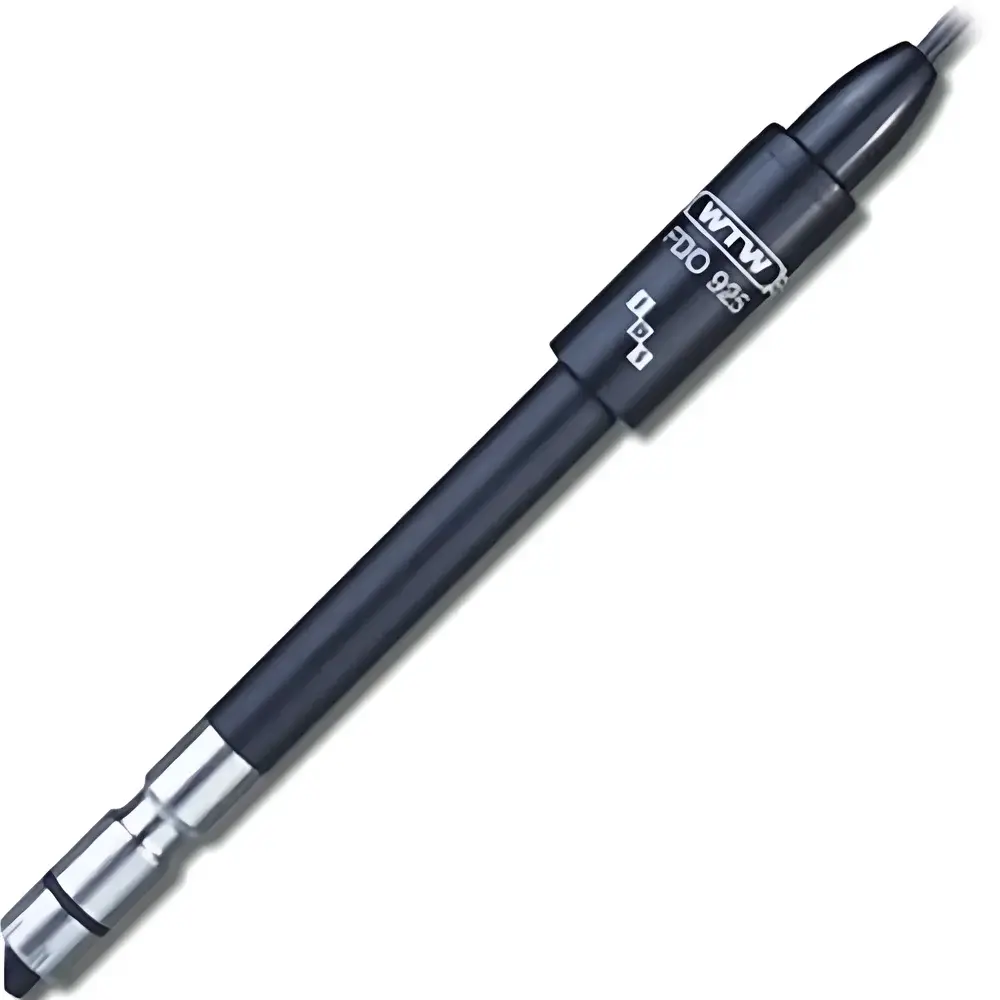
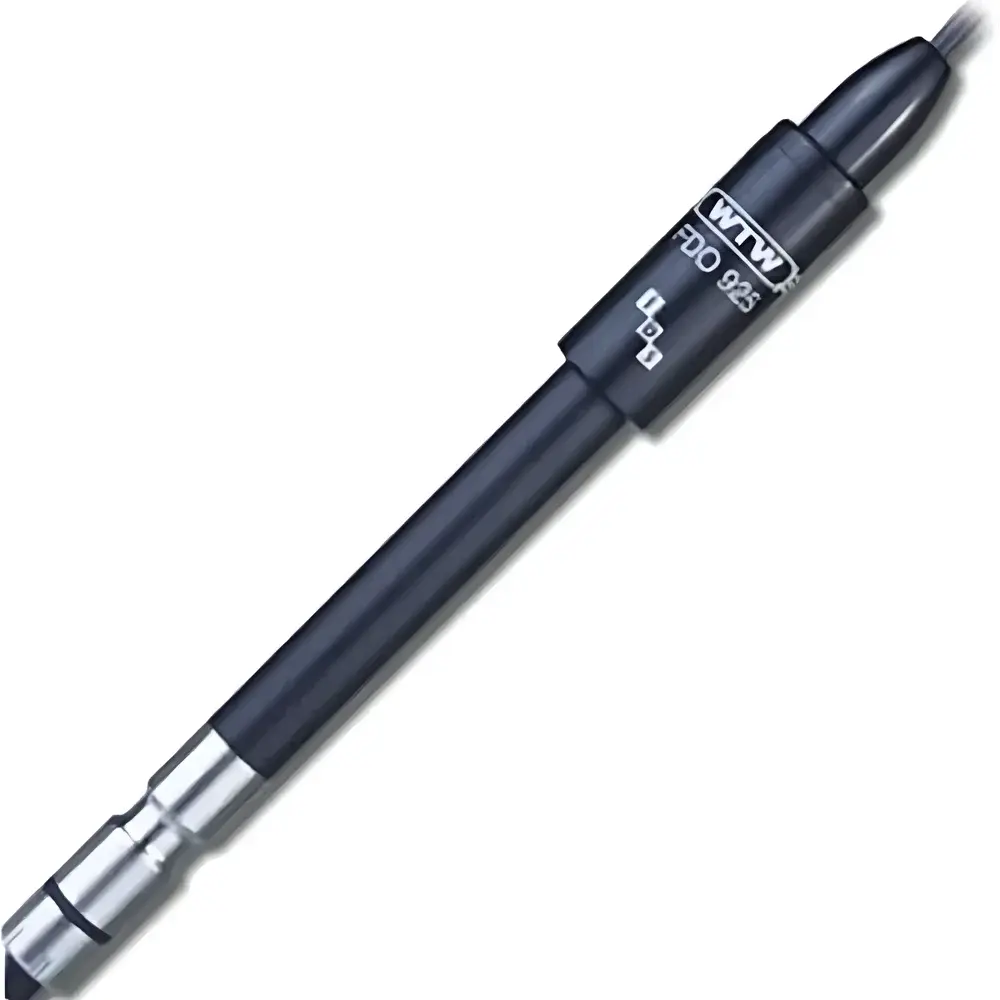
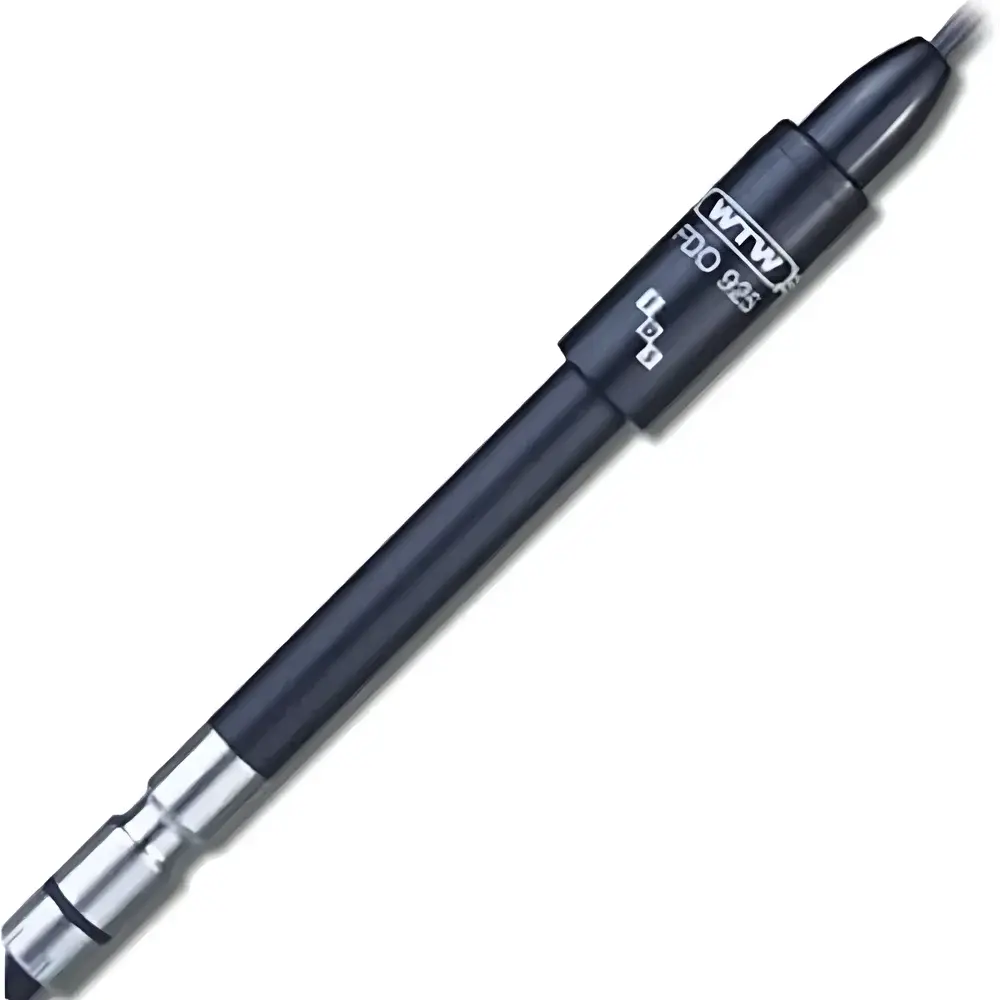
WTW FDO 925 Fluorescence-Based Dissolved Oxygen Electrode
| Brand | WTW |
|---|---|
| Origin | Germany |
| Model | FDO 925 |
| Instrument Type | Portable |
| Measurement Principle | Optical Fluorescence Quenching |
| Range | 0–20 mg/L DO |
| Accuracy | ±0.5% of reading ±0.05 mg/L DO |
| Repeatability | ≤0.1% of reading |
| Detection Limit | 0.01 mg/L DO |
| Response Time (t₉₀) | <30 s |
| Temperature Range | 0–50 °C |
| IP Rating | IP68 (2.5 bar) |
| Cable Options | 1.5 / 3 / 6 / 25 m |
| Electrode Body Material | POM |
| Cap Material | PVC, silicone, PMMA |
| Temperature Sensor | Integrated NTC30 (30 kΩ at 25 °C) |
| Weight | 180 g (with 3 m cable) |
Overview
The WTW FDO 925 is a high-precision, portable dissolved oxygen (DO) electrode engineered for reliable field and laboratory water quality analysis. It employs optical fluorescence quenching technology — a robust, maintenance-optimized alternative to traditional electrochemical Clark-type sensors. In this method, a pulsed blue LED excites a ruthenium-based luminophore immobilized on the sensor cap surface; molecular oxygen in the sample quenches the resulting red fluorescence proportionally. The phase shift or intensity decay of the emitted light is measured and converted into DO concentration (mg/L or % saturation), eliminating membrane permeability drift, electrolyte depletion, and zero-current polarization errors inherent in amperometric systems. Designed for continuous immersion or spot-check applications in rivers, lakes, wastewater treatment plants, aquaculture systems, and process water monitoring, the FDO 925 delivers stable, drift-free measurements across variable flow conditions and temperature gradients — without mandatory stirring correction.
Key Features
- Optical fluorescence detection ensures long-term stability, zero electrolyte refills, and no polarization time required before measurement.
- Integrated NTC30 temperature sensor (30 kΩ at 25 °C) enables automatic temperature compensation with ±0.2 K accuracy across 0–50 °C.
- Rugged POM (polyoxymethylene) housing and chemically resistant cap materials (PVC, silicone, PMMA) provide mechanical durability and resistance to biofouling and common disinfectants.
- IP68-rated (2.5 bar) submersible design supports deployment up to 25 m depth (cable-length dependent), with IP67-rated connector when mated.
- Fast response kinetics: t₉₀ < 30 s, t₉₅ < 45 s, and t₉₉ < 60 s in stirred 20 °C water — critical for dynamic profiling and rapid QA/QC verification.
- Low detection limit of 0.01 mg/L DO and measurement accuracy of ±0.5% of reading ±0.05 mg/L DO meet stringent regulatory reporting thresholds for environmental compliance.
- Minimal mechanical sensitivity: no fragile membranes or cathodes; however, proper handling protocols must be followed to preserve optical surface integrity and cap alignment.
Sample Compatibility & Compliance
The FDO 925 is validated for use in freshwater, seawater (with salinity compensation enabled via compatible WTW meters), wastewater effluents, drinking water distribution systems, and industrial process streams. Its optical principle eliminates interference from hydrogen sulfide, chlorine, CO₂, or heavy metals that commonly affect polarographic sensors. The electrode complies with ISO 5814:2012 (Water quality — Determination of dissolved oxygen — Electrochemical probe method), and its performance characteristics support data integrity requirements under EPA Method 360.1 and ASTM D888-22. When paired with WTW’s multi-parameter handheld meters (e.g., Multi 3630 IDS), audit trails, calibration logs, and user-defined metadata can be generated in accordance with GLP and FDA 21 CFR Part 11-compliant workflows — provided the host instrument firmware and software configuration support electronic signature and secure data export.
Software & Data Management
While the FDO 925 itself is an analog/digital transducer without embedded memory or Bluetooth, it interfaces seamlessly with WTW’s IDS-capable instruments (e.g., pH/DO/Conductivity loggers) via standardized digital communication protocols. Raw sensor output (fluorescence lifetime, temperature, DO value) is processed in real time by the host meter’s firmware, enabling simultaneous multi-parameter logging, timestamped CSV export, and configurable alarm thresholds. WTW’s LabX® software (optional) supports post-acquisition trend analysis, report generation (PDF/Excel), and integration into LIMS environments via ODBC or REST API. All calibration events, cap replacement timestamps, and diagnostic flags (e.g., “No Cap”, “Cap Dirty”) are recorded within the instrument’s internal memory — supporting traceability during regulatory audits.
Applications
- Regulatory environmental monitoring: compliance sampling for NPDES permits, WFD (EU Water Framework Directive), and state-level TMDL programs.
- Wastewater treatment optimization: aeration basin control, nitrification/denitrification monitoring, and sludge respiration rate assessment.
- Aquaculture and hatchery management: real-time DO surveillance in recirculating aquaculture systems (RAS) to prevent hypoxia stress.
- Drinking water quality assurance: source water evaluation, distribution system stagnation detection, and disinfection byproduct correlation studies.
- Research and education: kinetic studies of oxygen consumption in BOD assays, sediment-water interface flux measurements, and bioreactor process development.
FAQ
Why does the FDO 925 require specific handling of the optical cap?
The cap houses the luminophore layer and optical filter assembly. Finger oils, scratches, or UV exposure degrade fluorescence efficiency and increase signal noise. Always handle only by the cap edges and store caps in opaque containers.
What causes “No Cap” or “Error” messages during operation?
These indicate misalignment, contamination at the electrode head–cap interface, or physical damage to the gold-plated contact ring. Clean both surfaces with deionized water and lint-free tissue; verify full seating and torque of the retaining ring.
Is stirring required for accurate measurement?
No — unlike electrochemical DO sensors, the fluorescence method is inherently flow-independent. However, gentle mixing improves equilibration time in viscous or stagnant samples.
Can the FDO 925 be used in saline or brackish water?
Yes, when connected to a WTW meter with salinity compensation enabled. The optical signal is unaffected by conductivity, but dissolved solids may influence thermal mass and thus temperature-driven saturation calculations.
How often should the optical cap be replaced?
Under typical field use (≤8 h/day, moderate fouling), replacement is recommended every 12–18 months. Accelerated degradation occurs with UV exposure, abrasive cleaning, or repeated mechanical impact.







