
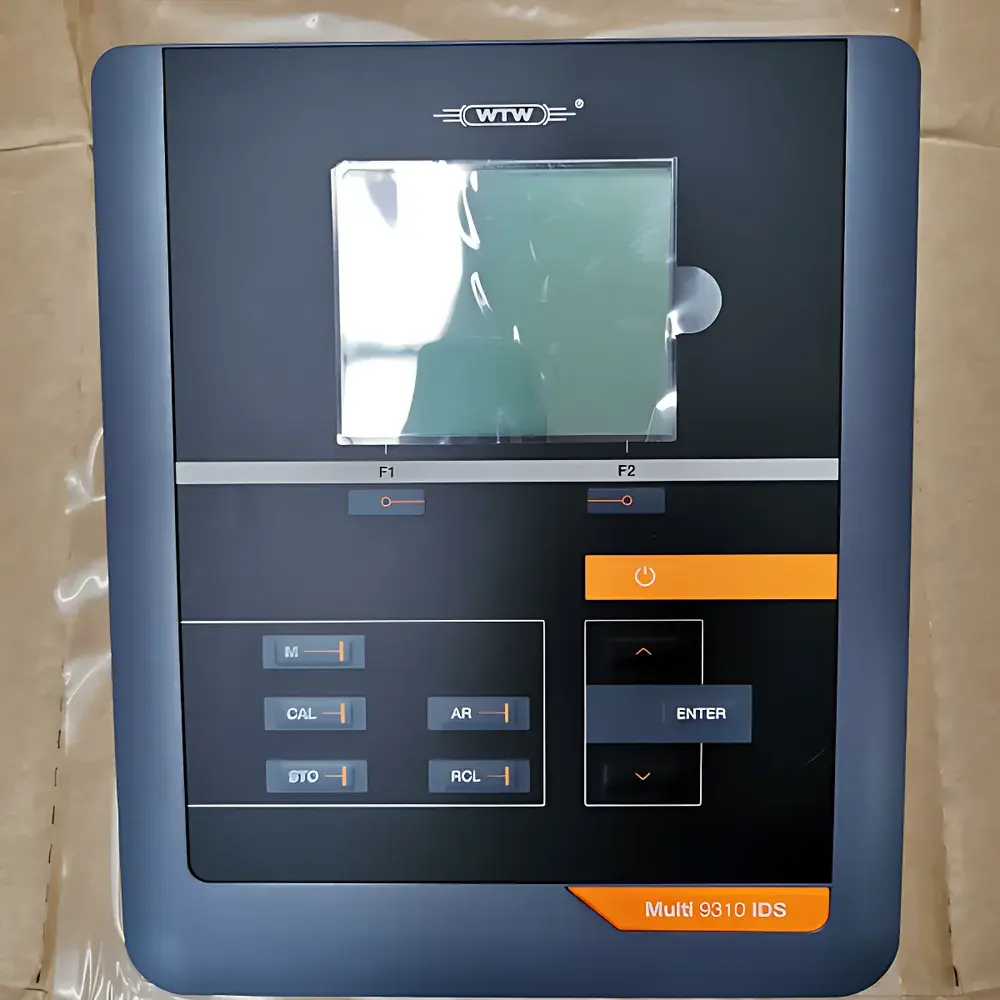
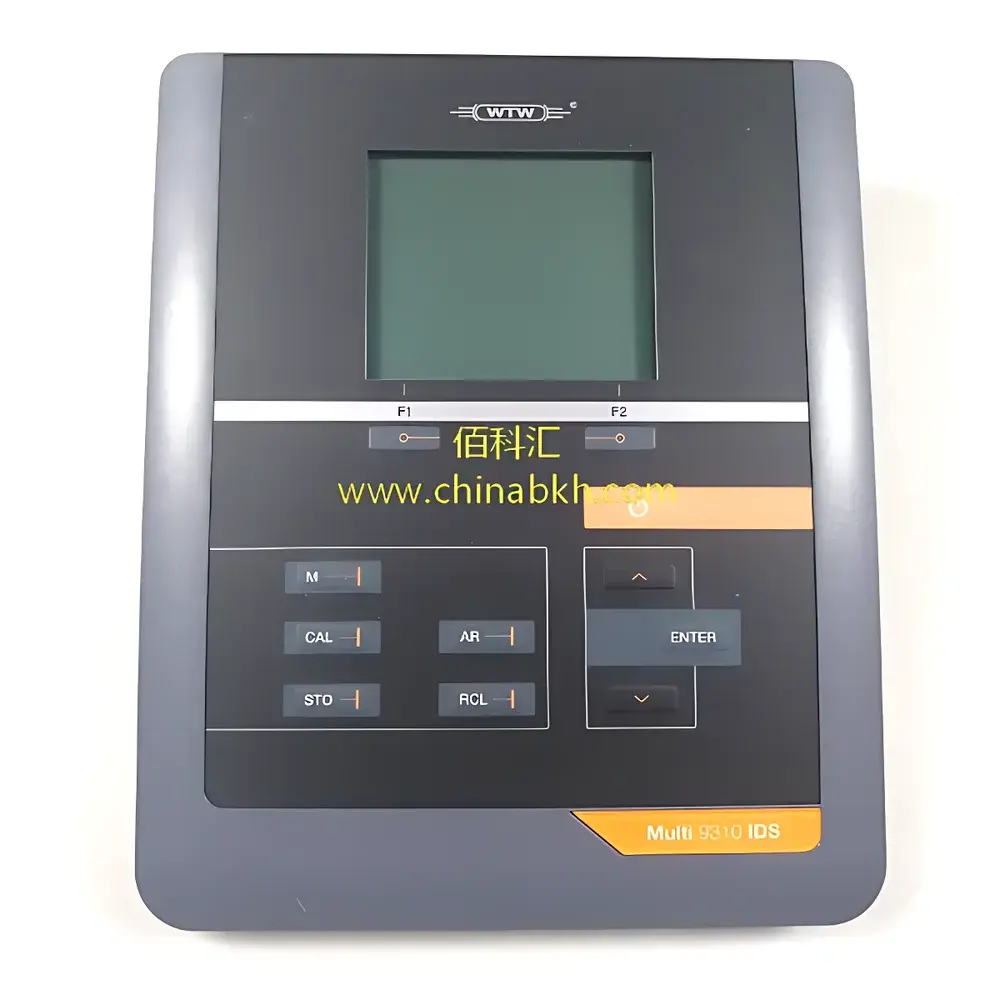
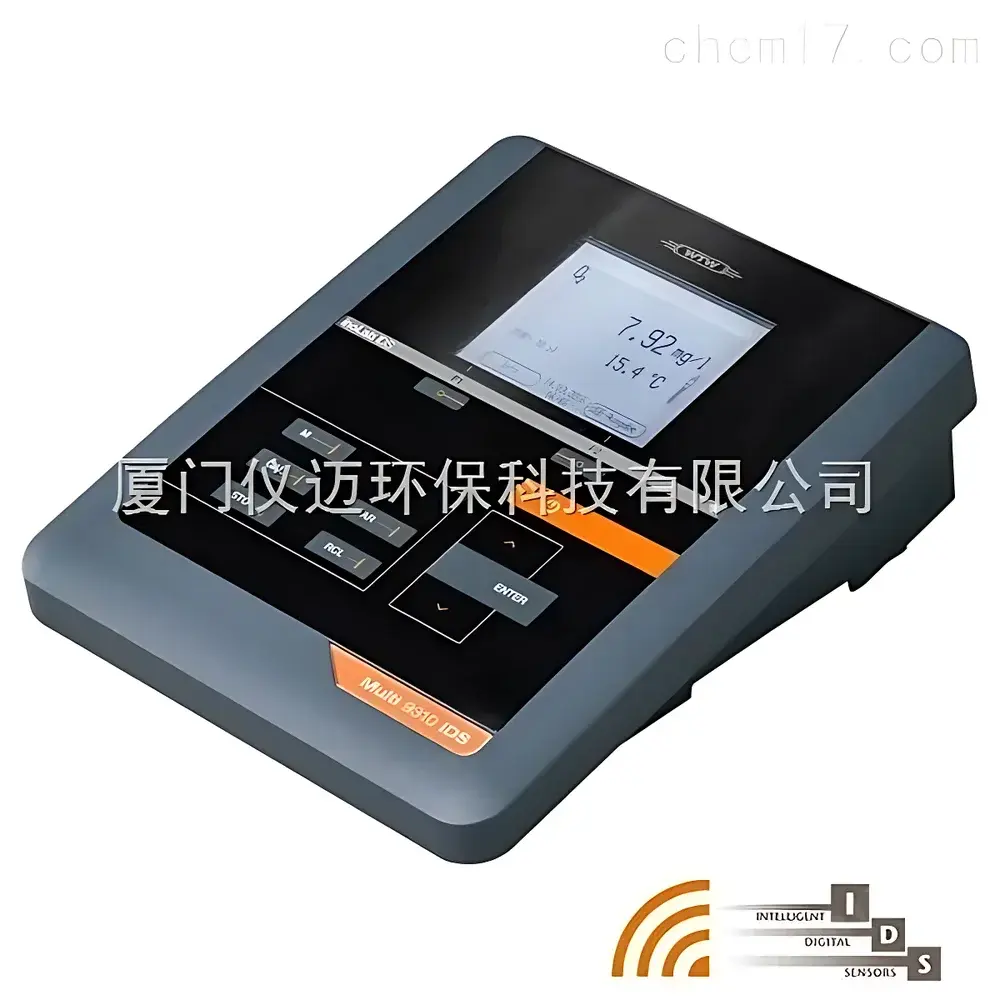
WTW inoLab Multi 9310 Digital Multiparameter Laboratory Analyzer
| Brand | WTW |
|---|---|
| Origin | Germany |
| Model | inoLab® Multi 9310 |
| Measurement Parameters | pH, ORP, Conductivity, Dissolved Oxygen (optical fluorescence), Temperature |
| Sensor Interface | IDS (Intelligent Digital Sensors) |
| Compliance | GLP, AQA |
| Data Storage | 5,000 readings with timestamp, user ID, and sensor serial number |
| Connectivity | Mini USB-B |
| Power Supply | AC adapter or 4 × AA batteries |
| Calibration Memory | Up to 10 calibrations with scheduling (1–999 days) |
| Temperature Compensation | Automatic for all parameters except ORP |
Overview
The WTW inoLab® Multi 9310 is a high-precision, benchtop digital multiparameter laboratory analyzer engineered for rigorous water quality analysis in regulated research, environmental monitoring, and industrial QC laboratories. Built on WTW’s Intelligent Digital Sensor (IDS) platform, the instrument employs embedded analog-to-digital conversion directly within each probe—eliminating signal degradation, cable-length limitations, and manual parameter assignment errors. This architecture ensures metrological traceability from measurement point to data output. The system simultaneously acquires and processes pH, redox potential (ORP), conductivity (including derived TDS, salinity, resistivity, and hardness), optical dissolved oxygen (via fluorescence quenching principle), and temperature—with full automatic temperature compensation across all electrochemical and optical parameters except ORP. Designed to meet stringent documentation requirements, the Multi 9310 supports audit-ready workflows compliant with Good Laboratory Practice (GLP) and Analytical Quality Assurance (AQA) frameworks.
Key Features
- IDS digital sensor interface with plug-and-play recognition: automatically detects sensor type, serial number, calibration history, and validity status upon connection.
- QSC (Quality Sensor Check): continuously monitors electrode impedance, slope, asymmetry potential, and reference junction stability—flagging deviations before they compromise data integrity.
- CMC (Continuous Measurement Control): tracks real-time drift and recalculates baseline references using first-calibration as anchor—enabling long-term stability assessment without repeated manual verification.
- Graphical monochrome LCD with intuitive icon-based navigation and multilingual UI (English, German, French, Spanish, Chinese).
- Onboard data logger stores up to 5,000 measurements with date/time stamp, operator ID, sensor serial number, and calibration metadata—fully traceable per GLP Annex 11 principles.
- Mini USB-B port enables direct export of CSV-formatted datasets compatible with LIMS, Excel, and statistical software—no proprietary drivers required.
- Dual power operation: universal AC adapter or four AA alkaline batteries (up to 200 hours typical runtime).
- Optional integrated thermal printer (9310P variant) for immediate hardcopy of measurements, calibration reports, and QA summaries—ideal for SOP-driven environments.
Sample Compatibility & Compliance
The inoLab® Multi 9310 is validated for aqueous matrices including drinking water, wastewater, surface water, groundwater, effluents, and process streams. Its IDS ecosystem supports interchangeable probes certified to ISO 7888 (conductivity), ISO 5667-22 (DO), DIN EN ISO 10523 (pH), and ASTM D1293 (pH of water). All firmware and data handling routines comply with FDA 21 CFR Part 11 requirements for electronic records and signatures when used with password-protected user accounts and audit-trail-enabled software (MultiLab® Importer v3.0+). Instrument configuration, calibration logs, and measurement histories are immutable once recorded—supporting regulatory inspections under EPA Method 150.1, USP <645>, and EU Directive 2000/60/EC (Water Framework Directive).
Software & Data Management
Data transfer and archiving are facilitated via WTW’s free MultiLab® Importer software (Windows/macOS), which imports native .csv files and generates PDF reports with embedded calibration certificates, sensor diagnostics, and statistical summaries (mean, SD, CV%). The software enforces role-based access control and maintains a full audit trail—including user login/logout timestamps, parameter edits, and report generation events. For enterprise integration, the analyzer outputs timestamped ASCII streams over USB CDC mode, enabling seamless ingestion into LabVantage, STARLIMS, or custom Python/Node.js middleware via standard serial protocols. All stored data includes ISO 8601-compliant timestamps and UTC offset awareness—critical for multi-site collaborative studies.
Applications
- Drinking water compliance testing (e.g., WHO Guidelines, EPA Safe Drinking Water Act parameters)
- Wastewater treatment plant influent/effluent characterization per ISO 11277 and EN 14855
- Environmental field lab support for ISO 5667-3 sampling campaigns
- Pharmaceutical water system validation (PW, WFI) per USP <1231> and EU GMP Annex 1
- Academic hydrochemistry research requiring long-term sensor stability tracking
- Calibration verification labs performing inter-laboratory comparisons under ISO/IEC 17025
FAQ
Does the Multi 9310 support analog sensors?
Yes—via optional ADA S7/IDS adapter, legacy analog pH/ORP electrodes can be retrofitted with digital addressing and calibration memory.
How does QSC differ from conventional electrode diagnostics?
QSC evaluates electrochemical health in real time—not just post-calibration—by analyzing impedance spectra and junction potential decay kinetics, providing predictive maintenance alerts.
Can calibration data be exported separately from measurement logs?
Yes: calibration events are stored as discrete entries with unique IDs, timestamps, buffer values, and acceptance criteria—exportable independently in CSV or PDF.
Is the thermal printer module upgradeable on existing 9310 units?
No—the printer is hardware-integrated only in the 9310P model variant; field retrofitting is not supported.
What happens if a sensor’s internal memory becomes corrupted?
The instrument detects checksum failures during handshake and blocks data acquisition until sensor reinitialization or replacement—preventing silent data corruption.
Related Products







