
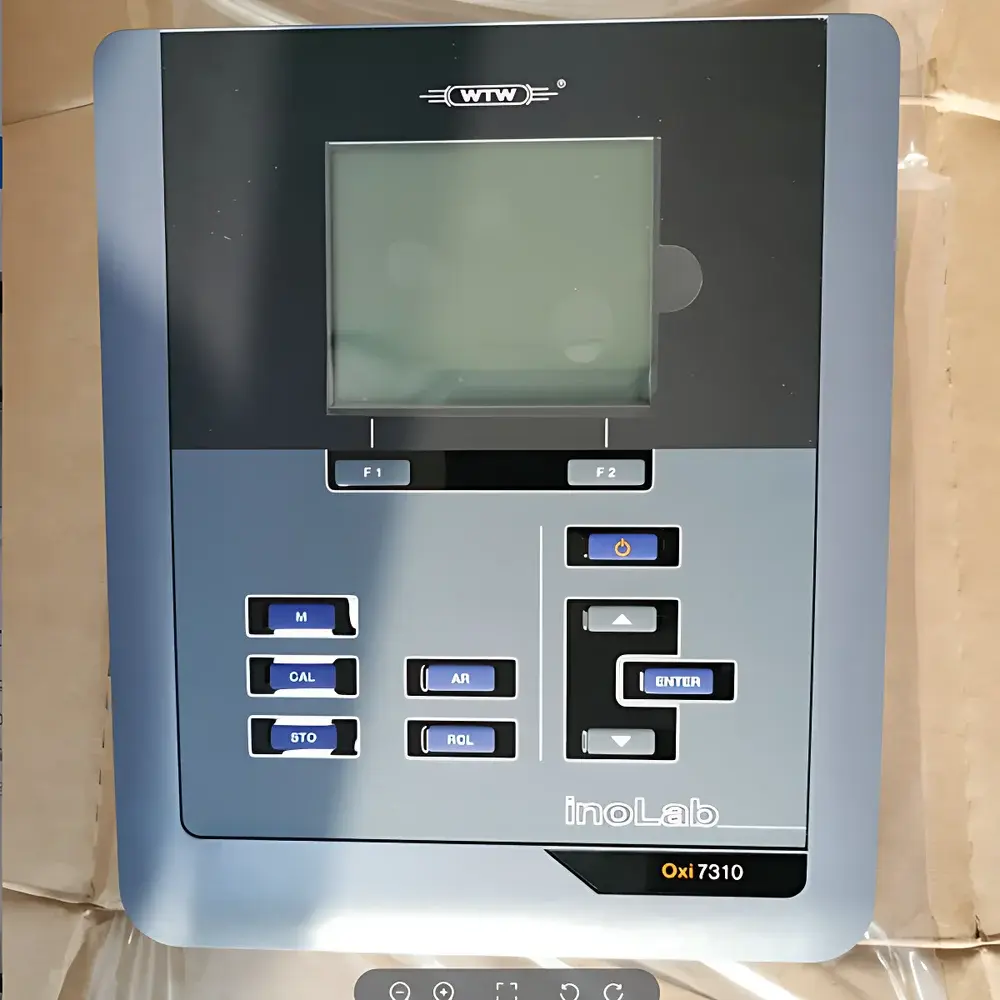
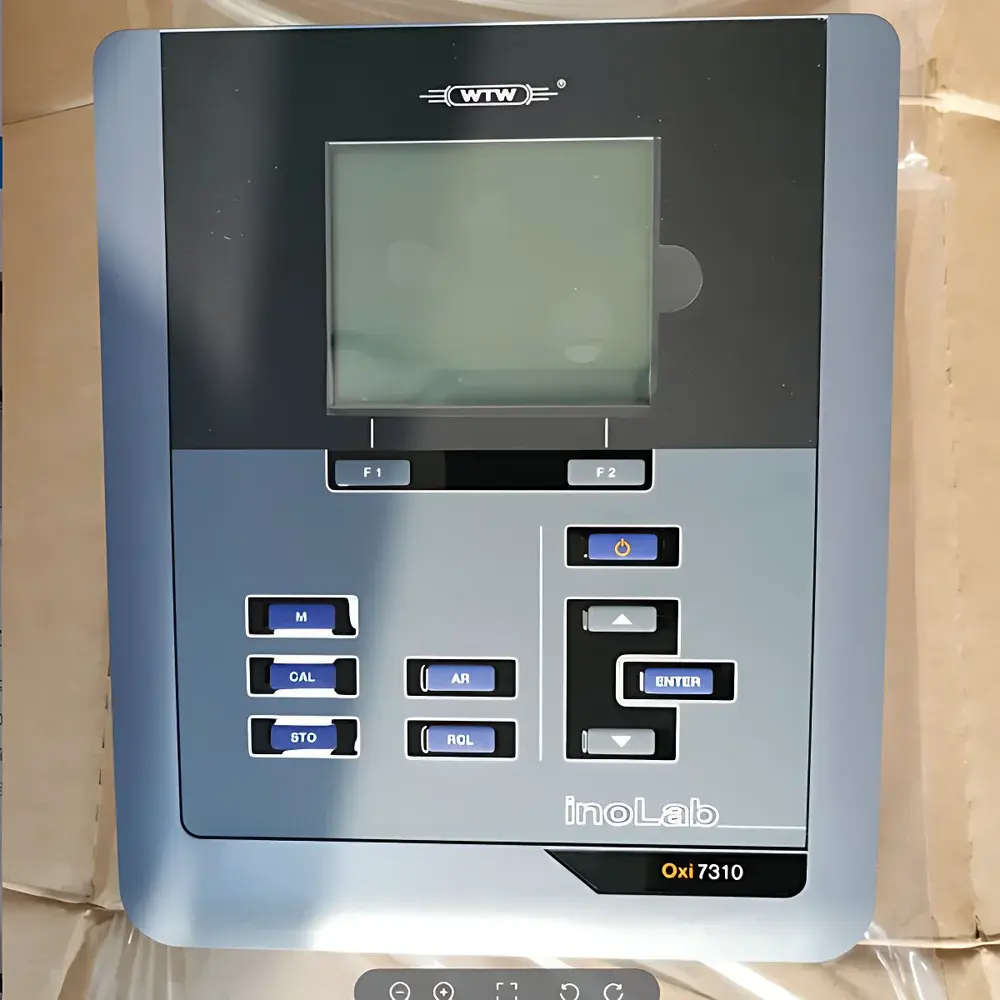
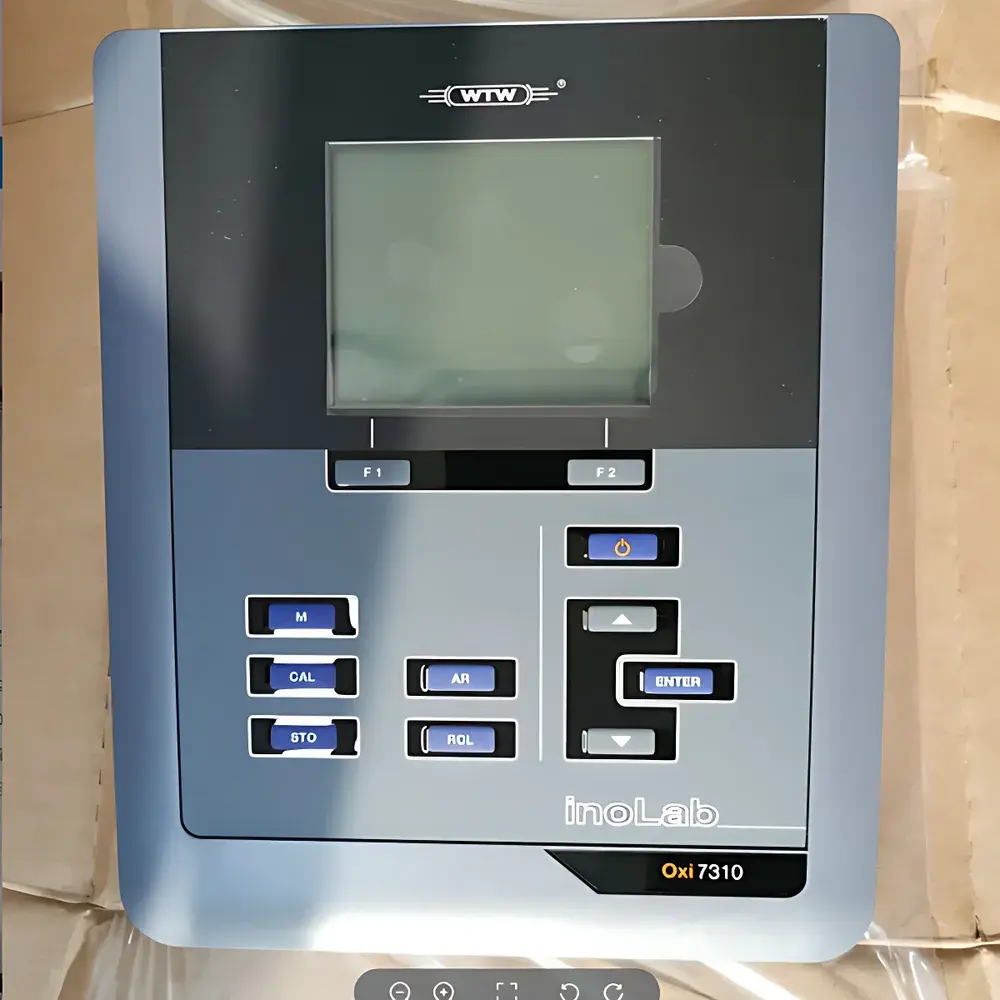
WTW inoLab Oxi 7310 BOD Analyzer
| Brand | WTW |
|---|---|
| Origin | Germany |
| Model | inoLab Oxi 7310 |
| Instrument Type | Laboratory BOD Analyzer |
| Measurement Principle | Electrochemical Dissolved Oxygen (DO) Method with StirrOx-G Self-Stirring Sensor |
| Measurement Range | DO: 0.00–20.00 mg/L (resolution: 0.01/0.1 mg/L) |
| Saturation | 0–200.0 % (0.01/0.1 %) |
| Partial Pressure of O₂ | 0–200.0 mbar (0.01/0.1 mbar) |
| Accuracy | ±0.5% of reading for DO, saturation, and pO₂ |
| Data Storage | 5,000 automatic / 500 manual entries |
| Interface | Mini-USB |
| Display | Backlit LCD with graphical capability |
| Power Supply | 4 × 1.5 V alkaline batteries, USB power, or universal AC adapter |
| Battery Life | up to 800 h (no backlight), 100 h (continuous backlight) |
| Compliance | GLP/AQA-compliant data logging with audit trail support |
Overview
The WTW inoLab Oxi 7310 BOD Analyzer is a precision laboratory instrument engineered for standardized biochemical oxygen demand (BOD) determination in accordance with international water quality protocols. It operates on the electrochemical dissolved oxygen (DO) method—specifically optimized for the 5-day BOD5 test per ISO 5815-1:2019, ASTM D5210, and EN 1899-1. Unlike optical or membrane-less systems, the inoLab Oxi 7310 integrates seamlessly with the StirrOx-G self-stirring Clark-type polarographic sensor, eliminating external stirring artifacts and ensuring hydrodynamic consistency across replicate samples. This architecture delivers high reproducibility in low-flow, closed-bottle BOD incubations—critical for wastewater effluent, surface water, and drinking water compliance testing. The system features built-in barometric pressure compensation (500–1100 mbar), manual salinity correction (0–70.0 g/kg), and automatic temperature compensation (0–40 °C), enabling accurate DO quantification under variable environmental conditions without operator intervention.
Key Features
- GLP- and AQA-compliant operation with time-stamped, user-identifiable measurement records and full audit trail capability
- Dedicated mini-USB interface for direct export of measurement data in CSV format—compatible with LIMS, Excel, and statistical analysis platforms
- Integrated graphical LCD display with backlighting supports real-time trend visualization, multi-parameter overlay (DO, saturation, pO₂, temperature), and intuitive menu navigation
- High-capacity internal memory stores up to 5,000 automatically logged measurements and 500 manually triggered entries—each with sensor ID, calibration status, and environmental metadata
- Optimized hardware interface for the StirrOx-G self-stirring DO sensor: no external stirrer required, consistent flow velocity (±2% deviation), and negligible intrinsic oxygen consumption (≤0.008 µg·h⁻¹ per mg·L⁻¹)
- Flexible power architecture: operates on four AA alkaline cells (800 h typical life), USB bus power, or optional AC adapter—enabling uninterrupted operation during extended incubation cycles
Sample Compatibility & Compliance
The inoLab Oxi 7310 is validated for use with standard 300 mL BOD bottles (glass or BOD-specific polyethylene) and compatible with all WTW-certified StirrOx-G sensor configurations. It meets functional requirements of ISO/IEC 17025-accredited laboratories for routine water quality testing and supports traceable calibration via zero-oxygen (sodium sulfite) and air-saturation standards. The system complies with EU Water Framework Directive (2000/60/EC) monitoring guidelines and aligns with US EPA Method 410.4 for carbonaceous BOD assessment. All stored data include mandatory GLP fields: operator ID, sample ID, calibration date/time, sensor serial number, ambient pressure, and salinity input—ensuring full regulatory defensibility during inspections or third-party audits.
Software & Data Management
Data export is native and protocol-transparent: no proprietary software installation is required. Upon USB connection, the device appears as a mass-storage device, allowing drag-and-drop retrieval of timestamped .csv files containing raw DO (mg/L), saturation (%), pO₂ (mbar), temperature (°C), pressure (mbar), salinity (g/kg), and measurement mode (manual/automatic). Each record includes a unique acquisition ID and firmware version stamp. For laboratories operating under FDA 21 CFR Part 11 or EU Annex 11, the inoLab Oxi 7310 supports user-level access control when paired with WTW’s optional LabX® Lite configuration tool (sold separately), enabling electronic signatures, role-based permissions, and encrypted data archiving. Audit logs capture all configuration changes, calibration events, and data deletions—retained for ≥12 months per default settings.
Applications
- Regulatory BOD5 testing of municipal and industrial wastewater effluents per ISO 5815-1 and EPA 410.4
- Surface water quality monitoring programs (e.g., rivers, lakes, reservoirs) requiring long-term DO stability assessment
- Drinking water treatment plant process control—particularly post-filtration and distribution system validation
- Environmental impact assessments (EIAs) and baseline ecological studies where low-concentration DO resolution (<0.01 mg/L) is critical
- Research applications involving biodegradability screening of organic compounds using standardized BOD bottle assays
- Academic teaching labs requiring robust, maintenance-minimized instrumentation for undergraduate environmental chemistry curricula
FAQ
Does the inoLab Oxi 7310 require daily recalibration?
No—calibration is performed only before analytical series or after sensor replacement. The StirrOx-G sensor maintains stability for up to 6 months per electrolyte fill, and the analyzer retains calibration coefficients even after power cycling.
Can the device log measurements autonomously during a 5-day BOD incubation?
Yes. When configured for automatic logging (e.g., every 30 minutes), the inoLab Oxi 7310 captures and timestamps DO, temperature, and saturation continuously for up to 5,000 points—sufficient for full BOD5 kinetic profiling without manual intervention.
Is the StirrOx-G sensor compatible with non-WTW BOD bottles?
It is mechanically and chemically optimized for WTW’s certified 300 mL glass BOD bottles with integrated magnetic stir bar recesses. Use with non-standard vessels may compromise flow uniformity and introduce measurement bias.
How does the system handle variable atmospheric pressure during high-altitude testing?
The built-in barometric sensor continuously measures ambient pressure (500–1100 mbar range) and applies real-time compensation to DO calculations—eliminating manual correction tables or external barometer inputs.
What happens if the StirrOx-G membrane develops a micro-leak?
The sensor performs continuous self-diagnostics: a detected leak triggers an audible alert and displays “MEMBRANE ERROR” on the analyzer screen, preventing erroneous data entry into the storage buffer.
Related Products







