
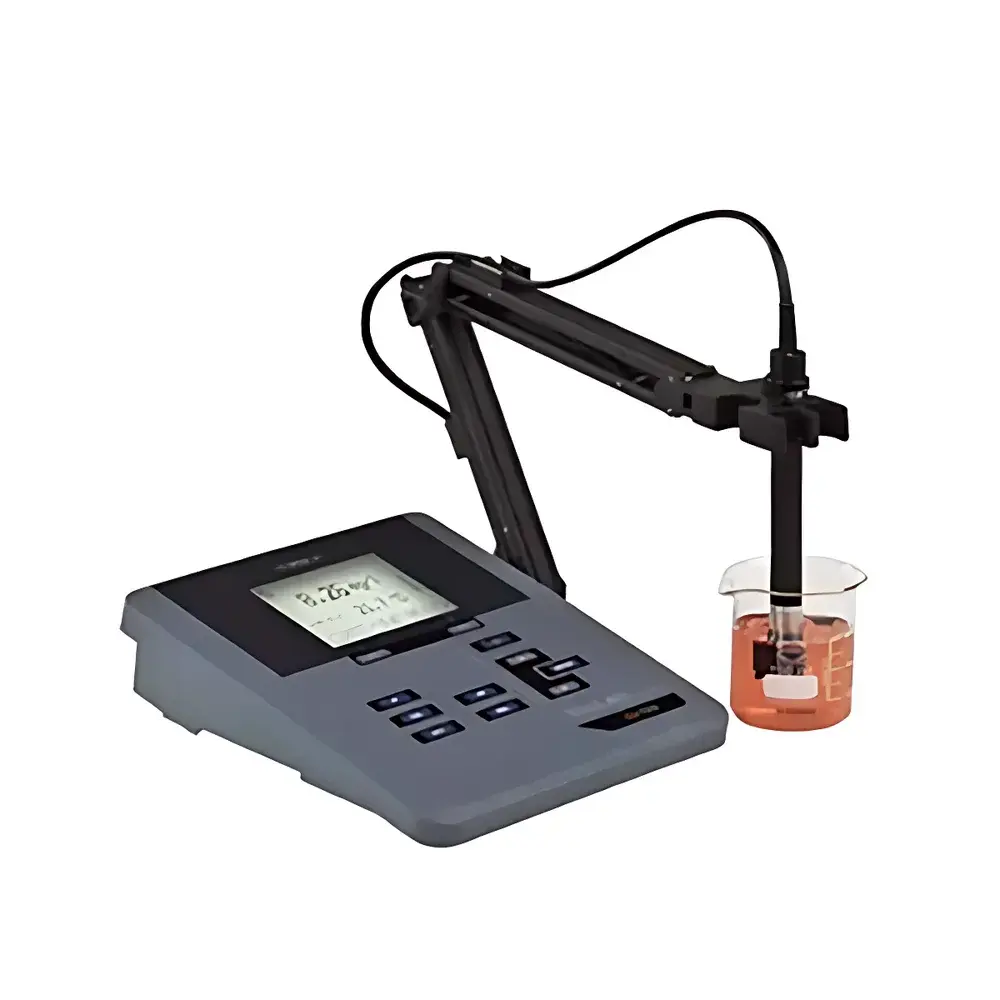
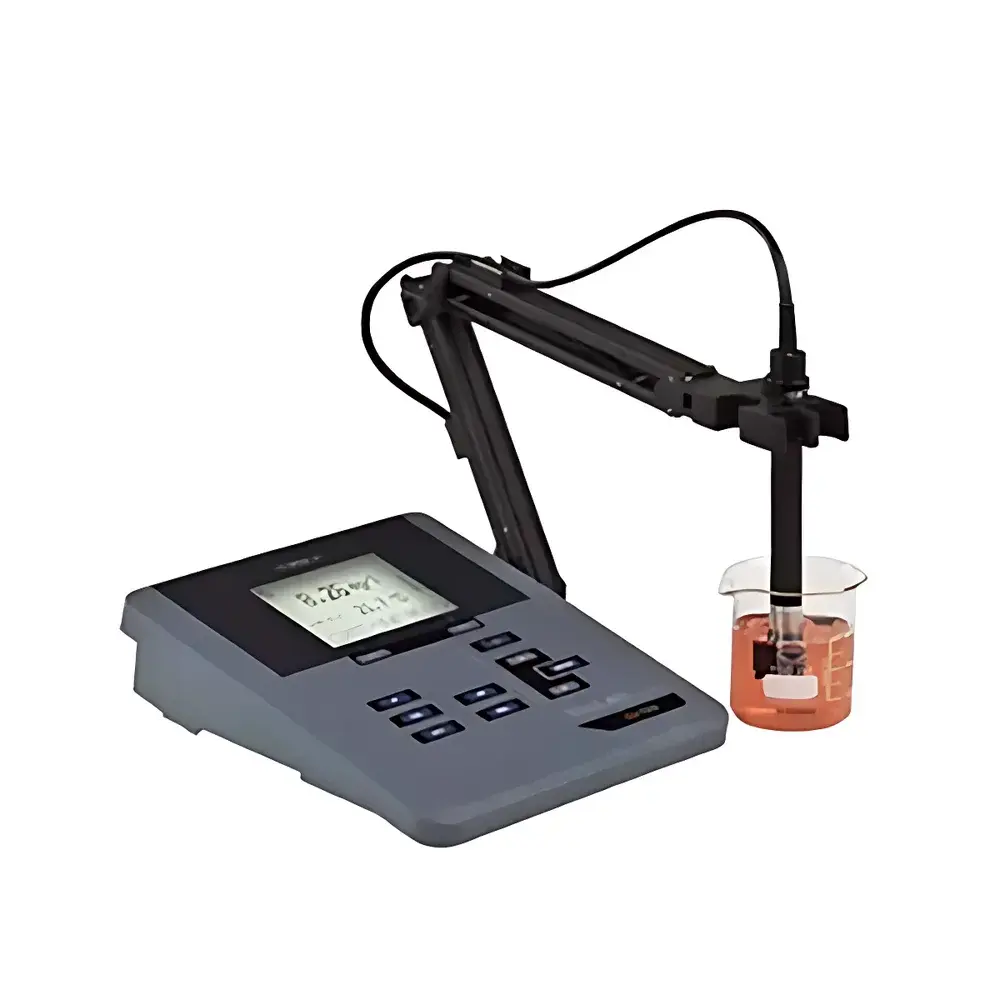
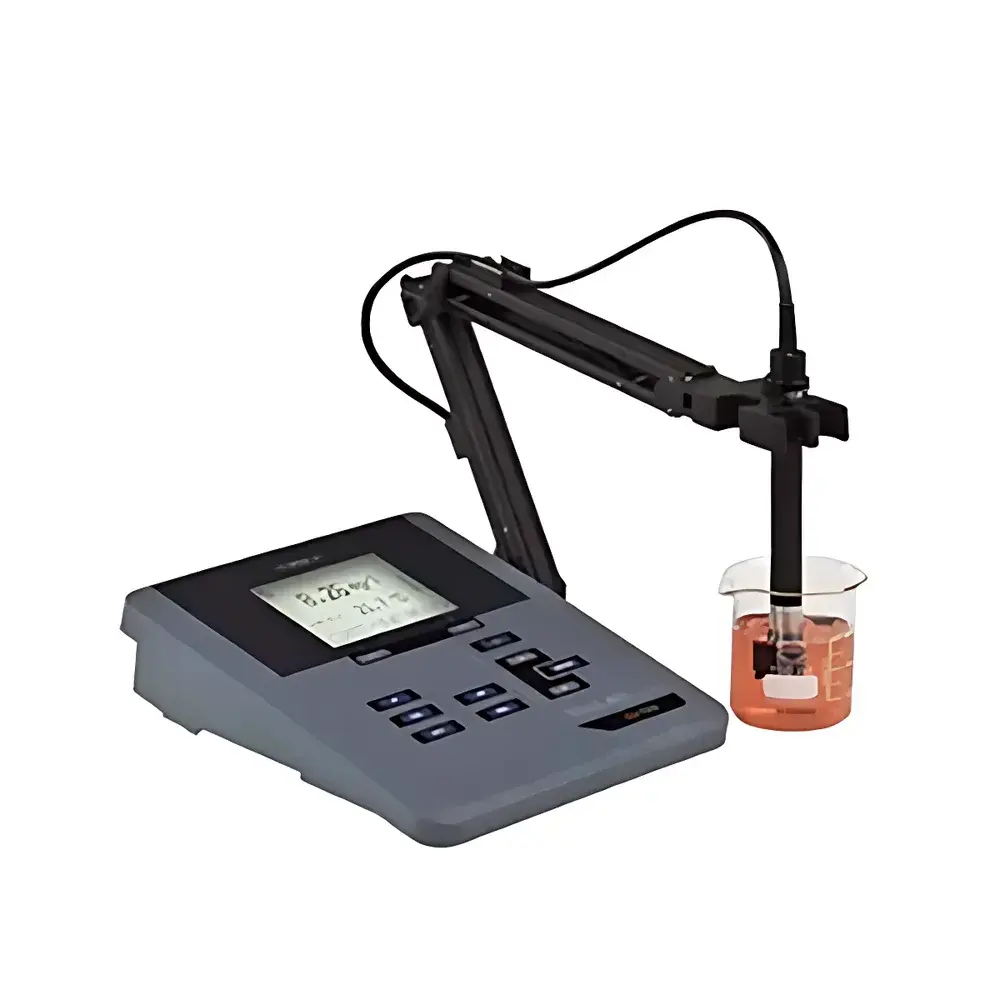
WTW inoLab Oxi 7310 Laboratory Dissolved Oxygen Meter
| Brand | WTW |
|---|---|
| Origin | Germany |
| Model | Oxi 7310 |
| Instrument Type | Benchtop Laboratory DO Meter |
| Measurement Principle | Electrochemical (Clark-type Polarographic Sensor) |
| Range | 0.00–20.00 mg/L |
| Accuracy | ±0.5% of reading (0.00–20.00 mg/L) |
| Repeatability | ≤±0.5% |
| Detection Limit | 0.10 mg/L |
| Temperature Range | −5.0 to +105.0 °C (±0.1 °C) |
| Saturation Range | 0.0–200.0 % (±0.5%) and 0.0–600 % (±0.5%) |
| Partial Pressure Range | 0–200.0 hPa / 0–1250 hPa |
| Data Storage | 500 manual entries / 5000 auto-logged records |
| Interface | Micro-USB |
| GLP Compliance | Yes (time-stamped, user-ID, probe serial logging, audit-ready CSV export) |
| Power Supply | 4×AA alkaline or NiMH batteries or AC adapter |
Overview
The WTW inoLab Oxi 7310 is a high-precision benchtop dissolved oxygen (DO) meter engineered for rigorous laboratory water quality analysis. It employs a Clark-type polarographic electrochemical sensor principle—where molecular oxygen diffuses through a gas-permeable membrane and undergoes reduction at a cathode under a fixed polarization voltage—enabling stable, drift-resistant measurements in aqueous samples. Designed for compliance with international water testing standards—including ISO 5814, ASTM D888, and EN 25814—the Oxi 7310 delivers traceable, reproducible DO quantification across environmental, wastewater, drinking water, and aquaculture applications. Its dual-mode measurement capability supports both concentration (mg/L), saturation (%), and partial pressure (hPa) outputs, allowing seamless correlation with temperature, atmospheric pressure, and salinity corrections—critical for method validation and inter-laboratory comparability.
Key Features
- Polarographic DO sensor architecture with integrated temperature compensation (−5.0 to +105.0 °C, ±0.1 °C accuracy) and built-in barometric pressure sensing for real-time altitude- and weather-adjusted calibration.
- GLP-compliant data management: automatic timestamping, user ID assignment, probe serial number registration, and full audit trail for every measurement and calibration event.
- Onboard data logger stores up to 500 manually triggered or 5000 automatically acquired records—with configurable sampling intervals—retaining date, time, temperature, DO value, saturation, and pressure data per entry.
- Micro-USB interface enables direct transfer of CSV-formatted datasets to Windows/macOS systems; exported files are natively compatible with Excel, LIMS, and statistical analysis platforms without conversion.
- Backlit graphical LCD display with intuitive menu navigation, real-time trend plotting, and AutoRead stabilization detection to ensure measurement validity before recording.
- Flexible power options: operation via 4×AA alkaline/NiMH batteries (up to 1,000 hours typical life) or universal AC adapter—ideal for both stationary lab use and mobile field deployment.
Sample Compatibility & Compliance
The Oxi 7310 is validated for use with freshwater, seawater, wastewater effluents, biological reactors, and sterilized process water. Its CellOx® 325 and StirrOx® G sensor variants support static and stirred measurements respectively—ensuring accurate DO determination across low-conductivity ultrapure water and high-turbidity sludge samples. All calibration and measurement protocols align with Good Laboratory Practice (GLP) and support regulatory readiness for ISO/IEC 17025-accredited laboratories. The instrument’s firmware maintains full traceability per FDA 21 CFR Part 11 requirements when paired with WTW LabX® software (optional), including electronic signatures, version-controlled calibration logs, and immutable record retention.
Software & Data Management
Data export follows standardized CSV formatting with UTF-8 encoding, preserving decimal precision and unit metadata. Each record includes column headers: “Timestamp”, “User_ID”, “Probe_Serial”, “DO_mg_L”, “Saturation_%”, “Temp_°C”, “Pressure_hPa”, and “Measurement_Mode”. No proprietary file formats or vendor-locked viewers are required. For centralized lab environments, the Oxi 7310 integrates seamlessly with WTW’s LabX® software suite, enabling automated report generation, multi-instrument fleet monitoring, and secure cloud-based data archiving compliant with EU GDPR and HIPAA-aligned storage policies.
Applications
- Regulatory compliance testing for municipal wastewater treatment plants (e.g., EPA Method 4500-O G, ISO 5815-1).
- Biochemical oxygen demand (BOD₅) incubation monitoring in environmental labs.
- Pharmaceutical water system validation (PW, WFI) per USP and EU Annex 1 guidelines.
- Aquaculture facility DO profiling and alarm-triggered intervention logging.
- Research-scale bioreactor aeration control and oxygen transfer coefficient (kLa) studies.
- Educational laboratory instruction on redox chemistry, sensor kinetics, and environmental parameter interdependence.
FAQ
Does the Oxi 7310 support automatic temperature and pressure compensation during measurement?
Yes—integrated Pt1000 temperature sensor and MEMS barometric pressure transducer provide continuous real-time correction per ISO 5814 equations.
Can calibration history be exported separately from measurement data?
Yes—calibration events (date/time, standard used, slope/mV offset, user ID, probe ID) are stored independently and exportable as a dedicated CSV log.
Is the instrument compatible with third-party LIMS via direct database ingestion?
When used with LabX® software, Oxi 7310 data can be pushed to SQL-based LIMS via ODBC or REST API; raw CSV exports also support manual LIMS import workflows.
What is the recommended recalibration frequency for routine QC use?
Per ISO/IEC 17025, daily zero and span verification is advised for critical applications; full two-point calibration (air-saturation and zero solution) is recommended before each analytical batch.
Are replacement membranes and electrolytes supplied with certified lot documentation?
Yes—CellOx® consumables (membranes, electrolyte, cleaning solution) are supplied with CoA (Certificate of Analysis) and traceable manufacturing batch numbers for full chain-of-custody documentation.
Related Products







