
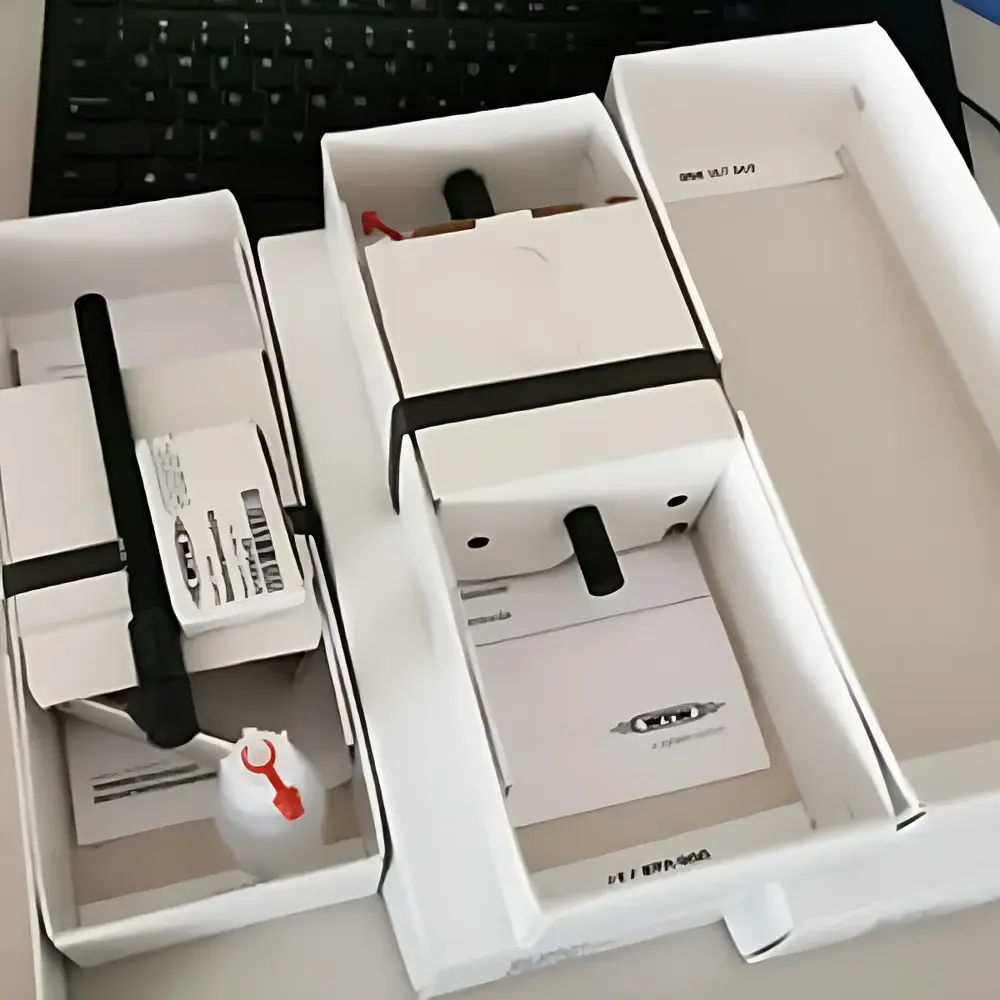
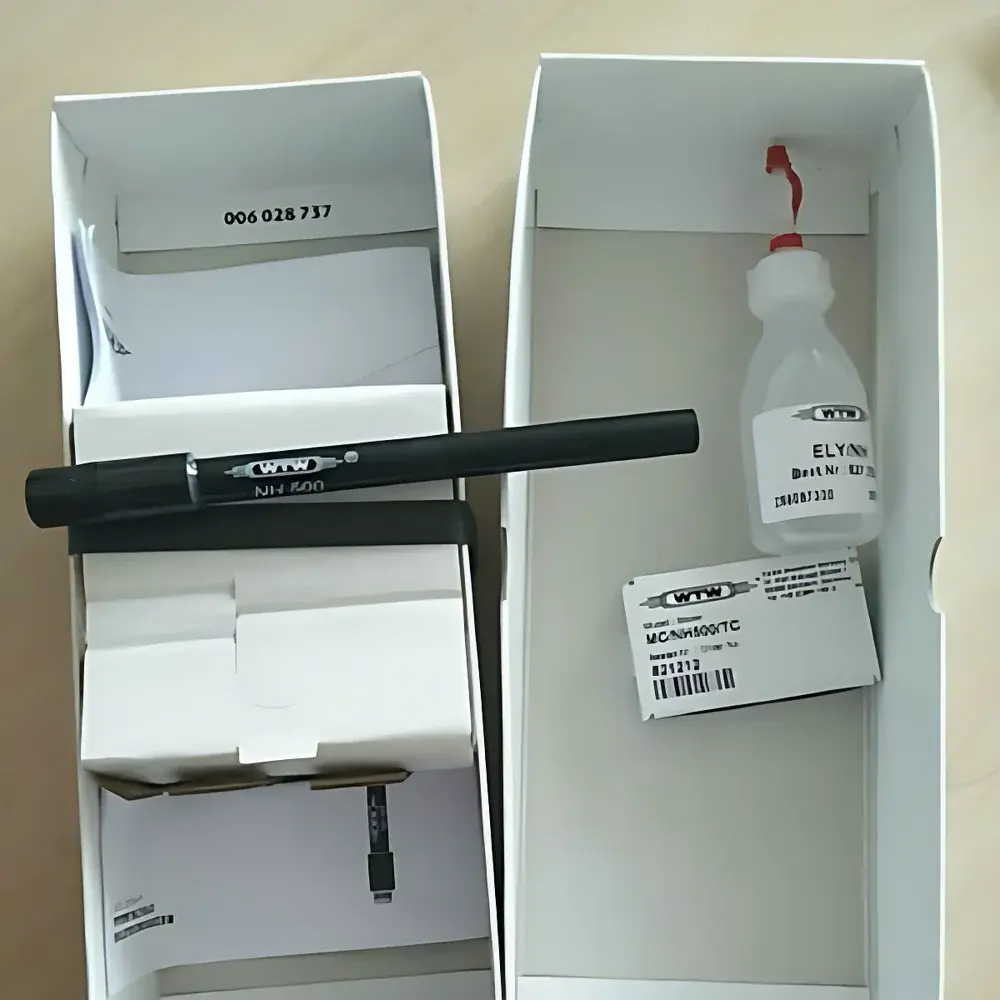
WTW NH500/TC Ammonia-Nitrogen Ion-Selective Electrode (Model 821210)
| [Brand | WTW |
|---|---|
| Origin | Germany |
| Model | 821210 |
| Instrument Type | Online |
| Measurement Principle | Gas-Sensing Ion-Selective Electrode (ISE) |
| Range | NH₄⁺–N: 0.1–1000 mg/L |
| Accuracy | ±5% of reading |
| Detection Limit | 0.1 mg/L NH₄⁺–N |
| Response Time | <3 minutes |
| Operation Mode | Continuous online monitoring |
| Compliance | Designed for integration with WTW TresCon®+ OA110 and TresCon® UNO A110 analyzers] |
Overview
The WTW NH500/TC Ammonia-Nitrogen Ion-Selective Electrode (Order No. 821210) is a high-stability, gas-diffusion-based electrochemical sensor engineered for continuous, real-time quantification of ammonium nitrogen (NH₄⁺–N) in aqueous environmental matrices. It operates on the principle of selective ammonia gas (NH₃) permeation through a hydrophobic microporous membrane, followed by pH-dependent potentiometric detection within an internal buffered electrolyte solution. When sample alkalinity is adjusted—typically via addition of NaOH—the equilibrium NH₄⁺ + OH⁻ ⇌ NH₃↑ + H₂O shifts to liberate free ammonia, which diffuses across the membrane and alters the pH of the internal reference solution. This pH shift is measured by a pH-sensitive glass electrode integrated into the sensor assembly, enabling direct, linear correlation to NH₄⁺–N concentration. The NH500/TC is not a standalone analyzer but a core sensing module designed exclusively for seamless integration into WTW’s TresCon®+ OA110 and TresCon® UNO A110 online ammonia analyzers—systems widely deployed in municipal wastewater treatment plants, industrial effluent monitoring stations, and surface water quality networks where regulatory compliance and process control demand long-term drift stability and low-maintenance operation.
Key Features
- Gas-sensing ISE architecture with integrated pH electrode and temperature compensation (TC), ensuring robust performance across variable ambient and sample temperatures
- Hydrophobic polytetrafluoroethylene (PTFE) membrane optimized for selective NH₃ diffusion while rejecting interfering ions (e.g., Ca²⁺, Mg²⁺, Cl⁻) and particulates
- Factory-calibrated sensor head with traceable documentation supporting ISO/IEC 17025-aligned calibration verification protocols
- Modular design compatible with WTW’s TresCon® platform: supports both three-module (TresCon®+ OA110) and single-module (TresCon® UNO A110) configurations
- Low maintenance interval: typical membrane replacement every 6–12 months under continuous operation; electrolyte refill recommended every 3–6 months depending on sample matrix and flow rate
- IP68-rated housing for submersible or flow-cell installation in wet-process environments
Sample Compatibility & Compliance
The NH500/TC electrode is validated for use in raw sewage, secondary effluent, activated sludge supernatant, and surface waters with turbidity ≤ 100 NTU and suspended solids ≤ 150 mg/L. It is not recommended for highly sulfide-rich (H₂S > 0.5 mg/L), high-oil-content, or strongly oxidizing (e.g., chlorine residual > 0.3 mg/L) samples without upstream conditioning. The sensor complies with measurement principles referenced in EN ISO 14911 (water quality — determination of ammonium — ion-selective electrode method) and supports data integrity requirements aligned with EPA Method 350.1 and ASTM D1426-15. When deployed within a fully configured TresCon® system, the complete analyzer meets IEC 61508 SIL 2 functional safety requirements for critical process monitoring and satisfies audit-trail and electronic signature provisions per FDA 21 CFR Part 11 when paired with WTW LabX® or TresCon® Control Center software.
Software & Data Management
The NH500/TC functions as a calibrated transducer within the TresCon® ecosystem, transmitting analog (4–20 mA) and digital (RS-485 Modbus RTU) output signals to the host analyzer’s embedded controller. All calibration events—including zero/span checks, slope verification, and membrane/electrolyte status logging—are timestamped and stored locally with ≥12 months of compressed trend history. Remote diagnostics, firmware updates, and alarm configuration (e.g., high/low limits, membrane clogging warning, electrolyte depletion alert) are managed via WTW’s web-based TresCon® Control Center interface. Raw sensor data and QA/QC metadata export in CSV or XML format supports integration with SCADA, LIMS, and enterprise environmental data platforms. Audit trails include user ID, action type, timestamp, and pre/post-change parameter values—fully compliant with GLP and GMP documentation standards.
Applications
- Real-time nitrification/denitrification process control in biological nutrient removal (BNR) systems
- Effluent compliance monitoring at discharge points subject to EU Urban Wastewater Treatment Directive (91/271/EEC) or US Clean Water Act NPDES permits
- Early-warning detection of ammonia breakthrough in drinking water distribution networks following chloramination
- Monitoring of landfill leachate collection systems and agricultural runoff basins
- Research-grade longitudinal studies of nitrogen cycling in constructed wetlands and receiving waters
FAQ
What is the difference between NH₄⁺–N and total ammonia (NH₃ + NH₄⁺)?
NH₄⁺–N refers specifically to the nitrogen mass contribution from the ammonium ion (NH₄⁺), reported in mg/L as N. Total ammonia includes both unionized NH₃ and ionized NH₄⁺; the NH500/TC measures only NH₄⁺–N, as the alkaline conversion step ensures near-complete liberation of NH₃ from NH₄⁺ under controlled pH.
Can the NH500/TC be used in seawater or brackish water?
No. High ionic strength (>20 mS/cm) and chloride interference significantly affect membrane permeability and internal reference stability. For marine applications, optical (UV absorption) or distillation-based methods are recommended.
How often must the membrane and electrolyte be replaced?
Under typical wastewater conditions (20–25°C, pH 12–13 during measurement), replace the membrane every 6 months and replenish the internal electrolyte every 3 months. Replacement intervals extend in clean, low-fouling matrices such as treated effluent.
Is factory calibration traceable to national standards?
Yes. Each NH500/TC sensor is calibrated against WTW-certified NH₄⁺–N reference standards traceable to PTB (Physikalisch-Technische Bundesanstalt), Germany’s national metrology institute.
Does the electrode require temperature compensation during operation?
Yes. The integrated TC element provides automatic temperature correction across 0–40°C, ensuring measurement accuracy unaffected by seasonal or diurnal thermal variation in field installations.







