
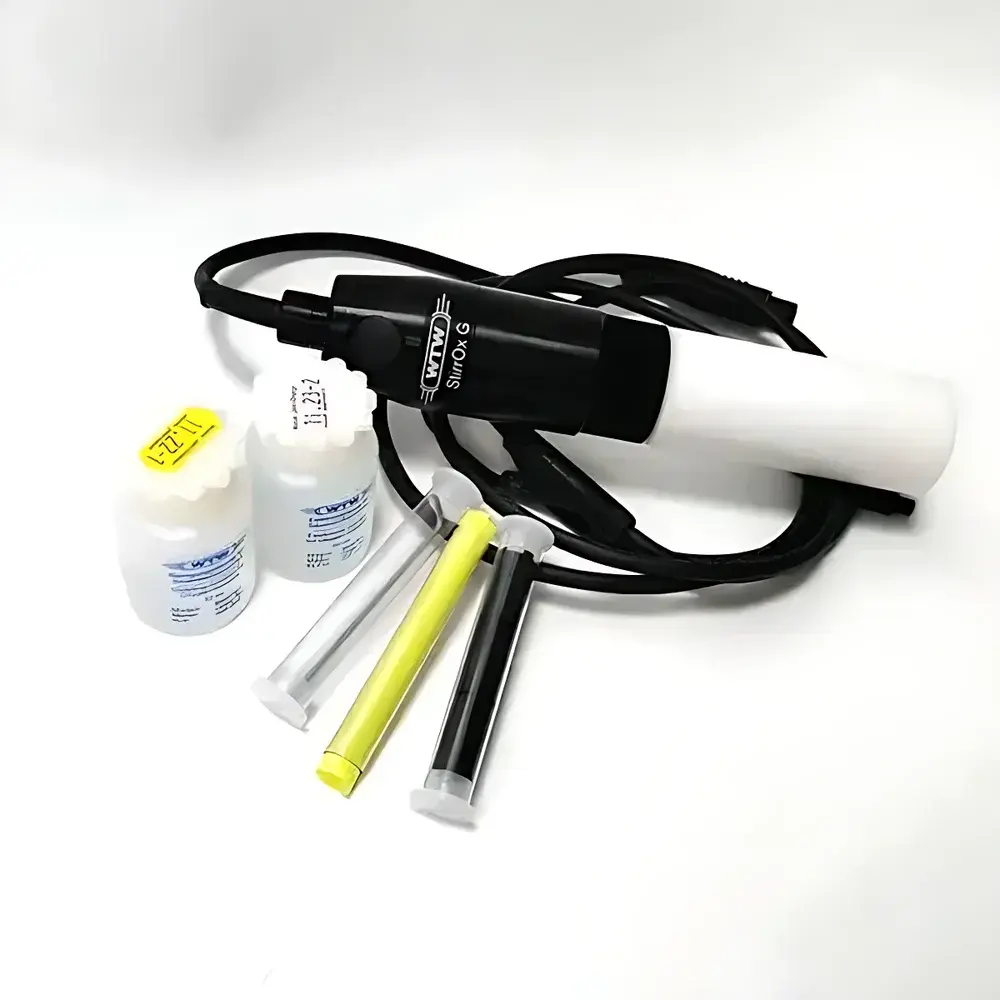
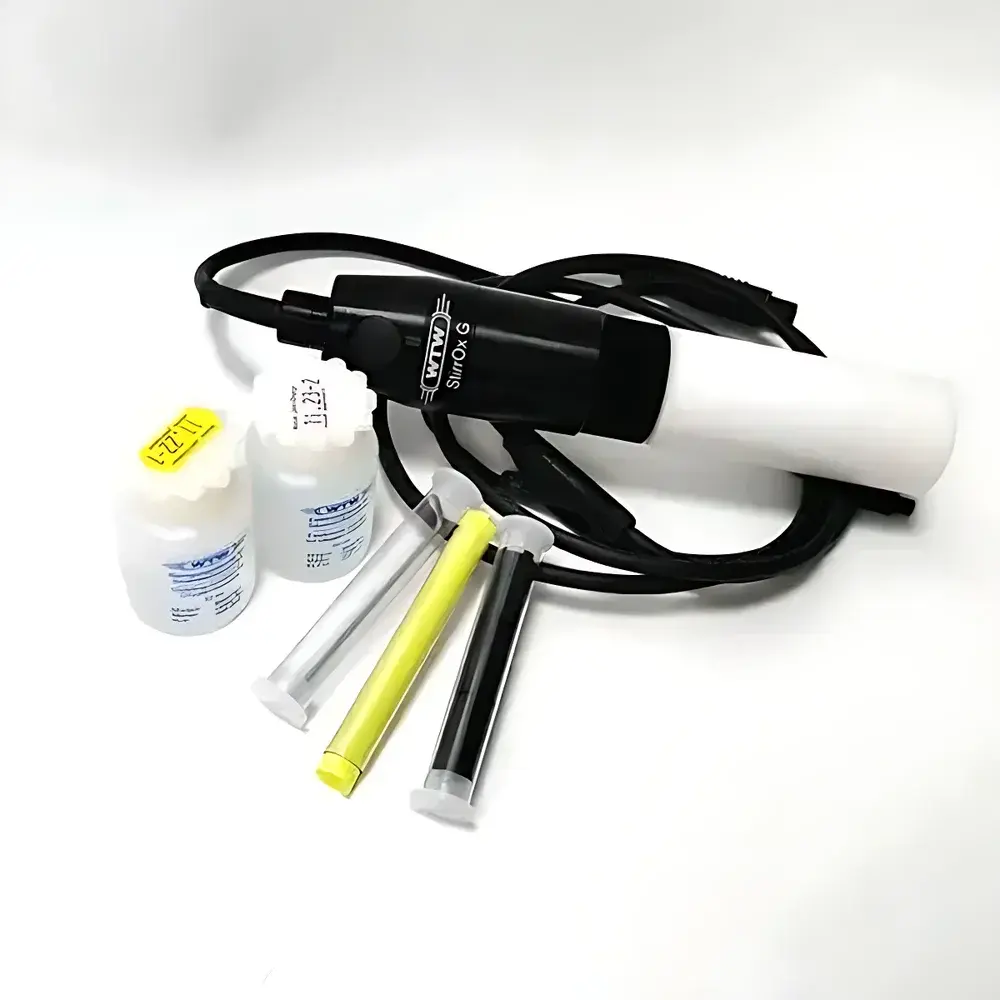
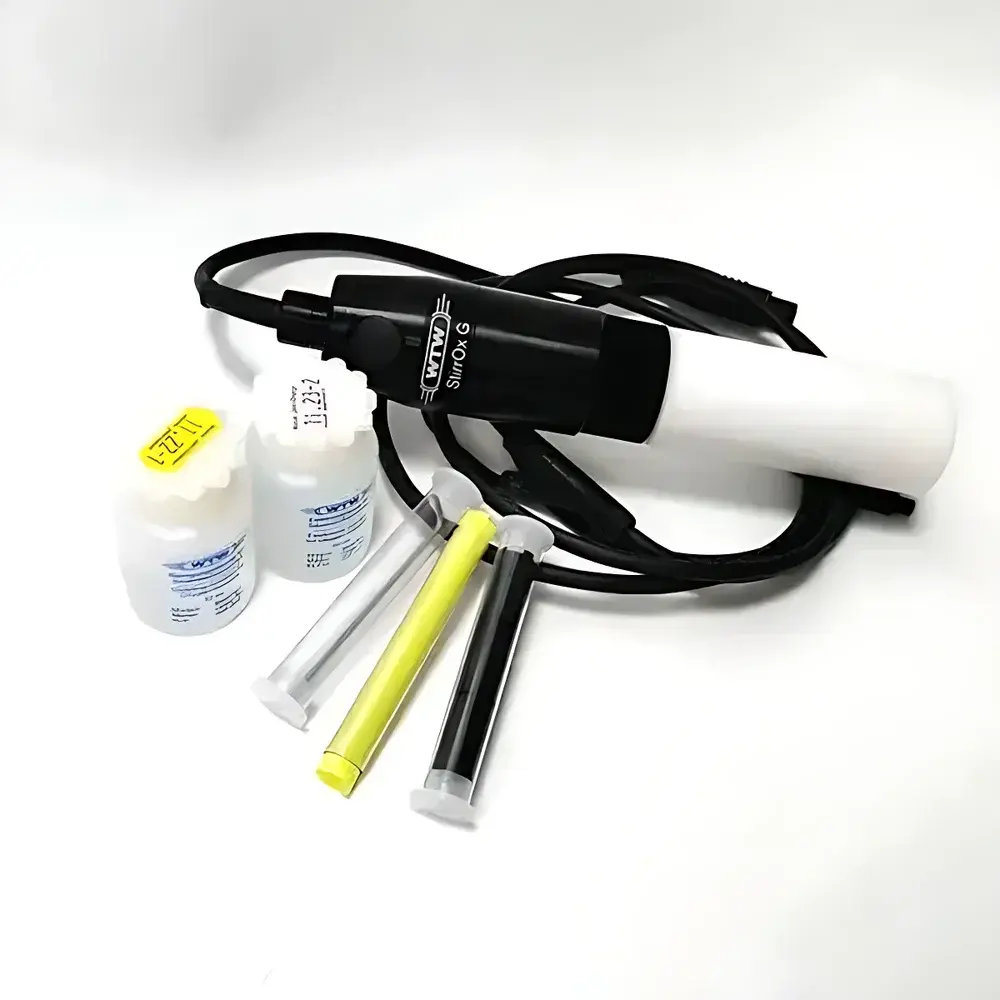
WTW StirrOx® G Self-Stirring Dissolved Oxygen Electrode
| Brand | WTW |
|---|---|
| Origin | Shanghai, China |
| Manufacturer Type | Authorized Distributor |
| Product Origin | Domestic (China-assembled under WTW/Xylem specifications) |
| Model | StirrOx® G |
| Instrument Type | Portable DO Sensor |
| Measurement Principle | Polarographic (Clark-type) Electrochemical Probe |
| Range | 0.00–90 mg/L O₂ |
| Accuracy | ±0.5% of reading |
| Repeatability | ≤±0.5% |
| Detection Limit | 0.01 mg/L |
| Response Time (t₉₀) | <60 s (in stirred water at 20 °C) |
| Operating Temperature | 0–40 °C |
| Membrane Material | PTFE |
| Electrolyte | KCl-based aqueous solution |
| Connector | WTW-standard 6-pin DIN |
Overview
The WTW StirrOx® G is a self-stirring polarographic dissolved oxygen (DO) electrode engineered for high-precision, trace-level DO quantification in biochemical oxygen demand (BOD) testing and routine water quality analysis. Unlike conventional Clark-type electrodes that require external sample agitation or controlled flow rates to overcome diffusion-limited boundary layer effects, the StirrOx® G integrates a miniaturized, brushless DC motor-driven stirrer directly within its probe body. This active mixing mechanism continuously disrupts the stagnant Nernst diffusion layer adjacent to the gas-permeable membrane—ensuring dynamic replenishment of dissolved O₂ at the cathode surface. As a result, the sensor delivers stable current output proportional to bulk-phase oxygen concentration without dependence on external flow velocity, temperature-induced convection, or manual stirring. Its slender, tapered geometry (diameter ≤12 mm, length ≈180 mm) conforms precisely to standard BOD bottles—including DIN 38409 H27-compliant Karlsruhe and Winkler bottles—enabling direct, non-invasive measurement of initial and final DO concentrations during 5-day incubation protocols.
Key Features
- Integrated self-stirring mechanism eliminates boundary layer artifacts and ensures measurement independence from sample flow rate or vessel geometry
- No pre-polarization required: ready-to-measure operation within seconds after membrane hydration
- Optimized for BOD5 compliance testing per ISO 5815-1:2019, ASTM D888, and EPA Method 4500-O G
- PTFE membrane with defined oxygen permeability provides long-term signal stability and resistance to fouling in turbid or organic-rich samples
- Robust housing constructed from chemically resistant POM (polyoxymethylene) and borosilicate glass; IP67-rated connector interface
- Compatible with WTW MultiLine IDS, Oxi 320/330, and IQ Sensor Net platforms via standardized 6-pin DIN connection
Sample Compatibility & Compliance
The StirrOx® G operates reliably across freshwater, wastewater, activated sludge supernatants, and low-conductivity surface waters (≥50 µS/cm). Its self-stirring design mitigates errors caused by biofilm accumulation or particulate settling—common challenges in prolonged BOD incubations. The electrode meets metrological requirements for regulatory reporting under ISO/IEC 17025-accredited laboratories and supports GLP-compliant data integrity when paired with WTW’s IQ-Lab software. Calibration verification against air-saturated water (OxiCal-ST storage/calibration vessel) satisfies traceability requirements per ISO 17034 and fulfills instrument qualification criteria outlined in USP and EP 2.2.43.
Software & Data Management
When connected to WTW MultiLine IDS meters or IQ Sensor Net gateways, the StirrOx® G enables automatic timestamped DO logging, real-time trend visualization, and export of CSV/Excel-compatible datasets. Firmware updates and sensor diagnostics—including membrane integrity checks and electrolyte depletion warnings—are accessible via WTW LabX® PC software. Audit trails, user access controls, and electronic signatures align with FDA 21 CFR Part 11 requirements for regulated environments. All raw current signals (nA range), temperature-compensated DO values (mg/L and % saturation), and calibration history are stored with immutable metadata.
Applications
- Standard 5-day BOD5 determination in municipal and industrial wastewater treatment plants
- Respirometry studies in environmental microbiology and ecotoxicology labs
- Quality control of drinking water distribution systems and reservoir monitoring
- Validation of aeration basin performance and oxygen transfer efficiency (OTE)
- Research-grade DO profiling in microcosm and mesocosm experiments
FAQ
Does the StirrOx® G require polarization time before use?
No—unlike traditional polarographic electrodes, it achieves electrochemical equilibrium immediately upon immersion due to continuous cathode surface renewal.
How often should the membrane and electrolyte be replaced?
Typical service interval is every 6–12 weeks under daily BOD testing conditions; replacement frequency increases in high-fouling matrices such as activated sludge.
Can it be used in low-ionic-strength samples like rainwater or distilled water?
Yes, provided conductivity exceeds 50 µS/cm; for ultra-pure water applications, use with an integrated temperature-conductivity compensation module is recommended.
Is the stirrer speed adjustable?
No—the motor operates at a fixed, optimized rotational speed (≈600 rpm) calibrated to maximize signal stability while minimizing power consumption and mechanical wear.
What standards does its calibration protocol support?
Air-saturation calibration using OxiCal-ST complies with ISO 5814:2012, DIN EN 25814, and CLSI EP10-A3 verification guidelines.







