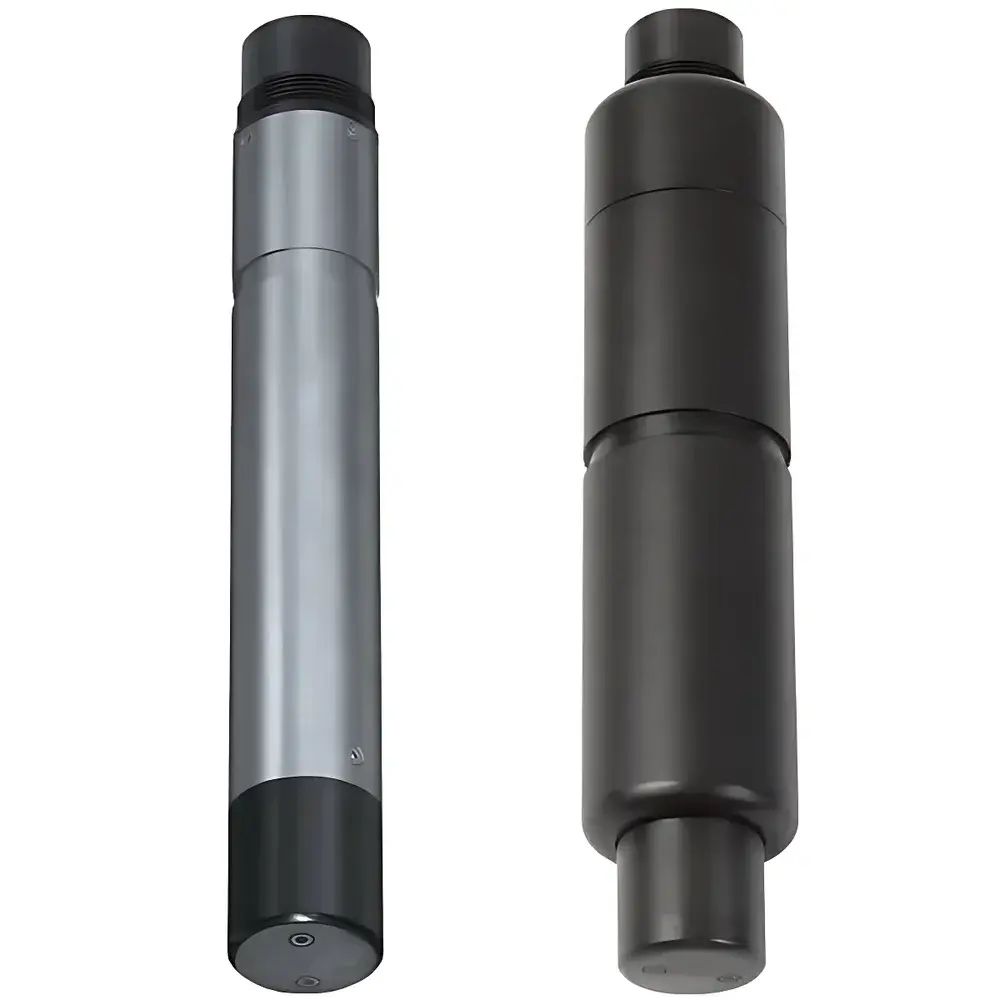
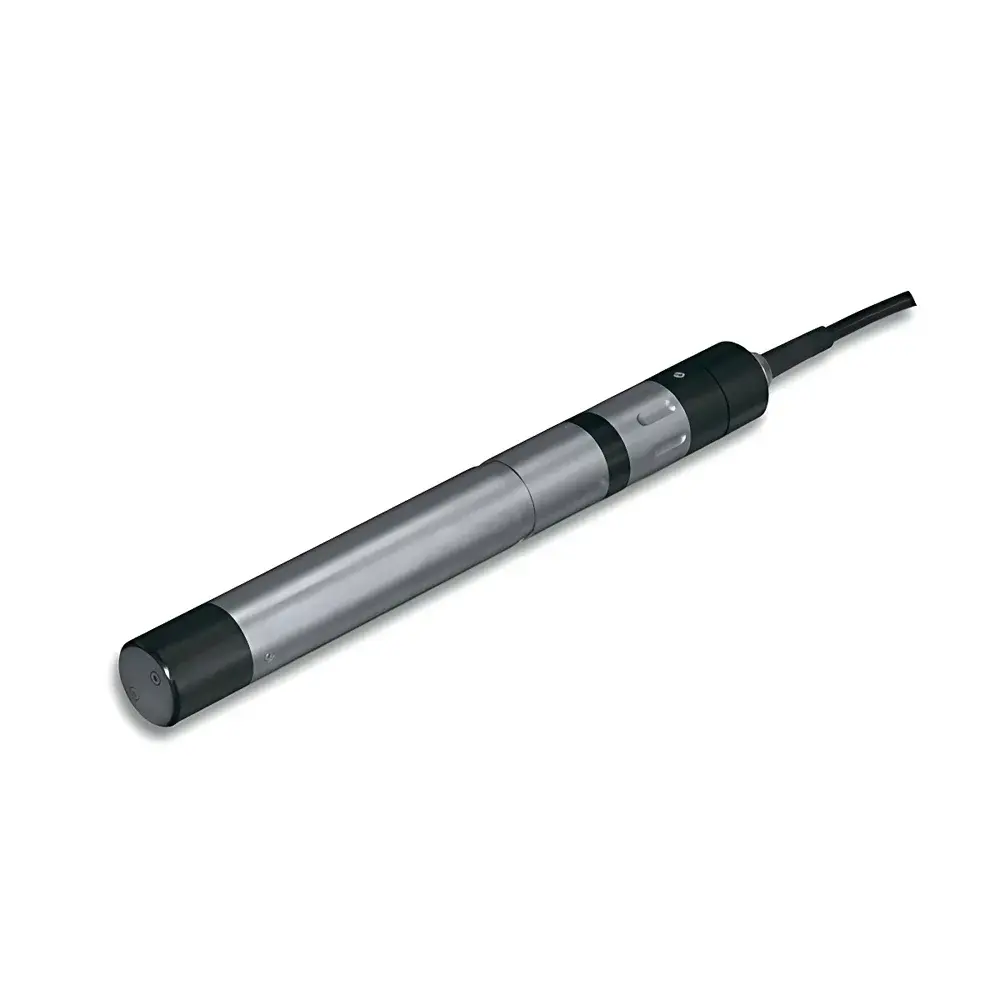
WTW TetraCon® 700 IQ Online Conductivity Sensor
| Brand | WTW |
|---|---|
| Origin | Germany |
| Model | TetraCon® 700 IQ |
| Measurement Principle | Four-Electrode Conductivity |
| Conductivity Range | 10 µS/cm to 500 mS/cm (up to 1000 mS/cm for SW variant) |
| Resolution | 0.01 µS/cm |
| Salinity Range | 0–70 PSU |
| TDS Range | 0–2000 mg/L |
| Response Time (t₉₀) | <60 s |
| Electrode Constant | Adjustable 0.826–1.008 cm⁻¹ (default K = 0.917 cm⁻¹ in free solution |
| Temperature Compensation | Integrated, -5 °C to +60 °C |
| Max. Pressure Rating | 10 bar (20 °C) |
| Accuracy | ±2% of reading (conductivity), ±0.1–0.2 PSU (salinity, depending on temperature range) |
Overview
The WTW TetraCon® 700 IQ is a high-performance, four-electrode online conductivity sensor engineered for continuous, stable measurement in demanding industrial and municipal water process environments. Unlike traditional two-electrode systems, the TetraCon® 700 IQ employs a true four-electrode (tetrapolar) configuration: two outer electrodes apply an alternating current, while two inner sensing electrodes measure the resulting voltage drop without drawing current. This design eliminates polarization effects—especially critical at high conductivity levels—and inherently compensates for electrode fouling, coating, or surface resistance changes. The sensor’s embedded microprocessor continuously monitors signal integrity and dynamically adjusts excitation voltage to maintain optimal signal-to-noise ratio, ensuring long-term stability and minimal drift in real-world installations such as wastewater treatment plants, desalination pre-treatment lines, and industrial cooling circuits.
Key Features
- Four-electrode measurement principle with active background compensation for fouling and polarization immunity
- Wide dynamic conductivity range: 10 µS/cm to 500 mS/cm (extendable to 1000 mS/cm for TetraCon® 700 IQ SW variant optimized for seawater and high-chloride effluents)
- Adjustable electrode constant (0.826–1.008 cm⁻¹) with factory-calibrated default values for both free-solution (K = 0.917 cm⁻¹) and flow-cell applications (K = 0.933 cm⁻¹)
- Integrated Pt1000 temperature sensor with automatic temperature compensation across -5 °C to +60 °C
- Robust stainless steel (1.4435/SS316L) housing rated to 10 bar at 20 °C, suitable for pressurized pipelines and open-channel installations
- Digital IQ interface (RS-485, Modbus RTU) enabling direct communication with WTW controllers (e.g., pHoenix, inoLab® Multi 9310 IDS) and third-party SCADA/DCS systems without external signal conditioning
- Optional analog output (4–20 mA) available via WTW-compatible adapter modules for legacy integration with controllers such as the 28× and 202 series
Sample Compatibility & Compliance
The TetraCon® 700 IQ is validated for use in raw water, activated sludge streams, secondary effluent, brackish influent, and seawater (SW variant). Its corrosion-resistant construction and non-polarizing electrode geometry ensure reliable operation in media containing suspended solids, biofilm precursors, or scaling ions (e.g., Ca²⁺, Mg²⁺, SO₄²⁻). The sensor meets IEC 60746-3 for electrochemical conductivity analyzers and complies with EN ISO 7888 for water quality—conductivity determination. When integrated into validated process control systems, it supports adherence to regulatory frameworks including EPA Method 120.1, ASTM D1125, and EU Directive 2000/60/EC (Water Framework Directive). For GMP or GLP environments, full audit trails—including calibration history, sensor diagnostics, and timestamped measurement logs—are retained when paired with WTW’s IDS-capable controllers supporting 21 CFR Part 11-compliant data handling.
Software & Data Management
The TetraCon® 700 IQ operates natively within WTW’s Intelligent Digital Sensor (IDS) ecosystem. Sensor-specific parameters—including calibration coefficients, temperature offset, electrode constant, and diagnostic thresholds—are stored onboard and automatically recognized upon connection. Configuration and diagnostics are performed via WTW’s inoLab® Software or directly through compatible controllers with touchscreen interfaces. Real-time diagnostics monitor electrode impedance, signal stability, and temperature deviation, triggering configurable alerts for maintenance planning. All measurements are time-stamped and traceable to NIST-traceable reference standards used during calibration. Data export supports CSV and XML formats for integration into LIMS or enterprise analytics platforms, with optional cloud synchronization via WTW’s myWTW portal for remote fleet monitoring.
Applications
- Municipal wastewater treatment: Continuous monitoring of influent conductivity for load balancing and bioreactor feed control
- Seawater desalination pre-treatment: Detection of brine leakage or membrane integrity loss in RO feed streams (TetraCon® 700 IQ SW)
- Power plant cooling water systems: Early warning of chloride ingress or condenser tube leakage
- Food & beverage processing: Sanitary rinse water verification and CIP solution concentration tracking
- Chemical manufacturing: Batch endpoint detection in neutralization or dilution processes
- Environmental monitoring stations: Long-term deployment in rivers, estuaries, and coastal zones requiring salinity (PSU) and TDS derivation
FAQ
What distinguishes the TetraCon® 700 IQ from two-electrode sensors?
It uses a four-electrode configuration that separates current injection from voltage sensing, eliminating polarization errors and enabling accurate high-conductivity measurement (>100 mS/cm) without electrode passivation.
Can the TetraCon® 700 IQ be used in seawater?
Yes—the SW variant is specifically calibrated and constructed for high-chloride environments (Cl⁻ > 500 mg/L) and provides extended range up to 1000 mS/cm with salinity output in PSU.
Is temperature compensation automatic?
Yes—an integrated Pt1000 sensor provides continuous, real-time temperature measurement, and the firmware applies linear or non-linear (EN 27888) compensation algorithms per user selection.
How is calibration performed?
Calibration is conducted using certified KCl standard solutions (e.g., 0.01 mol/L, 0.1 mol/L) and stored digitally in the sensor memory. Multi-point calibration is supported via WTW controllers to correct for nonlinearity across the full range.
Does the sensor support predictive maintenance?
Yes—onboard diagnostics track electrode impedance trends, signal noise, and temperature correlation anomalies, enabling condition-based service scheduling rather than fixed-interval replacement.