X-imaging Intelligent Unmanned Water Quality Laboratory System
| Brand | X-imaging |
|---|---|
| Origin | Shanghai, China |
| Manufacturer Type | Original Equipment Manufacturer (OEM) |
| Country of Origin | China |
| Model | Intelligent Unmanned Water Quality Laboratory System |
| Pricing | Available upon Request |
Overview
The X-imaging Intelligent Unmanned Water Quality Laboratory System is an integrated, modular automation platform engineered for high-reliability, end-to-end water quality analysis in regulatory and environmental monitoring laboratories. Built upon a Couette-flow-compatible liquid handling architecture and synchronized robotic orchestration, the system implements standardized physicochemical and spectrophotometric measurement principles—including UV-Vis absorbance (for ammonia nitrogen, total phosphorus, and total nitrogen), permanganate index titrimetry, and catalytic digestion–based oxidation assays—to comply with national and international water testing protocols. Its core function is to replace manual sample preparation, reagent addition, digestion, centrifugation, filtration, and instrumental analysis with deterministic, repeatable, and auditable robotic workflows—enabling continuous 24/7 operation without human intervention at the analytical stage.
Key Features
- Full-process automation covering sample intake, auto-aliquoting, high-pressure microwave-assisted digestion (up to 180 °C, 20 bar), centrifugation (max. 5,000 × g), gravimetric reagent dispensing, and post-analysis glassware cleaning & drying
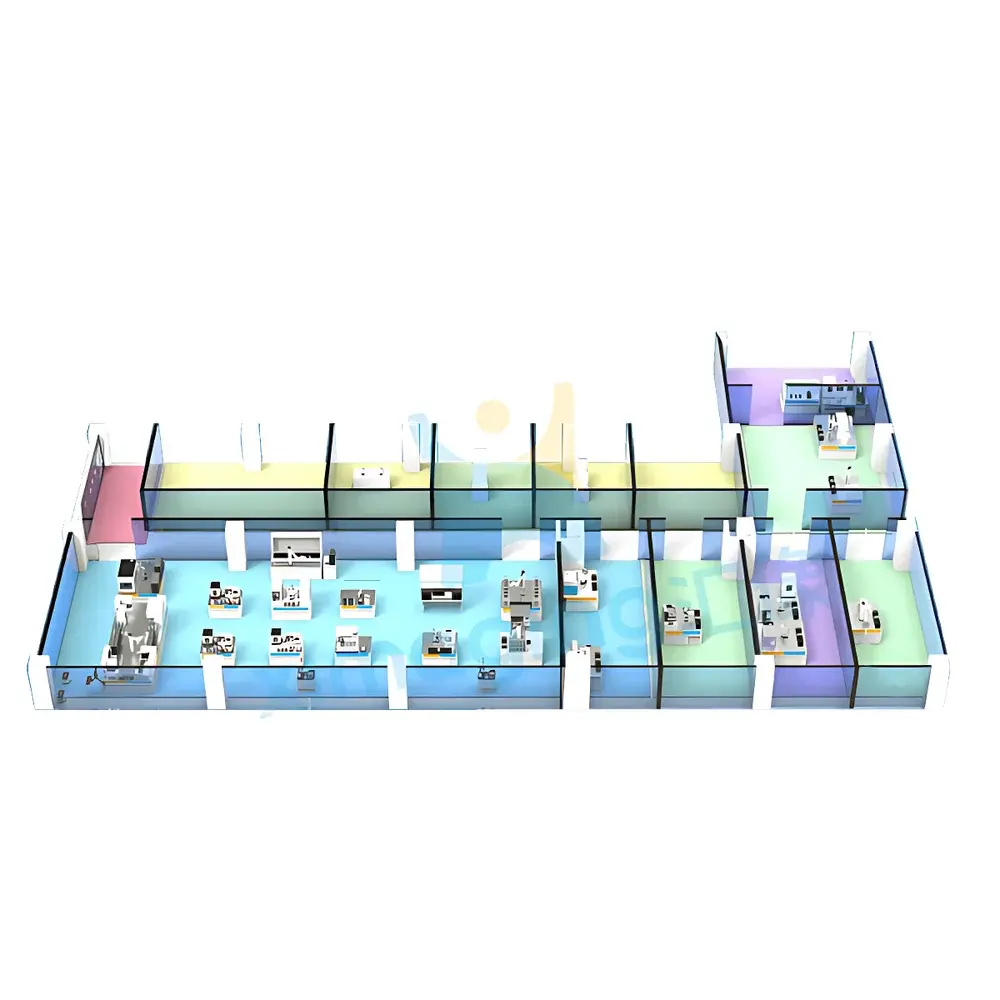
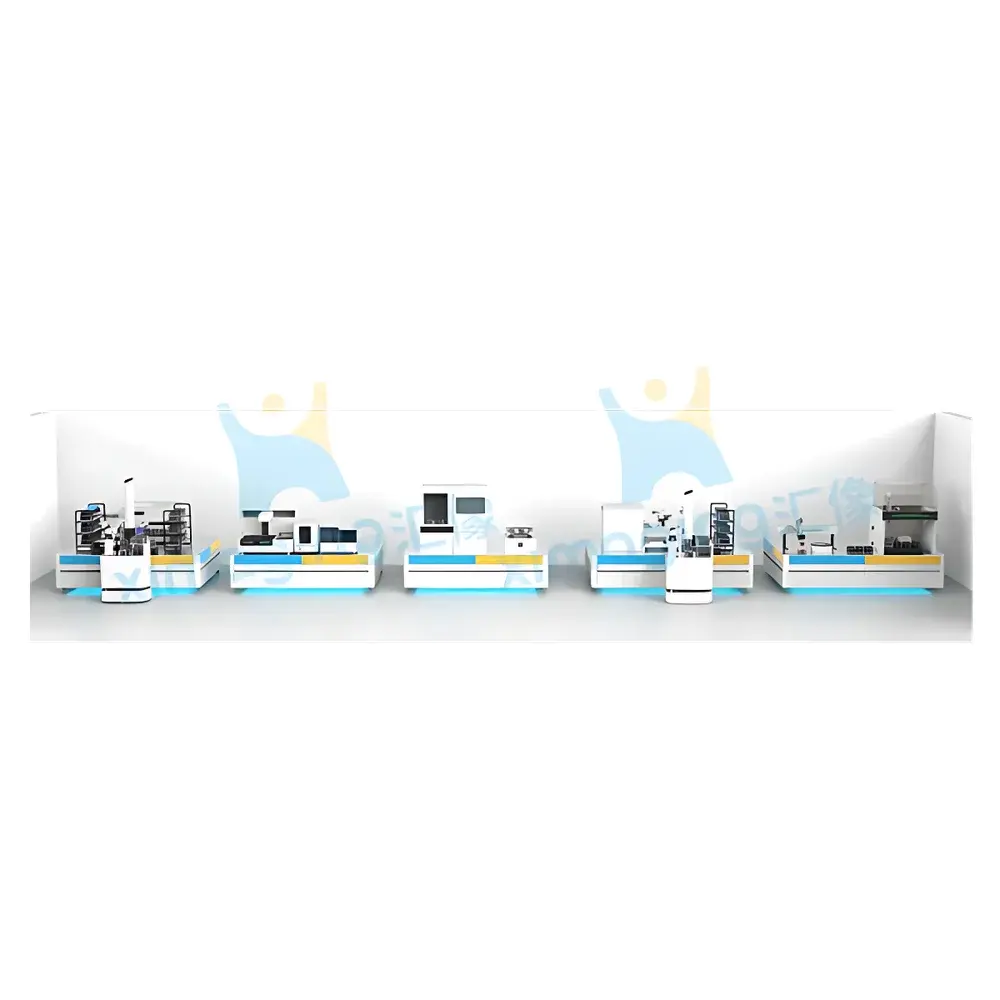
- Modular functional islands—Sample Ingestion Island, Pre-treatment Island, Digestion & Reaction Island, Analytical Instrument Interface Bay, Waste Management & Reclamation Zone—designed for mechanical decoupling, fault isolation, and serviceability
- Integrated vision-guided robotic arms with sub-millimeter positioning repeatability (±0.1 mm) and barcode/QR-code-based sample tube identification compliant with ISO/IEC 15420
- Digital twin synchronization enabling real-time status mirroring of hardware states (e.g., digestion vessel temperature, rotor speed, photometer lamp intensity) within a centralized SCADA interface
- Onboard environmental monitoring: ambient temperature (±0.5 °C), humidity (±3% RH), and particulate count (ISO Class 7 cleanroom-grade air handling)
Sample Compatibility & Compliance
The system supports aqueous matrices including drinking water (per GB 5750–2022), surface water (per GB 3838–2002), groundwater, wastewater effluent, and treated municipal water. It accommodates sample volumes from 10 mL to 500 mL in standard polypropylene or borosilicate glass vials (16–28 mm OD). All analytical modules are validated per ISO/IEC 17025:2017 requirements for method verification, including limit of detection (LOD), limit of quantification (LOQ), linearity (R² ≥ 0.999), and inter-day precision (RSD ≤ 5%). The platform is preconfigured to meet data integrity expectations under GLP and GMP environments, with full audit trail logging (user actions, instrument events, calibration history) satisfying FDA 21 CFR Part 11 electronic record requirements.
Software & Data Management
The laboratory operates under X-LabOS™ v4.2—a role-based, web-accessible LIMS-integrated control suite supporting TLS 1.3 encryption, SAML 2.0 single sign-on, and structured data export in ASTM E1384-compliant XML and CSV formats. All raw spectra, chromatograms (where interfaced with HPLC/GC modules), and calculated results are timestamped, digitally signed, and stored with immutable hash verification. Automated report generation includes QC flagging (e.g., spike recovery < 85%, blank signal > 3σ), statistical process control (SPC) charts, and compliance summaries aligned with China’s Ministry of Ecology and Environment (MEE) reporting templates. Data retention policies support configurable archiving (local NAS + optional AWS S3 backup) with automated purging based on retention schedules.
Applications
- Centralized environmental monitoring stations requiring 200+ samples/day throughput during flood season or pollution incident response
- Drinking water utilities performing routine compliance testing across 36 parameters—including turbidity, CODMn, NH3-N, TP, TN, fluoride, nitrate, heavy metals (via ICP-MS integration), and microbiological surrogates (ATP-based)
- Research institutions conducting long-term trend analysis with trace-level reproducibility (CV < 2.8% for repeated NH3-N measurements over 72 h)
- Third-party testing labs seeking CNAS accreditation with demonstrable reduction in analyst-dependent variability and human transcription error
FAQ
Does the system support integration with existing HPLC or ICP-MS instruments?
Yes—via RS-232, Ethernet/IP, or OPC UA protocols; hardware docking interfaces are available for Shimadzu, Agilent, Thermo Fisher, and PerkinElmer platforms.
What is the mean time between failures (MTBF) for the robotic handling subsystem?
Based on accelerated life testing, MTBF exceeds 12,500 operational hours under continuous 24/7 duty cycle conditions.
Can the system be validated for ISO 17025 accreditation?
Yes—the platform includes IQ/OQ/PQ documentation packages, calibration traceability to NIM (National Institute of Metrology, China), and full validation support services.
Is remote diagnostics and firmware update capability available?
Yes—through secure outbound HTTPS tunneling with zero-trust authentication; updates are staged, version-signed, and rollback-enabled.
How is waste stream segregation managed for hazardous digestates?
Dual-compartment waste collection with pH-triggered neutralization, heavy metal chelation, and segregated storage for acid/alkali/organic fractions per GB 8978–1996 discharge standards.
Related Products