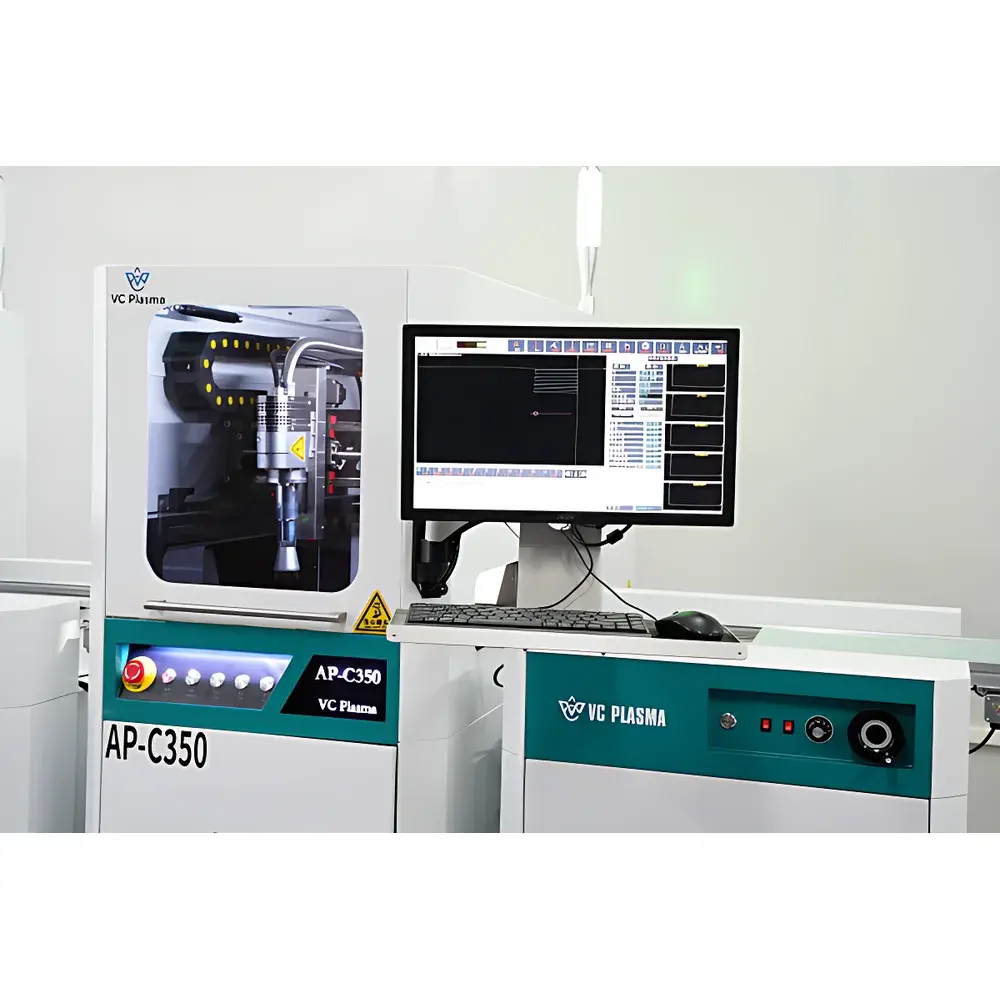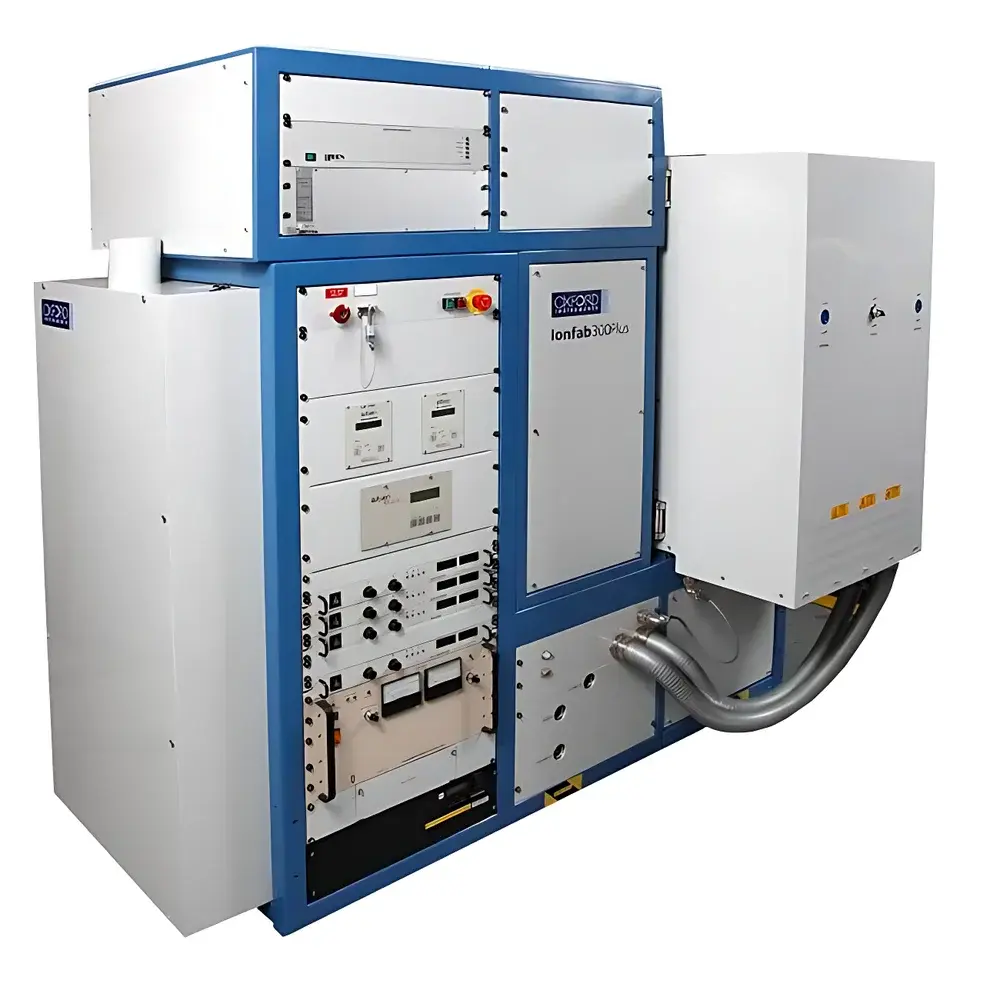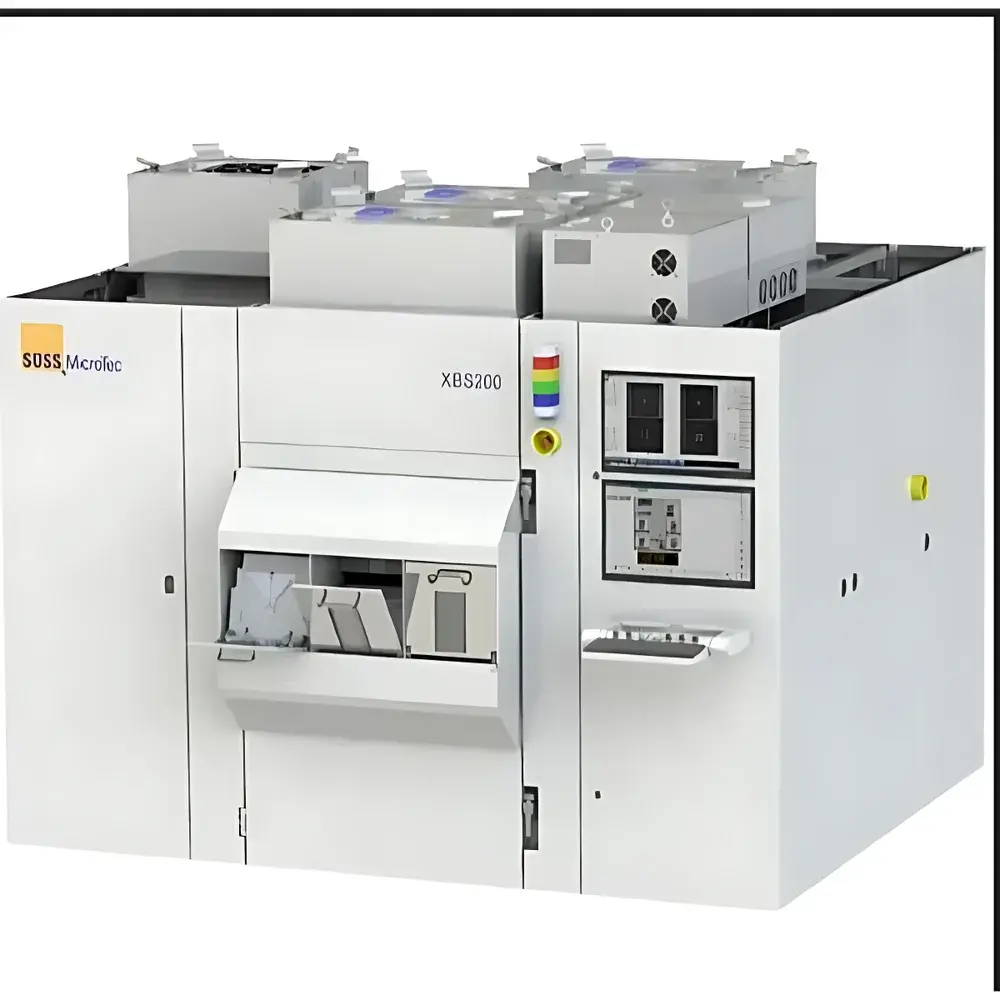
XBS200 Wafer Bonding System by SUSS MicroTec
| Brand | SUSS MicroTec |
|---|---|
| Origin | Germany |
| Model | XBS200 |
| Maximum Wafer Size | 200 mm |
| Bonding Force | up to 100 kN |
| Temperature Range | up to 550 °C |
| Vacuum Chamber Pressure Range | 5×10⁻⁵ mbar to 3 bar |
| Heating/Cooling Rate | up to 40 K/min (heating), up to 30 K/min (cooling) |
| Bonding Force Repeatability | < 2% |
| Temperature Uniformity | < 1% |
| Process Control | Programmable ramp/soak profiles with independent pressure, temperature, and force regulation |
Overview
The XBS200 Wafer Bonding System is a high-precision, modular bonding platform engineered by SUSS MicroTec for advanced wafer-level processing in semiconductor, MEMS, LED, and 3D heterogeneous integration manufacturing. Based on controlled thermocompression, anodic, or adhesive bonding principles, the system delivers repeatable, vacuum-compatible, and temperature-stable bonding across 200 mm wafers. Its core architecture integrates a rigid mechanical frame, a high-stiffness force application mechanism, and a fully sealed bond chamber capable of ultra-high vacuum (5×10⁻⁵ mbar) through positive pressure (up to 3 bar), enabling both low-temperature polymer bonding and high-temperature fusion processes. Designed for production environments, the XBS200 supports seamless integration into automated fab material handling systems and meets stringent requirements for process stability, tool uptime, and cross-lot reproducibility.
Key Features
- Modular platform architecture supporting multiple bonding technologies — including adhesive (epoxy, BCB, polyimide, UV-curable resins), thermocompression, and anodic bonding — without hardware reconfiguration.
- High-precision optical pre-alignment subsystem with integrated CCD cameras and motorized stage positioning, delivering sub-micron overlay accuracy prior to chamber sealing.
- Programmable multi-zone thermal control with independent heating/cooling ramps (up to 40 K/min heating, 30 K/min cooling) and real-time closed-loop temperature feedback across top/bottom chucks.
- Dual-axis force actuation system with load cell-based closed-loop control, ensuring bonding force repeatability better than ±2% across full 100 kN range.
- Full-vacuum bond chamber with leak-tight metal gasket sealing, bake-out capability, and in-situ pressure monitoring from UHV to overpressure conditions.
- Optional ID reader integration (RFID or barcode) for traceable wafer tracking aligned with SEMI E142 and factory MES protocols.
- Automated cycle scheduler with yield-optimized dispatch logic, enabling unattended 24/7 operation while maintaining consistent thermal-mechanical dwell timing across sequential lots.
Sample Compatibility & Compliance
The XBS200 accommodates standard 200 mm silicon, SOI, glass, sapphire, and compound semiconductor wafers — including patterned, thinned, or temporary-bonded substrates. It supports both front-to-front and front-to-back bonding configurations with customizable chuck surface coatings (e.g., electrostatic, ceramic, or quartz) for low-particle, non-damaging handling. The system complies with CE machinery directive 2006/42/EC, electromagnetic compatibility (EMC) Directive 2014/30/EU, and is designed to meet ISO 14644-1 Class 5 cleanroom operational standards when installed with appropriate HVAC interfaces. All software logs — including parameter sets, alarm history, chamber pressure/temperature/force traces, and operator actions — are timestamped and structured to support GLP/GMP audit readiness per FDA 21 CFR Part 11 requirements when paired with validated SUSS ProcessSuite software.
Software & Data Management
Controlled via SUSS ProcessSuite — a Windows-based, role-based HMI with intuitive recipe management, real-time graphing, and event-driven alarm handling. Each bonding sequence is stored as a version-controlled XML recipe containing full parameter definitions (ramp rates, setpoints, dwell times, pressure profiles), user permissions, and calibration metadata. Raw sensor data (force, temperature, pressure, position) is logged at ≥10 Hz and exportable in CSV or HDF5 format for offline SPC analysis. Audit trails record all critical actions (recipe edits, manual overrides, maintenance events) with user ID, timestamp, and before/after values. Optional OPC UA server enables integration with third-party MES/SCADA platforms for centralized equipment monitoring and predictive maintenance workflows.
Applications
- MEMS packaging: Hermetic encapsulation of inertial sensors, microphones, and resonators using glass frit or metal eutectic bonding.
- Advanced 3D integration: TSV-enabled die stacking, interposer bonding, and hybrid bonding R&D with sub-µm alignment tolerance.
- LED manufacturing: Sapphire-on-silicon or GaN-on-silicon wafer bonding for cost-effective epitaxial lift-off and transfer printing.
- Micro-optics & photonics: Alignment and bonding of silicon photonics wafers with grating couplers, waveguides, and integrated lasers.
- Power device fabrication: SiC and GaN device wafer bonding for high-voltage, high-thermal-conductivity module assembly.
- Research & development: Process window exploration for novel bonding chemistries (e.g., nano-adhesives, self-assembled monolayers) under tightly controlled thermal-mechanical-vacuum conditions.
FAQ
What wafer sizes does the XBS200 support?
The system is optimized for 200 mm wafers; manual or semi-automated adaptation for smaller formats (100 mm, 150 mm) is possible with chuck inserts, but not certified for production use.
Is the XBS200 compatible with SUSS’s alignment tools such as MA/BA series?
Yes — the XBS200 shares common optical and metrology interfaces with SUSS mask aligners and bond aligners, enabling direct recipe transfer and overlay calibration traceability.
Can the system perform low-temperature adhesive bonding below 100 °C?
Yes — the thermal control system supports stable operation from ambient to 550 °C, with fine-resolution ramp control down to 0.1 K/min, making it suitable for UV-curable adhesives, dry film laminates, and BCB curing profiles.
Does the XBS200 include remote diagnostics or service connectivity?
Standard configuration includes Ethernet-based remote access with TLS-secured VNC and diagnostic port forwarding; optional 24/7 SUSS Remote Support subscription provides proactive health monitoring and firmware update deployment.
What vacuum pumping configuration is used?
A dual-stage system comprising a turbomolecular pump backed by a dry scroll pump ensures rapid pump-down to 5×10⁻⁵ mbar and maintains base pressure stability during extended bonding cycles.