
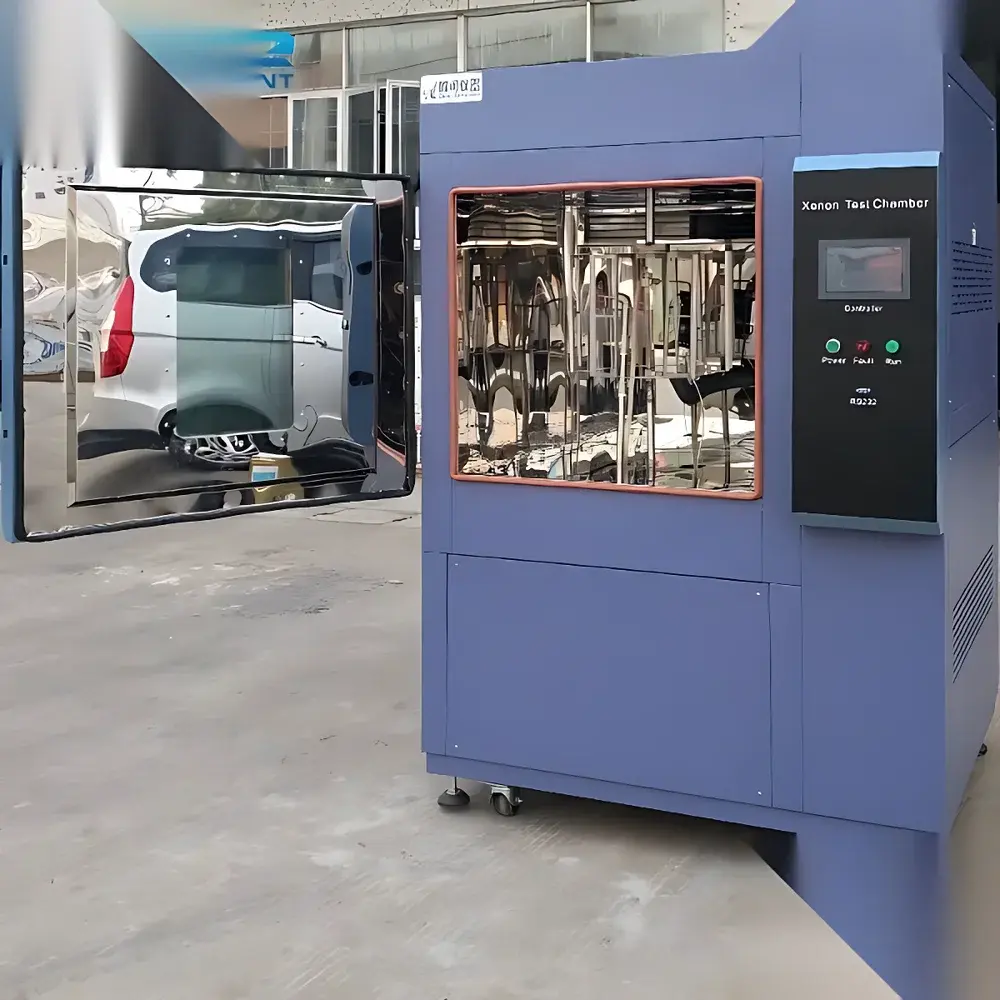
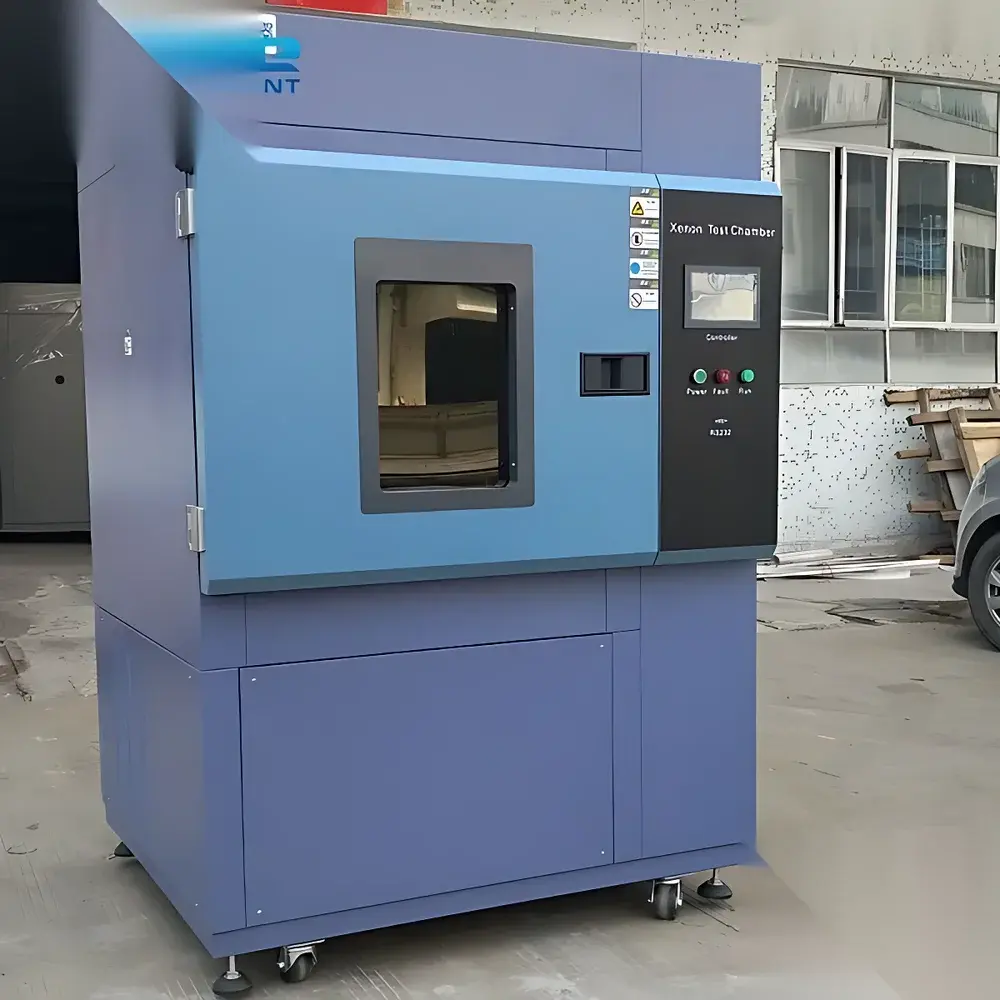
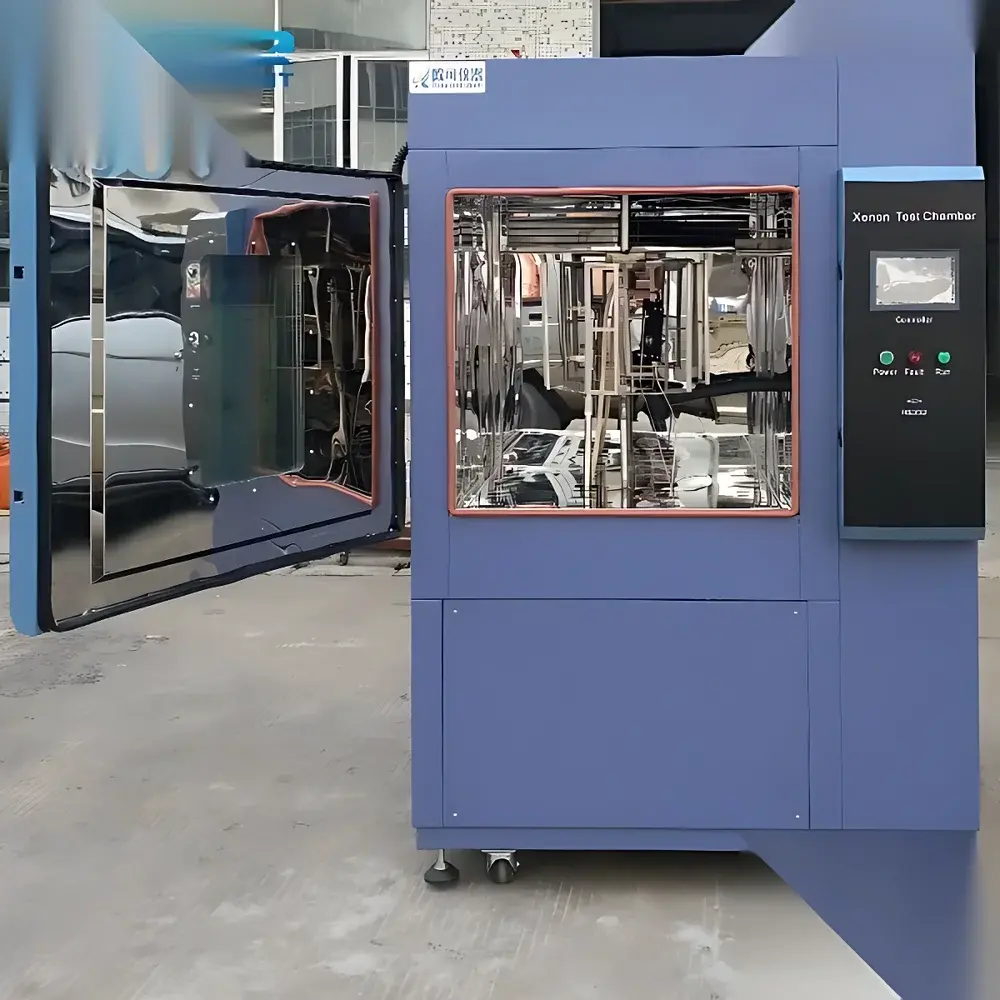
OK-XD-1000 Xenon Arc Weathering Test Chamber
| Brand | Other Brands |
|---|---|
| Origin | Imported |
| Manufacturer Type | Authorized Distributor |
| Temperature Range | −70 °C to +85 °C |
| Humidity Range | 10–98% RH |
| Temperature Uniformity | ±3 °C |
| Humidity Uniformity | ±3% RH |
| Temperature Fluctuation | ±3 °C |
| Humidity Fluctuation | ±3% RH |
| Rainfall Duration | 0–9999 min (continuous) |
| Rainfall Cycle | 0–240 min (intermittent) |
| Xenon Lamp Power | 6 kW |
| Spectral Range | 290–400 nm |
| Irradiance Control | 315 nm band (±5%) |
| Sample Rack Rotation | 1 rpm, 360° |
| Sample-to-Lamp Distance | 300–375 mm |
| Internal Chamber Dimensions | 1000 × 1000 × 1000 mm (D×W×H) |
| Refrigerant | R404A |
| Compressor | Hermetic French Tecumseh Unit |
| Cooling Method | Air-Cooled, Single-Stage |
| Compliance | GB/T 16422.2–1999, GB/T 1865–2007, GB/T 2423.24–1995, ASTM G155, ISO 105-B02/B04, SAE J2527, SAE J2412 |
Overview
The OK-XD-1000 Xenon Arc Weathering Test Chamber is an engineered environmental simulation system designed for accelerated weathering evaluation of materials under controlled, reproducible conditions that replicate key outdoor stressors—including solar radiation, thermal cycling, humidity, rain, condensation, and airflow. It employs a 6 kW air-cooled xenon arc lamp with spectral output calibrated to match terrestrial sunlight (290–400 nm), with precise irradiance control centered at 315 nm—a critical wavelength for UV-induced polymer degradation. Unlike UV fluorescent or metal halide systems, xenon arc technology delivers full-spectrum irradiance closely aligned with natural solar irradiance, enabling physiologically and chemically relevant photodegradation kinetics. The chamber integrates independent temperature and humidity control subsystems, allowing simultaneous or sequential application of climatic stressors—supporting both ISO-standard cyclic test protocols and custom multi-stress exposure profiles.
Key Features
- Robust dual-function climate control: refrigeration (−70 °C to +85 °C) and humidification (10–98% RH), each with ±3 °C/±3% RH uniformity and stability specifications validated per IEC 60068-3-5.
- Motorized 360° rotating sample rack (1 rpm) ensures uniform irradiance distribution across all specimens; adjustable lamp-to-sample distance (300–375 mm) enables irradiance tuning per ISO 105-B02 requirements.
- Programmable rainfall system supports both continuous (0–9999 min) and intermittent modes (cycle: 0–240 min), replicating natural precipitation patterns including dew formation via integrated condensation control.
- Thermally insulated double-wall construction with high-density fiberglass and polyurethane foam minimizes thermal bridging; stainless steel multi-wing impeller fans ensure laminar, low-turbulence airflow for consistent thermal/hygrometric homogeneity.
- Hermetically sealed French Tecumseh compressor, R404A refrigerant, and auto-defrost evaporator coil ensure long-term reliability under sustained low-temperature operation; all refrigerant circuit components—including filter-driers, sight glasses, solenoid valves, and oil separators—are OEM-sourced from certified industrial suppliers.
- Double-gasketed door with non-reactive ergonomic handle and high-tensile silicone seals maintains chamber integrity during dynamic pressure and thermal transients.
Sample Compatibility & Compliance
The OK-XD-1000 accommodates flat-panel, molded, or irregularly shaped specimens up to 1000 mm in any dimension. Its modular rack design permits standardized specimen mounting per ASTM D7869 and ISO 4892-2 configurations. The system conforms to international weathering standards including ASTM G155 (xenon-arc apparatus calibration and operation), ISO 105-B02/B04 (colorfastness to artificial light), SAE J2527/J2412 (automotive exterior material aging), and multiple Chinese national standards (GB/T 16422.2, GB/T 1865, GB/T 2423.24). All control algorithms and sensor calibrations are traceable to NIST-traceable references. The chamber architecture supports GLP-compliant validation protocols—including IQ/OQ/PQ documentation packages—and may be configured with audit-trail-enabled controllers compliant with FDA 21 CFR Part 11 when paired with optional software modules.
Software & Data Management
Equipped with a programmable logic controller (PLC) interface and RS485/Modbus RTU connectivity, the OK-XD-1000 supports integration into centralized laboratory data acquisition networks. Optional PC-based software provides real-time monitoring of irradiance (W/m² @ 315 nm), chamber temperature/humidity, rainfall status, and lamp operating hours. Data logging intervals are configurable down to 1-second resolution; exported datasets comply with ASTM E2048 format for interoperability with LIMS and statistical analysis platforms. Firmware includes built-in diagnostics for lamp spectral drift, refrigerant pressure anomalies, and humidity sensor drift compensation—critical for maintaining test repeatability over extended operational lifecycles.
Applications
This chamber is routinely deployed in R&D laboratories and QC departments for evaluating photochemical stability, color shift, gloss loss, cracking, chalking, and mechanical property degradation in polymers, coatings, textiles, automotive trim, architectural facades, and photovoltaic encapsulants. It supports qualification testing per UL 746C, MIL-STD-810H Method 505.6, and IEC 61215 (for PV module UV preconditioning). Its ability to decouple and recombine environmental stressors makes it suitable for mechanistic studies—e.g., isolating synergistic effects between UV dose and thermal-hygrometric cycling on hydrolytic degradation of polyesters or polyurethanes.
FAQ
What spectral irradiance standard does the OK-XD-1000 follow?
The system is calibrated to meet ISO 4892-2:2013 requirements for xenon arc exposure, with irradiance control targeting 0.35 W/m² @ 315 nm ±5%, traceable to NIST SRM 2242.
Is the chamber suitable for testing coated metal substrates per ASTM D4587?
Yes—the combination of controlled UV intensity, condensation cycles, and thermal ramp rates satisfies the exposure conditions specified in ASTM D4587 for fluorescent UV–condensation testing, with xenon arc offering broader spectral fidelity.
Can the rainfall system simulate acid rain or saline spray?
The base configuration delivers deionized water only; optional corrosion-resistant nozzles and auxiliary reservoirs support pH-adjusted or saltwater delivery upon request, subject to material compatibility review.
Does the system include lamp spectral output certification?
Each xenon lamp is supplied with a factory spectral power distribution (SPD) report; annual recalibration services—including spectroradiometric verification—are available through authorized service partners.
What validation documentation is provided with shipment?
Standard delivery includes Factory Acceptance Test (FAT) report, calibration certificates for temperature/humidity sensors and irradiance meter, and compliance matrix mapping to listed standards.



