
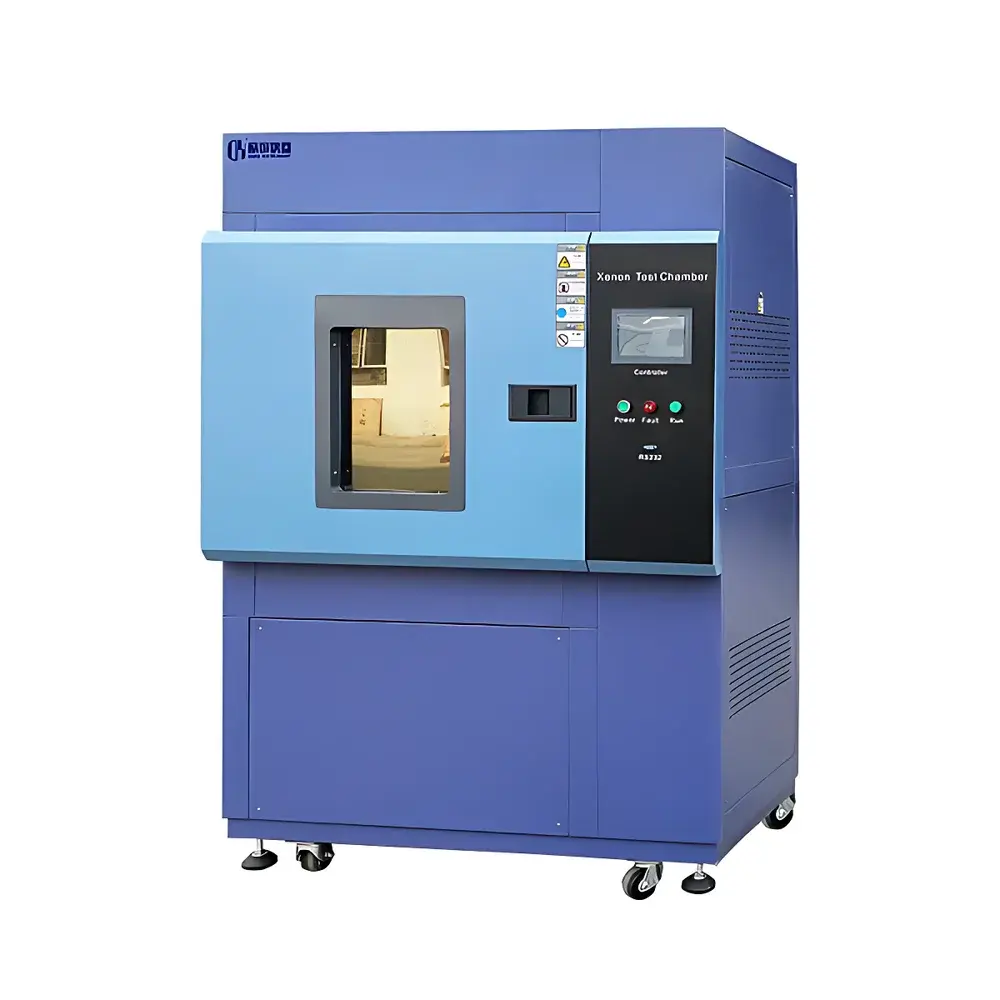
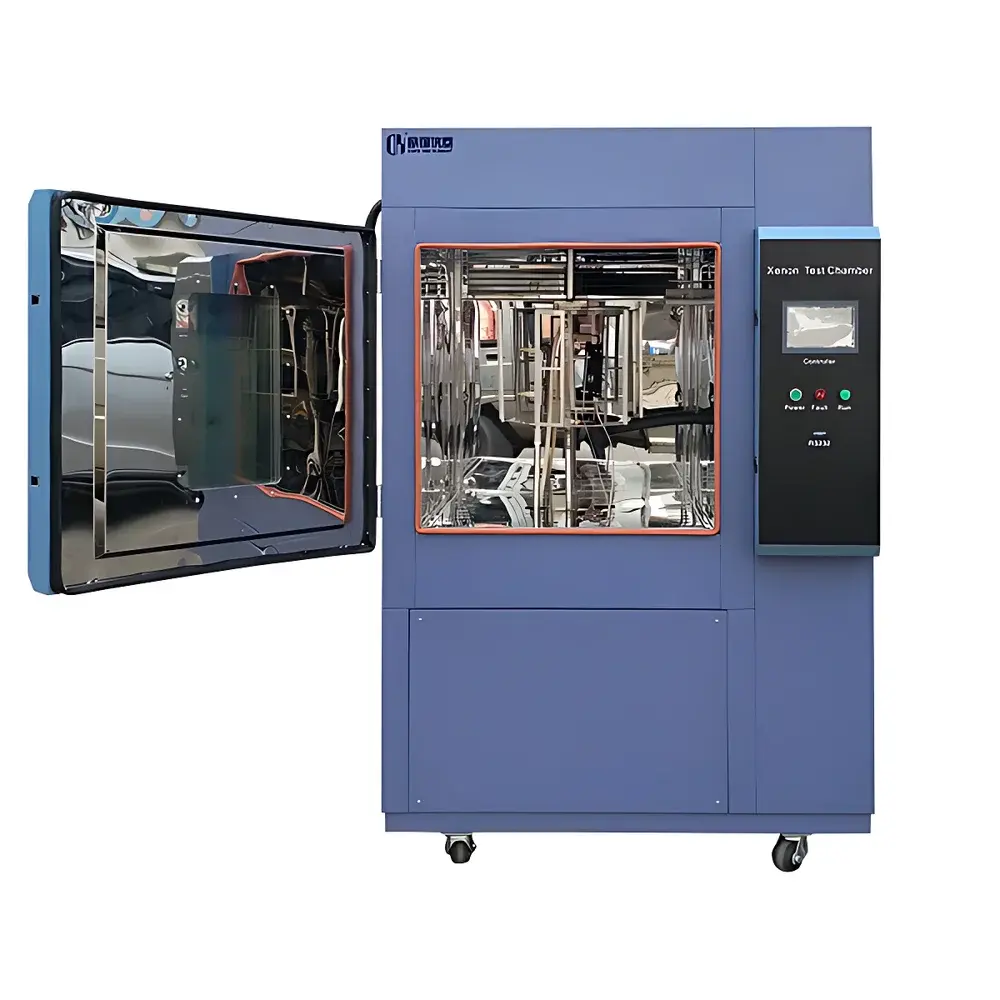
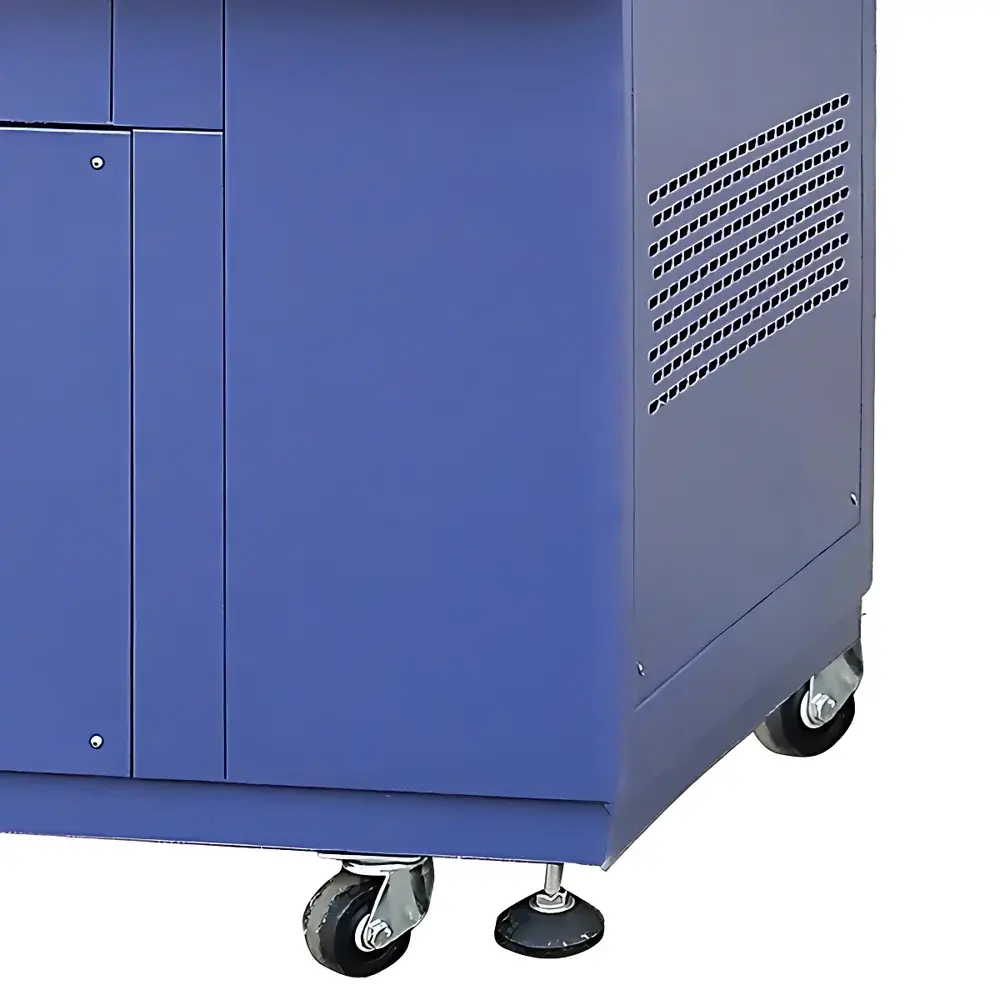
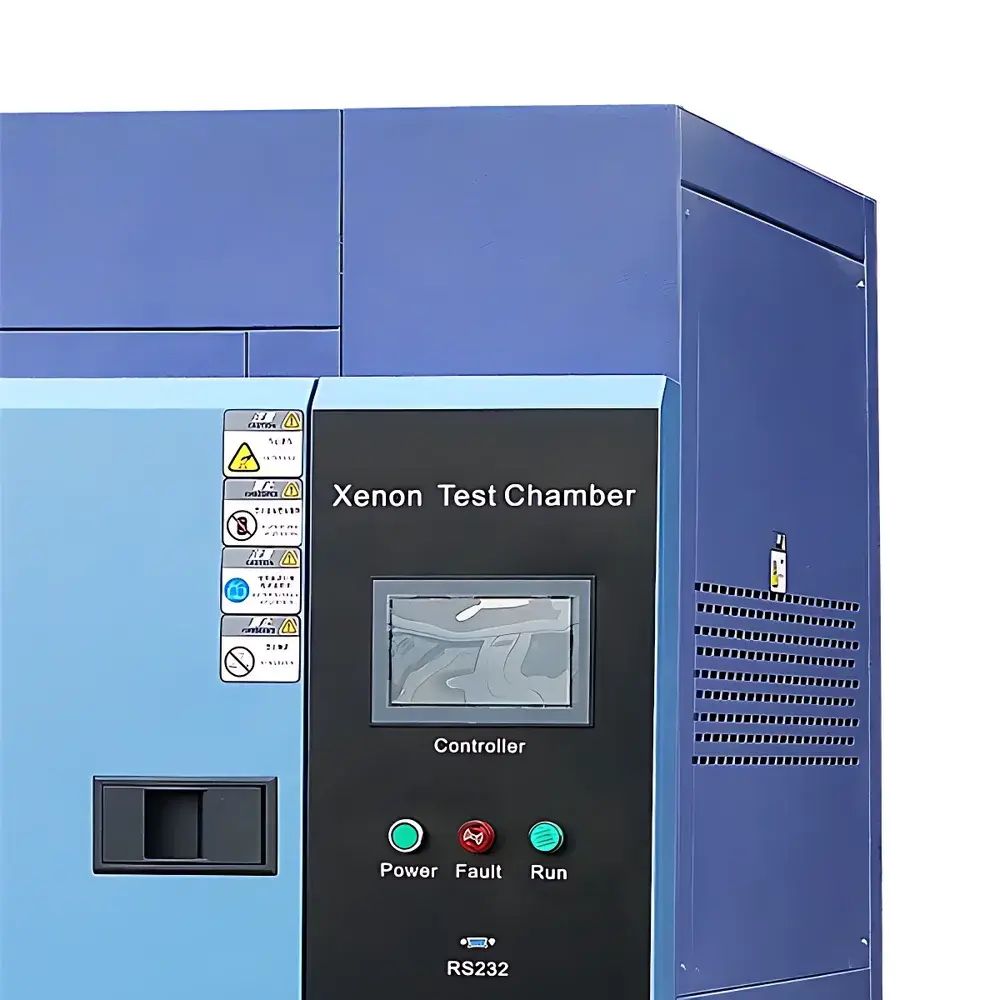
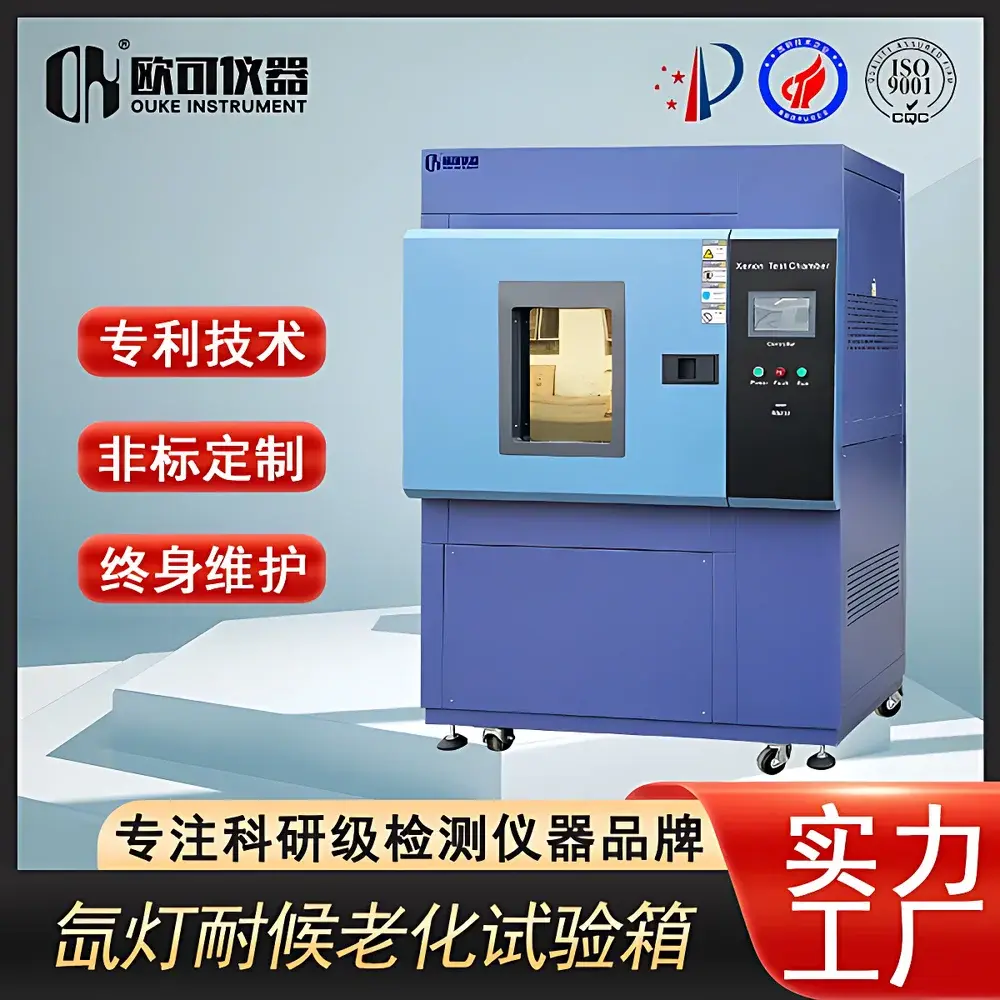
OK-XD-225 Xenon Arc Weathering Test Chamber
| Brand | OK Instruments |
|---|---|
| Origin | Guangdong, China |
| Manufacturer Type | Direct Manufacturer |
| Model | OK-XD-225.000 |
| Xenon Lamp Power | 5 kW |
| Irradiance Range | ≤1200 W/m² |
| Light Exposure Cycle | 1–999 h/min/sec (programmable) |
| Humidity Range (Light Cycle) | 20–75% R.H. |
Overview
The OK-XD-225 Xenon Arc Weathering Test Chamber is an engineered environmental simulation system designed to accelerate material degradation under controlled, reproducible conditions that replicate key outdoor weathering stressors—primarily full-spectrum solar radiation, temperature, relative humidity, and cyclic moisture exposure. At its core, the chamber employs a 5 kW air-cooled long-arc xenon lamp whose spectral output closely approximates natural sunlight across UV (290–400 nm), visible (400–700 nm), and near-infrared (700–1100 nm) regions. This photometric fidelity enables physicochemical aging mechanisms—including photooxidation, chain scission, pigment bleaching, and hydrolytic degradation—to be activated in a laboratory setting with high relevance to real-world field performance. Unlike narrowband UV sources, xenon arc technology delivers broad-spectrum irradiance essential for evaluating holistic material behavior, especially for polymers, coatings, textiles, and composites where synergistic UV/visible/thermal effects dominate failure modes.
Key Features
- High-fidelity solar spectrum simulation via calibrated 5 kW xenon lamp with integrated optical filtering options (e.g., Daylight-Q/B and Window Glass filters per ISO 4892-2 and ASTM G155)
- Precise irradiance control: closed-loop feedback system maintains setpoint irradiance (≤1200 W/m²) within ±5% tolerance using broadband or narrowband (340 nm or 420 nm) sensors
- Programmable light/dark cycles with independent control of exposure duration (1–999 hours/minutes/seconds), enabling compliance with SAE J2527, ASTM D6695, and GB/T 16422.2 protocols
- Integrated temperature and humidity regulation: air-heated and refrigerated conditioning system achieves specimen surface temperature control (typically 30–80°C) and maintains RH between 20–75% R.H. during light cycles
- Multi-mode moisture simulation: programmable frontal spray (deionized water), condensation cycle (via cold-wall humidification), and optional rear-spray capability for comprehensive wet/dry cycling
- Robust stainless-steel test chamber with insulated double-wall construction, quartz glass viewport, and corrosion-resistant internal surfaces
- Intuitive touchscreen HMI with embedded PID controllers for irradiance, temperature, humidity, and spray timing—each parameter logged with timestamped audit trail
Sample Compatibility & Compliance
The OK-XD-225 accommodates flat-panel specimens up to 225 mm × 225 mm (standard rack configuration) and supports rotational sample holders for uniform irradiance distribution. It is compatible with rigid plastics, elastomers, painted metal substrates, woven/nonwoven textiles, automotive interior/exterior trim, architectural coatings, and flexible packaging films. The system is engineered to meet the operational and metrological requirements of internationally recognized standards including ISO 4892-2 (Plastics — Methods of exposure to laboratory light sources — Part 2: Xenon-arc lamps), ASTM G155 (Standard Practice for Operating Xenon Arc Light Apparatus for Exposure of Non-Metallic Materials), SAE J2527 (Surface Vehicle Recommended Practice for Accelerated Exposure of Automotive Exterior Materials Using a Controlled Irradiance Xenon-Arc Apparatus), and GB/T 16422.2 (Chinese national standard for xenon arc exposure testing). All critical parameters—including irradiance stability, black panel temperature accuracy, and humidity repeatability—are traceable to NIST-calibrated reference instruments.
Software & Data Management
The chamber operates with OK-WeatherLink™ software (Windows-based, USB/Ethernet interface), providing full remote monitoring, real-time parameter visualization, and automated report generation in PDF/CSV formats. Data logging records irradiance (W/m²), chamber air temperature (°C), black panel temperature (°C), relative humidity (% R.H.), spray status, and elapsed time at user-defined intervals (minimum 1-second resolution). Audit trails comply with GLP principles and support 21 CFR Part 11 readiness through configurable user roles, electronic signatures, and immutable data archiving. Calibration history, lamp usage hours, filter replacement logs, and maintenance events are stored in a relational database for quality system integration and regulatory review.
Applications
- Automotive: Accelerated evaluation of exterior paint gloss retention, plastic bumper UV resistance, interior fabric colorfastness (SAE J2412), and sealant cracking under thermal-humidity cycling
- Coatings & Inks: Quantification of chalking, gloss loss, blistering, and adhesion failure in architectural acrylics, industrial alkyds, and UV-curable inks per ASTM D6695
- Polymers & Elastomers: Assessment of tensile strength decay, elongation-at-break reduction, and yellowing index (YI) in polypropylene, PVC, EPDM, and TPO compounds
- Textiles & Geotextiles: Determination of color change (ΔE*), breaking strength loss, and UV absorber depletion in awning fabrics, military camouflage, and erosion control mats per AATCC TM16 and ISO 105-B02
- Building Materials: Performance validation of roofing membranes, window glazing interlayers, and fiber-cement siding under simulated subtropical and desert climatic profiles
FAQ
What spectral filters are included with the OK-XD-225?
The standard configuration includes a Daylight-Q/B filter for direct terrestrial sunlight simulation and a Window Glass filter for indoor-exposed applications. Additional filters (e.g., Extended UV, UV-Quartz) are available as optional accessories.
Is black panel temperature (BPT) measurement supported?
Yes—the chamber integrates a calibrated black panel thermometer (BPT) sensor per ISO 4892-2 Annex A, enabling surface temperature monitoring critical for automotive and coating testing protocols.
How often must the xenon lamp and filters be replaced?
Typical lamp service life is 1,500–2,000 hours under continuous operation; optical filters require replacement every 1,000–1,200 hours to maintain spectral integrity. Replacement schedules are tracked automatically in OK-WeatherLink™.
Does the system support unattended operation over weekends?
Yes—fully programmable cycles, built-in power-fail recovery, and email/SMS alarm notifications enable secure multi-day or multi-week testing without manual intervention.
Can test data be exported for statistical process control (SPC)?
All logged parameters export directly to CSV format compatible with Minitab, JMP, and industry-standard SPC platforms; trend charts and pass/fail thresholds can be configured per test method.



