
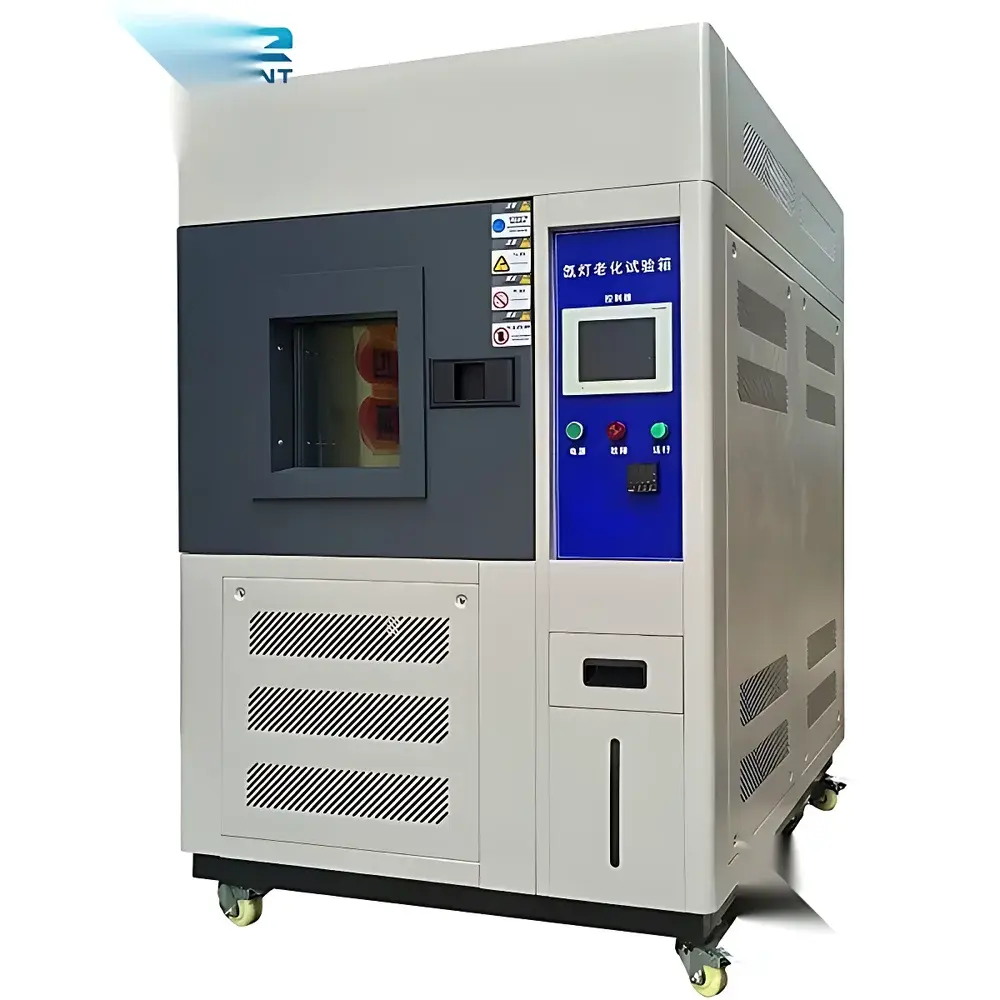
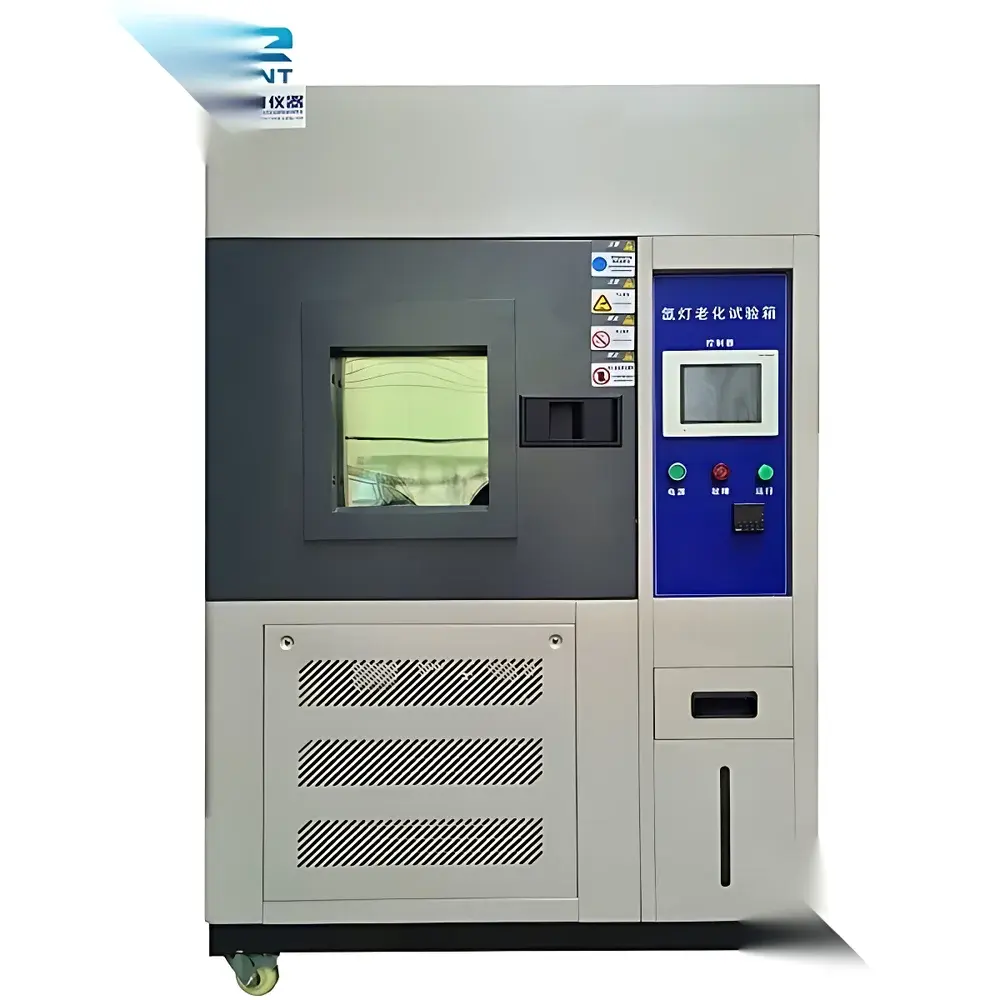
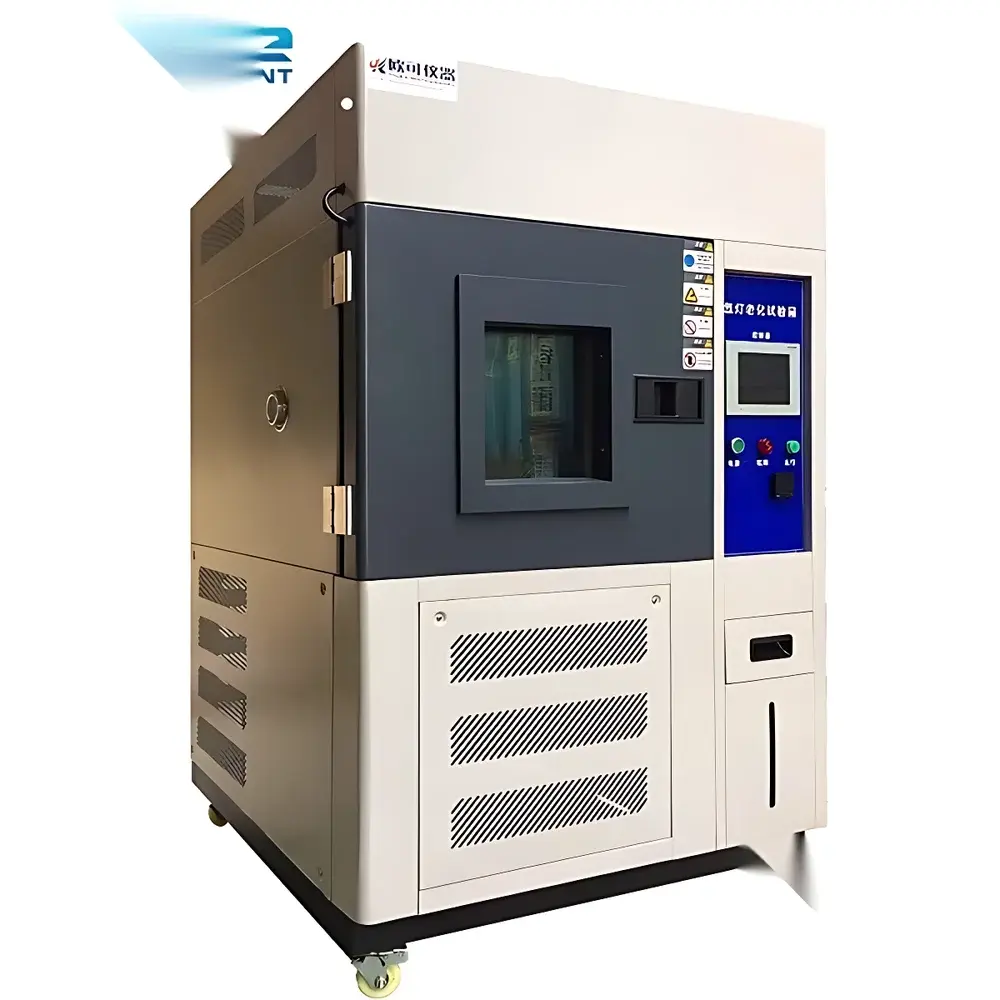
OK-XD-400 Xenon Arc Weathering Test Chamber
| Brand | OK Instruments |
|---|---|
| Model | OK-XD-400 |
| Interior Dimensions (W×H×D) | 470 × 750 × 460 mm |
| Inner Liner Material | SUS304 Stainless Steel |
| Outer Casing | Powder-Coated A3 Steel |
| Temperature Range | RT+10°C to 90°C (±2°C) |
| Black Panel Temperature Range | RT+10°C to 120°C |
| Humidity Range | 45–98% RH (±5% RH) |
| Rainfall Duration | 0–9999 min (continuously adjustable) |
| Light Source | Air-Cooled Xenon Arc Lamp |
| Lamp Power | 5.4 kW |
| Spectral Output | 290–850 nm |
| Sample Holder Capacity | 26 positions, each 200 × 60 mm |
| Compliance | GB/T 16422.2, GB/T 8430, GB/T 1865, GB/T 16259, GB/T 5137.3, GB/T 2423.24, ASTM D4459 |
Overview
The OK-XD-400 Xenon Arc Weathering Test Chamber is an engineered environmental simulation system designed to replicate the combined degradative effects of solar radiation, thermal cycling, humidity, and periodic water exposure—key stressors in real-world outdoor aging of polymeric, coated, and textile materials. It operates on the principle of xenon arc irradiation, where a high-intensity air-cooled xenon lamp emits a spectral distribution closely approximating natural sunlight (290–850 nm), including critical UV, visible, and near-infrared regions. Unlike UV fluorescent or metal halide sources, xenon arc technology provides spectrally accurate irradiance for accelerated weathering assessments aligned with international material durability standards. The chamber integrates precise black panel temperature (BPT) monitoring via wireless transmission, fiber-optic radiometric sensing for stable irradiance feedback control, and programmable rainfall cycles—enabling reproducible, traceable, and ISO/IEC 17025-compatible test protocols.
Key Features
- Air-cooled 5.4 kW xenon arc lamp with calibrated spectral output (290–850 nm), compliant with ISO 4892-2 and ASTM G155 requirements for spectral power distribution.
- Wireless black panel temperature (BPT) sensor system, eliminating thermal interference from wiring and improving long-term stability and measurement repeatability (±0.5°C typical).
- Fiber-optic irradiance monitoring—decoupling photometric detection from lamp housing temperature fluctuations to maintain ±5% irradiance control accuracy over time.
- Stainless steel (SUS304) interior chamber and powder-coated A3 steel exterior ensure corrosion resistance and structural integrity under humid, saline, and thermal stress conditions.
- Programmable rainfall module with 0–9999 minute continuous adjustment, supporting cyclic wet/dry exposures per ISO 11341 and ASTM D4329.
- Integrated timer with automatic shutdown function; door interlock circuit disables lamp power and halts all test functions upon opening for operator safety and lamp life preservation.
- Real-time control of chamber temperature (RT+10°C to 90°C, ±2°C), relative humidity (45–98% RH, ±5% RH), and black panel temperature (RT+10°C to 120°C).
Sample Compatibility & Compliance
The OK-XD-400 accommodates flat-panel specimens up to 200 × 60 mm across 26 independent mounting positions, enabling parallel evaluation of multi-material batches or formulation variants. Its mechanical and optical design conforms to widely adopted national and international standards—including GB/T 16422.2 (China), ASTM D4459 (polystyrene color/gloss degradation), ASTM G155 (xenon-arc exposure apparatus), ISO 4892-2 (plastics—methods of exposure to laboratory light sources), and ISO 11341 (paints and varnishes). It supports full compliance workflows for GLP and GMP-regulated laboratories through configurable audit trails, user access levels, and event logging—compatible with FDA 21 CFR Part 11 requirements when integrated with validated LIMS or ELN platforms.
Software & Data Management
The chamber operates via an embedded industrial-grade controller with intuitive touchscreen interface, supporting preloaded test profiles for common standards (e.g., ISO 4892-2 Cycle 1A, ASTM D4329 Method B). All operational parameters—including irradiance setpoint (W/m² @ 340 nm), chamber temperature, humidity, BPT, rainfall timing, and elapsed exposure time—are continuously logged with timestamped records stored internally (≥10,000 data points) and exportable via USB. Optional Ethernet connectivity enables remote monitoring, centralized fleet management, and integration into enterprise quality systems (e.g., TrackWise, MasterControl) for automated report generation and deviation tracking.
Applications
This instrument serves as a core tool in R&D, QC, and regulatory validation labs across sectors where long-term material stability is mission-critical. In automotive manufacturing, it validates polymer trim, headlamp lenses, and interior fabrics per GB/T 5137.3 and SAE J2527. In coatings and ink development, it quantifies gloss retention, chalking, and color shift (ΔE*ab) in accordance with ISO 2813 and ASTM D2244. Rubber compounders use it to assess cracking, tensile loss, and surface oxidation under simulated tropical or desert climatic profiles. Petrochemical and textile laboratories rely on its reproducible UV dose delivery to rank UV stabilizer efficacy and predict service life under accelerated conditions—always anchored to reference standards rather than empirical correlation alone.
FAQ
What standards does the OK-XD-400 explicitly support?
It is configured and validated for GB/T 16422.2, GB/T 8430, GB/T 1865, GB/T 16259, GB/T 5137.3, GB/T 2423.24, and ASTM D4459—covering plastics, textiles, coatings, glass, and electrical components.
Is irradiance calibration traceable to NIST or equivalent national metrology institutes?
Yes—optional factory calibration includes irradiance sensor certification traceable to NIST SRM 2241 or PTB-calibrated reference cells, with certificate of calibration provided upon request.
Can the chamber operate unattended for extended test durations (e.g., 1000+ hours)?
Yes—designed for continuous operation with redundant thermal fusing, lamp current monitoring, and self-diagnostic firmware that logs fault events and triggers safe shutdown before component failure.
Does the system support external data acquisition or SCADA integration?
Yes—Modbus TCP and RS-485 interfaces are standard; optional OPC UA gateway enables direct integration with MES, SCADA, or LabVantage systems.
What maintenance intervals are recommended for optimal performance?
Xenon lamp replacement every 1500–2000 hours; quartz filter cleaning weekly; irradiance sensor recalibration annually or after lamp replacement; full system verification per ISO/IEC 17025 every 12 months.



