
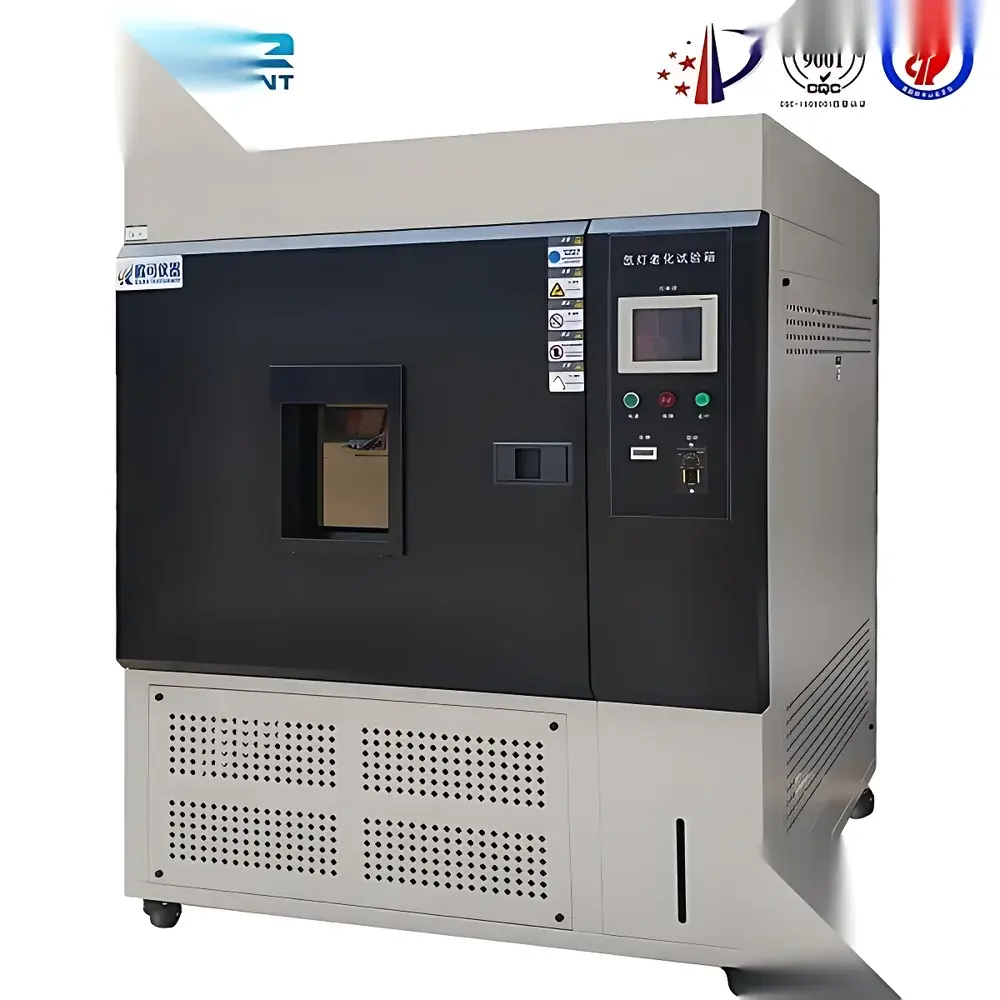
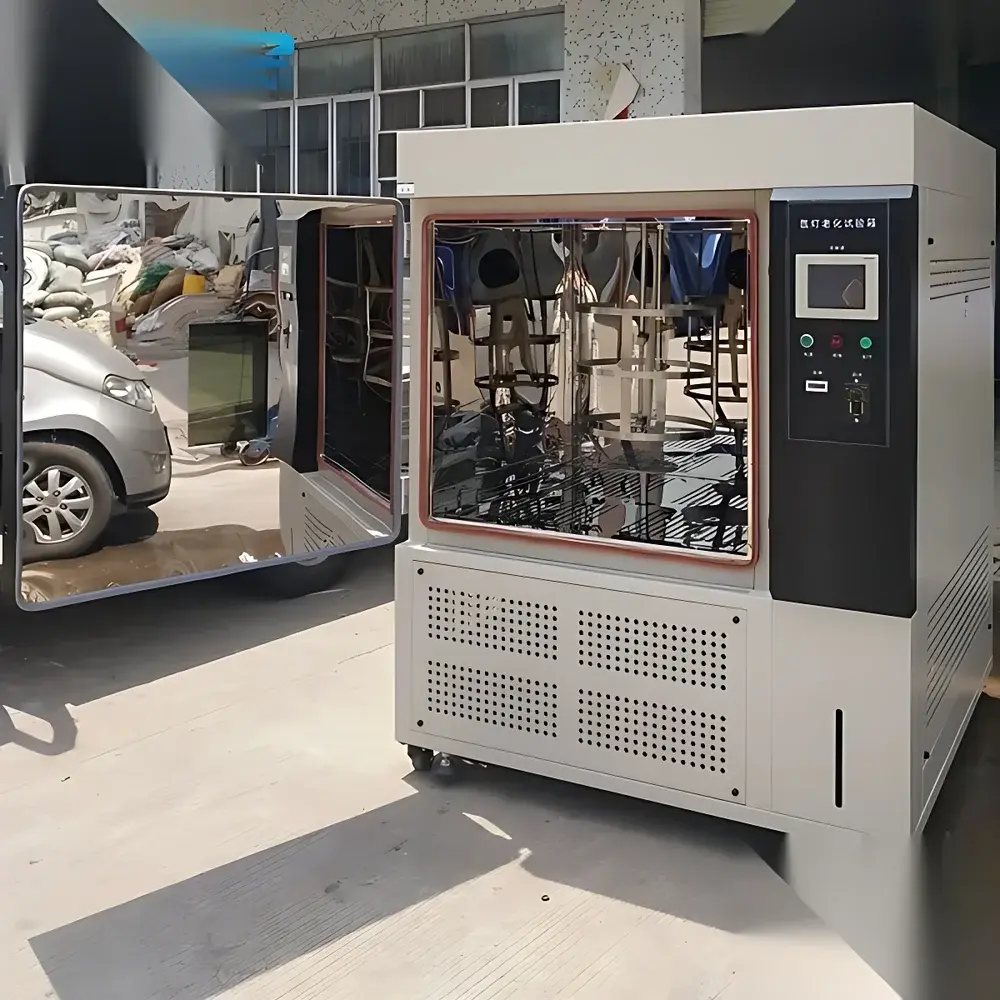
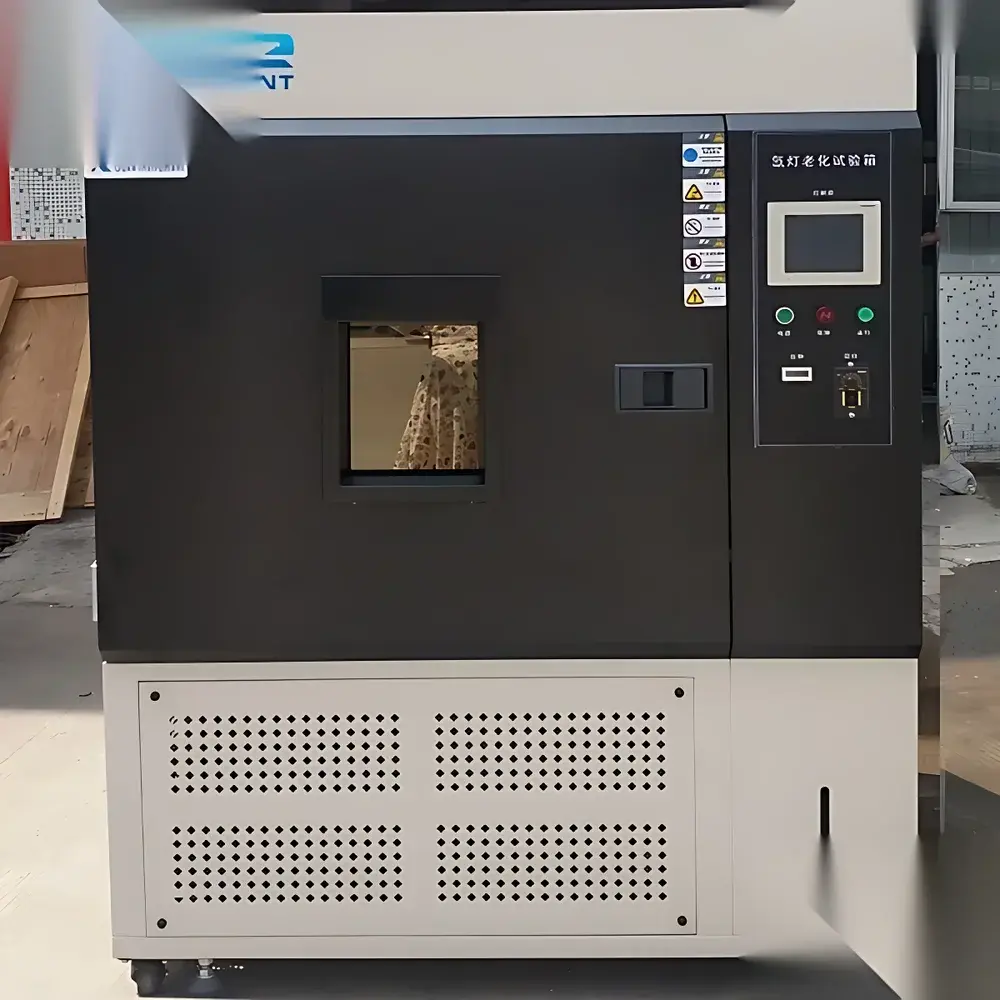
OK-XD Series Xenon Arc Weathering Test Chamber
| Brand | OK Instruments |
|---|---|
| Origin | Imported |
| Manufacturer Type | Authorized Distributor |
| Price | USD 5,300 (FOB China, subject to configuration and customization) |
| Internal Dimensions (L×W×H, cm) | 50×50×40 / 50×75×60 / 80×80×80 / 100×100×100 |
| Temperature Range | 0–150 °C (chamber), 40–85 °C (black panel) |
| Humidity Range | 20–75% RH (light cycle), 20–98% RH (dark cycle) |
| Control Accuracy | ±0.5 °C (temperature), ±2.0% RH (humidity) |
| Uniformity | ±2.0 °C (temp), ±3.0% RH (humidity) |
| Irradiance | 550 W/m² ±10% (300–800 nm), 1000 W/m² ±10% (300–1200 nm) |
| Xenon Lamp Power | 1.8 kW / 2.5 kW / 6 kW |
| Lamp Life | ~1,500 h at standard irradiance setpoints |
| Spray Cycle | 1–999 min (intermittent or continuous) |
| Spray Pressure | 70–127 kPa |
| Sample Mounting | Dual-layer flat mesh rack or 500 mm diameter rotating turntable (0–3 rpm) |
| Construction | Interior — SUS304 stainless steel |
| Power Supply | AC 380 V ±5%, 50 Hz ±0.5 Hz |
Overview
The OK-XD Series Xenon Arc Weathering Test Chamber is an engineered environmental simulation system designed to replicate the full solar spectrum—including UV, visible, and near-infrared radiation—under controlled temperature, humidity, and moisture conditions. Utilizing long-arc, air-cooled xenon lamps with precision spectral filtering, the chamber delivers high-fidelity irradiance profiles that closely match natural sunlight (CIE No. 85, ISO 4892-2). This enables accelerated evaluation of photodegradation mechanisms such as polymer chain scission, pigment fading, surface chalking, and coating delamination. Unlike UV fluorescent or metal halide systems, xenon arc technology provides spectrally accurate exposure across 290–2500 nm, making it the internationally preferred method for assessing lightfastness and weathering resistance in accordance with ASTM G155, ISO 4892-2, and GB/T 16422.2. The chamber supports both open-air and closed-loop test protocols, with programmable light/dark cycles, condensation, and simulated rainfall—enabling comprehensive climate stress testing aligned with real-world service environments.
Key Features
- Full-spectrum xenon arc lamp system with calibrated optical filters to maintain spectral stability across 300–1200 nm, compliant with ISO 4892-2 spectral class A requirements.
- Integrated water spray subsystem with adjustable pressure (70–127 kPa) and programmable duration (1–999 min), supporting intermittent and continuous wetting cycles per ISO 20340 and ASTM D4329.
- Precise black panel thermometer (BPT) and chamber air temperature control, enabling independent monitoring and regulation of specimen surface thermal load and ambient thermal environment.
- Dual-mode sample mounting: configurable flat mesh racks for planar specimens or motorized 500 mm-diameter turntables (0–3 rpm) for uniform angular exposure—critical for automotive trim, textiles, and architectural coatings.
- Robust SUS304 stainless steel interior construction with corrosion-resistant exterior finish, ensuring long-term integrity under aggressive cyclic humidity and saline spray conditions.
- Modular lamp housing with quick-release mechanism; standard 1,500-hour lamp life at nominal irradiance output, with field-replaceable lamp and filter assemblies minimizing downtime.
Sample Compatibility & Compliance
The OK-XD chamber accommodates diverse material geometries—from fabric swatches and plastic sheets to molded automotive components and painted metal panels—via its adaptable sample fixtures and scalable internal volumes (100 L to 1,000 L). It meets stringent regulatory and industry-standard test requirements including GB/T 8427 (textile colorfastness to light), GB/T 14576 (photostability of dyes), ISO 4892-2 (plastics—xenon-arc exposure), ASTM D529 (rubber weathering), and ISO 20340 (offshore protective coatings). All operational parameters—including irradiance, temperature ramp rates, humidity transitions, and spray timing—are traceable and reproducible within defined tolerances, supporting GLP-compliant data generation and audit-ready documentation per ISO/IEC 17025 and FDA 21 CFR Part 11 (when paired with validated software).
Software & Data Management
The chamber integrates with OK-WeatherLink™ control software (Windows-based), providing intuitive touchscreen or remote PC interface for multi-segment test programming, real-time parameter logging (irradiance, BPT, chamber temp/RH, spray status), and automated alarm handling. Data export is supported in CSV and PDF formats, with optional timestamped digital signatures and electronic audit trails. Software configuration supports user-defined test standards, automatic recalibration prompts, and lamp aging compensation algorithms—ensuring consistent exposure dose (kJ/m² @ 340 nm) across multiple test runs and instrument lifecycles. Optional Ethernet/IP or Modbus TCP connectivity enables integration into centralized lab management systems (LIMS) and industrial IoT platforms.
Applications
This system serves R&D, QC, and regulatory validation laboratories across industries where long-term outdoor durability is mission-critical. Key applications include: accelerated lightfastness assessment of automotive interior trims (dashboards, seat fabrics); UV resistance validation of aerospace composites and sealants; color stability testing of architectural paints and roofing membranes; photostability profiling of medical device polymers per ISO 10993-12; and comparative weathering analysis of biodegradable packaging films per ASTM D6954. Its ability to combine UV irradiation with thermal cycling, humidity modulation, and mechanical wetting makes it indispensable for failure mode analysis of multi-stress degradation pathways.
FAQ
What standards does the OK-XD chamber comply with?
It is fully compatible with ISO 4892-2, ASTM G155, GB/T 16422.2, GB/T 8427, and other major international weathering standards requiring xenon arc exposure.
Can the chamber simulate rain + UV + heat simultaneously?
Yes—programmable spray cycles operate independently or concurrently with irradiation and thermal conditioning, replicating realistic diurnal weather sequences.
Is black panel temperature (BPT) monitoring included?
Standard configuration includes dual BPT sensors with independent PID control loops for precise specimen surface thermal profiling.
How is irradiance calibrated and maintained over time?
Built-in broadband radiometer with NIST-traceable calibration certificate; automatic lamp power adjustment compensates for spectral drift during lamp aging.
What maintenance intervals are recommended?
Filter replacement every 1,200 hours; lamp replacement every 1,500 hours; quarterly verification of temperature/humidity sensor accuracy per ISO 17025 guidelines.



