
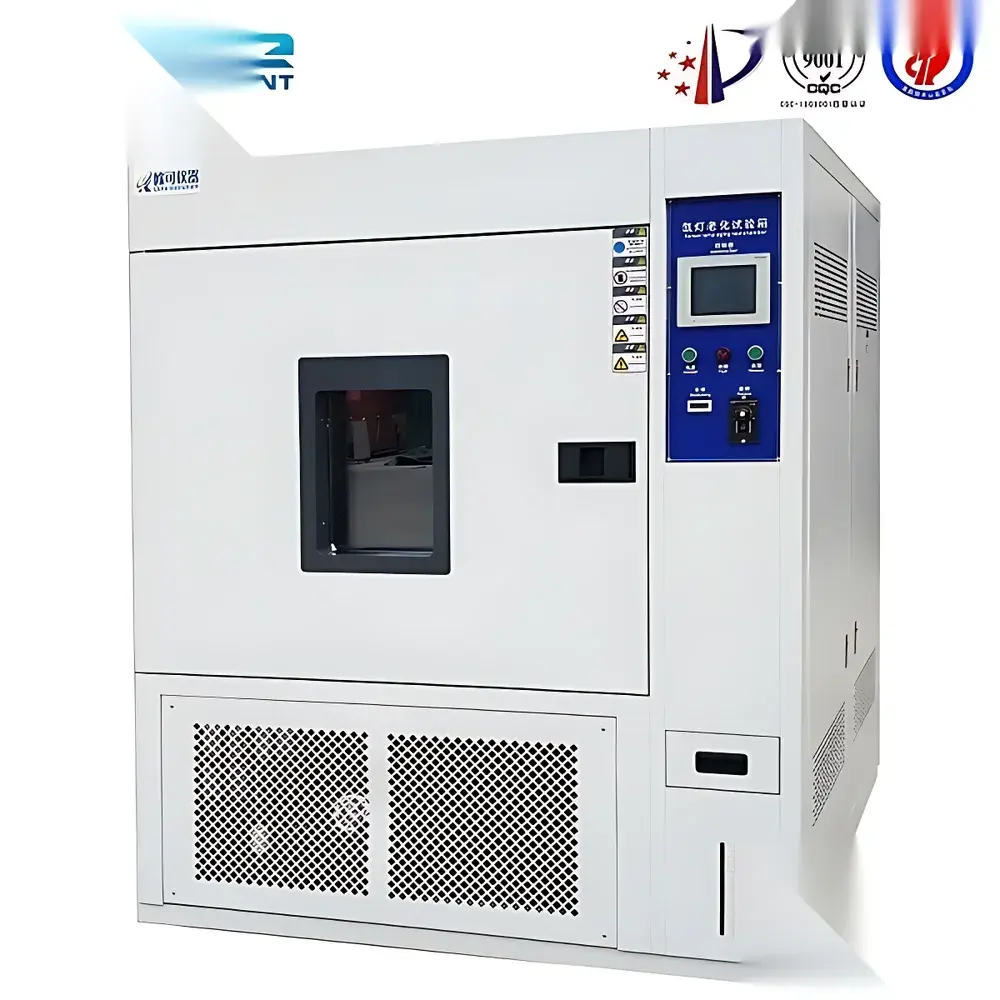
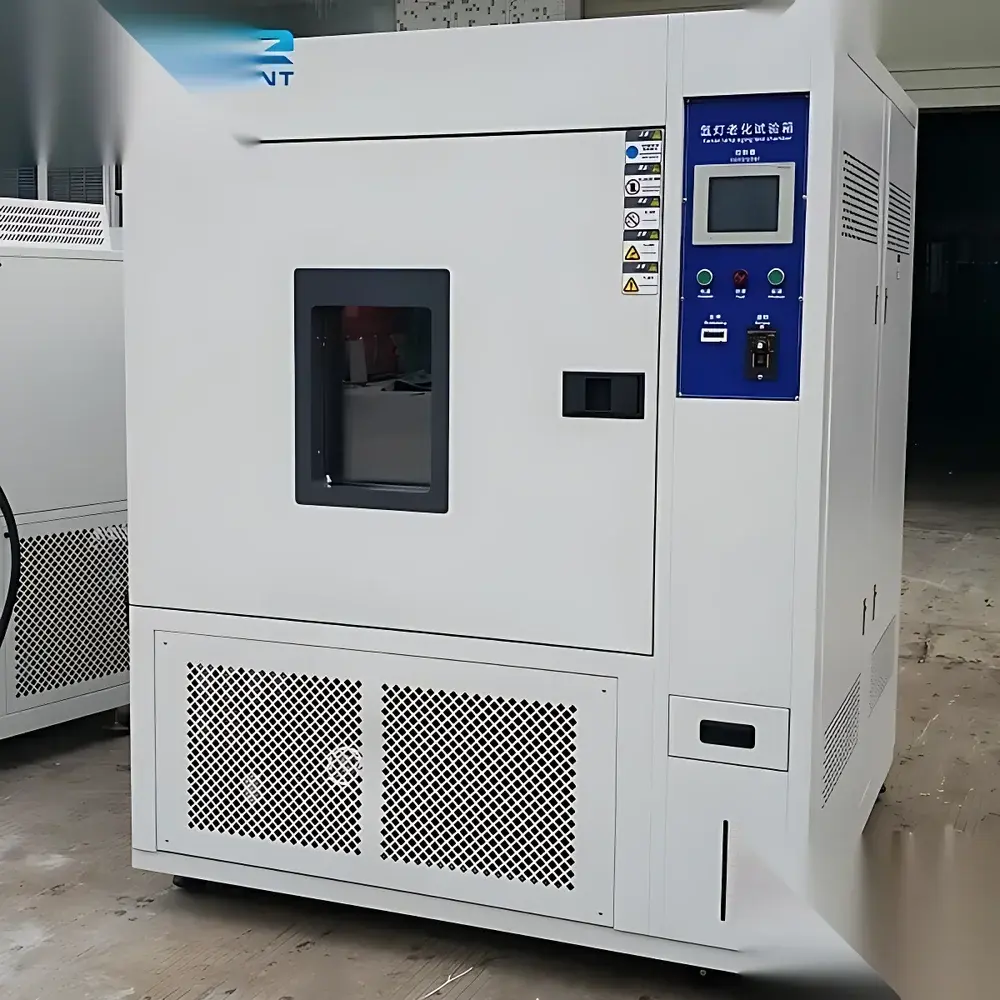
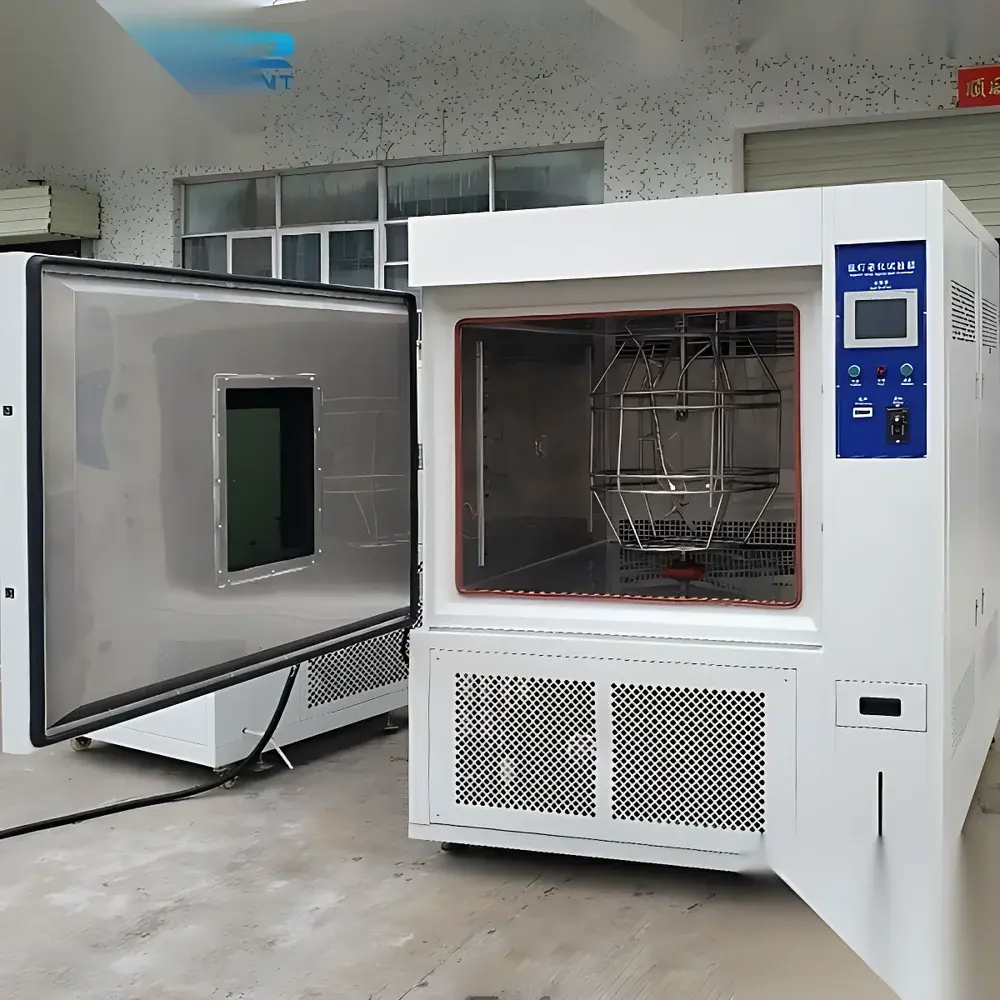
Xenon Arc Weathering Test Chamber – Full-Function Environmental Test System
| Brand | OEM |
|---|---|
| Origin | Imported |
| Manufacturer Type | Authorized Distributor |
| Price | USD 5,300 (Reference Only |
Overview
The Xenon Arc Weathering Test Chamber – Full-Function Environmental Test System is an engineered solution for accelerated material degradation testing under simulated solar radiation, temperature, and humidity stressors. Utilizing a high-stability xenon arc lamp as the spectral energy source, this chamber replicates full-spectrum sunlight (290–800 nm), with particular emphasis on UV-A (315–400 nm) and visible light bands critical to polymer photodegradation, pigment fading, coating chalking, and textile colorfastness evaluation. Unlike UV fluorescent lamp-based testers, xenon arc systems provide superior spectral match to natural sunlight—validated per ISO 4892-3 and ASTM G155—making them the internationally preferred platform for automotive OEMs, aerospace composites labs, and regulatory-compliant R&D facilities requiring reproducible, traceable weathering data.
Key Features
- Stainless steel 304 construction for both inner and outer chambers, ensuring long-term corrosion resistance in high-humidity and condensation cycles
- Microprocessor-controlled PID temperature regulation with ±3 °C uniformity across the irradiated zone (50–70 °C during light cycle; 40–60 °C during dark/condensation phase)
- Black panel thermometer (BPT) monitoring with ±1 °C accuracy over 30–80 °C range, compliant with ASTM D7869 and ISO 4892-3 operational requirements
- UV irradiance calibration-ready: configurable output at UVA-340 (0.68 W/m² @ 340 nm) and UVB-313 (0.55 W/m² @ 313 nm), traceable to NIST-traceable reference sensors
- Steam-based humidification system with SUS304 stainless steel reservoir and heater, enabling precise RH control from 30% to 98% RH—fully programmable per light/dark cycle profiles
- Sample exposure geometry optimized per ISO 4892-3: 50 mm distance from lamp surface to specimen plane; 70 mm lamp center-to-center spacing; 900 × 210 mm effective irradiated area
- Integrated safety architecture: over-temperature cutoff, lamp current monitoring, water-level auto-detection, and door interlock protection
Sample Compatibility & Compliance
The chamber accommodates standard specimens of 75 × 150 mm or 75 × 300 mm (custom dimensions available upon specification), mounted on corrosion-resistant aluminum/stainless steel wire mesh racks. Its operational envelope satisfies mandatory test protocols across global regulatory and industry frameworks—including ASTM D4329 (plastics), D4587 (coatings), D5208 (photopolymer stability), G154 (fluorescent UV), and G53 (xenon arc); ISO 4892-3 (plastics), ISO 11507 (paints and varnishes); EN 534, prEN 1062-4, BS 2782, JIS D0205, SAE J2020, and GB/T 14522-93. All control logic and data logging functions are structured to support GLP/GMP audit readiness and 21 CFR Part 11-compliant electronic records when paired with validated software modules.
Software & Data Management
Equipped with embedded microcontroller firmware supporting real-time parameter logging (irradiance, BPT, chamber RH, condensation time), the system outputs timestamped CSV files via USB or RS-485 interface. Optional PC-based software enables full-cycle programming—including multi-step irradiance ramping, dynamic RH profiling, and synchronized thermal transitions—and generates PDF reports with metadata traceability (operator ID, calibration date, lamp hours, sensor drift compensation flags). Audit trails record all parameter modifications, user logins, and alarm events—meeting ISO/IEC 17025 documentation rigor for accredited laboratories.
Applications
This chamber serves as a core tool in materials qualification workflows for automotive exterior trim (PP, TPO, PU coatings), architectural sealants (silicones, polyurethanes), agricultural films (LDPE, EVA), outdoor signage substrates (PVC, PETG), and medical device packaging polymers. It supports comparative aging studies, shelf-life modeling, failure mode analysis (e.g., microcracking initiation, gloss loss kinetics), and validation of UV stabilizer packages. Its spectral fidelity and environmental controllability make it suitable for ASTM D7869-compliant automotive component certification and ISO 11341-filtered daylight exposure simulation.
FAQ
What spectral filters are supported for irradiance conditioning?
Standard configurations include Daylight-Q, Window Glass-Q, and Extended UV filters—each certified per ISO 4892-3 spectral transmission profiles.
Is lamp replacement and recalibration supported onsite?
Yes—lamp assemblies are field-replaceable with alignment jigs; optional annual irradiance recalibration service includes NIST-traceable spectroradiometric verification.
Can the system operate unattended for extended cycles (e.g., 1,000+ hours)?
Fully supported: integrated water level management, thermal redundancy, and event-triggered email/SMS alerts ensure safe long-duration operation.
Does the controller support custom test profiles beyond standard methods?
Yes—user-defined sequences may combine variable irradiance setpoints, stepped RH ramps, and timed condensation phases with sub-minute resolution.
Are validation documents (IQ/OQ/PQ) provided?
Factory-issued IQ/OQ documentation is included; PQ execution requires site-specific environmental verification and is performed by qualified third-party metrology partners.



