
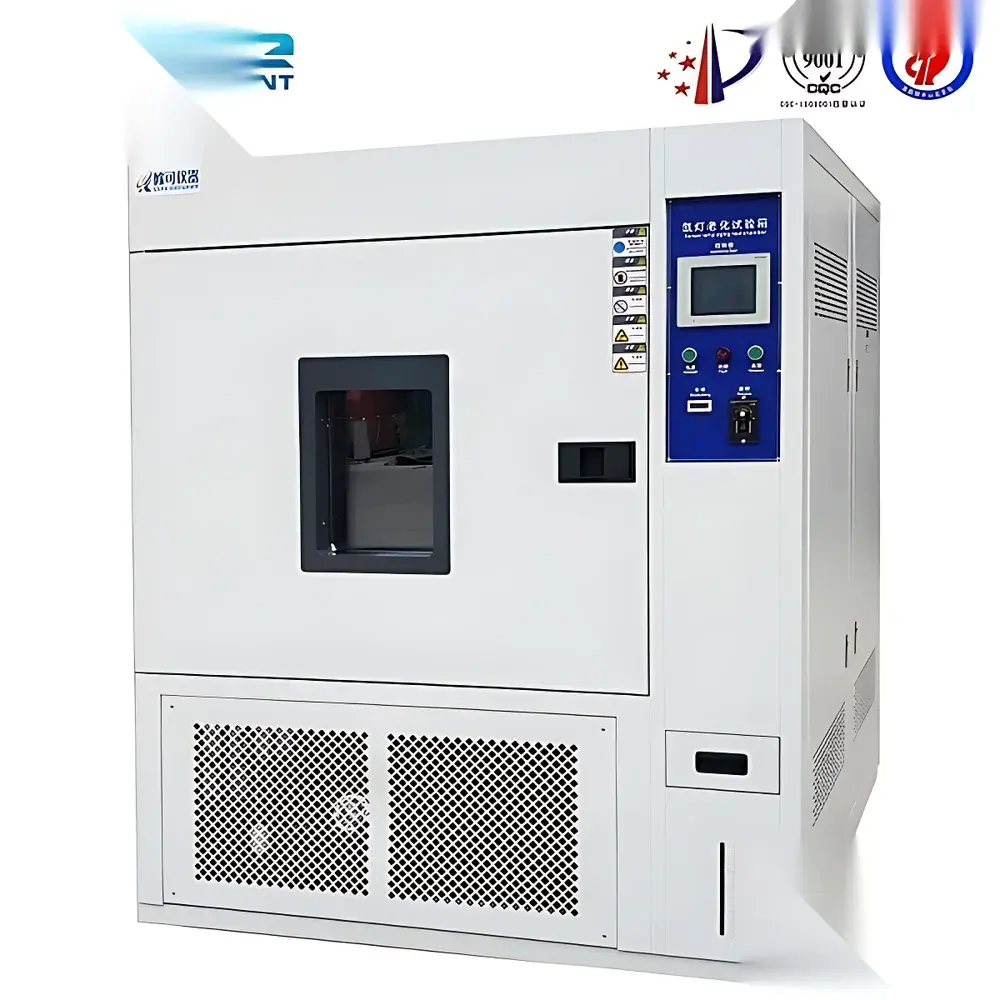
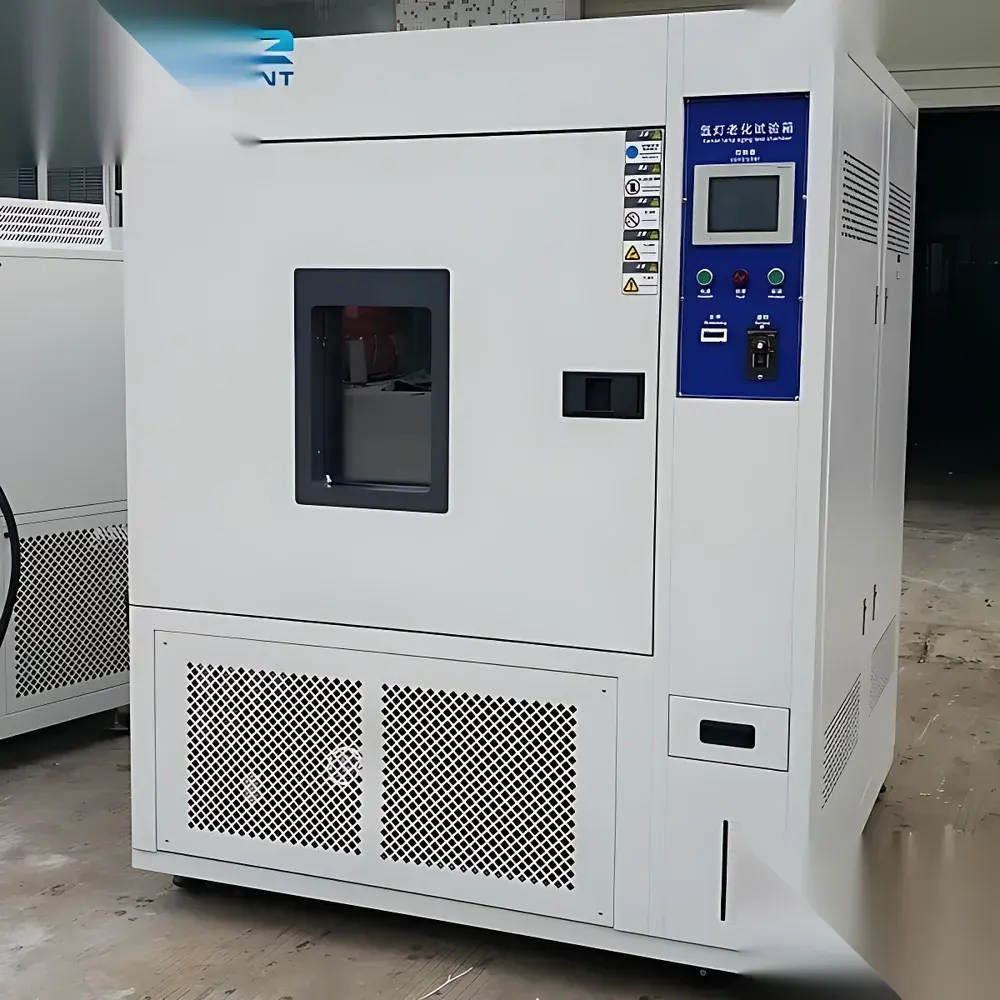
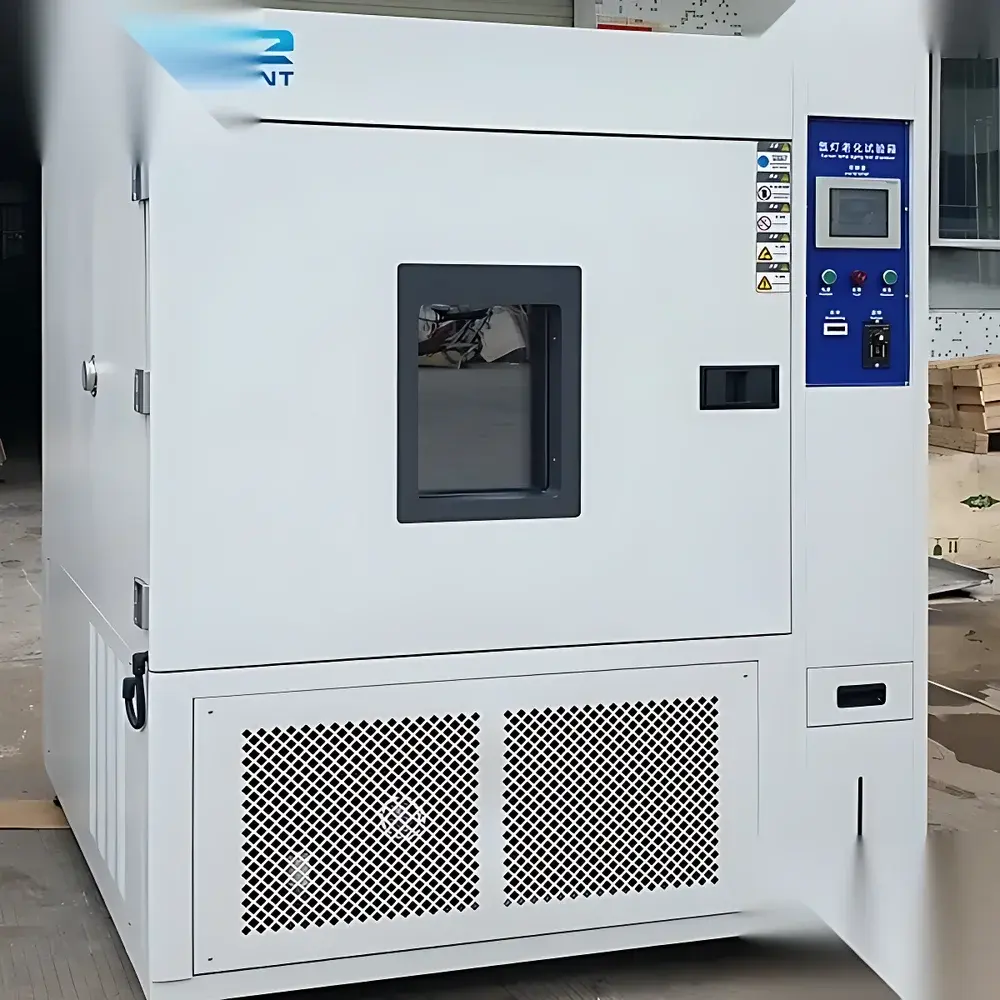
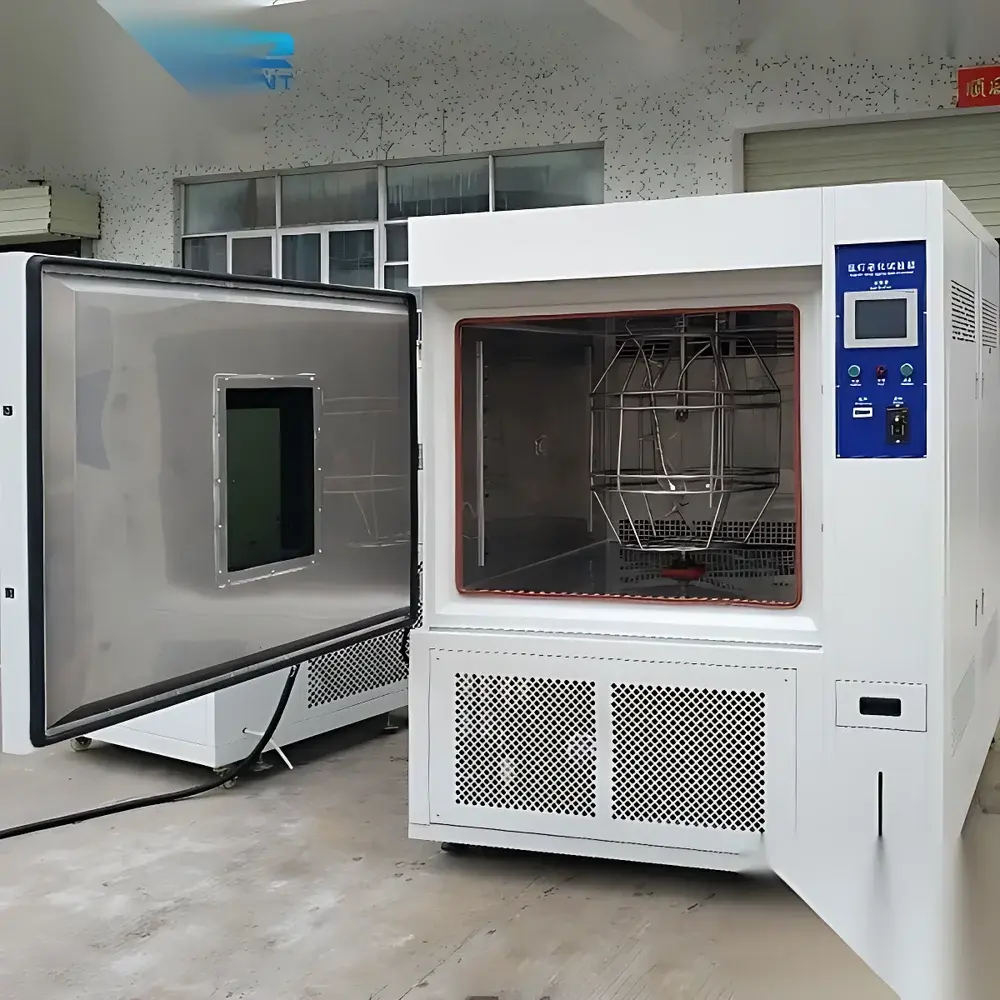
Xenon Arc Weathering Test Chamber – Full-Spectrum Artificial Sunlight Simulation System
| Brand | OEM / Custom Brand |
|---|---|
| Origin | Imported |
| Supplier Type | Authorized Distributor |
| Pricing | USD 5,300 (FOB, subject to configuration and certification requirements) |
| Compliance | ISO 4892-2, ASTM G155, ASTM D4459, DIN 75220, JIS D0205, SAE J2527, BS EN ISO 11341, ANSI C78.377, U.S. Federal Standard 101C |
| Sample Capacity | 24 pcs of 75 mm × 300 mm specimens or 48 pcs of 75 mm × 150 mm specimens |
| Irradiance Control | CR-10-calibrated electronic eye system with automatic feedback loop |
| Black Panel Temperature Range | 30–110 °C |
| Humidity Range | 10–100% RH (condensation mode) |
| Lamp Life | ≥1600 h (with irradiance calibration and proper cooling) |
| Control Interface | Programmable touchscreen HMI with English/Chinese bilingual firmware |
| Power Supply | 380 VAC ±10%, 3-phase, 50/60 Hz |
Overview
The Xenon Arc Weathering Test Chamber is an engineered environmental simulation system designed to replicate the full-spectrum solar irradiance (290–800 nm), thermal cycling, humidity, and moisture exposure conditions encountered in real-world outdoor service environments. Utilizing a high-intensity, water-cooled xenon arc lamp as its radiation source, the chamber delivers spectrally stabilized output closely matching natural sunlight—particularly in the critical UV-A, UV-B, visible, and near-infrared regions. This enables accelerated, reproducible assessment of photodegradation mechanisms including polymer chain scission, pigment bleaching, surface oxidation, and hydrolytic degradation. Unlike UV fluorescent or metal halide systems, xenon arc technology provides true broadband spectral fidelity, making it the internationally preferred method for qualifying materials per ISO 4892-2 and ASTM G155 protocols. The chamber integrates calibrated black panel temperature sensing, programmable condensation cycles, and optional rain simulation—ensuring correlation with field aging data across automotive coatings, aerospace composites, architectural sealants, and medical device packaging.
Key Features
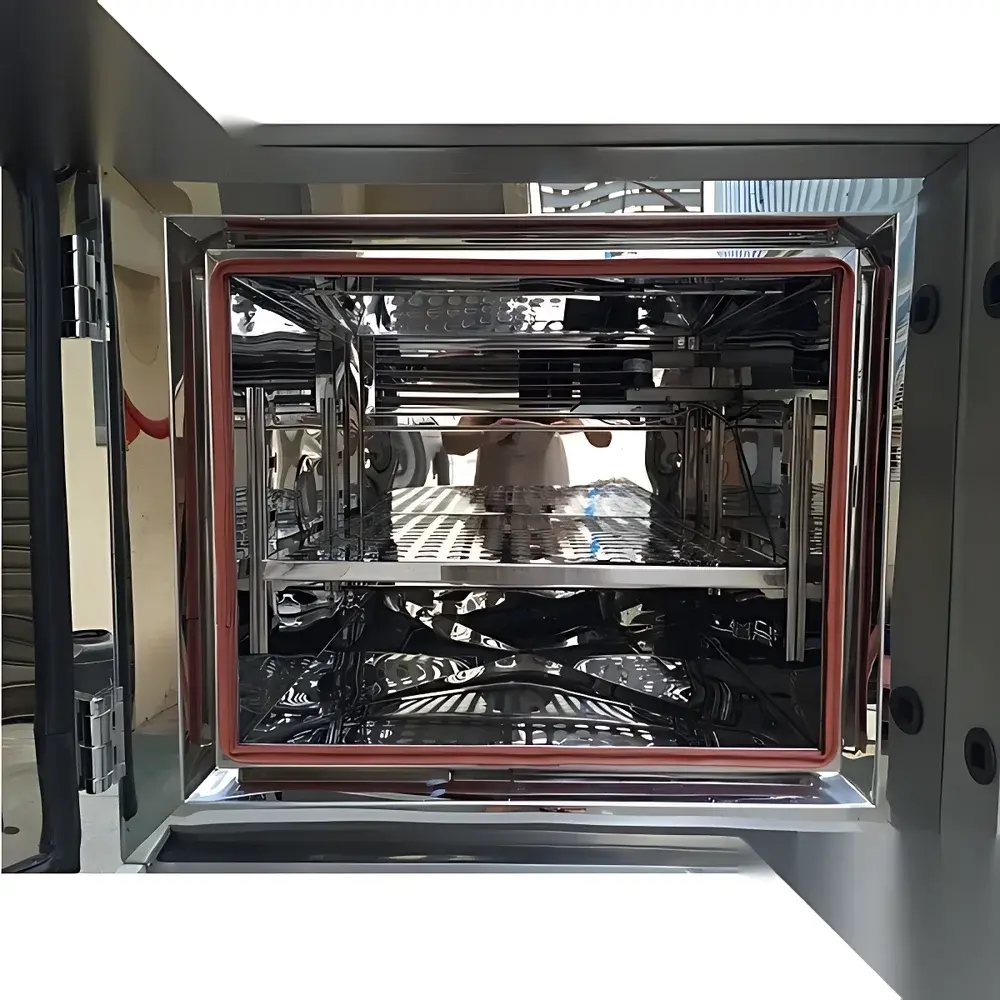
- Modular specimen rack system with adjustable thickness clearance (up to 50 mm), enabling rapid loading/unloading of flat or contoured samples without tools.
- Top-hinged, upward-opening door design minimizes floor space footprint (< 1.2 m²) while providing unobstructed access during sample insertion and maintenance.
- Passive condensation system utilizing standard tap water—no deionized water or external humidifier required. Condensation humidity reaches 100% RH via controlled thermal gradient between specimen surface and chamber wall.
- Submersible stainless-steel heating element located beneath the water reservoir—eliminates direct immersion corrosion and extends service life beyond 5 years under routine operation.
- Externally mounted water level sensor with visual LED indicator and fail-safe cut-off relay—facilitates real-time monitoring without opening the chamber.
- Integrated casters (locking type, ISO 9001-certified) as standard equipment—allows safe relocation within lab or production environments.
- Programmable controller with dual-language (English/Chinese) interface, error logging, and auto-diagnostic alarm triggers for lamp failure, temperature deviation, or water shortage.
- CR-10 traceable irradiance calibration system (Q-Lab patented optical feedback loop) maintains spectral power stability within ±5% over lamp lifetime; extends usable lamp duration to ≥1600 hours.
- Fixed-position UV radiometer probe—no manual repositioning required between test cycles—ensures measurement repeatability across laboratories.
Sample Compatibility & Compliance
The chamber accommodates standardized flat-panel specimens per ISO 11341 and ASTM D4459 formats: up to 24 pieces of 75 mm × 300 mm or 48 pieces of 75 mm × 150 mm. Specimen holders are fabricated from anodized aluminum to minimize thermal distortion and reflectivity interference. All internal surfaces use electropolished AISI 316L stainless steel for corrosion resistance and low outgassing—critical for testing pharmaceutical packaging and optical films. The system meets full regulatory alignment for GLP-compliant testing: audit trails, user-level access control, electronic signature support (21 CFR Part 11 ready), and calibration certificate traceability to NIST standards. It is routinely validated for automotive OEM specifications (GMW14124, Ford CETP 00.00-L-467), aerospace material approvals (SAE AMS 14000), and cosmetic stability testing (ISO 29603).
Software & Data Management
The embedded controller supports multi-segment test profiles with independent programming of irradiance setpoints (W/m² @ 340 nm), black panel temperature (°C), relative humidity (%RH), condensation duration (min), and spray cycle timing (on/off intervals). All parameters are logged at 1-second resolution to internal flash memory (≥12 months retention) and exportable via USB 2.0 to CSV or XML format. Optional Ethernet/IP integration enables remote monitoring via LabVIEW-compatible OPC UA servers or enterprise LIMS platforms. Calibration records—including CR-10 verification logs, lamp hour counters, and sensor drift compensation coefficients—are stored with time-stamped digital signatures. Firmware complies with IEC 62443-3-3 for industrial cybersecurity baseline requirements.
Applications
This xenon arc chamber serves as a primary qualification tool across regulated and industrial sectors: automotive exterior trim and paint systems (fading, chalking, gloss loss); aerospace polymer composites (UV-induced matrix embrittlement); architectural silicone sealants (adhesion loss under cyclic wet/dry exposure); medical device packaging (sterility barrier integrity after accelerated aging); printed electronics (conductive ink delamination); and cosmetic formulation stability (photoreactivity of UV filters and fragrance compounds). Its ability to synchronize UV dose, thermal load, and moisture ingress enables mechanistic modeling of degradation kinetics—supporting predictive lifetime estimation per ISO 11507 Annex B methodology.
FAQ
What standards does this chamber fully comply with?
It meets the core requirements of ISO 4892-2, ASTM G155, ASTM D4459, DIN 75220, JIS D0205, SAE J2527, and BS EN ISO 11341. Full compliance documentation—including factory validation reports and third-party calibration certificates—is provided upon shipment.
Can the system operate without distilled or deionized water?
Yes. The condensation system is designed for municipal tap water (conductivity < 500 µS/cm). Integrated scale-inhibiting heater geometry and periodic drain cycles prevent mineral buildup.
Is black panel temperature measurement traceable to national standards?
Yes. Each unit ships with NIST-traceable calibration for the black panel sensor (±0.5 °C accuracy at 60 °C), verified annually using a certified reference thermometer per ISO/IEC 17025 accredited procedure.
How is irradiance uniformity maintained across the specimen plane?
A motorized filter carousel and elliptical reflector assembly ensure ±8% irradiance uniformity (measured per ASTM G155 Annex A3) over the entire 75 mm × 300 mm exposure area.
Does the controller support 21 CFR Part 11 compliance for pharmaceutical applications?
Yes—when configured with password-protected user roles, electronic audit trail logging, and digital signature modules, the system satisfies FDA requirements for electronic records and signatures in regulated environments.



