
Xenon Arc Weathering Test Chamber – OEM/ODM Manufacturer Supply
No specifications available.
Overview
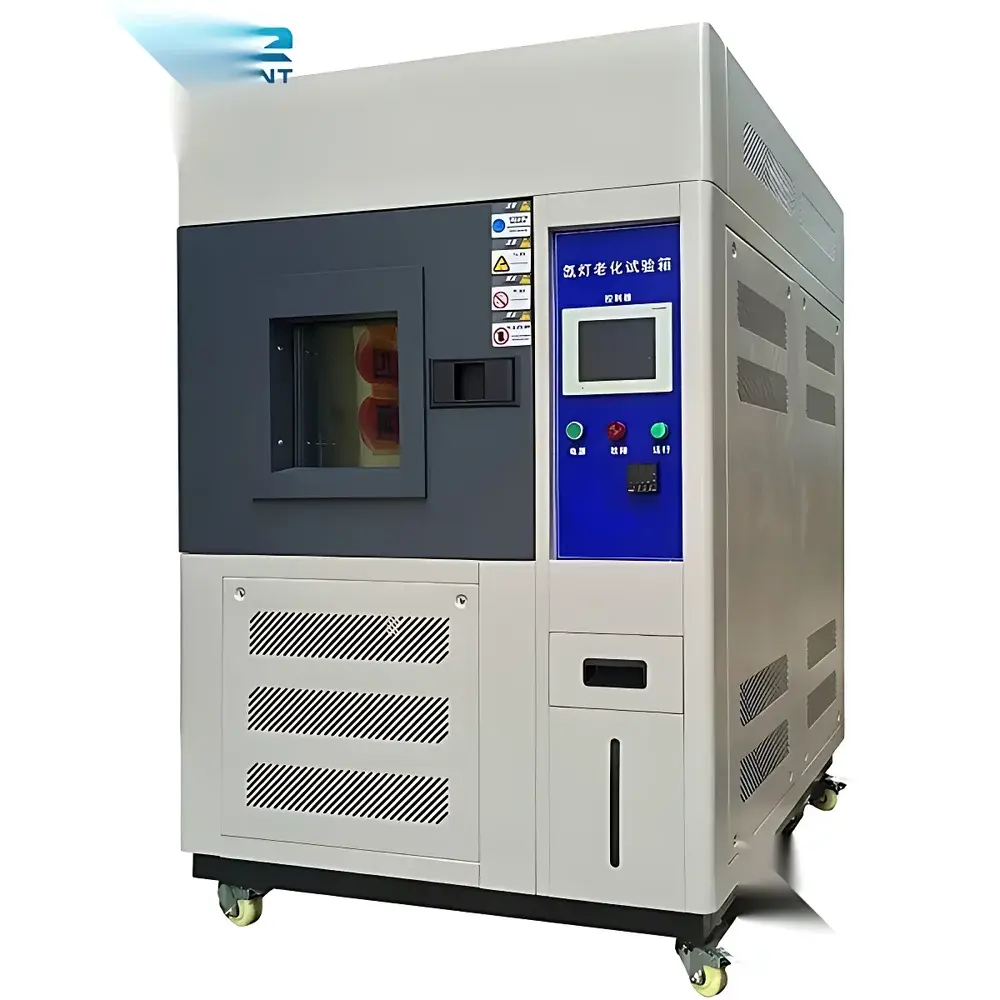
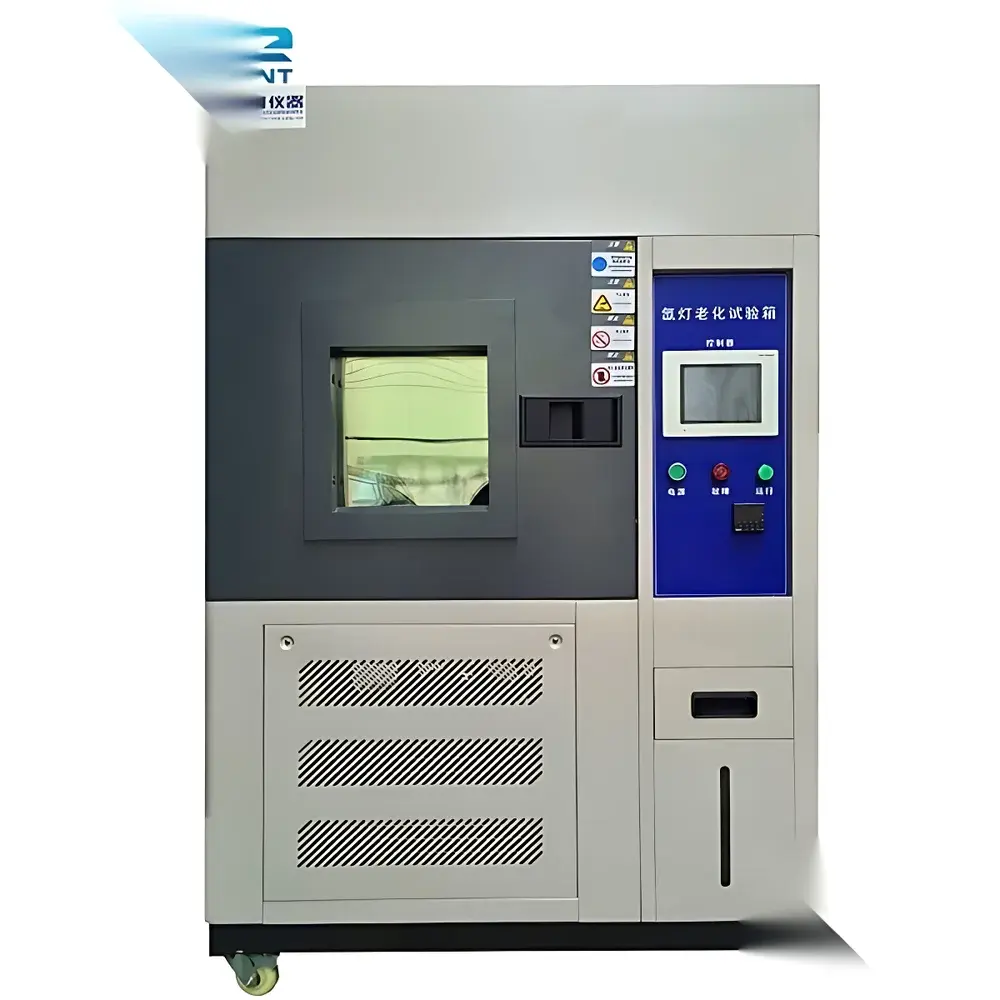
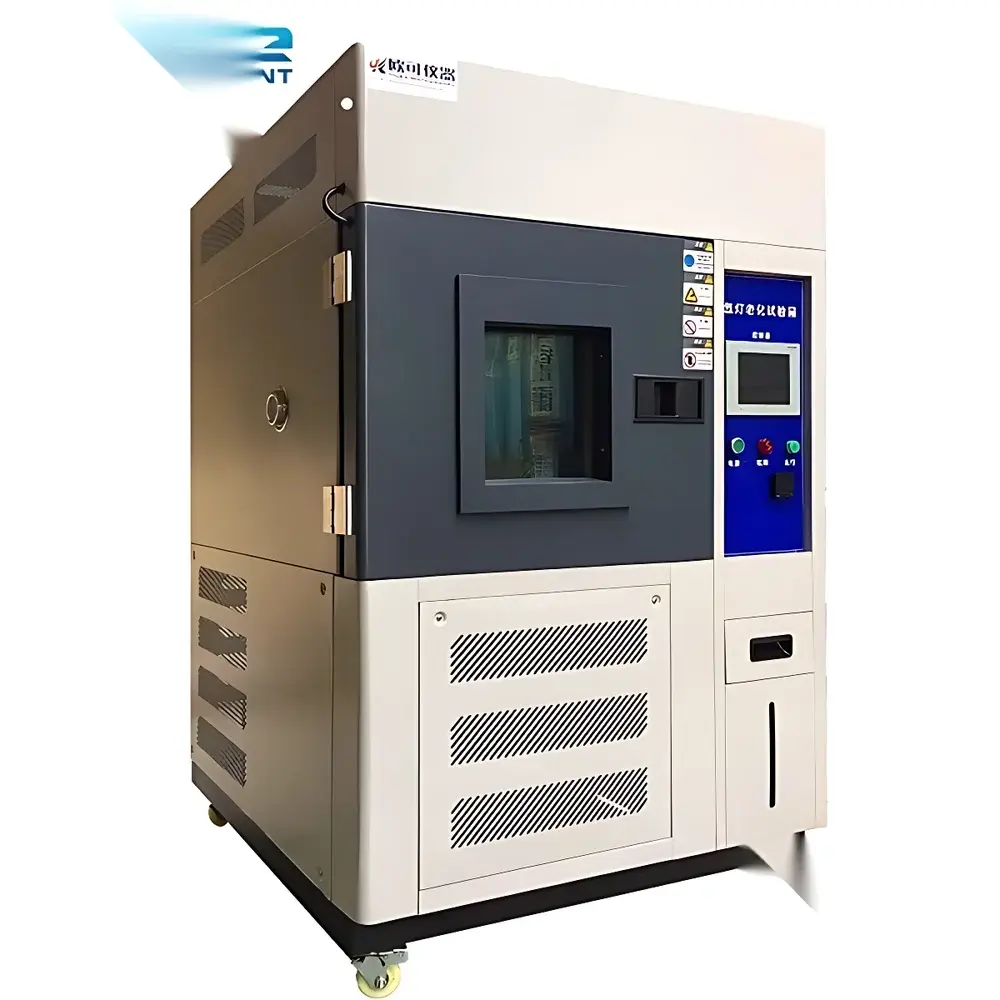
The Xenon Arc Weathering Test Chamber is an environmental simulation instrument engineered to replicate the photodegradative effects of natural sunlight, heat, and humidity under controlled laboratory conditions. It employs a high-intensity xenon arc lamp—calibrated to closely match the spectral power distribution (SPD) of terrestrial solar radiation between 290 nm and 800 nm—to accelerate material aging processes. Unlike UV fluorescent or metal halide sources, xenon arc technology provides broad-spectrum irradiance including critical UVA, UVB, visible, and near-infrared components, enabling realistic evaluation of photochemical degradation mechanisms such as polymer chain scission, pigment fading, coating chalking, and elastomer cracking. Designed for long-term stability and repeatability, this chamber supports standardized exposure protocols aligned with international weathering test methodologies used in automotive, aerospace, coatings, plastics, and textile industries.
Key Features
- High-fidelity xenon arc light source with quartz-filtered output to emulate global solar irradiance (ISO 4892-2, ASTM G155)
- Independent heating and cooling circuits: air-cooled R404A refrigeration system with hermetic French Tecumseh compressor
- Precision climate control: temperature range 0–70 °C (adjustable), humidity range 30–65 % RH, uniformity ≤ ±2 °C / +2 −3 % RH
- Intelligent thermal regulation via PID-controlled balance heating, supported by PT100 platinum resistance sensors (accuracy ±0.1 °C)
- Integrated ozone generation module (100–500 ppm / 0–1000 pphm) with Siemens PLC-based programmable logic control and analog I/O expansion
- Dynamic sample rotation mechanism (0.1–2 rpm) and motorized stretching fixture for mechanical stress coupling during exposure
- 4.3-inch color TFT touchscreen controller with shielded Siemens communication cabling and real-time parameter logging
- Robust internal construction: spiral copper refrigerant tubing, sloped evaporator, imported desiccant filter, sight glass, service valve, oil separator, and solenoid valve
Sample Compatibility & Compliance
This chamber accommodates flat-panel specimens up to standard ISO 4892-2 mounting dimensions, with optional fixtures for 3D parts, textiles, and flexible substrates. Sample racks are constructed from stainless steel and designed for minimal shadowing and optimal irradiance homogeneity across the exposure plane. The system complies with multiple national and international standards—including GB/T 2424.14–1995 (equivalent to IEC 60068-2-5), GB/T 9344–1998 (ASTM D4329 alignment), GB 14049–1993, and GB/T 20149–2016—ensuring data integrity for regulatory submissions and inter-laboratory correlation studies. All control firmware and data handling routines support GLP-compliant audit trails when integrated into validated QA/QC workflows.
Software & Data Management
The embedded controller firmware enables full-cycle exposure programming: ramp profiles, dwell times, irradiance setpoints (W/m² @ 340 nm), temperature/humidity ramps, and ozone concentration scheduling—all configurable in 1-minute resolution over 999-hour maximum duration. Real-time monitoring includes graphical trend display of all measured parameters, with timestamped CSV export via USB interface. While the base unit does not include PC-hosted analysis software, its communication protocol is compatible with third-party LIMS integration through Modbus RTU or Ethernet/IP interfaces. For regulated environments, optional 21 CFR Part 11 compliance packages are available upon request, including electronic signatures, user access levels, and immutable event logs.
Applications
- Evaluation of UV stabilizers, antioxidants, and pigment systems in polyolefins, PVC, and engineering thermoplastics
- Correlation of accelerated exposure data with outdoor Florida or Arizona field trials (via reciprocity modeling)
- Qualification testing of automotive interior trim, headlamp lenses, and exterior body coatings per SAE J2412/J2527
- Validation of packaging barrier performance under combined thermal, humid, and photolytic stress
- Assessment of textile colorfastness and tensile retention following ISO 105-B02 and AATCC TM16 protocols
- Pre-screening of photovoltaic encapsulant materials for yellowing and delamination resistance
FAQ
What spectral filters are included with the xenon lamp system?
Standard configuration includes Daylight (Q/B) and Window Glass (Q/FS40) borosilicate outer filters, meeting ISO 4892-2 requirements for irradiance cutoff at 295 nm and 320 nm respectively.
Is calibration traceable to NIST or other national metrology institutes?
Yes—radiometric calibration certificates for the irradiance sensor are available upon request, traceable to NIST-traceable reference detectors with annual recalibration intervals recommended.
Can the chamber operate continuously for extended durations (e.g., >1000 hours)?
The system is rated for unattended operation up to 999 hours per cycle; for longer tests, sequential program chaining or external scheduler integration is required.
Does the controller support multi-step irradiance ramping?
Yes—up to 16 programmable segments per test profile, each with independent irradiance, temperature, humidity, and ozone targets.
What maintenance intervals are recommended for the xenon lamp and optical system?
Xenon lamps require replacement every 1500 ± 200 hours of operation; quartz filter assemblies should be inspected quarterly and cleaned with spectroscopic-grade methanol to prevent transmission loss.



