
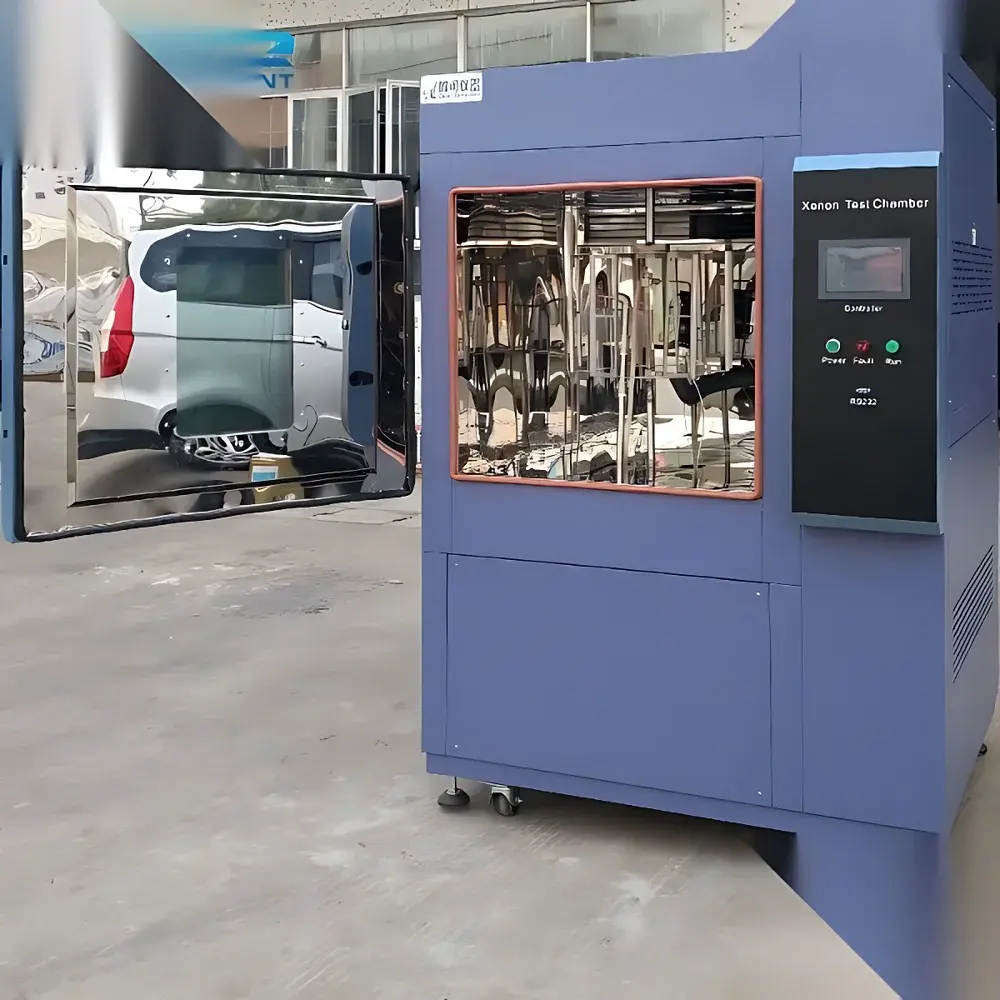
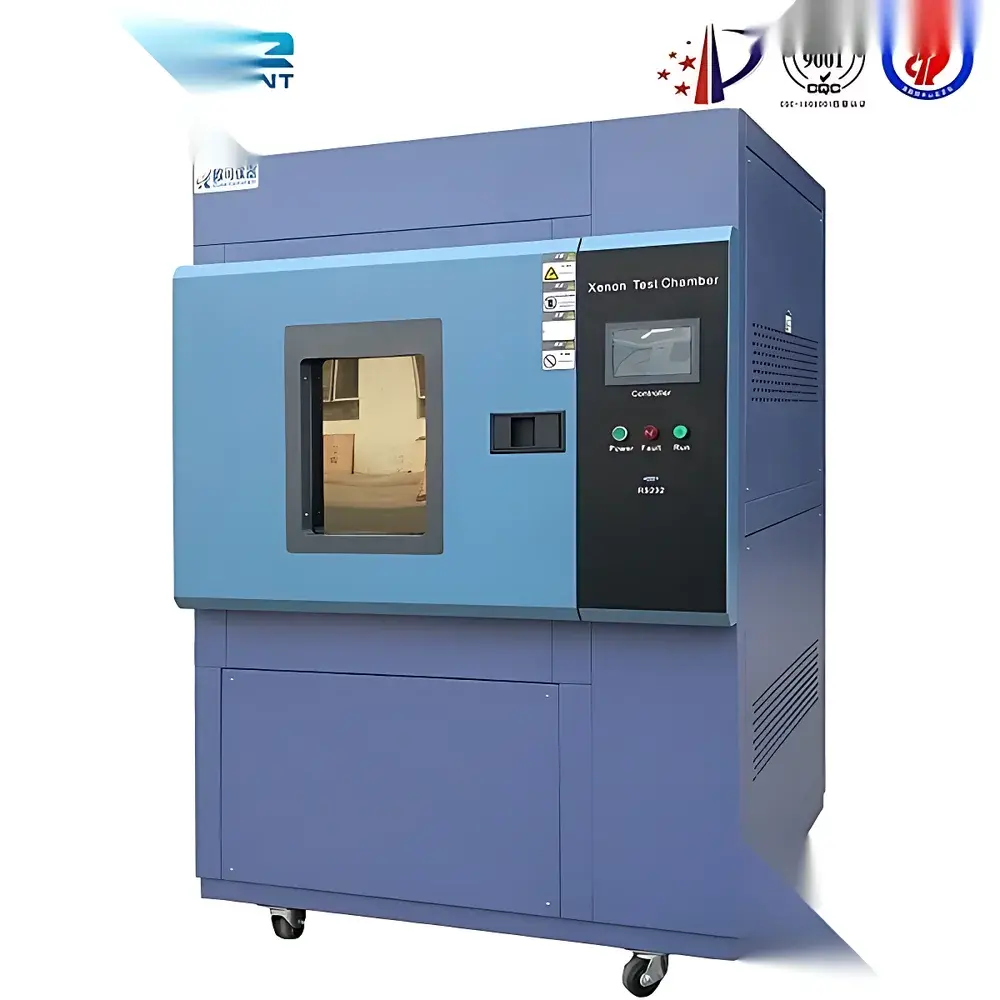
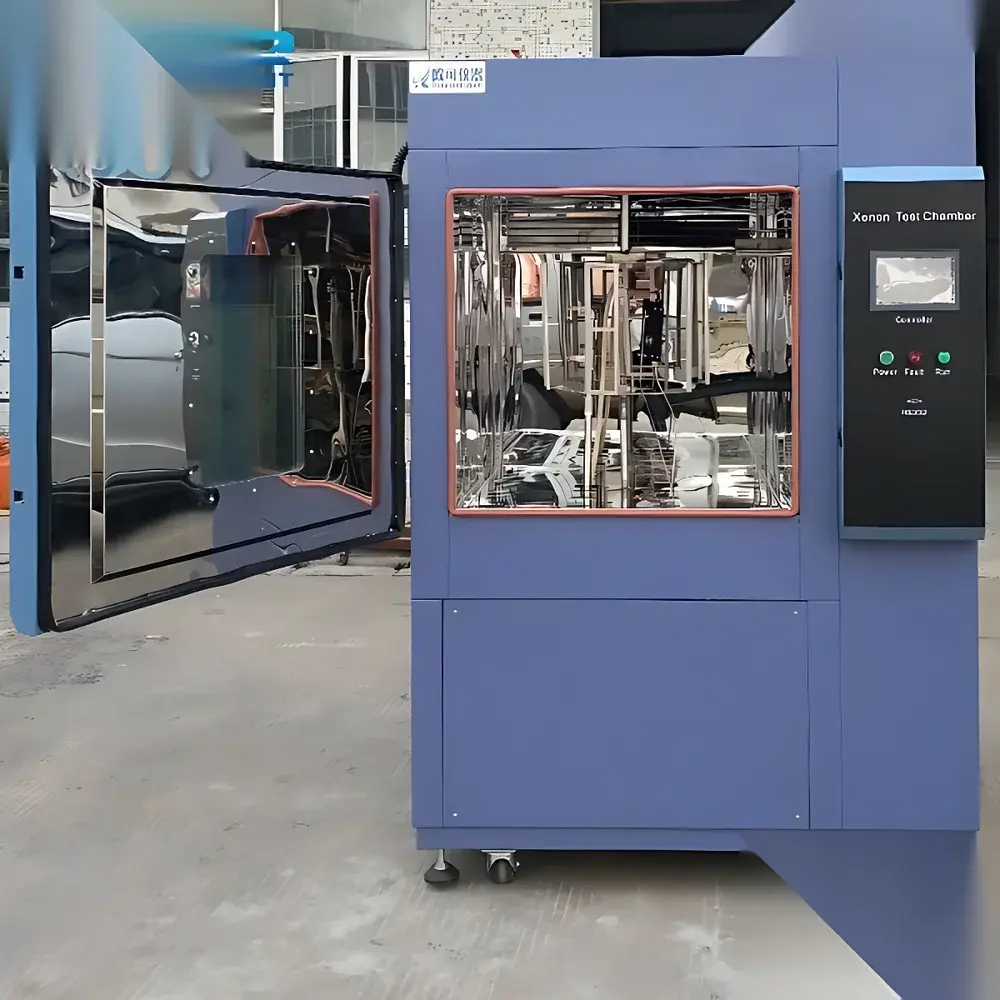
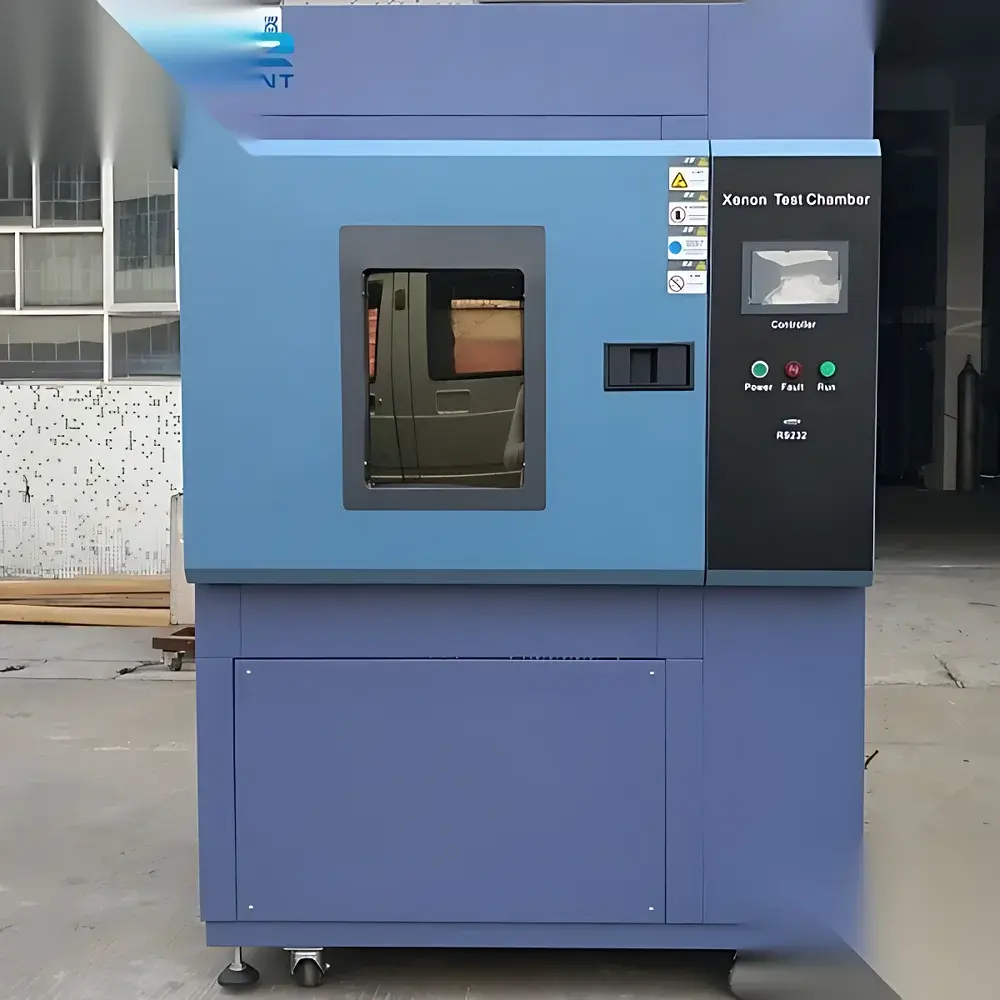
Xenon Arc Weathering Test Chamber – Standard Chamber Dimensions Model
No specifications available.
Overview
The Xenon Arc Weathering Test Chamber is an environmental simulation instrument engineered for precision accelerated weathering testing of materials under controlled, reproducible conditions that replicate the spectral distribution, intensity, and thermal-humidity cycles of natural sunlight. Utilizing a high-intensity xenon arc lamp with a quartz envelope and integrated optical filters (typically Daylight-Q or Window Glass-Q), the chamber delivers a continuous spectrum closely matching terrestrial solar irradiance (290–800 nm), including critical UV-B, UV-A, visible, and near-infrared regions. This enables quantitative assessment of photodegradation mechanisms—including polymer chain scission, pigment fading, surface chalking, gloss loss, and mechanical property deterioration—under standardized exposure protocols. Designed for long-term stability and radiometric consistency, the system supports both open-air and closed-loop exposure configurations and integrates real-time irradiance monitoring via calibrated broadband or narrowband UV sensors (e.g., 340 nm or 420 nm). It serves as a core tool in R&D laboratories, quality assurance departments, and certification bodies engaged in material durability validation.
Key Features
- High-fidelity xenon arc light source with spectral output compliant with ISO 4892-2, ASTM G155, and SAE J2527 standards
- Liquid-cooled or air-cooled lamp options, supporting stable irradiance control at 0.35–1.20 W/m² @ 340 nm (adjustable per test specification)
- Programmable touchscreen controller with intuitive GUI for multi-segment temperature/humidity/irradiance profiles
- Precise climate control: temperature range −10°C to +80°C (±0.1°C setpoint accuracy), humidity range 10–95% RH (±1% RH resolution)
- Robust chamber construction: outer shell of electrostatically coated cold-rolled steel; inner chamber lined with mirror-finish SUS304 stainless steel for corrosion resistance and reflectivity uniformity
- High-performance door seal using dual-durometer silicone rubber rated for −60°C to +200°C operation, ensuring thermal integrity and low leakage
- Integrated black panel or black standard thermometer (BST) for specimen surface temperature monitoring per ISO 4892-2
- Timed exposure capability up to 99 hours, 99 minutes, 99 seconds with automatic cycle termination and data logging
Sample Compatibility & Compliance
The chamber accommodates flat-panel specimens (standard rack dimensions: 450 mm × 700 mm × 50 mm max thickness) and optional 3D sample holders for automotive trim, textile swatches, or painted substrates. Sample mounting fixtures are non-reflective and thermally inert to minimize measurement artifacts. The system meets essential regulatory and industry-standard requirements including GB/T 16422.2–1999 (equivalent to ISO 4892-2), GB/T 8427–2019 (textile colorfastness to artificial light), GB/T 1865–2021 (coating aging), and GB/T 2423.24–2013 (IEC 60068-2-5). For regulated environments, optional audit-trail-enabled firmware supports 21 CFR Part 11 compliance when paired with validated software packages, enabling GLP/GMP-aligned test documentation, user access control, and electronic signature functionality.
Software & Data Management
The embedded controller logs time-stamped operational parameters—including chamber air temperature, relative humidity, irradiance (W/m²), BST temperature, and elapsed exposure time—at user-defined intervals (1 s to 60 min). Export formats include CSV and XML for post-processing in MATLAB, Python, or LIMS platforms. Optional PC-based software provides remote monitoring, multi-chamber fleet management, automated report generation (PDF/Excel), and trend analysis against reference degradation curves (e.g., ΔE*ab, gloss retention %, tensile strength loss). All data files include embedded metadata (test ID, operator, calibration date, lamp hour count) to satisfy traceability requirements under ISO/IEC 17025 accreditation frameworks.
Applications
- Automotive: Accelerated evaluation of interior trim, exterior coatings, headlamp lenses, and sealants under simulated South Florida or Arizona desert spectra
- Textiles & Apparel: Colorfastness validation per AATCC TM16, ISO 105-B02, and GB/T 8427 for dyed fabrics, outdoor gear, and technical textiles
- Paints & Coatings: Correlation of QUV vs. xenon arc performance; determination of chalk resistance, gloss decay, and adhesion loss per ASTM D4587 and ISO 11341
- Plastics & Polymers: UV stabilization efficacy testing of polyolefins, PVC, PC, and engineering resins used in outdoor applications
- Electronics Enclosures: Environmental stress screening of housing materials for IP-rated consumer and industrial devices
- Building Materials: Durability assessment of roofing membranes, window films, and façade cladding systems per ASTM D4329 and EN ISO 4892-2
FAQ
What spectral filters are available, and how do they affect test relevance?
Standard filter configurations include Daylight-Q (full-spectrum simulation for general outdoor exposure) and Window Glass-Q (cut-off below 295 nm to mimic indoor through-glass exposure). Filter selection directly determines UV dose distribution and must align with end-use environment per ISO 4892-2 Annex A.
Is irradiance calibration traceable to NIST or other national metrology institutes?
Yes—optional factory-calibrated broadband or narrowband sensors are supplied with individual calibration certificates traceable to NIST SRM 2242 or equivalent primary standards. Annual recalibration services are available.
Can the chamber operate continuously for extended exposure campaigns (e.g., >1,000 hours)?
Yes—the system supports unattended operation with automatic lamp hour tracking, scheduled maintenance alerts, and redundant safety interlocks (overtemperature, overirradiance, door-open cutoff).
Does the chamber support simultaneous control of multiple environmental variables?
Yes—temperature, humidity, irradiance, and spray cycles (if equipped with water misting system) can be independently programmed and synchronized within a single test profile.
What is the typical lamp service life, and how is lamp aging compensated?
Xenon lamps typically last 1,500–2,000 hours. The controller automatically adjusts power output to maintain constant irradiance throughout lamp life, with real-time compensation based on feedback from the calibrated sensor.



