
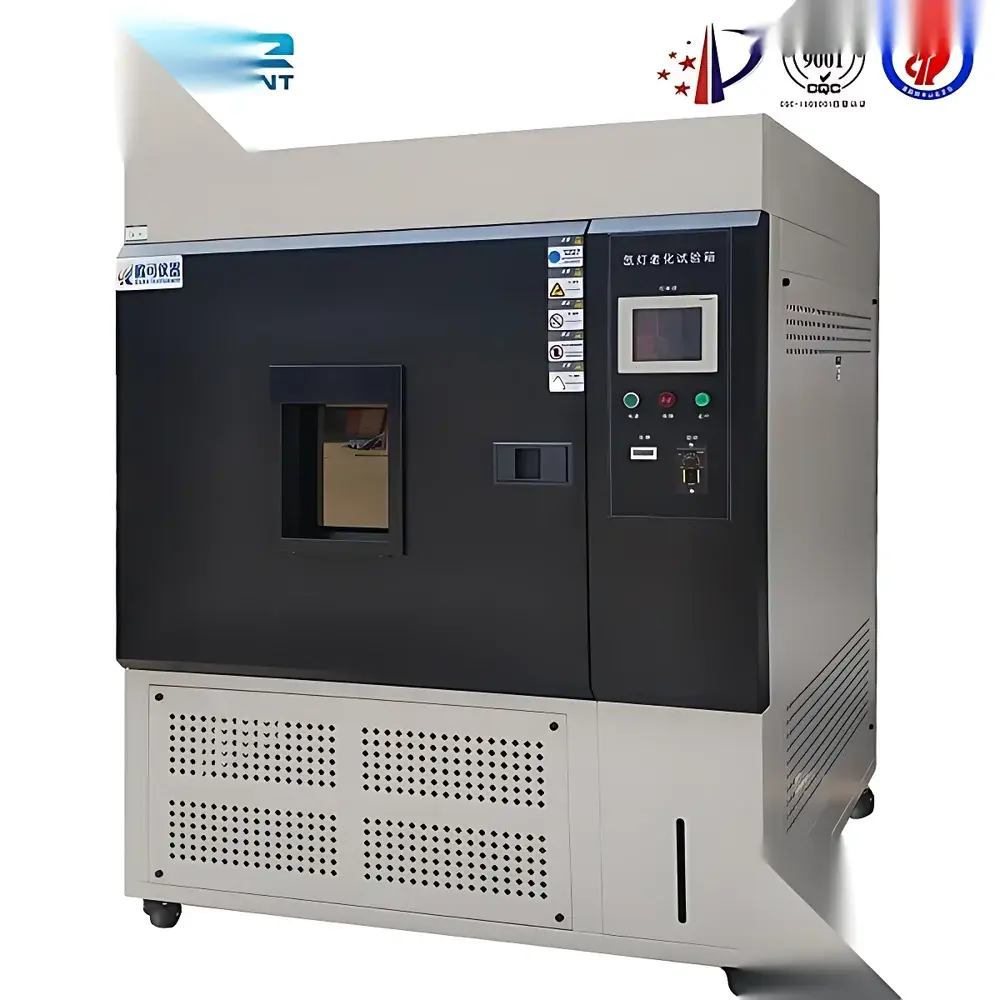
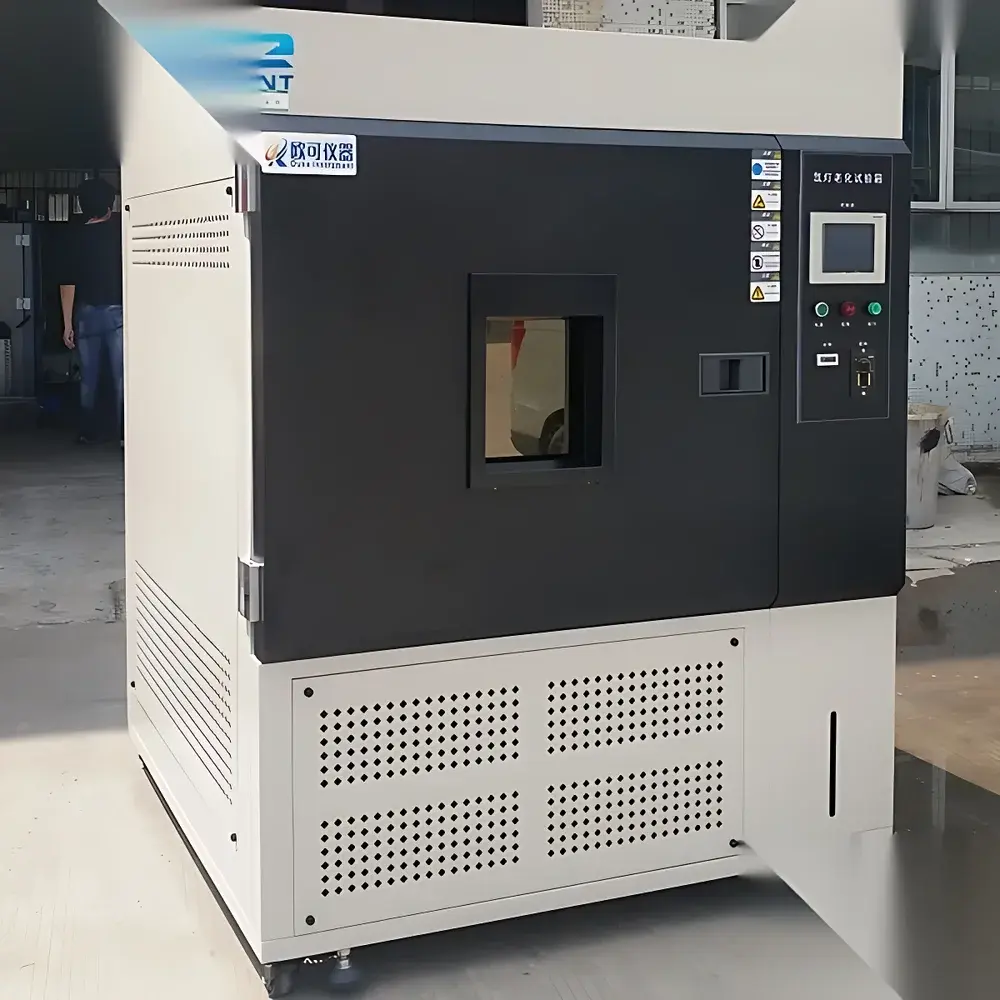
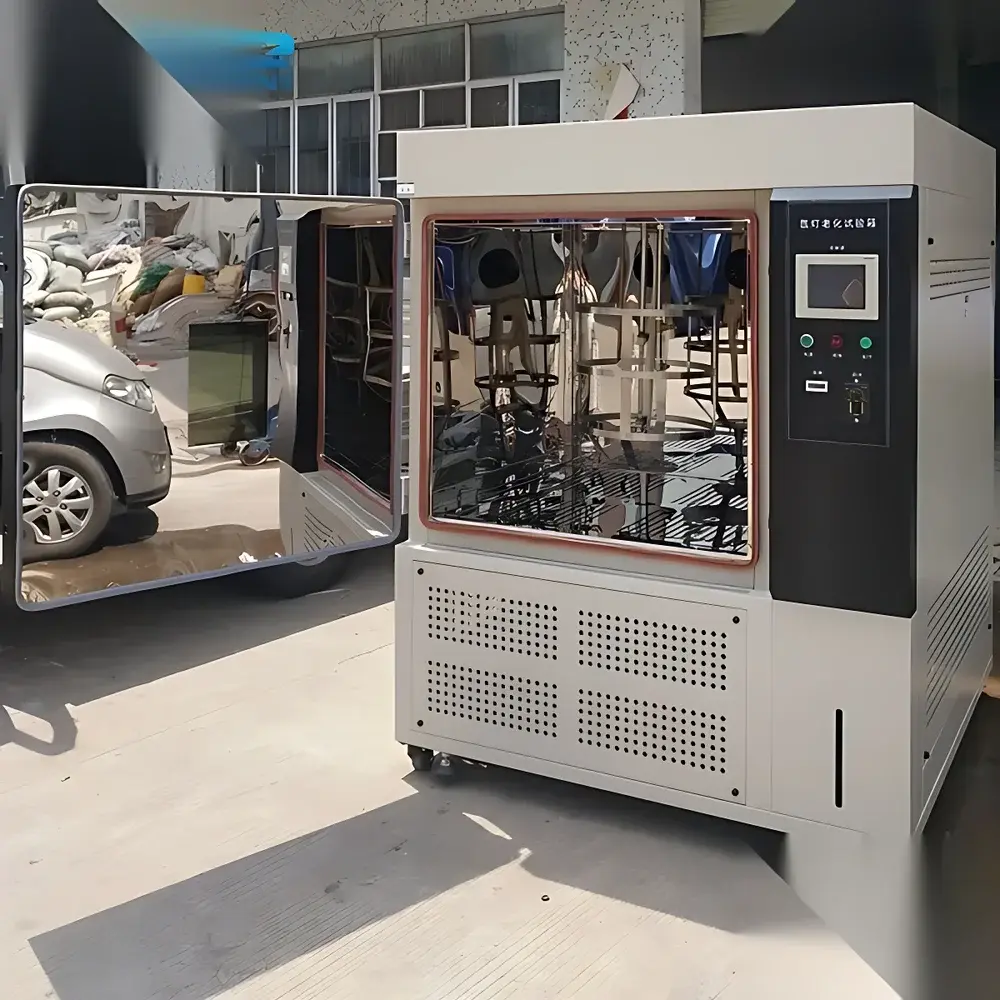
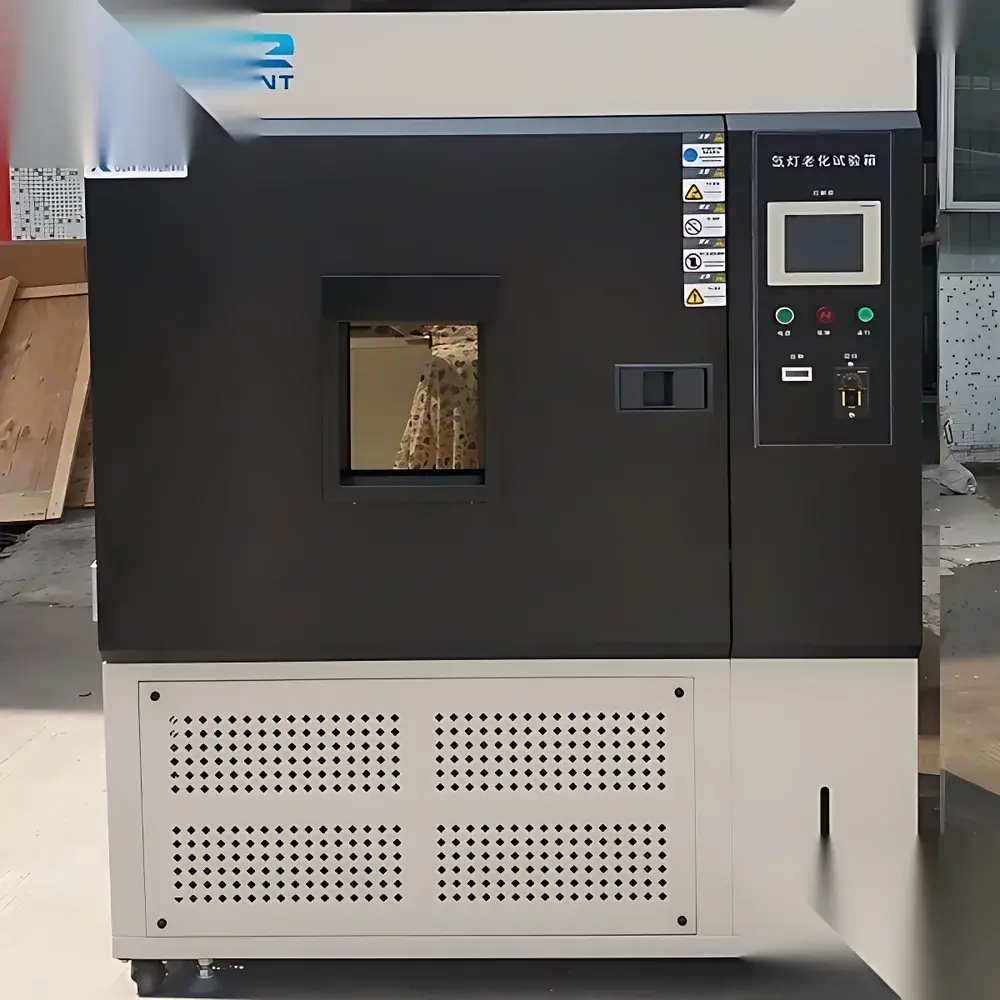
Xenon Arc Weathering Test Chamber – Standard Horizontal Tray Configuration
| Brand | OEM / Custom-Built |
|---|---|
| Origin | Imported |
| Manufacturer Type | Authorized Distributor |
| Price | USD 5,300 (Reference Only |
Overview
The Xenon Arc Weathering Test Chamber is an engineered environmental simulation system designed to replicate the combined effects of solar radiation, temperature, and moisture—key stressors driving material degradation in real-world outdoor exposure. It utilizes a high-intensity xenon arc lamp as the light source, spectrally filtered to closely match natural sunlight (CIE No. 85, ISO 4892-2, ASTM G155), including UV, visible, and near-infrared regions. The chamber integrates precise black-panel or black-standard thermometer (BST) temperature control, relative humidity regulation via steam humidification, and programmable water spray cycles to simulate rain, dew, and condensation. Unlike UV fluorescent systems, xenon arc testing provides full-spectrum fidelity essential for evaluating color fading, gloss loss, chalking, cracking, and polymer chain scission across coatings, plastics, textiles, automotive trim, and architectural materials.
Key Features
- Horizontal sample tray configuration with 5° forward tilt—ensures uniform water retention during spray cycles and mimics realistic wetting dynamics on flat or slightly angled surfaces.
- Programmable spray system delivering calibrated deionized water at defined intervals (e.g., 3 seconds per minute), enabling reproducible wet/dry cycling aligned with ISO 4892-2 Cycle 1 and ASTM D4329.
- Real-time monitoring of irradiance (W/m² @ 340 nm or 420 nm), BST temperature (±0.5°C), chamber air temperature (±1.0°C), and RH (±3% RH), all traceable to NIST-calibrated sensors.
- Robust stainless-steel interior with corrosion-resistant construction, integrated water filtration and recirculation loop, and automatic low-water cutoff protection.
- Compliance-ready architecture supporting audit trails, user-level access control, and electronic signature capability—facilitating adherence to GLP, ISO/IEC 17025, and FDA 21 CFR Part 11 requirements when paired with validated software.
Sample Compatibility & Compliance
The chamber accommodates standard test specimens up to 150 mm × 300 mm on a single-tier horizontal tray (custom multi-tier options available). Specimen mounting fixtures are non-reactive (anodized aluminum or PTFE-coated) to prevent catalytic interference. All operational parameters comply with internationally recognized weathering standards: ISO 4892-2 (Xenon-arc methods), ASTM G155 (Non-filtered xenon arc exposure), ASTM D2565 (Plastics), AATCC TM16 (Textiles), SAE J2527 (Automotive exterior materials), and IEC 60068-2-9 (Damp heat, cyclic). Calibration certificates for irradiance, temperature, and humidity sensors are provided with each unit shipment.
Software & Data Management
Equipped with embedded controller firmware supporting multi-segment test profiles (irradiance ramping, temperature gradients, humidity hold phases, and spray timing logic). Optional PC-based software enables remote monitoring, real-time graphing of environmental parameters, automated report generation (PDF/CSV), and secure data archiving. Audit logs record operator ID, parameter changes, alarm events, and calibration history—fully configurable to meet ISO 17025 documentation rigor and internal quality management system (QMS) requirements. Data export supports integration into LIMS platforms via OPC UA or Modbus TCP protocols.
Applications
This system is routinely deployed in R&D laboratories, QC departments, and third-party testing facilities for accelerated aging validation of: automotive interior and exterior components (dashboards, seals, headlamp lenses); architectural cladding and roofing membranes; aerospace composites and sealants; medical device packaging (ISO 11607-1 stability); consumer electronics housings; and pigment-stabilized printing inks. Its ability to decouple and recombine solar spectral energy, thermal load, and moisture ingress makes it indispensable for failure mode analysis, formulation optimization, and regulatory dossier preparation (e.g., FDA 510(k), CE marking, REACH compliance dossiers).
FAQ
What safety interlocks are built into the chamber?
The system includes door-open irradiance shutoff, overtemperature cutout (BST and chamber air), low-water level detection, and lamp cooling-fan failure monitoring—all compliant with IEC 61000-6-2 EMC and IEC 60204-1 machinery safety directives.
Can the chamber operate unattended for extended cycles?
Yes—when installed in a climate-controlled room with stable utility supply, the unit supports continuous operation up to 1,000 hours with scheduled maintenance intervals (lamp replacement every 1,500–2,000 hours; filter cleaning every 200 hours).
Is calibration support included with purchase?
A full factory calibration certificate (traceable to NIST or DAkkS-accredited labs) is supplied. On-site recalibration services and annual verification packages are available under service agreement.
How is water quality managed to prevent nozzle clogging?
Integrated reverse-osmosis + deionization filtration ensures resistivity >1 MΩ·cm; optional ultrasonic nozzle cleaning cycle prevents mineral deposition without chemical additives.
Does the system meet ISO/IEC 17025 method validation requirements?
Yes—the chamber’s measurement uncertainty budget, sensor linearity verification, and repeatability data (per ISO/IEC 17025 Clause 7.7) are documented in the technical manual and can be extended to method-specific validation protocols upon request.



