
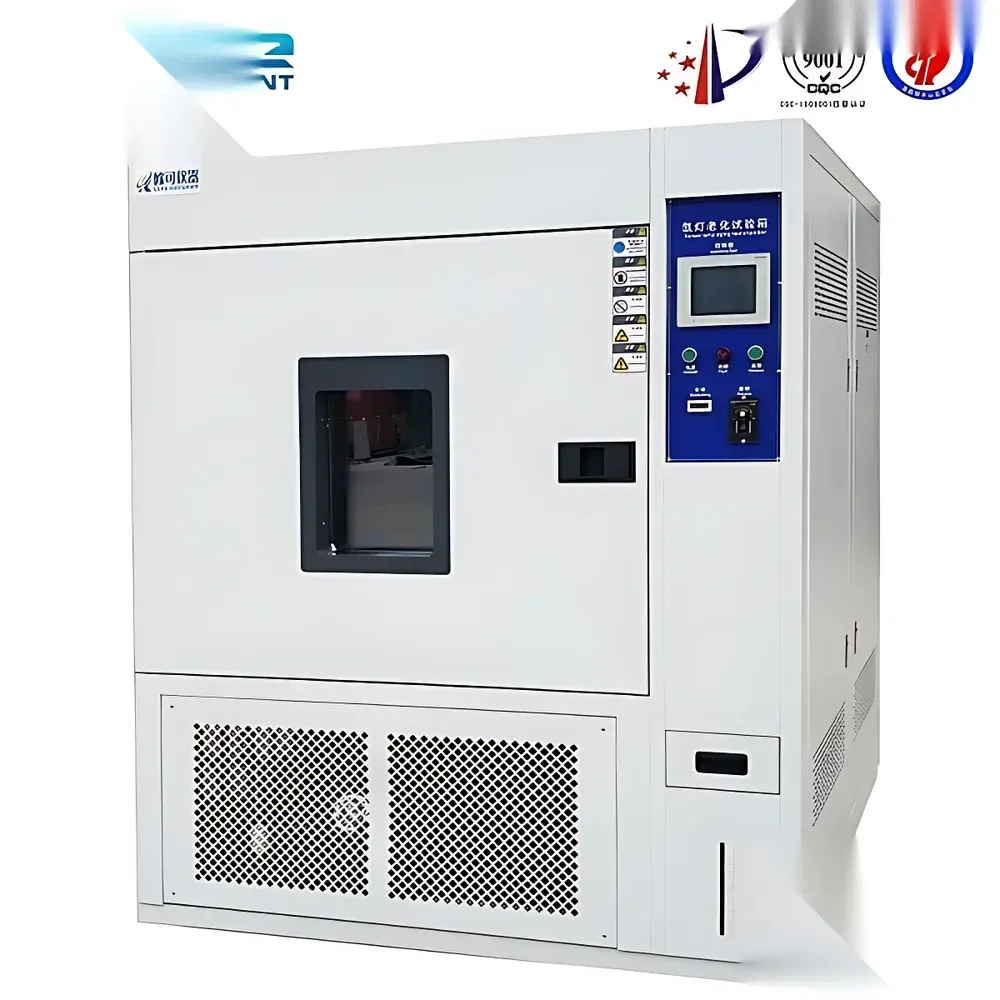
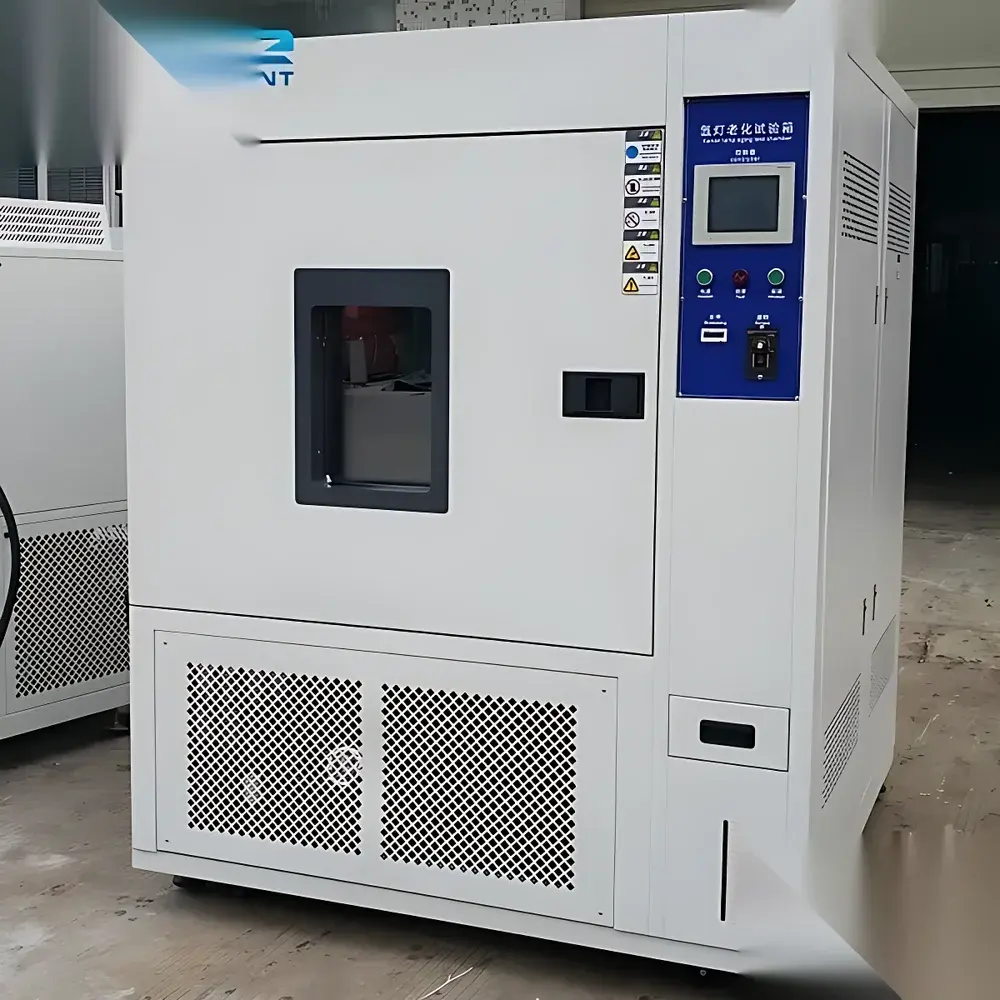
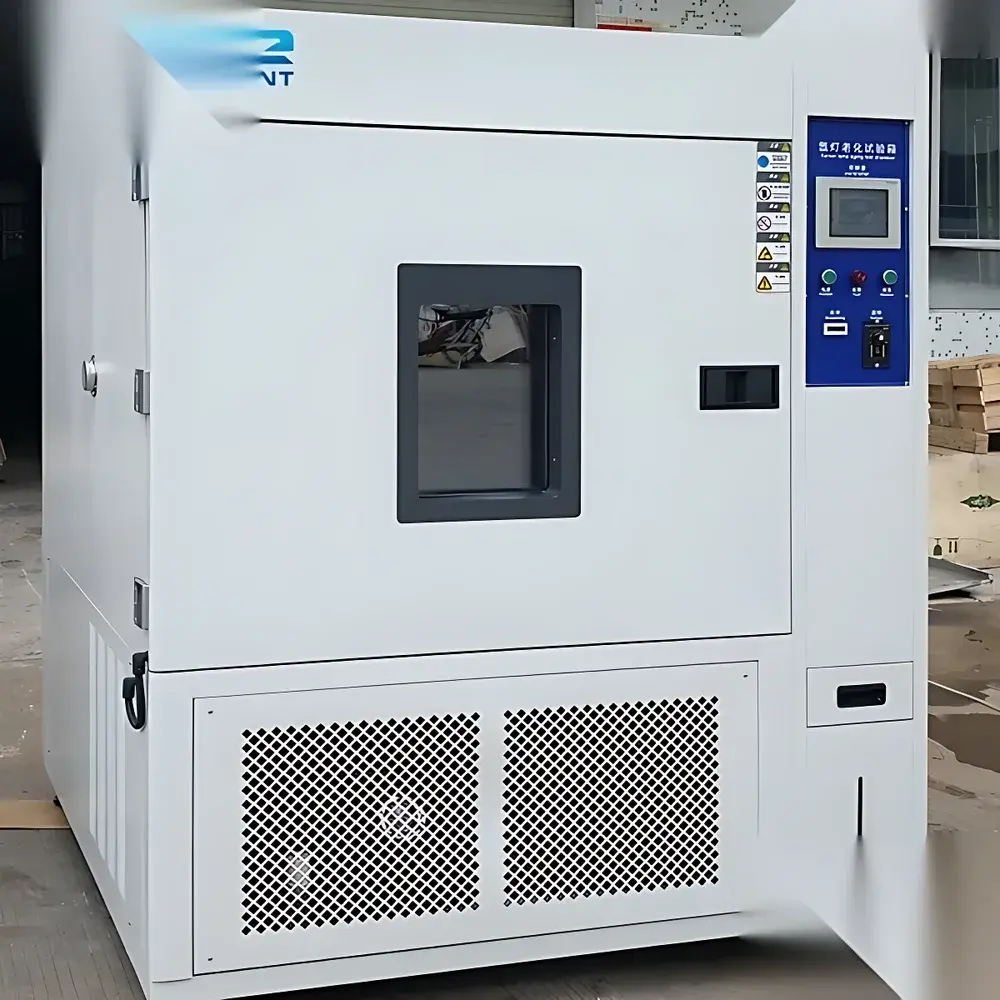
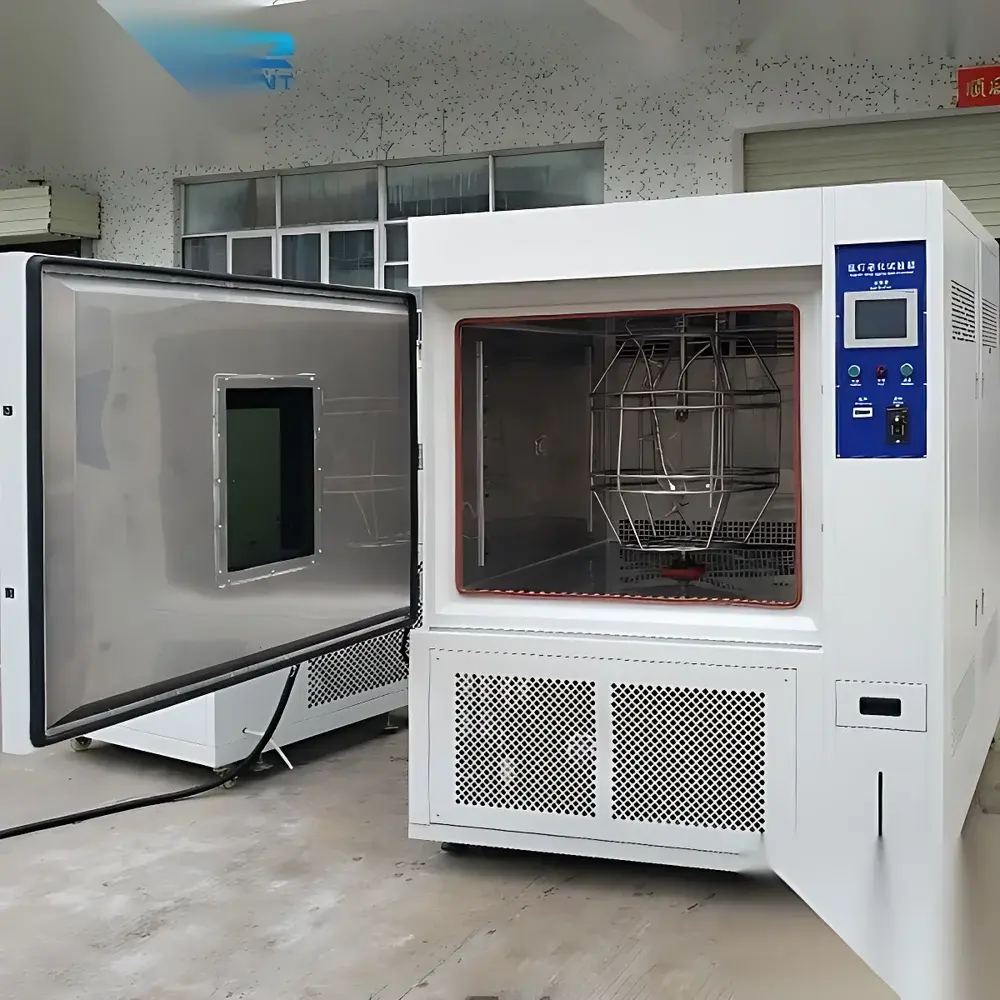
Xenon Arc Weathering Test Chamber – Standard Model XW-1000
| Brand | Other Brands |
|---|---|
| Origin | Imported |
| Manufacturer Type | Authorized Distributor |
| Price | USD 5,200 (Reference Only) |
| Light Source | Air-Cooled Long-Arc Xenon Lamp |
| Spectral Range | 290–800 nm (Full Solar Spectrum) |
| Irradiance Control | 0.35–0.65 W/m² @ 340 nm |
| Temperature Range | RT +10°C to 80°C |
| Humidity Range | 10–95% RH |
| Water Spray Cycle | Programmable On/Off |
| Sample Rotation | Dual-axis (Orbital + Self-rotation) |
| Filter Options | Daylight-Q, Window-Glass, Extended UV |
| Lamp Life | ~1600 h at 0.55 W/m² @ 340 nm |
| Compliance | ASTM G155, ISO 4892-2, SAE J2527, AATCC TM16, GB/T 16422.2 |
Overview
The Xenon Arc Weathering Test Chamber – Standard Model XW-1000 is an engineered environmental test system designed to replicate the photodegradative effects of natural sunlight, heat, and moisture under accelerated, controlled laboratory conditions. It employs a high-intensity, air-cooled long-arc xenon lamp as its primary radiation source — delivering a continuous spectrum closely aligned with terrestrial solar irradiance (290–800 nm). Unlike UV fluorescent or metal halide sources, xenon arc technology provides true full-spectrum simulation, including critical UVA, UVB, visible, and near-infrared bands essential for evaluating photochemical degradation mechanisms in organic materials. The chamber integrates precise irradiance control via calibrated broadband or narrowband (340 nm) sensors, enabling reproducible exposure dosimetry per international standards such as ASTM G155 and ISO 4892-2. Its robust thermal and hygric regulation ensures stable test environments during extended cycles, making it suitable for qualification testing in R&D, quality assurance, and regulatory compliance workflows.
Key Features
- Air-cooled long-arc xenon lamp with spectral output traceable to NIST-calibrated reference standards
- Programmable irradiance control (0.35–0.65 W/m² @ 340 nm) with real-time feedback and auto-compensation
- Dual-axis sample rotation system: orbital translation combined with individual specimen self-rotation for uniform exposure distribution
- Integrated water spray subsystem with adjustable frequency, duration, and pressure (0.05–0.15 MPa), compliant with wet/dry cycling protocols
- Precision temperature and relative humidity control: RT+10°C to 80°C / 10–95% RH, maintained via PID-regulated heating, refrigeration, and steam humidification
- Modular optical filter system supporting daylight-Q (direct sun), window-glass (indoor), and extended-UV configurations for application-specific spectral tailoring
- Stainless steel mirror-finish inner chamber (AISI 304) with high-density fiberglass + polyurethane composite insulation (U-value ≤ 0.25 W/m²·K)
- Low-noise axial circulation fan with stainless steel multi-blade impeller and high-temp bearing assembly for uniform vertical airflow
- Double-lip silicone gasket seal on observation door with non-latching ergonomic handle and viewing window (quartz glass, UV-transmissive)
Sample Compatibility & Compliance
The XW-1000 accommodates irregularly shaped specimens up to 500 mm × 500 mm × 100 mm (W×D×H) using a configurable multi-angle sample rack fabricated from corrosion-resistant aluminum alloy. Specimen holders are compatible with standard AATCC, ISO, and ASTM mounting fixtures, including textile frame clamps, automotive panel brackets, and plastic coupon trays. The system supports fully automated test sequences per ASTM D4329 (plastics), ASTM D4459 (interior automotive), ISO 11341 (paints), and GB/T 16422.2 (Chinese national standard). All operational parameters—including irradiance setpoint, chamber temperature, RH, spray timing, and rotation speed—are logged with timestamped audit trails, satisfying GLP and FDA 21 CFR Part 11 data integrity requirements when paired with validated software.
Software & Data Management
Control and monitoring are managed via a dedicated embedded touchscreen HMI (7″ TFT, IP65-rated) running deterministic real-time firmware. The interface supports multi-step program definition, live graphing of irradiance/temperature/RH trends, and export of CSV-formatted test logs via USB 2.0. Optional PC-based software (XW-Control Suite v3.2) enables remote supervision, report generation (PDF/Excel), statistical analysis of color shift (ΔE* CIELAB), gloss retention, and mechanical property correlation. All data records include digital signatures, user authentication logs, and version-controlled firmware metadata—fully compliant with ISO/IEC 17025 documentation requirements for accredited testing laboratories.
Applications
- Textile and leather industries: assessment of lightfastness (AATCC TM16, ISO 105-B02), photostability of dyes, and light-sweat synergy testing
- Automotive OEMs and suppliers: exterior trim validation per SAE J2527 and ISO 16322, headlamp lens yellowing, and interior material fogging resistance
- Coatings and pigments: weathering performance of architectural paints (ISO 4892-2), industrial coatings (ASTM D4587), and powder coatings
- Plastics and polymers: evaluation of UV stabilizer efficacy, embrittlement onset, and surface chalking in polyolefins, PVC, and engineering resins
- Outdoor lighting and signage: photometric stability of LED housings, diffusers, and reflective sheeting (ASTM D7897)
- Regulatory submission support: generation of repeatable, auditable exposure data for REACH, RoHS, and IECQ qualification dossiers
FAQ
What spectral filters are included with the standard configuration?
The base unit ships with a daylight-Q filter. Additional filters (window-glass, extended UV, borosilicate) are available as optional accessories.
Is lamp calibration required before first use?
Yes — initial spectral verification using a NIST-traceable spectroradiometer is recommended prior to qualification testing; annual recalibration is advised per ISO/IEC 17025 guidelines.
Can the chamber operate unattended for 1,000-hour exposure tests?
Yes — the system features hardware-level safety interlocks (overtemperature, lamp arc failure, door open), automatic lamp power ramp-down, and event-triggered email alerts via optional Ethernet module.
Does the XW-1000 support humidity control during dark cycles?
Yes — RH control remains active independent of lamp operation, enabling realistic day/night condensation simulation per ISO 4892-2 Annex B.
What maintenance intervals are specified for the xenon lamp and filters?
Lamp replacement is recommended after 1,600 hours at nominal irradiance; quartz envelope and secondary filters require cleaning every 200 hours and replacement every 4,000 hours or per spectral drift verification.



