
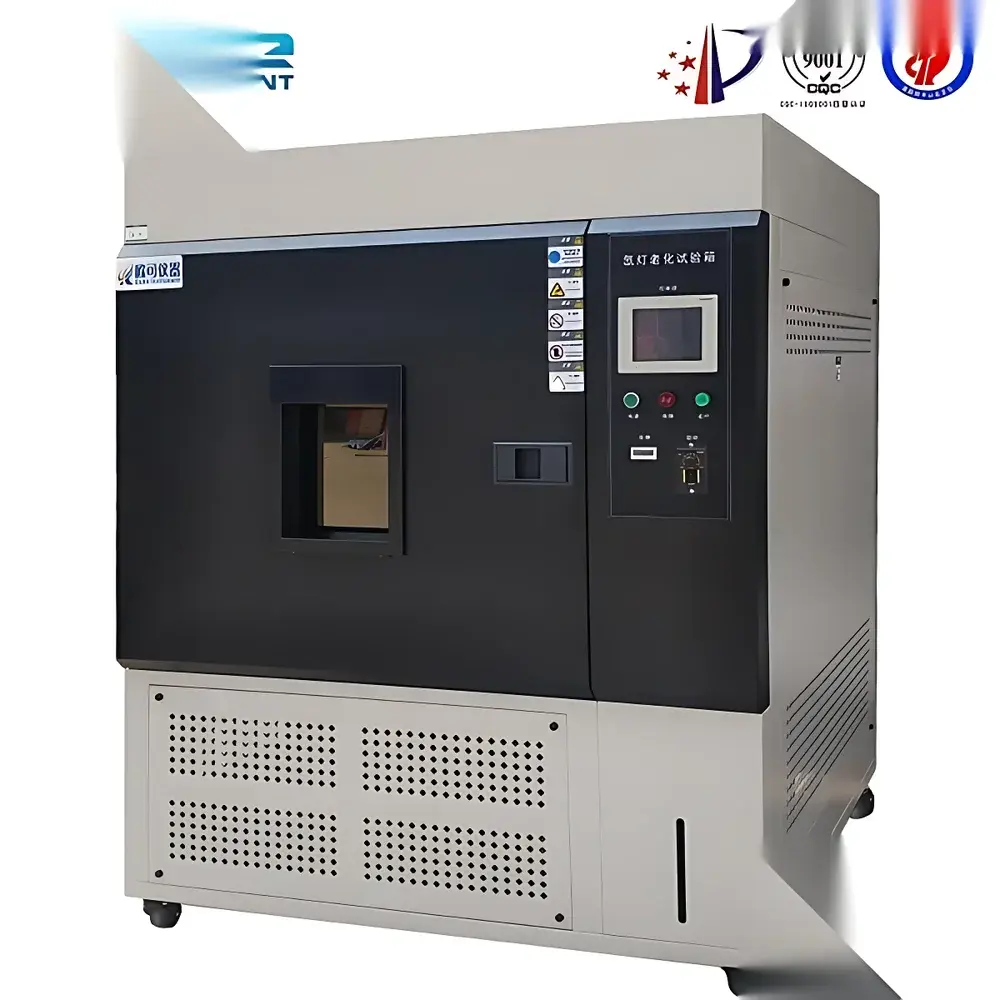
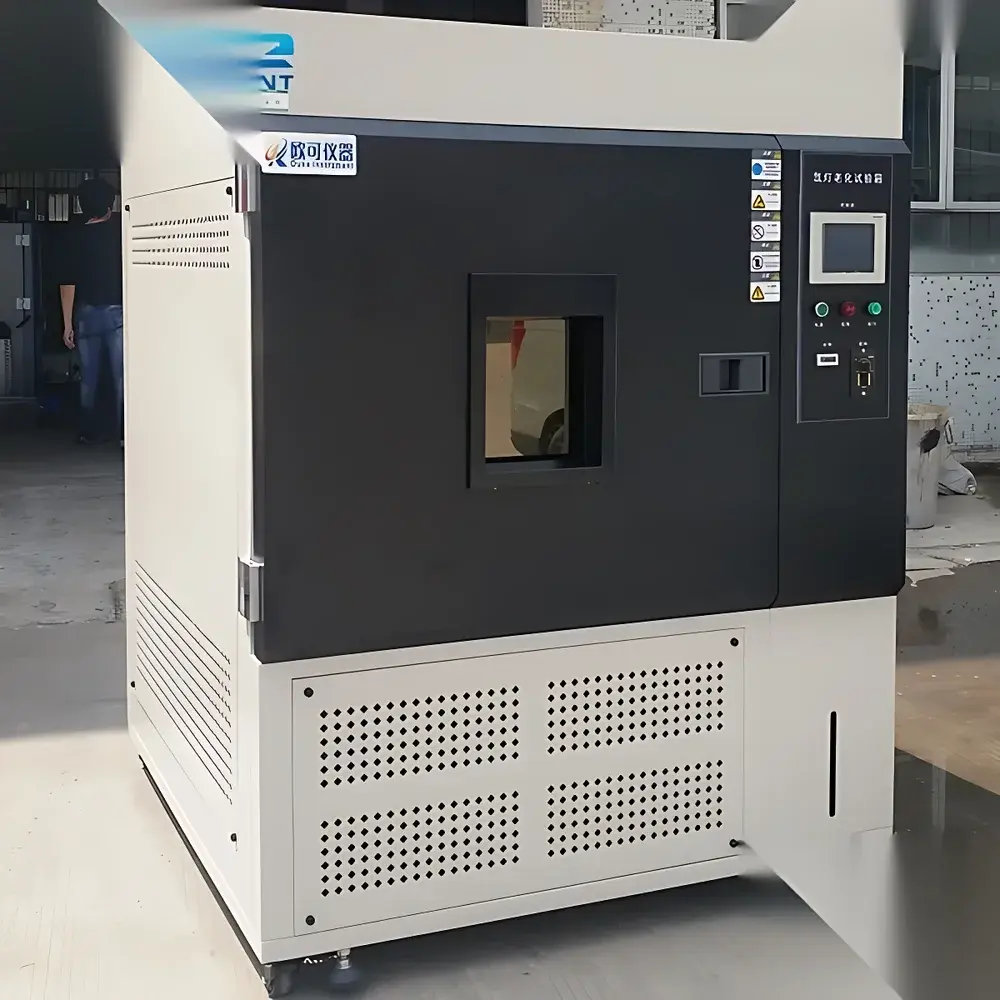
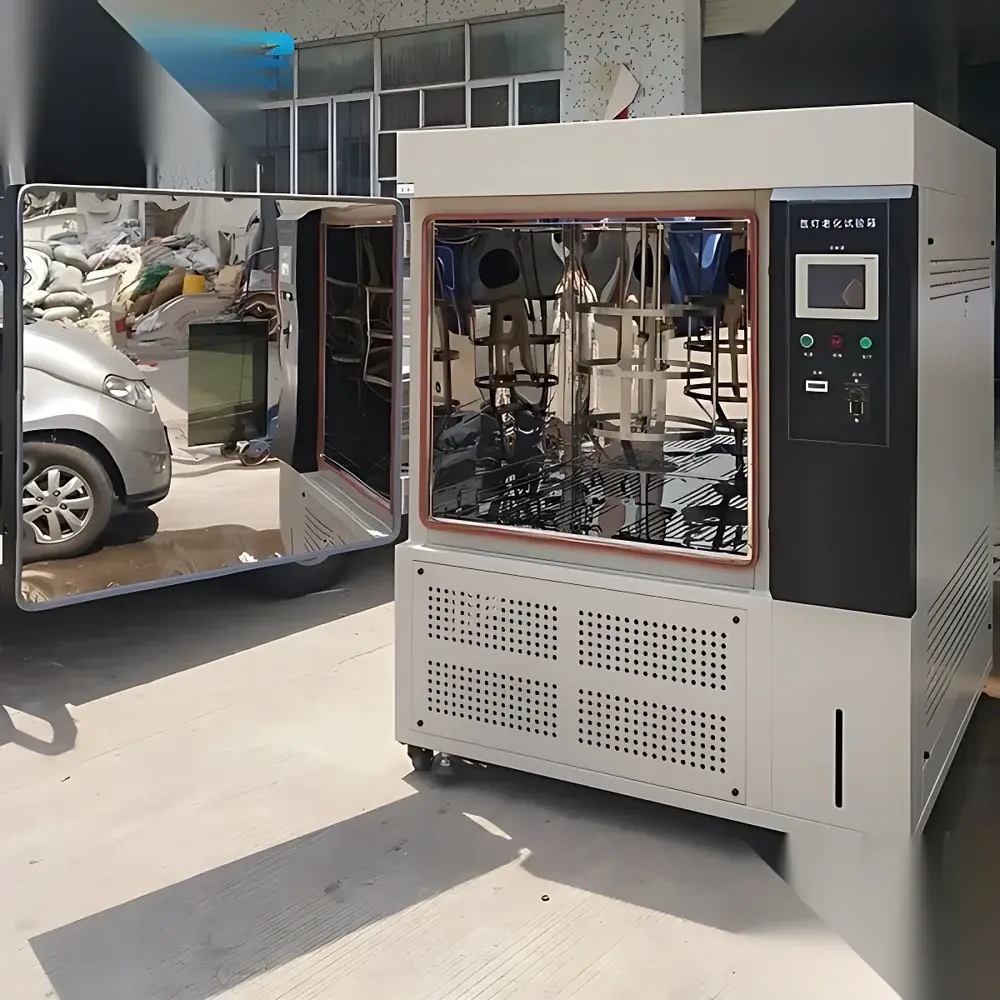
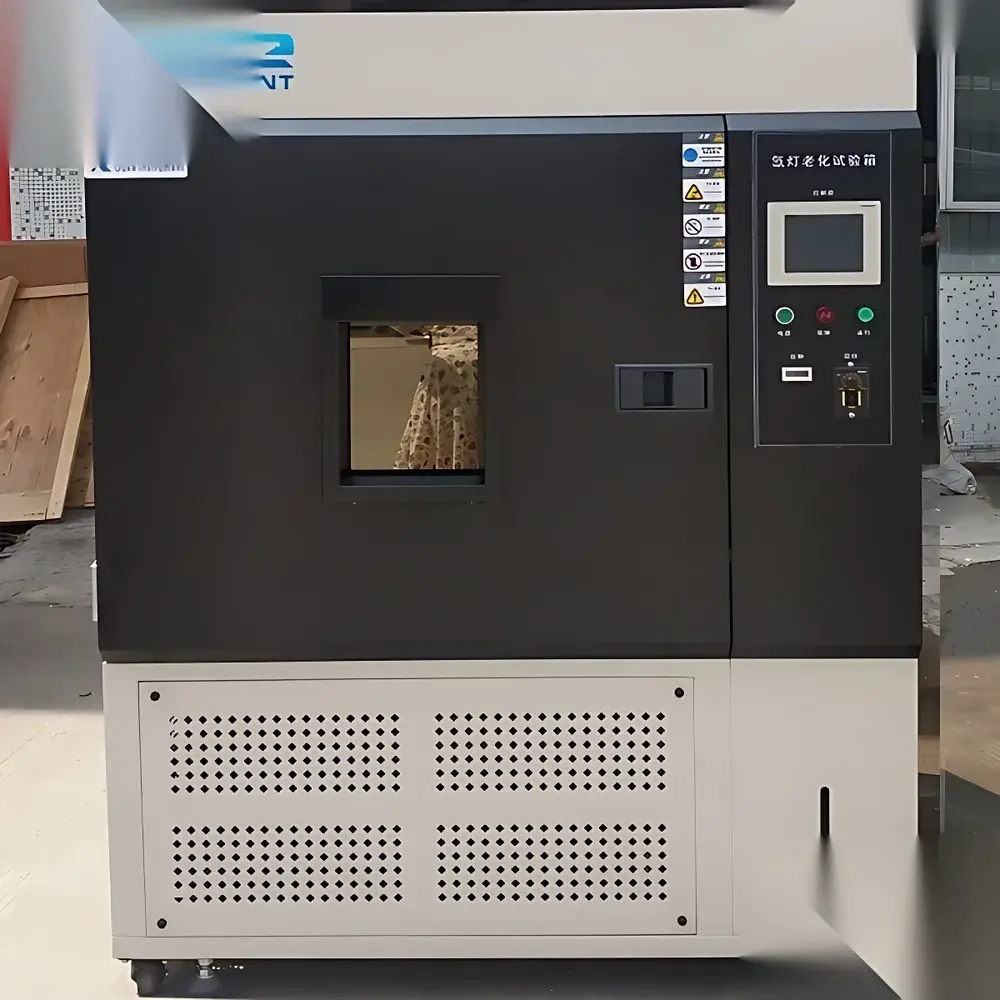
Xenon Arc Weathering Test Chamber – Standard Model XW-400
| Key | Internal Dimensions (D×W×H): 400×1250×700 mm |
|---|---|
| External Dimensions (D×W×H) | 450×1350×1700 mm |
| Temperature Range | RT+10°C to 70°C |
| Humidity Range | 65–95% RH |
| Sample-to-Lamp Distance | 240 mm |
| Spectral Range | 295–330 nm |
| Irradiance | 1000 µW/cm² @ 340 nm |
| Lamp Configuration | 8 × 40 W, 1200 mm linear xenon arc lamps |
| Condensation Method | Gravity-fed water condensation |
| Inner Chamber Material | SUS304 stainless steel |
| Control System | Digital temperature & timer controller |
| Water Consumption | ~8 L/day (deionized or distilled water recommended) |
Overview
The Xenon Arc Weathering Test Chamber – Standard Model XW-400 is an engineered environmental simulation system designed to replicate the combined effects of solar radiation, temperature, and humidity on polymeric, coated, textile, and composite materials. It operates on the principle of xenon arc irradiation—utilizing high-intensity, full-spectrum artificial sunlight closely matching natural solar spectral distribution (especially in the critical UV-A and visible regions, 295–800 nm). With calibrated spectral filtering and precise irradiance control at 1000 µW/cm² (typically monitored at 340 nm), the chamber accelerates photochemical degradation mechanisms such as chain scission, oxidation, and chromophore breakdown. This enables laboratory-based prediction of real-world service life under outdoor exposure conditions—reducing validation timelines from years in field trials to days or weeks under controlled, repeatable test cycles.
Key Features
- Eight 40 W, 1200 mm linear xenon arc lamps provide uniform irradiance distribution across the test area; lamp alignment and reflector geometry ensure ±5% irradiance homogeneity at the sample plane.
- Gravity-driven condensation system replicates natural dew formation without pumps, nozzles, or pressurized water circuits—minimizing maintenance and eliminating risk of nozzle clogging or non-uniform wetting.
- SUS304 stainless steel interior chamber resists corrosion from UV-degraded byproducts, acidic condensate, and saline mist; exterior finish uses brushed stainless steel for durability and cleanroom-compatible aesthetics.
- Dual independent control loops manage temperature (RT+10°C to 70°C) and relative humidity (65–95% RH) with PID regulation and real-time feedback from platinum resistance thermometers (PT100) and capacitive hygrometers.
- Programmable irradiance, temperature, humidity, and condensation cycles support standardized test protocols including ISO 4892-2, ASTM G155, SAE J2527, and GB/T 16422.2.
- Front-access viewing window with UV-blocking tempered glass allows visual monitoring without interrupting test integrity.
Sample Compatibility & Compliance
The XW-400 accommodates flat-panel specimens up to 1200 mm wide and 400 mm deep, mounted on adjustable stainless steel racks. Its 240 mm fixed lamp-to-sample distance ensures consistent radiant flux per IEC 60068-2-5 and ISO 4892-2 requirements. The chamber complies with electromagnetic compatibility (EMC) standards EN 61326-1 and safety directives per EN 61010-1. While not certified to FDA 21 CFR Part 11 out-of-the-box, its digital controllers support audit-trail-ready logging when integrated with validated third-party data acquisition software compliant with GLP and GMP documentation practices.
Software & Data Management
The standard configuration includes a dual-channel digital controller with local display and manual setpoint adjustment. Optional RS-485/Modbus RTU interface enables integration into centralized lab management systems for remote parameter setting, real-time data streaming (temperature, humidity, irradiance status), and automated report generation. All operational logs—including cycle start/stop timestamps, setpoint deviations, and lamp-on hours—are stored onboard for minimum 30 days and exportable via USB. For regulated environments, optional validation packages include IQ/OQ documentation templates aligned with ISO/IEC 17025 and ASTM E2500 guidelines.
Applications
This chamber supports material qualification across automotive (interior trim, exterior coatings, headlamp lenses), electronics (encapsulants, PCB conformal coatings), aerospace (composite surface finishes), and consumer goods (textiles, plastics, printing inks). Typical failure modes assessed include color shift (ΔE* measured per CIE 1976 L*a*b*), gloss loss (60° specular reflectance per ASTM D523), chalking (ASTM D4214), tensile strength reduction (ISO 527), and microcrack initiation (per ISO 11341 visual rating scale). Results feed into Design Failure Mode and Effects Analysis (DFMEA) and support regulatory submissions for RoHS, REACH, and UL 746C UV resistance claims.
FAQ
What spectral filters are used to meet ISO 4892-2 Cycle 1 and Cycle 2 requirements?
The standard configuration employs a borosilicate outer filter (Boro/Quartz) paired with a soda-lime inner filter to approximate daylight and extended UV exposure profiles. Custom filter sets (e.g., quartz/quartz for enhanced UV-B output) are available upon request.
Is deionized water mandatory for condensation operation?
While distilled or deionized water is strongly recommended to prevent mineral deposition on lamp envelopes and chamber walls, the gravity condensation design tolerates low-conductivity tap water (<100 µS/cm) for short-term qualification runs.
How often must xenon lamps be replaced to maintain irradiance accuracy?
Lamp output declines predictably over time; replacement is recommended after 1,500 hours of operation or when irradiance falls below 90% of initial calibration—verified using a NIST-traceable UV radiometer.
Can the chamber perform dark-cycle thermal aging without irradiation?
Yes. The control system allows independent activation of heating/humidity functions while disabling lamp power—enabling standalone thermal-hygroscopic stress testing per ISO 11358 or ASTM D3045.
Does the unit include calibration certificates for temperature and irradiance sensors?
Factory calibration certificates (as-found/as-left) are provided with each shipment. Field recalibration services—including traceable irradiance verification at 340 nm and temperature uniformity mapping per ASTM E2758—are available through authorized service partners.



