
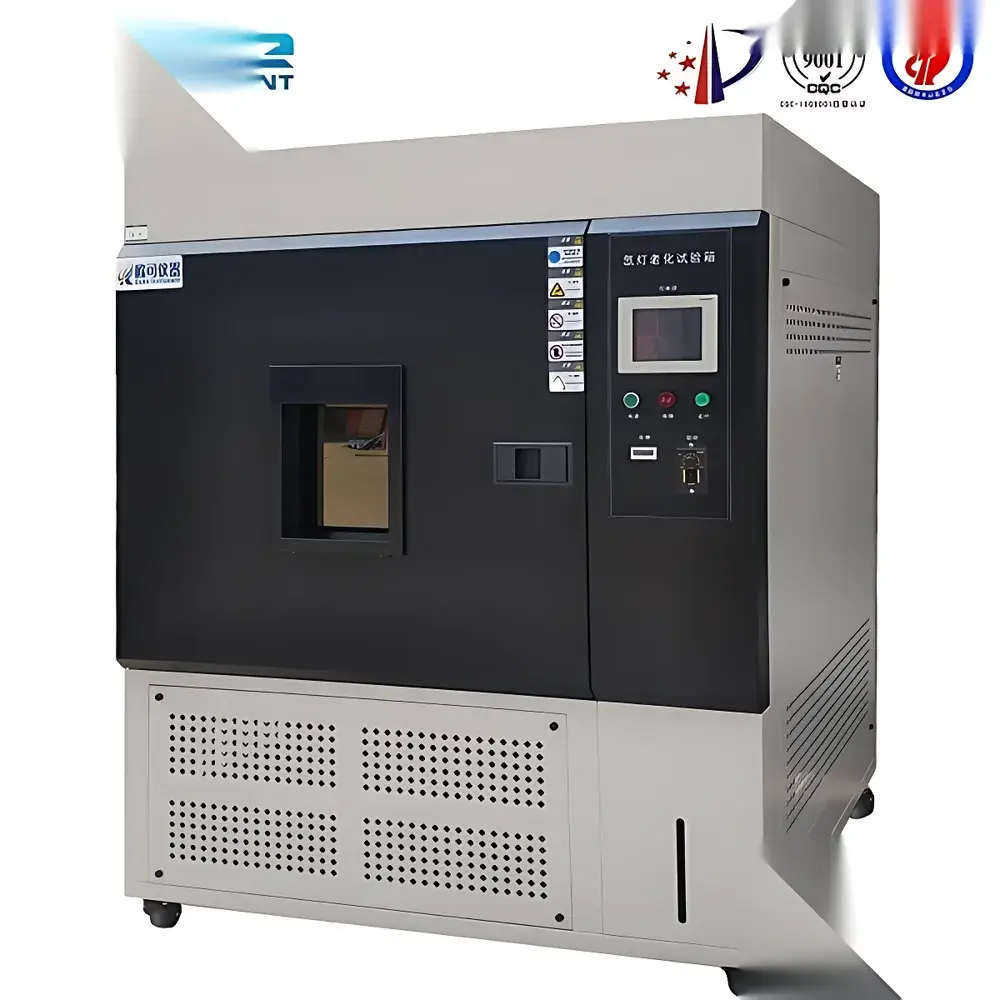
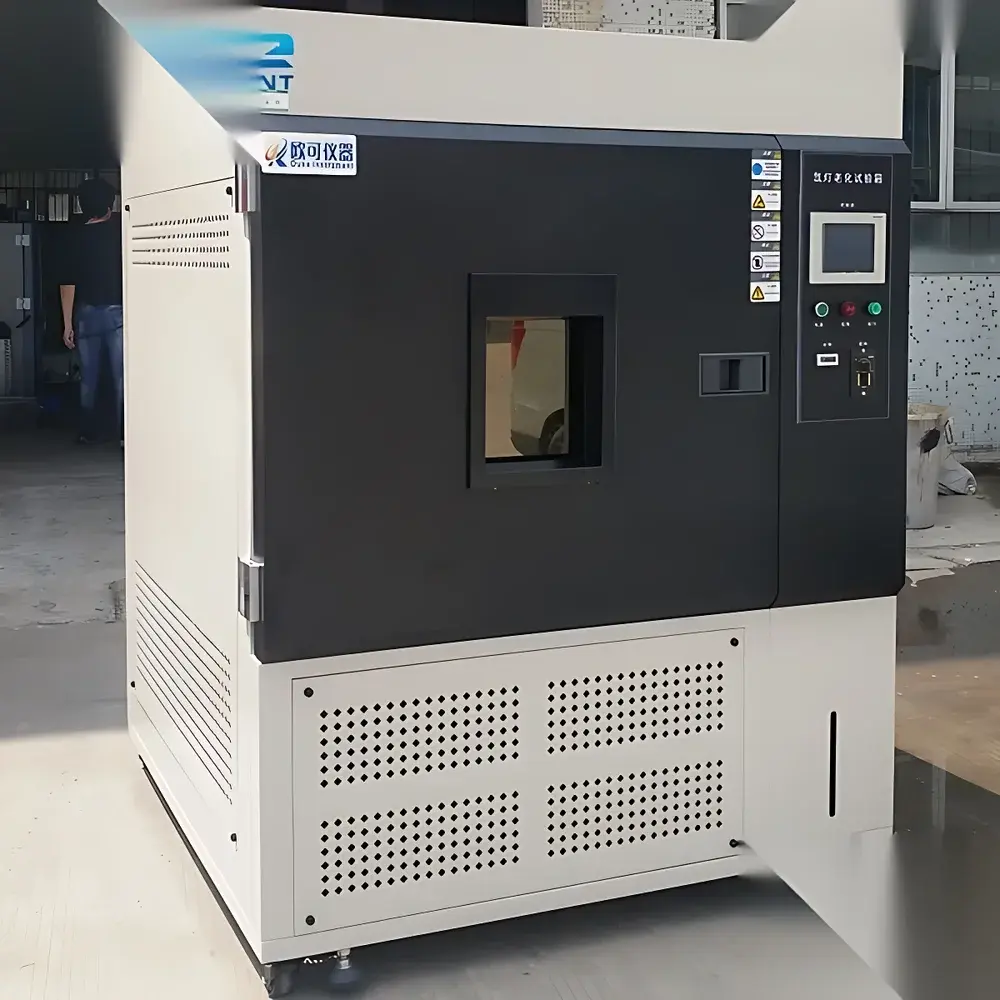
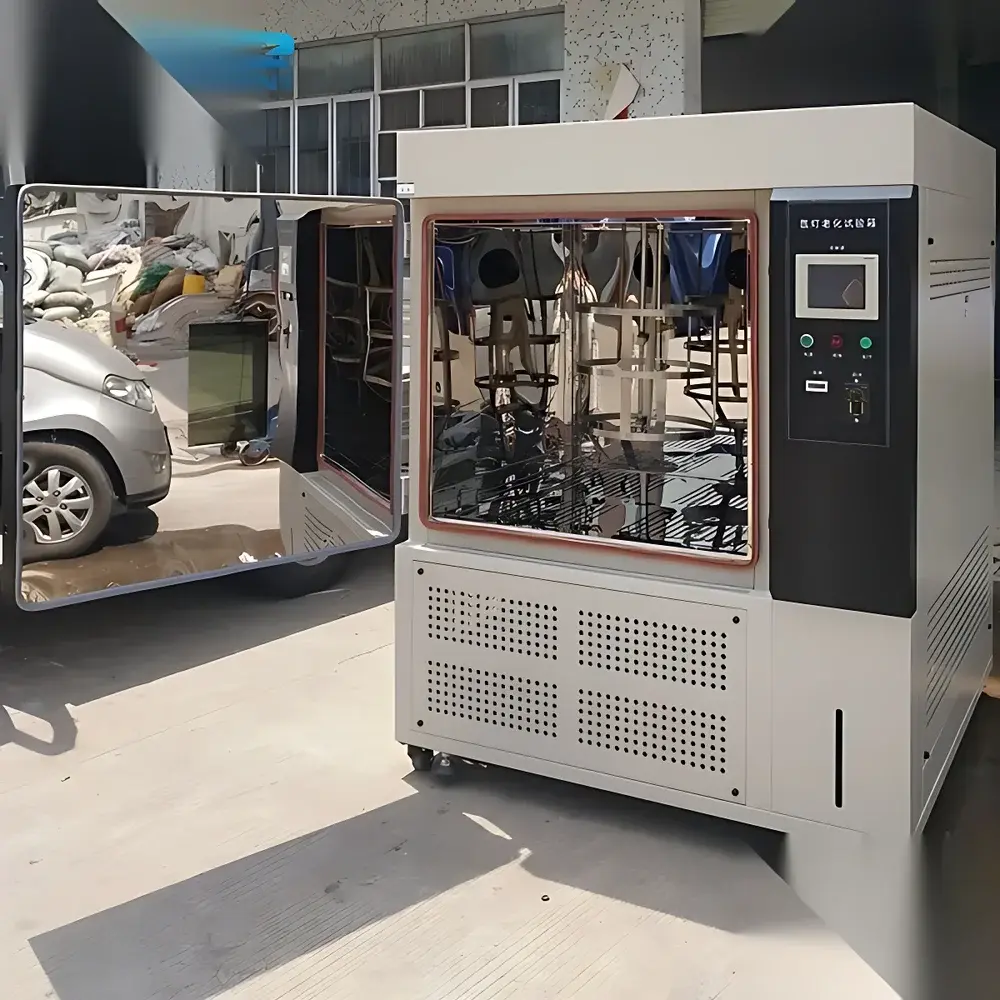
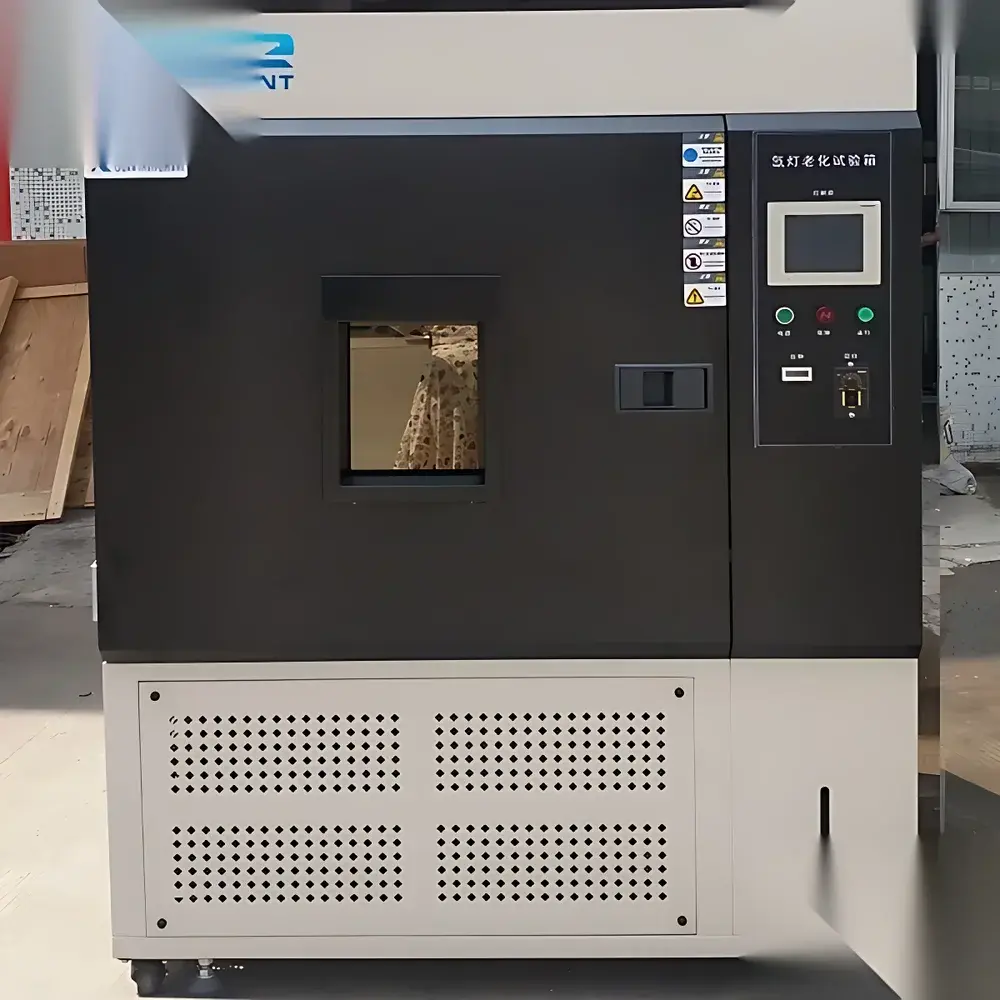
Xenon Arc Weathering Test Chamber – Water-Cooled Type
| Brand | OEM / Other Brands |
|---|---|
| Origin | Imported |
| Manufacturer Type | Authorized Distributor |
| Price | USD 5,200 (Reference Only) |
Overview
The Xenon Arc Weathering Test Chamber – Water-Cooled Type is a precision-engineered environmental test system designed to simulate the full solar spectrum under controlled climatic conditions. Utilizing a high-intensity, water-cooled xenon arc lamp as its radiation source, this chamber replicates natural sunlight—including UV, visible, and near-infrared wavelengths—with spectral power distribution closely aligned to CIE No. 85 and ISO 4892-2 standards. Unlike air-cooled variants, the water-cooled configuration enables stable, high-irradiance operation (>1.10 W/m² @ 340 nm) over extended test durations, making it suitable for accelerated weathering protocols requiring rigorous thermal and photometric stability. The chamber is widely deployed in R&D laboratories, quality assurance departments, and materials certification facilities to assess photochemical degradation mechanisms—including fading, chalking, cracking, gloss loss, and polymer chain scission—under reproducible, traceable conditions.
Key Features
- Robust dual-layer chamber construction: Outer shell fabricated from CNC-machined A3 steel with electrostatic powder coating; inner chamber liner made of imported SUS304 stainless steel for corrosion resistance and long-term dimensional stability.
- Hermetic sealing system: Dual-layer, high-tensile silicone gasket between door and frame ensures leak-tight integrity across temperature ranges from –70 °C to +100 °C and humidity levels from 10% to 98% RH.
- Uniform environmental distribution: High-efficiency axial fan motor with multi-blade stainless-steel impeller delivers vertical laminar airflow; optimized wind-path design meets ASTM G155 irradiance uniformity requirements (±15% across specimen plane).
- Advanced refrigeration architecture: Hermetically sealed French “Tecumseh” (formerly “Danfoss/Tecumseh”) compressor; binary cascade low-temperature circuit; American “Alco” desiccant filter, Chinese “Guanya” oil separator, and Italian “Castel” solenoid valve ensure reliable sub-zero cooling performance and extended service intervals.
- Modular climate control: Independent heating, cooling, and humidification subsystems minimize cross-interference, improve energy efficiency, reduce maintenance frequency, and extend component lifespan.
- Ergonomic access: Counterbalanced, non-reactive door handle; tempered, low-iron, anti-reflective coated observation window with integrated defogging heater for real-time sample monitoring without thermal disturbance.
Sample Compatibility & Compliance
The chamber accommodates flat-panel specimens up to 600 mm × 600 mm × 50 mm (W × H × D), with optional multi-tier rotating sample racks for enhanced exposure uniformity. It supports standardized specimen holders per ISO 11341, ASTM D2565, SAE J2412, and GB/T 16422.3. All operational parameters—including irradiance setpoint (typically 0.35–1.50 W/m² @ 340 nm), black panel temperature (BST: 30–110 °C), chamber air temperature (CAT: 10–80 °C), and relative humidity (10–98% RH)—are programmable and logged with timestamped audit trails compliant with GLP and ISO/IEC 17025 documentation requirements. Optional IEC 61000-4-3 EMC shielding and optional 21 CFR Part 11-compliant software modules are available for regulated pharmaceutical or automotive testing environments.
Software & Data Management
Equipped with an embedded industrial-grade controller featuring a 7-inch TFT-LCD touchscreen interface, the system supports multi-step ramp-soak profiles, real-time graphing of irradiance, BST/CAT, and RH, plus automatic data export via USB or Ethernet. Optional PC-based software provides advanced analysis tools—including spectral irradiance mapping, degradation rate modeling (Arrhenius-based extrapolation), and automated report generation in PDF/CSV formats. All data logging conforms to ISO 17025 traceability criteria, with user-level access control, electronic signatures, and immutable audit logs meeting FDA 21 CFR Part 11 Annex 11 expectations for regulated industries.
Applications
This xenon arc chamber is routinely employed for accelerated aging of automotive interior trim (dashboards, seat fabrics), architectural coatings (acrylics, fluoropolymers), outdoor signage substrates, textile dyes, plastic enclosures (PP, ABS, PC), and photovoltaic encapsulants. It supports qualification testing per ISO 4892-2, ASTM G155, SAE J2527, AATCC TM16, and MIL-STD-810H Method 505.5. Its water-cooled lamp system ensures minimal spectral drift during multi-week exposures—critical for comparative durability studies where inter-batch repeatability is mandated by internal QA protocols or third-party certification bodies.
FAQ
What distinguishes water-cooled xenon lamps from air-cooled systems?
Water-cooled lamps maintain tighter spectral fidelity and higher irradiance stability over prolonged cycles, especially above 0.80 W/m² @ 340 nm, due to superior thermal management of the quartz envelope and electrode assembly.
Is calibration traceable to NIST or equivalent national standards?
Yes—integrated broadband and narrowband radiometers are factory-calibrated against NIST-traceable reference standards; annual recalibration services are available with ISO/IEC 17025-accredited certificates.
Can the chamber operate unattended for 1,000+ hours?
Yes—designed for continuous operation with redundant safety interlocks (over-temperature, lamp arc failure, coolant flow loss), remote alarm outputs, and predictive maintenance alerts based on compressor runtime and lamp hour counters.
Does it support cyclic weathering protocols (e.g., light/dark, rain/light)?
Yes—programmable sequence control allows synchronized activation of xenon irradiation, spray nozzles (deionized water), condensation cycles, and humidity modulation per ISO 4892-2 Cycle 1–5 and ASTM G155 Procedure A/B.
What maintenance intervals are recommended?
Lamp replacement every 1,500–2,000 hours; quartz filter inspection every 500 hours; refrigerant circuit check annually; full system verification per ISO/IEC 17025 every 12 months.



