
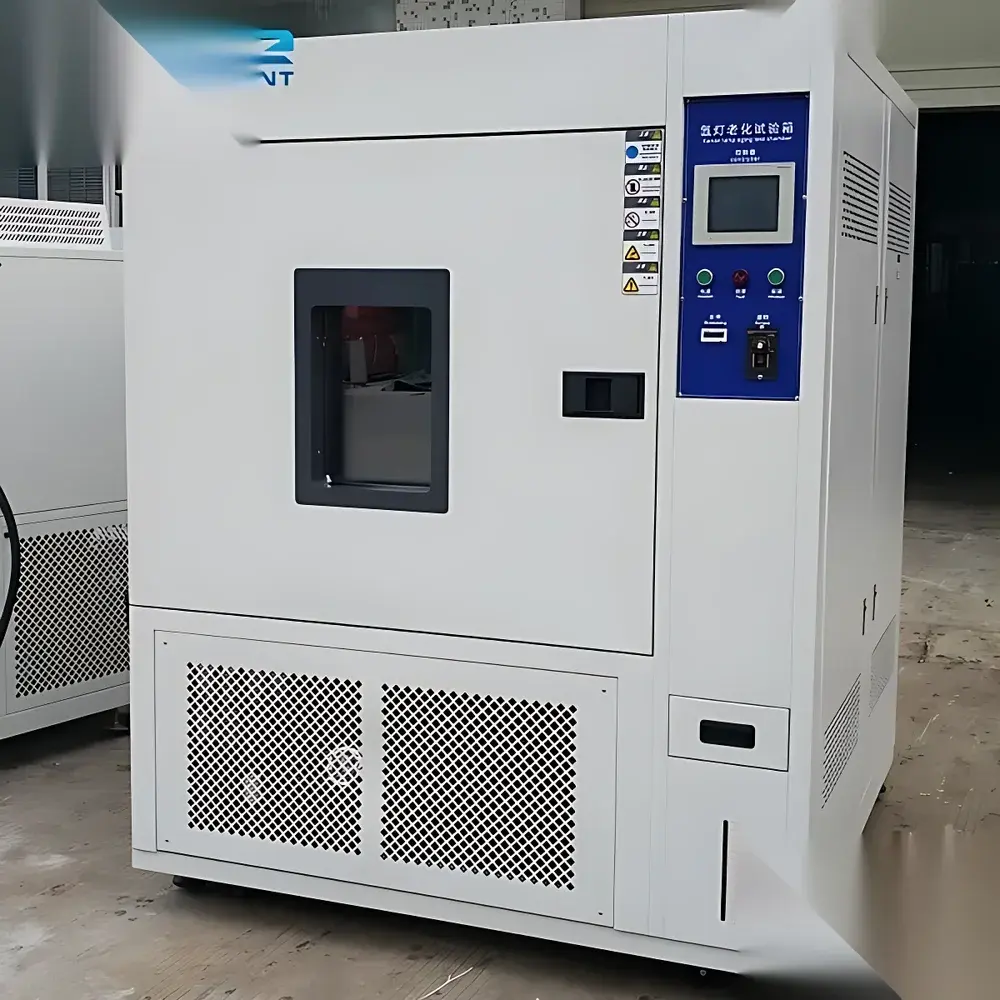
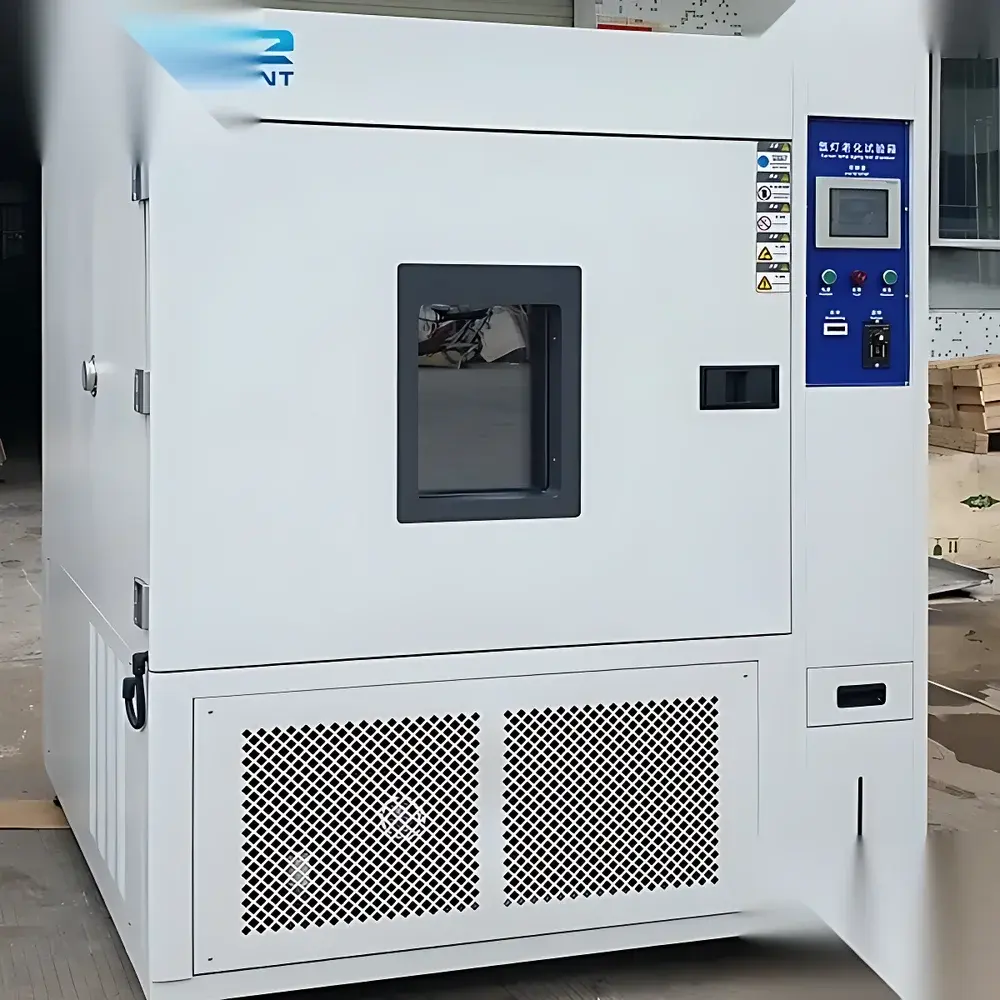
Xenon Arc Weathering Test Chamber OK-XD Series
| Brand | OK Instruments |
|---|---|
| Model | OK-XD-100 / OK-XD-225 / OK-XD-500 / OK-XD-1000 |
| Chamber Interior Dimensions (W×D×H) | 50×50×40 cm to 100×100×100 cm |
| Temperature Range | 0–150°C (chamber), 40–85°C (black panel) |
| Humidity Range | 20–75% RH (light cycle), 20–98% RH (dark cycle) |
| Irradiance Control | 550 W/m² ±10% (300–800 nm), 1000 W/m² ±10% (300–1200 nm) |
| Xenon Lamp Power | 1.8 kW / 2.5 kW / 6 kW |
| Lamp Life | ≈1500 h |
| Spray Cycle | 1–999 min (intermittent or continuous) |
| Spray Pressure | 70–127 kPa |
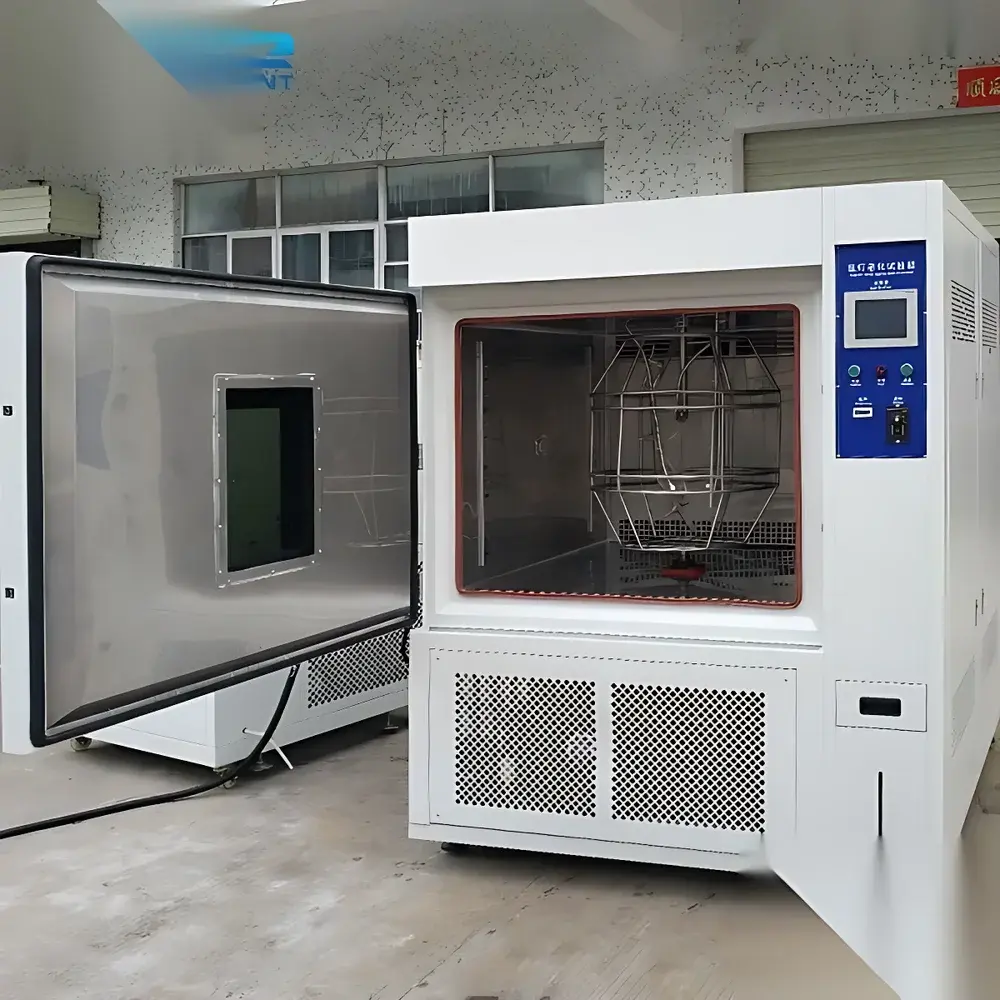
| Sample Mounting | Dual-layer flat mesh rack or 500 mm diameter rotating turntable (0–3 rpm) |
| Construction | Interior – SUS304 stainless steel |
| Compliance | GB/T 8427, GB/T 16422-2, GB/T 8430, ISO 4892-2, ASTM D529, GB/T 14576, GB/T 15102-2006, GB/T 15104-2006 |
Overview
The OK-XD Series Xenon Arc Weathering Test Chamber is an engineered environmental simulation system designed to replicate the full spectrum of solar radiation—ultraviolet (UV), visible, and near-infrared (NIR)—in controlled laboratory conditions. Based on the principle of xenon arc irradiation, it subjects materials to accelerated exposure cycles that mimic natural sunlight degradation mechanisms, including photolysis, thermal oxidation, and hydrolytic aging. Unlike UV fluorescent lamp systems limited to short-wave UV, the OK-XD series employs long-arc, air-cooled xenon lamps filtered through precision optical filters to deliver a spectral power distribution closely aligned with terrestrial sunlight (CIE No. 85, ASTM G155 Annex A1). This enables physicochemical evaluation of photochemical stability, colorfastness, gloss retention, cracking, chalking, and mechanical property loss across diverse material classes under standardized test protocols.
Key Features
- Full-spectrum xenon arc source with selectable irradiance bands (300–800 nm at 550 W/m² ±10%; 300–1200 nm at 1000 W/m² ±10%), calibrated per ISO 4892-2 Annex B requirements;
- Integrated water spray system with adjustable pressure (70–127 kPa) and programmable duration (1–999 min), supporting intermittent and continuous modes for realistic wet/dry cycling;
- Precise black panel temperature control (40–85°C) and chamber air temperature regulation (0–150°C), both maintained within ±0.5°C accuracy;
- Dual humidity control architecture: 20–75% RH during irradiation phase; 20–98% RH during dark condensation cycles, with uniformity ≤±3.0% RH;
- Modular sample mounting options—including dual-layer stainless-steel mesh racks and motorized 500 mm turntables (0–3 rpm)—accommodating irregular geometries and ensuring isotropic exposure;
- Optical filtration system using durable, long-life quartz and borosilicate glass filters to stabilize spectral output over lamp lifetime (~1500 h);
- Robust construction: interior chamber fabricated from electropolished SUS304 stainless steel; exterior housing available in either corrosion-resistant SUS304 or powder-coated structural steel;
- Comprehensive safety interlocks, overtemperature protection, lamp current monitoring, and automatic lamp shutdown upon filter degradation or airflow failure.
Sample Compatibility & Compliance
The OK-XD chamber accommodates flat, curved, or three-dimensional specimens—including textiles, automotive trim, architectural coatings, polymer films, outdoor signage, and composite laminates—without requiring specimen thinning or encapsulation. Its flexible interior dimensions (50×50×40 cm to 100×100×100 cm) allow custom configuration for oversized components such as headlamp assemblies or façade mock-ups. All models are validated against internationally recognized weathering standards: ISO 4892-2 (plastics), ASTM D529 (textiles), GB/T 16422-2 (Chinese national standard for plastics), GB/T 8427 (textile colorfastness to light), and GB/T 14576 (photostability of pigments). The system supports GLP-compliant operation when integrated with audit-trail-enabled software (see Software & Data Management), meeting documentation requirements for regulatory submissions under FDA 21 CFR Part 11 and ISO/IEC 17025-accredited laboratories.
Software & Data Management
Standard controller firmware provides real-time monitoring of irradiance (W/m²), black panel temperature (°C), chamber humidity (%RH), spray status, and elapsed exposure time. Optional PC-based software enables automated test sequencing, multi-step profile programming (e.g., light/irradiation → spray → dark/condensation), and export of timestamped CSV data logs. Critical parameters—including lamp voltage, filter age counter, and calibration verification timestamps—are recorded with immutable audit trails. Data files comply with ASTM E2098 metadata conventions and support traceability to NIST-traceable radiometric calibrations. For regulated environments, optional 21 CFR Part 11-compliant modules provide electronic signatures, role-based access control, and secure archival compliant with ISO 13485 and ICH Q5C guidelines.
Applications
- Accelerated lightfastness and weathering evaluation of textile dyes, inks, and pigment dispersions per ISO 105-B02 and AATCC TM16;
- Automotive OEM validation of interior trim, exterior body panels, and lighting optics per SAE J2412 and GMW14124;
- Photostability assessment of pharmaceutical packaging polymers and medical device housings per ICH Q1B and USP <1208>;
- Performance qualification of architectural sealants, roofing membranes, and facade cladding systems per ASTM D4329 and EN 15302;
- Research-grade investigation of photooxidative degradation kinetics in polyolefins, polyacrylates, and biodegradable polymers;
- Correlation studies between laboratory xenon exposure and real-world service life via dose-response modeling (kJ/m² UV-A, cumulative radiant exposure).
FAQ
What spectral range does the OK-XD chamber replicate?
The system delivers irradiance across 300–1200 nm, with user-selectable filtering to match CIE daylight (D65), summer noon sun, or extended UV spectra per ISO 4892-2 Annex A.
How is irradiance calibrated and maintained?
Each chamber includes a NIST-traceable broadband radiometer with annual recalibration certificate; optical filters are rated for ≥1500 h at nominal irradiance before scheduled replacement.
Can the OK-XD series perform cyclic tests with simultaneous light, heat, and moisture?
Yes—fully programmable exposure profiles integrate irradiance control, black panel temperature ramping, humidity modulation, and timed water spray in sequence or overlap per ASTM G155 Cycle 1–10.
Is customization available for non-standard specimen sizes or mounting configurations?
Yes—OK Instruments offers engineering consultation and mechanical redesign of sample holders, turntable geometry, and chamber internal fixtures to meet client-specific dimensional and loading requirements.
What maintenance intervals are recommended for optimal performance?
Lamp replacement every ~1500 h; filter inspection every 500 h; weekly cleaning of quartz envelope and spray nozzles; quarterly verification of humidity sensor drift and thermocouple accuracy per ISO/IEC 17025 procedures.



