
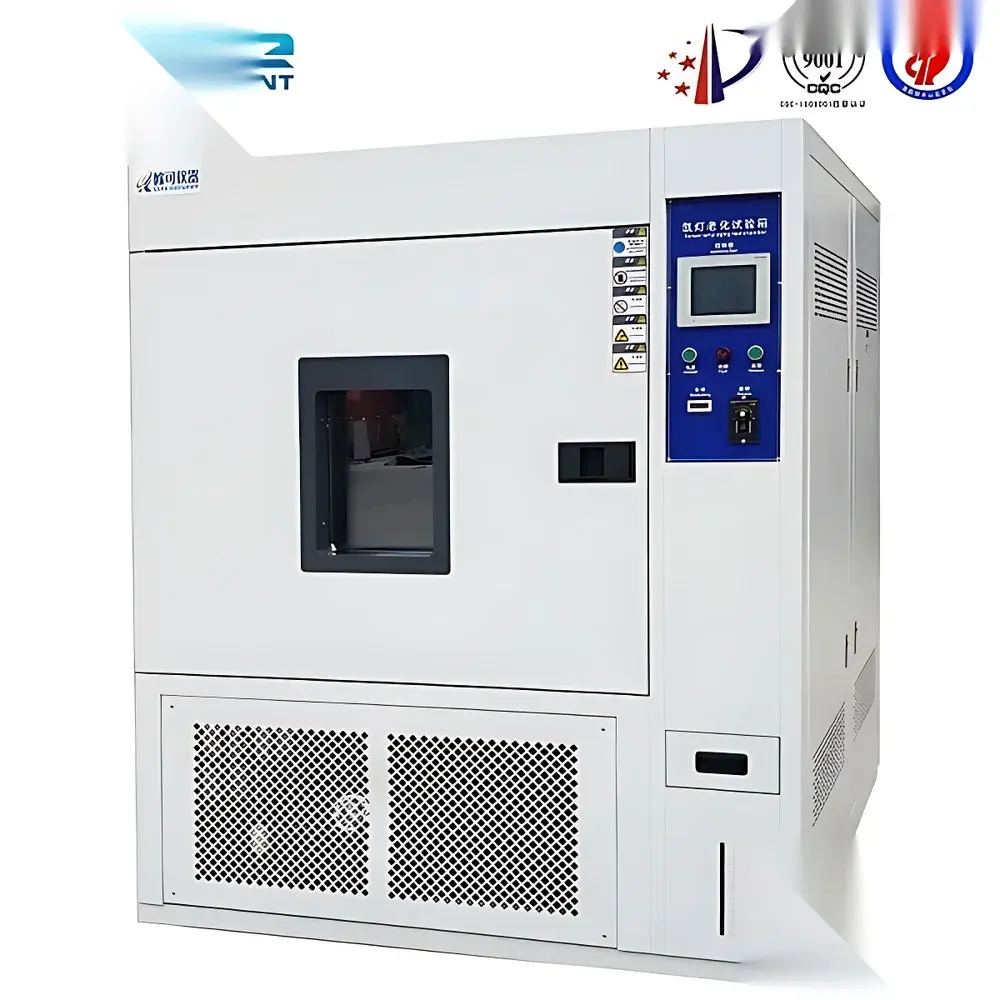
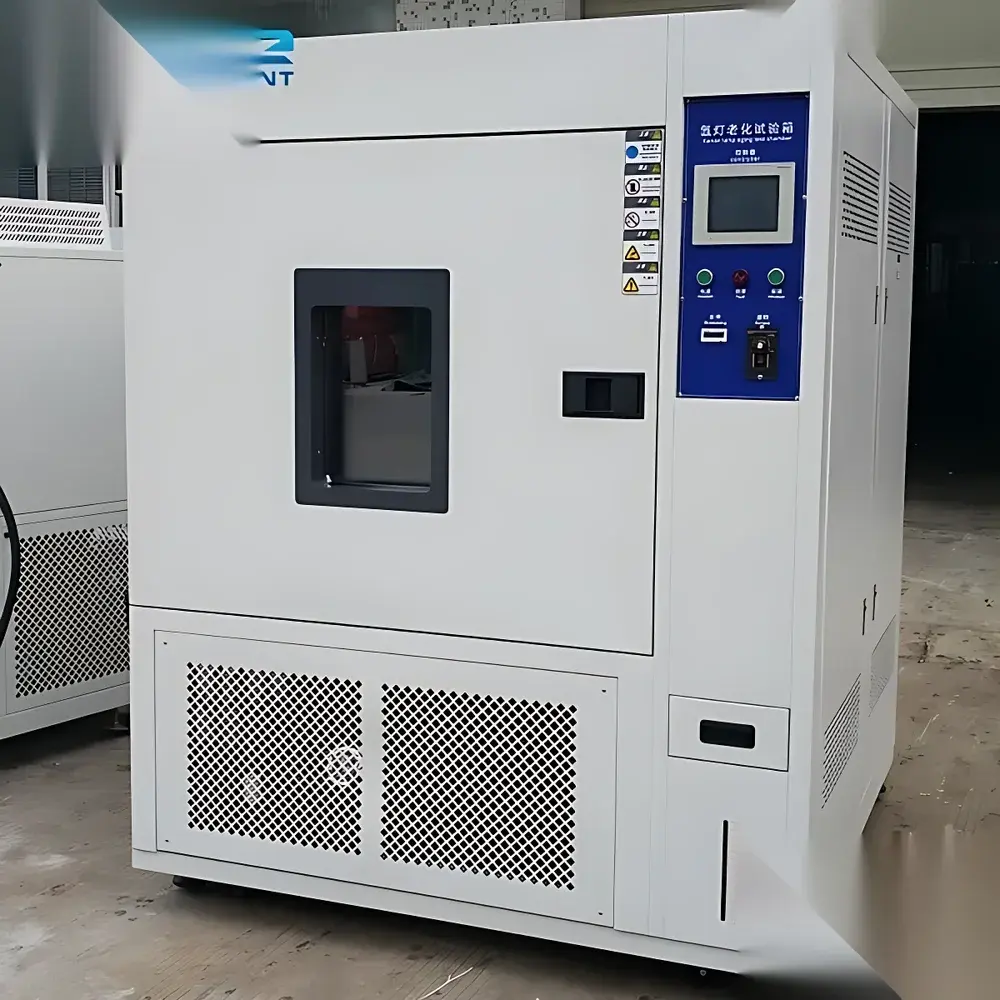
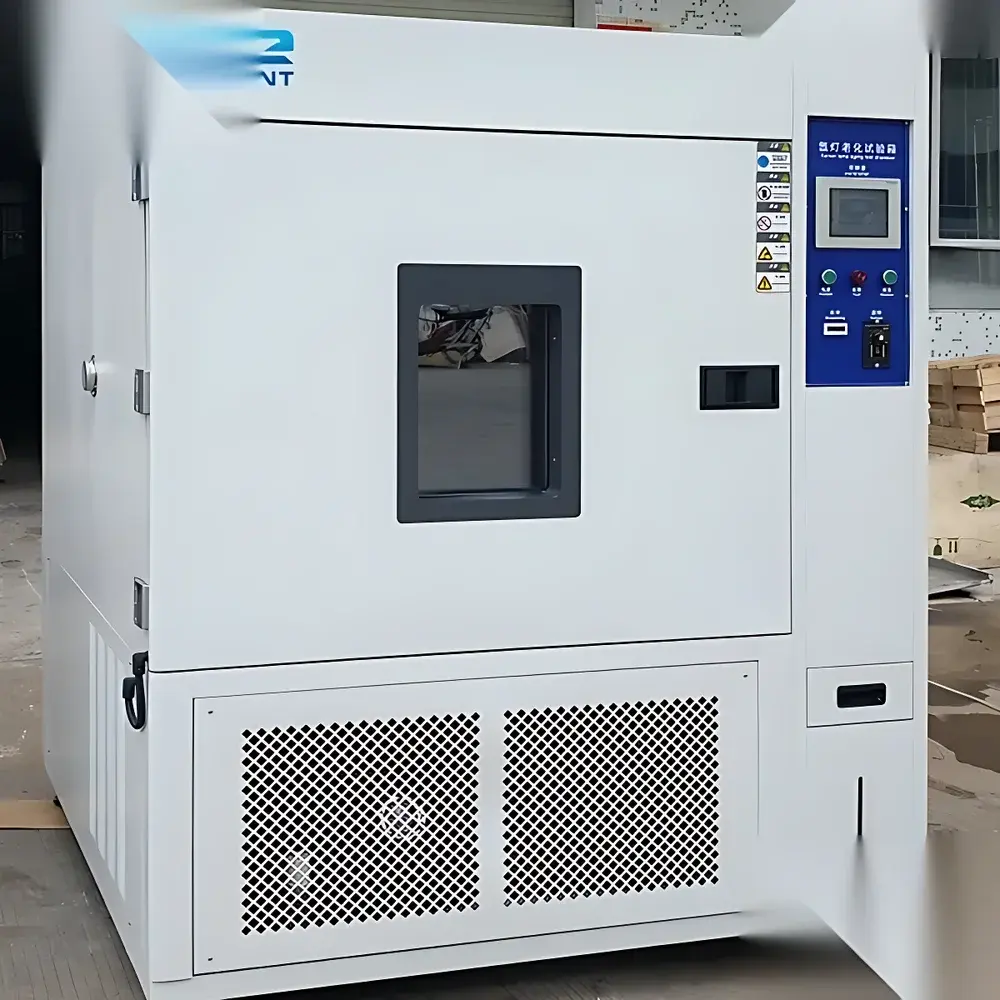
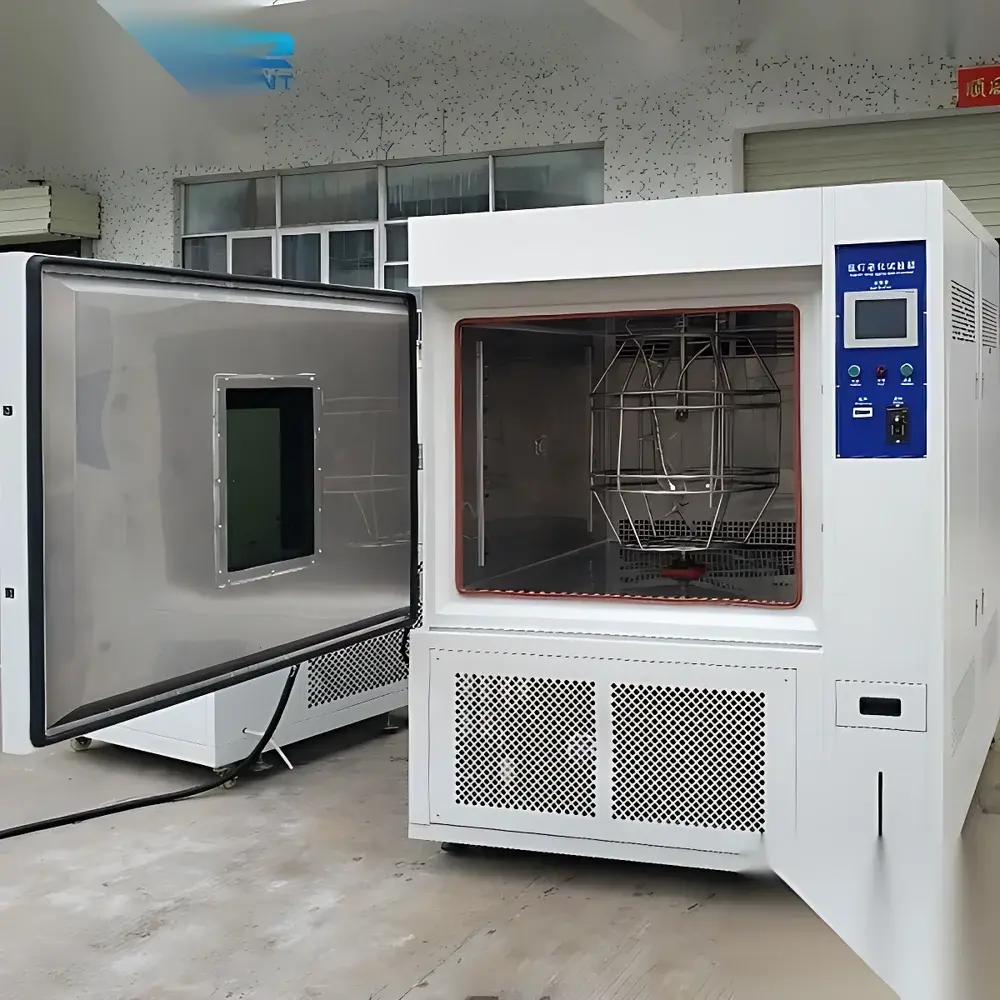
Xenon Arc Weathering Test Chamber OK-XD Series
| Brand | Other Brands |
|---|---|
| Origin | Imported |
| Manufacturer Type | General Distributor |
| Price | USD 5,300 (approx.) |
| Temperature Range | 0–150°C (chamber), 40–85°C (black panel) |
| Humidity Range | 20–75% RH (light cycle), 20–98% RH (dark cycle) |
| Irradiance | 550 W/m² ±10% (300–800 nm), 1000 W/m² ±10% (300–1200 nm) |
| Xenon Lamp Power | 1.8 kW / 2.5 kW / 6 kW |
| Lamp Life | ~1,500 hours |
| Spray Duration | 1–999 min (intermittent or continuous) |
| Spray Pressure | 70–127 kPa |
| Sample Mounting | Dual-layer flat mesh rack or 500 mm diameter rotating turntable (0–3 rpm) |
| Internal Dimensions (cm) | 50×50×40 (OK-XD-100) to 100×100×100 (OK-XD-1000) |
| Construction | Interior — SUS304 stainless steel |
| Control Accuracy | ±0.5°C (temperature), ±2.0% RH (humidity) |
| Uniformity | ±2.0°C (temperature), ±3.0% RH (humidity) |
| Compliance Standards | GB/T 8427, GB/T 16422-2, ISO 4892-2, ASTM D529, GB/T 14576, GB/T 15102-2006, GB/T 15104-2006 |
Overview
The OK-XD Series Xenon Arc Weathering Test Chamber is an engineered environmental simulation system designed to replicate the full spectrum of solar radiation—including UV, visible, and near-infrared wavelengths—alongside controlled temperature, humidity, and moisture exposure. It operates on the principle of xenon arc irradiation, where a high-intensity, long-arc, air-cooled xenon lamp emits light closely matching natural sunlight (300–1200 nm), filtered through precision optical filters to meet standardized spectral power distributions specified in ISO 4892-2 and ASTM G155. This enables accelerated evaluation of material degradation mechanisms such as photolysis, oxidation, chalking, cracking, color fading, and gloss loss under repeatable, quantifiable conditions. The chamber supports both light/dark cycling and simultaneous irradiation with water spray or humidity control, making it suitable for evaluating complex synergistic effects between solar exposure and atmospheric moisture—critical for automotive trim, architectural coatings, textile dye systems, and polymer-based outdoor components.
Key Features
- Full-spectrum xenon arc lamp with calibrated spectral output compliant with ISO 4892-2 Class A requirements, supported by durable, spectrally stable optical filters ensuring consistent irradiance profiles over lamp lifetime.
- Integrated water spray system with adjustable pressure (70–127 kPa) and programmable duration (1–999 min), enabling realistic simulation of rain, dew, or condensation events during light or dark phases.
- Precise black panel temperature (BPT) and chamber air temperature control (0–150°C), with independent monitoring and feedback regulation to maintain thermal stability within ±0.5°C.
- Dual-mode humidity control: 20–75% RH during irradiation cycles; extended range up to 98% RH during dark cycles, supporting ISO 4892-2 humidity ramping protocols.
- Flexible sample mounting options: dual-layer flat stainless-steel mesh racks for planar specimens or a motorized 500 mm diameter turntable (0–3 rpm) for uniform angular exposure—accommodating irregularly shaped samples without repositioning.
- Robust construction using interior SUS304 stainless steel for corrosion resistance and exterior powder-coated steel or optional SUS304 cladding, ensuring long-term reliability in laboratory and QC environments.
- Modular lamp assembly with quick-release mechanism; standard lamp life rated at approximately 1,500 hours at nominal irradiance, with straightforward field replacement requiring no realignment tools.
Sample Compatibility & Compliance
The OK-XD Series accommodates a broad range of non-volatile solid materials including woven and knitted textiles, painted metal substrates, plastic injection-molded parts, rubber compounds, laminated wood composites, and coated glass. Its design conforms to internationally recognized weathering test standards including ISO 4892-2 (xenon arc methods), ASTM D529 (textile colorfastness to weathering), GB/T 8427 (ISO 105-B02 equivalent), GB/T 16422-2, and GB/T 14576 (lightfastness of dyes). All operational parameters—including irradiance intensity (measured via calibrated broadband radiometer), BPT, chamber RH, and spray timing—are traceable and reproducible, supporting GLP-compliant testing workflows. While not inherently 21 CFR Part 11–validated, the system’s analog/digital control architecture allows integration into validated laboratory information management systems (LIMS) when paired with external data logging and audit-trail software.
Software & Data Management
The chamber utilizes a microprocessor-based controller with intuitive touchscreen interface supporting multi-step program storage (up to 100 user-defined cycles), real-time parameter display, and event-triggered alarms (e.g., lamp failure, overtemperature, low water level). Optional RS485/Modbus RTU or Ethernet interfaces enable remote monitoring and data export to CSV or Excel-compatible formats. For regulated environments, third-party SCADA or LIMS integration can be implemented to record timestamped irradiance, temperature, humidity, and spray status—fulfilling basic data integrity requirements per ALCOA+ principles. Calibration certificates for integrated sensors (PT100 temperature probes, capacitive RH sensors, thermopile radiometers) are provided upon request and should be renewed annually per ISO/IEC 17025 recommendations.
Applications
- Evaluation of colorfastness and dimensional stability in automotive interior fabrics exposed to dashboard-level solar loading.
- Accelerated aging of UV-stabilized polyolefin roofing membranes per ASTM D4459.
- Correlation studies between xenon arc exposure and real-world service life for exterior architectural coatings (e.g., fluoropolymer PVDF finishes).
- Lightfastness screening of reactive dyes on cotton per ISO 105-B02, including combined light-and-sweat testing via optional perspiration tray integration.
- Pre-qualification of LED streetlight housing materials subjected to cyclic thermal stress and UV exposure in tropical climates.
- Validation of packaging film barrier performance against photo-oxidative degradation during shelf-life simulation.
FAQ
What spectral range does the xenon lamp cover, and how is it filtered?
The lamp emits energy from 290 nm to 2500 nm; optical filters limit output to 300–800 nm (550 W/m² ±10%) or 300–1200 nm (1000 W/m² ±10%), aligning with ISO 4892-2 daylight and extended UV filter requirements.
Can the chamber operate without water spray?
Yes—spray function is fully programmable and may be disabled for dry-heat or UV-only exposure protocols.
Is black panel temperature (BPT) independently controlled?
No—BPT is monitored and reported, but regulated indirectly via chamber air temperature and irradiance settings; users must validate BPT response per specimen absorptivity per ISO 4892-2 Annex B.
Are calibration services available for irradiance sensors?
Third-party NIST-traceable radiometer calibration is available upon request; factory calibration is performed prior to shipment.
Does the system support custom test profiles beyond standard methods?
Yes—the controller accepts user-defined time-temperature-humidity-irradiance-spray sequences, enabling proprietary aging protocols aligned with internal product specifications.
Related Products



