
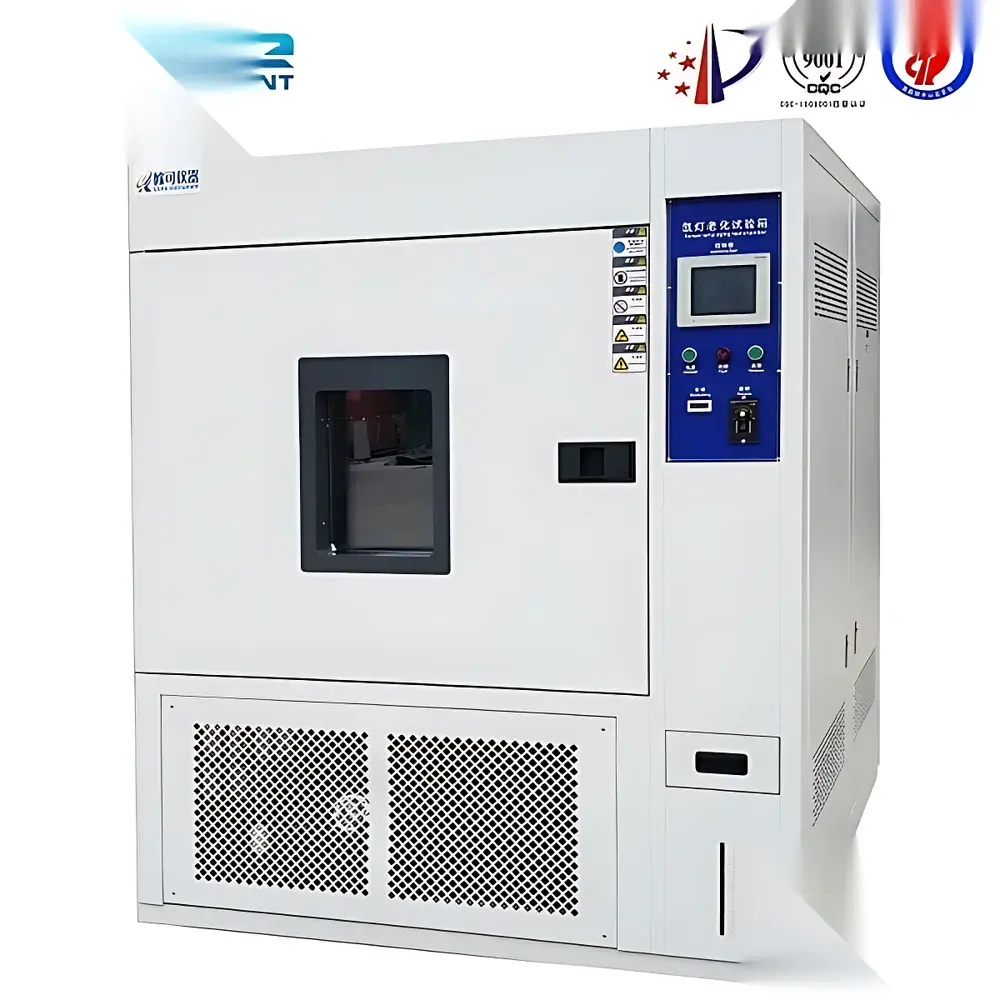
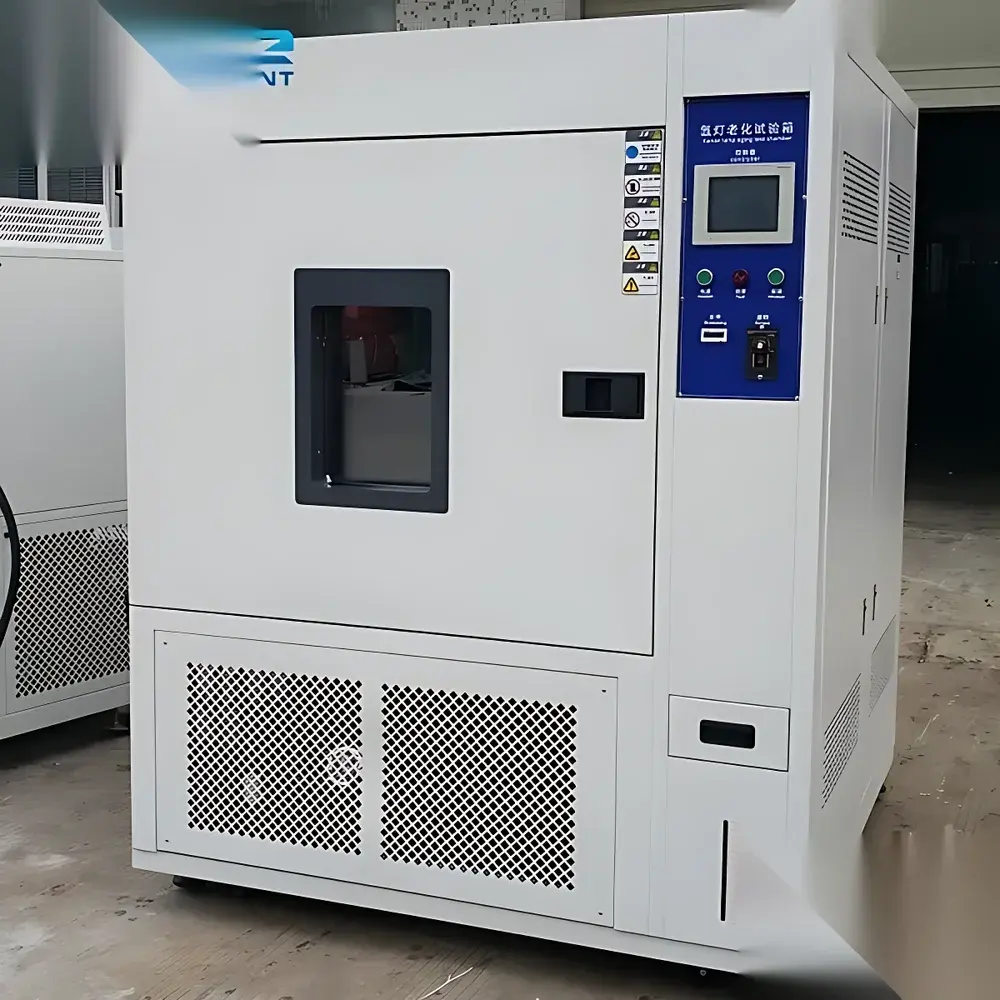
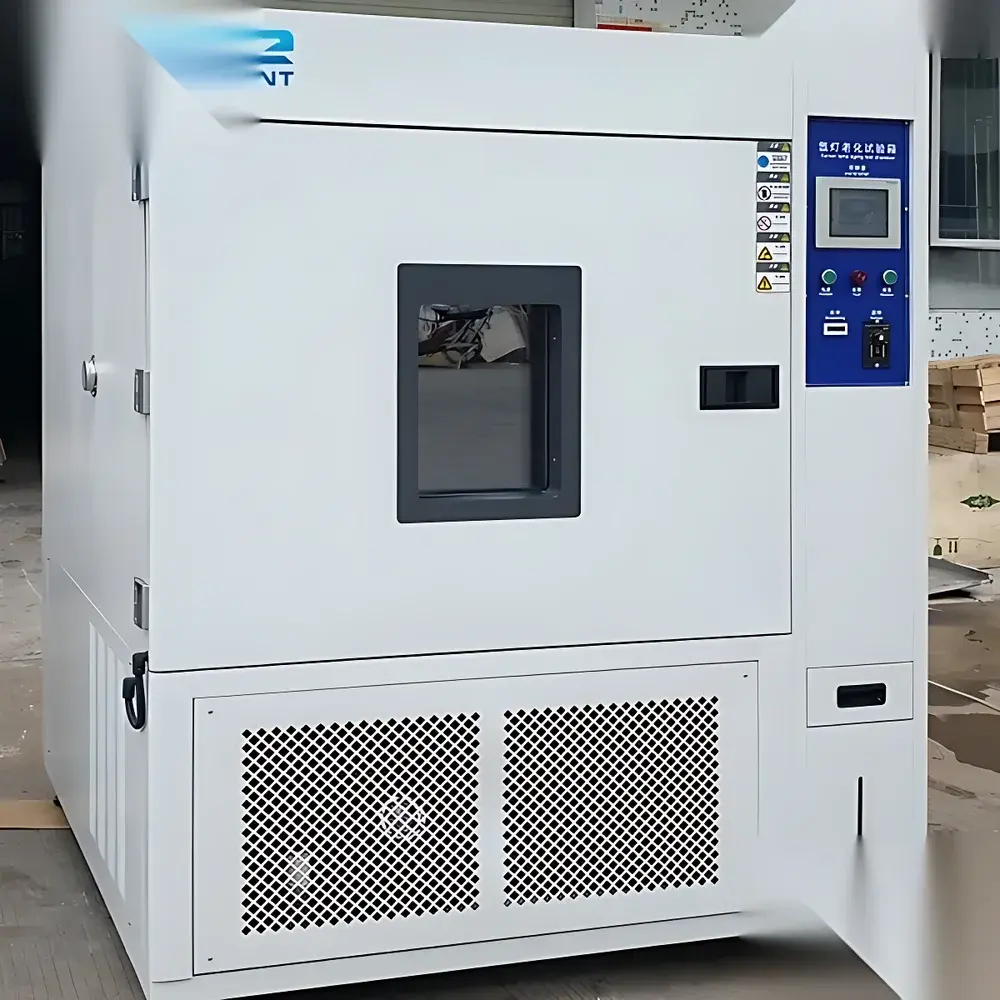
Xenon Arc Weathering Tester Manufacturer
| Brand | Other Brands |
|---|---|
| Origin | Imported |
| Manufacturer Type | General Distributor |
| Price | USD 5,300 (approx.) |
Overview
The Xenon Arc Weathering Tester is an advanced environmental simulation instrument engineered to replicate the full solar spectrum—including ultraviolet (UV), visible, and near-infrared (NIR) radiation—using stabilized xenon arc lamps. Unlike UV fluorescent or metal halide sources, xenon arc technology delivers spectral power distribution closely matching natural sunlight (CIE No. 85, ISO 4892-2, ASTM G155), making it the internationally accepted reference method for evaluating photostability and weathering resistance of materials. This tester subjects specimens to controlled, accelerated exposure conditions that integrate radiant energy, black-panel or black-standard temperature, relative humidity, and cyclic moisture events (spray, rain, or condensation), enabling reproducible assessment of degradation mechanisms such as chalking, cracking, fading, gloss loss, embrittlement, and polymer chain scission.
Key Features
- High-stability 1.8 kW or 2.5 kW air-cooled or water-cooled xenon arc lamp systems with quartz envelope filtration to match daylight (Daylight Filter) or window-glass-filtered (Window Glass Q/B) spectra per ISO 4892-2 and ASTM G155.
- Real-time irradiance control via calibrated broadband (300–400 nm) or narrowband (340 nm or 420 nm) UV sensors with automatic feedback compensation to maintain setpoint ±5% tolerance.
- Integrated climate control system regulating chamber temperature (typically 25–80 °C), black-standard temperature (BST) or black-panel temperature (BPT) (up to 120 °C), and relative humidity (10–95% RH) with precision ±2 °C / ±5% RH.
- Programmable exposure cycles supporting multi-step profiles: light-only, light + spray, light + condensation, dark + condensation, and sequential combinations compliant with ISO 11341, ISO 16474-2, and SAE J2527.
- Robust stainless-steel interior chamber with corrosion-resistant construction, motorized sample trays, and optional specimen rotation for uniform irradiance distribution.
- Compliance-ready architecture supporting audit trails, user access levels, and electronic signature functionality aligned with FDA 21 CFR Part 11 requirements when paired with validated software packages.
Sample Compatibility & Compliance
The tester accommodates flat or three-dimensional specimens up to standard rack dimensions (e.g., 600 mm × 600 mm × 50 mm), including molded plastics, elastomers, coated metals, textile swatches, painted panels, automotive trim, packaging films, and pharmaceutical packaging components. It meets essential international standards for material weathering evaluation, including ISO 4892-2, ASTM D2565, ASTM D4329, ASTM G155, IEC 60068-2-9, and SAE J2412. All configurations support GLP and GMP-aligned validation protocols—including IQ/OQ/PQ documentation templates—and are compatible with third-party calibration services traceable to NIST or PTB standards.
Software & Data Management
Equipped with embedded controller firmware and optional PC-based software (e.g., WinTest or custom SCADA interfaces), the system enables full-cycle programming, real-time parameter logging (irradiance, BST/BPT, RH, chamber temp), and export of timestamped CSV or XML datasets. Audit trail functionality records operator actions, parameter changes, and alarm events with immutable timestamps—critical for regulatory submissions under FDA, EMA, or MHRA frameworks. Data integrity safeguards include password-protected configuration modes, electronic signatures for test initiation/completion, and encrypted local storage compliant with 21 CFR Part 11 Annex 11 expectations.
Applications
This instrument serves critical roles across R&D, quality assurance, and regulatory compliance laboratories: predicting service life of outdoor-facing polymers; qualifying UV stabilizers in polyolefins and PVC formulations; validating colorfastness of automotive interior textiles per OEM specifications; assessing photochemical stability of drug product packaging under ICH Q1B photostability testing guidelines; benchmarking durability of architectural coatings per AAMA 2605; and supporting sustainability initiatives through accelerated aging of biodegradable packaging materials. Its ability to decouple and recombine photonic, thermal, and hygric stressors makes it indispensable for root-cause analysis of field failures.
FAQ
What spectral filters are available for xenon arc testing?
Standard configurations include Daylight (ISO 4892-2 Option 1) and Window Glass (Option 2); optional extended NIR filters and UV-enhanced variants are available upon request.
Can the system perform ICH Q1B photostability testing?
Yes—when operated with appropriate irradiance monitoring, temperature control, and data audit capabilities, it satisfies ICH Q1B Step 1 and Step 2 requirements for drug substance and product evaluation.
Is calibration of irradiance sensors traceable to national standards?
All factory-calibrated sensors include NIST-traceable certificates; annual recalibration services are recommended and supported globally.
What maintenance intervals are required for xenon lamps and filters?
Lamp lifetime is typically 1,500–2,000 hours; borosilicate inner and outer filters require replacement every 500–1,000 hours depending on operating intensity and cycle profile.
Does the system support remote monitoring and alarm notifications?
Via optional Ethernet or RS-485 interface, users can integrate the tester into facility-wide SCADA networks and configure email/SMS alerts for critical fault conditions.



