
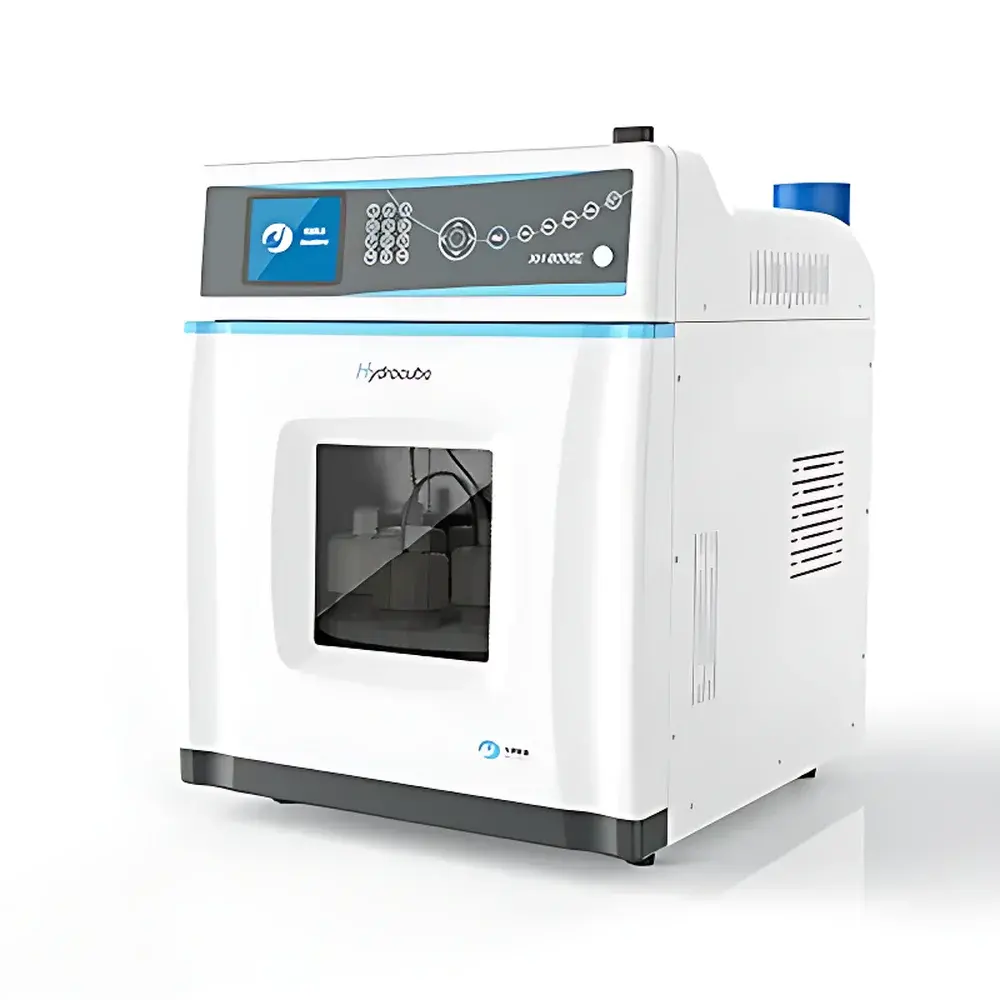
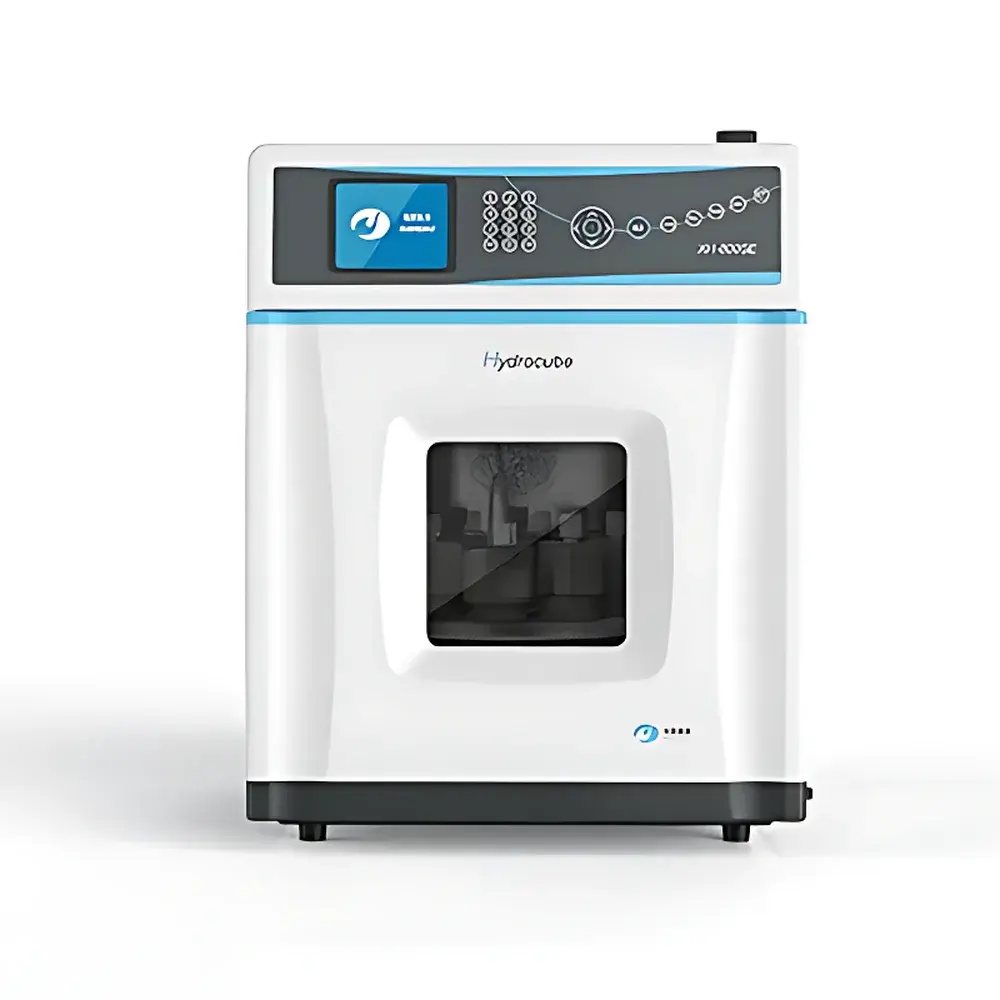
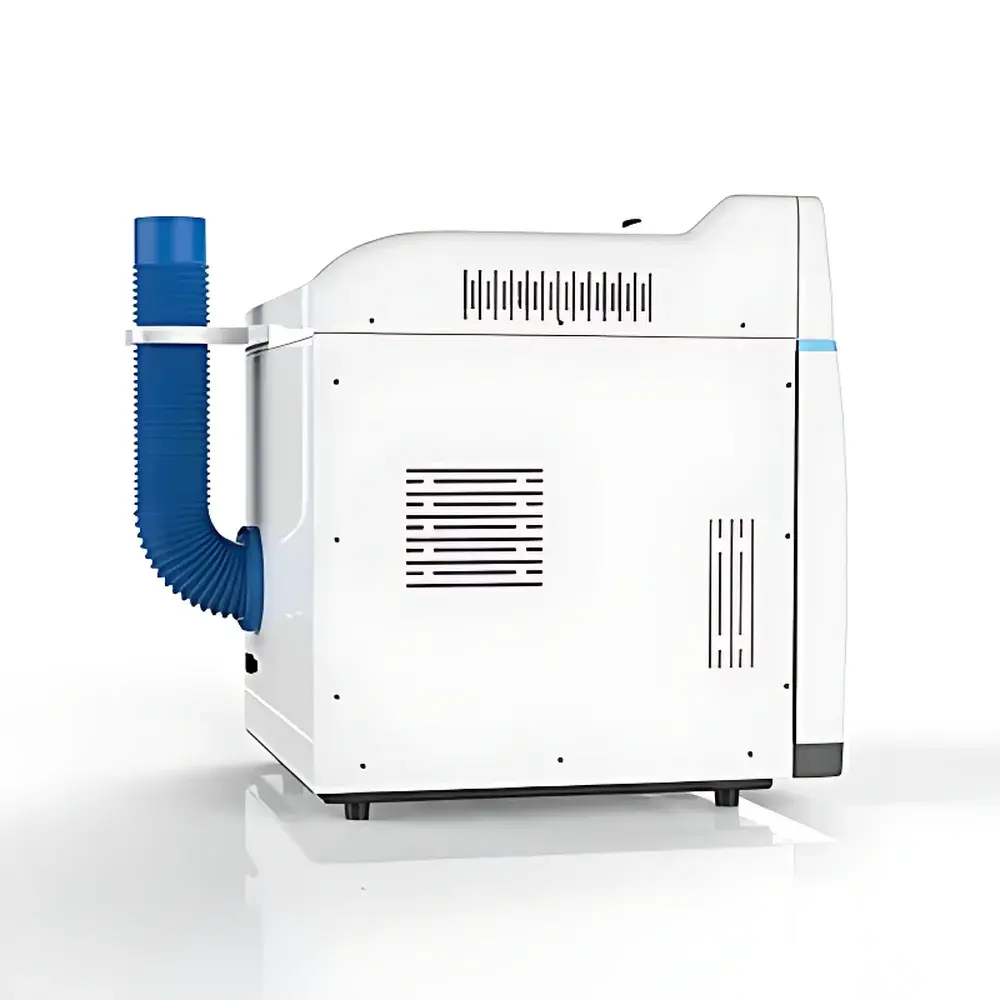
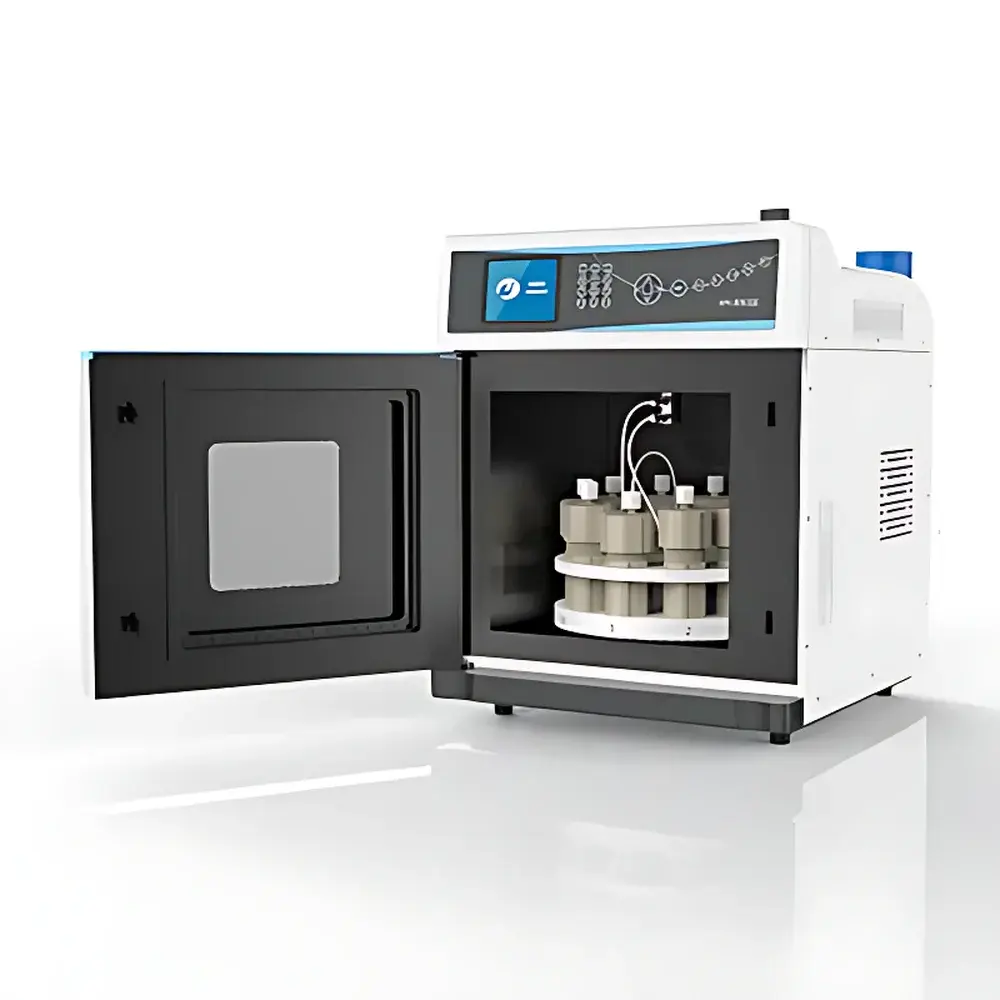
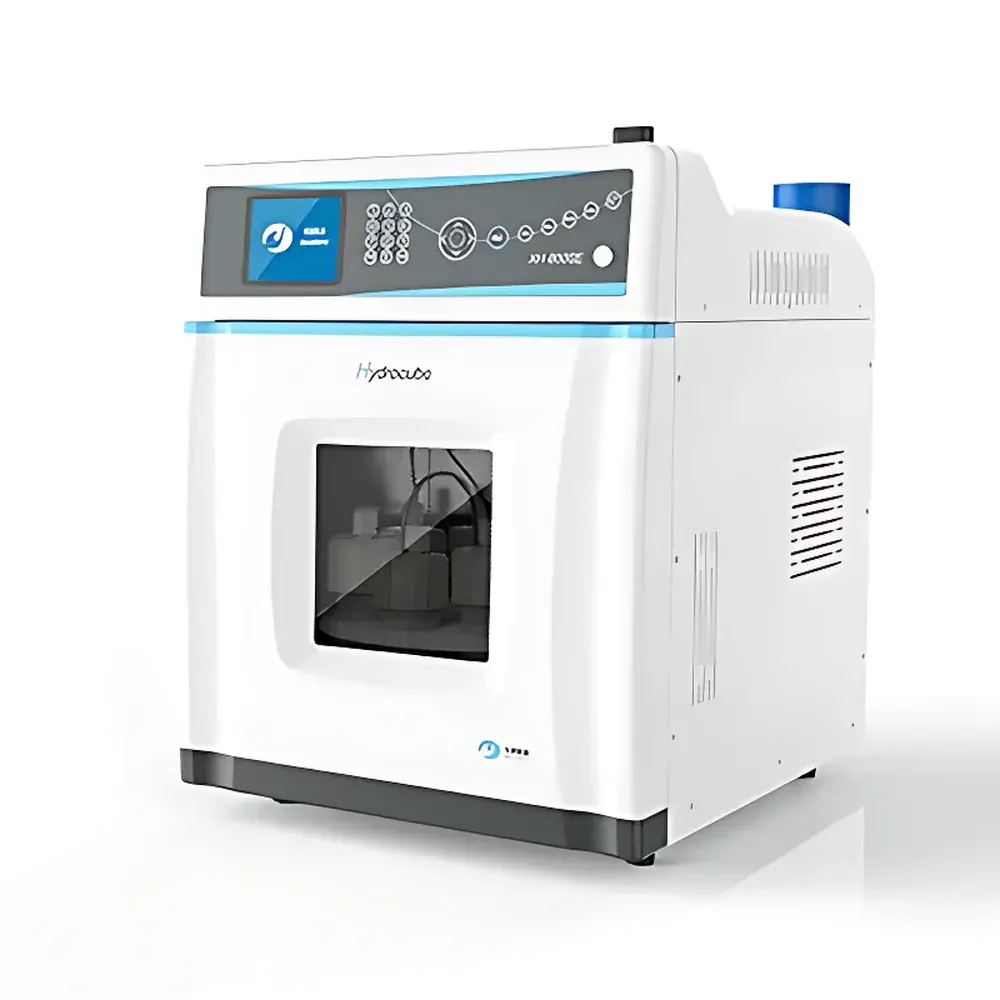
Xianghu Hydrocube XH-800SE Microwave Hydrothermal Synthesis System
| Brand | Xianghu |
|---|---|
| Origin | Beijing, China |
| Manufacturer Type | Direct Manufacturer |
| Region | Domestic (China) |
| Model | XH-800SE |
| Price Range | USD 14,000–28,000 |
| Temperature Range | 0–260 °C |
| Pressure Range | 0–6 MPa |
| Microwave Power Output | 0–1000 W (continuously adjustable, PID-controlled) |
| Microwave Frequency | 2450 MHz |
| Reaction Vessel Capacity | 10 × 100 mL |
| Temperature Sensor | Pt1000 contact probe (control accuracy ±1 °C, measurement accuracy ±0.1 °C) |
| Pressure Measurement Accuracy | ±0.01 MPa |
| Cavity Volume | 45 L |
| Cooling System | Post-reaction forced-air cooling with auto-alert at ≤40 °C |
| Safety Compliance | Microwave leakage <5 mW/cm² (GB 10436-2008), ISO 9001 certified |
Overview
The Xianghu Hydrocube XH-800SE is a high-performance, benchtop microwave hydrothermal synthesis system engineered for precise, reproducible, and safe high-pressure/temperature chemical synthesis under controlled microwave irradiation. It operates on the principle of dielectric heating—where polar molecules (e.g., water, alcohols, ionic solvents) absorb 2450 MHz microwave energy, enabling rapid and volumetric heating of reaction mixtures within sealed vessels. Unlike conventional conductive heating, this mechanism delivers uniform thermal energy distribution across multiple samples simultaneously, significantly reducing reaction times (from hours to minutes), improving yield selectivity, and minimizing thermal degradation pathways. Designed specifically for hydrothermal, solvothermal, and nanomaterial synthesis applications—including metal–organic frameworks (MOFs), perovskites, transition metal oxides, and quantum dots—the XH-800SE integrates real-time, dual-parameter (temperature & pressure) feedback control with industrial-grade safety architecture to meet rigorous academic and industrial R&D requirements.
Key Features
- 10-position parallel synthesis capability with independent 100 mL PTFE-lined PEEK composite reactors—rated to 6 MPa working pressure and 10 MPa burst tolerance.
- PID-controlled 0–1000 W microwave power delivery with dynamic frequency modulation ensures stable energy coupling and eliminates thermal runaway during exothermic reactions.
- Pt1000 contact temperature sensing (±0.1 °C measurement accuracy) combined with high-frequency data acquisition (≥150 readings/sec) enables sub-second thermal response tracking and closed-loop control.
- Dual-stage pressure monitoring (0–6 MPa range, ±0.01 MPa resolution) with automatic overpressure shutdown and rupture-disk–based passive泄压 (designed to vent radially without compromising vessel integrity).
- 45 L stainless steel (Austenitic 316L) cavity with multi-layer PTFE coating provides superior microwave reflectivity, corrosion resistance, and long-term thermal stability.
- Coaxial rotating turntable (360° continuous rotation, both orbital and rotational motion) ensures homogeneous field distribution and eliminates cold spots—critical for inter-batch reproducibility in multivessel workflows.
- Integrated forced-air cooling system (5 m³/min airflow, acid-resistant centrifugal blower) rapidly dissipates residual heat post-irradiation; auto-alarm triggers when internal vessel temperature drops to ≤40 °C.
Sample Compatibility & Compliance
The XH-800SE accommodates a broad spectrum of solvent systems—including aqueous, ethylene glycol, DMF, ethanol, and mixed-phase media—compatible with standard hydrothermal protocols defined in ASTM D7502 (nanomaterial synthesis), ISO 13320 (particle characterization prep), and USP (particulate matter testing). All reactor components comply with FDA-relevant material safety standards: inner liners are molded from virgin PTFE (USP Class VI certified), while outer vessels utilize reinforced PEEK composites meeting UL 94 V-0 flammability and ASTM D638 tensile strength requirements. The system conforms to GB 10436-2008 (Chinese national standard for microwave appliance radiation limits) and is ISO 9001:2015 certified for design, manufacturing, and quality management processes. Its safety architecture—including dual redundant sensors, hardware-based emergency cutoff, and fail-safe pressure relief—supports GLP-compliant documentation and audit readiness.
Software & Data Management
The instrument features an embedded capacitive touchscreen HMI with intuitive graphical interface supporting up to 16 customizable method files, each containing up to 10 sequential reaction stages with independent temperature, pressure, power, and time parameters. Real-time dual-channel curves (temperature vs. time, pressure vs. time) are displayed synchronously with numeric readouts. All sensor data—including timestamped temperature/pressure logs at ≥150 Hz—are stored internally and exportable via USB to CSV format for traceable analysis. While the base system does not include network connectivity or 21 CFR Part 11–compliant electronic signatures, its data structure and audit trail metadata (e.g., operator ID placeholder, method version stamp, event timestamps) allow seamless integration into validated LIMS or ELN platforms via third-party middleware.
Applications
- Synthesis of crystalline nanomaterials: TiO₂, ZnO, Fe₃O₄, LiFePO₄, and layered double hydroxides (LDHs) under controlled nucleation kinetics.
- Preparation of porous frameworks: MOFs (e.g., MIL-101, UiO-66), COFs, and zeolitic imidazolate frameworks (ZIFs) with tunable surface area and pore size distribution.
- Hydrothermal carbonization (HTC) of biomass derivatives for functional carbon materials and heteroatom-doped catalysts.
- Rapid optimization of solid-state reaction conditions for battery cathode precursors and ceramic powders.
- Green chemistry workflows: solvent-free or low-solvent condensation, esterification, and cyclization reactions requiring precise thermal ramping profiles.
FAQ
What is the maximum recommended operating pressure for routine use?
The XH-800SE is rated for continuous operation up to 6 MPa (870 psi); the reactor vessels are tested to 10 MPa burst pressure per ISO 11119-2.
Can the system be used for non-aqueous solvothermal synthesis?
Yes—provided the solvent exhibits sufficient dielectric loss factor at 2450 MHz and remains chemically compatible with PTFE and PEEK at elevated temperatures and pressures.
Is remote monitoring or Ethernet connectivity available?
No native Ethernet or Wi-Fi interface is included; however, USB data export and optional RS-232 serial output support external SCADA or LabVIEW integration.
How often should the pressure and temperature sensors be calibrated?
Annual calibration is recommended per ISO/IEC 17025 guidelines; calibration certificates traceable to NIM (National Institute of Metrology, China) are available upon request.
Does the system support GMP documentation requirements?
While the base firmware lacks 21 CFR Part 11 user authentication or electronic signature modules, raw data files contain immutable timestamps and method identifiers suitable for manual GMP recordkeeping and retrospective review.



