
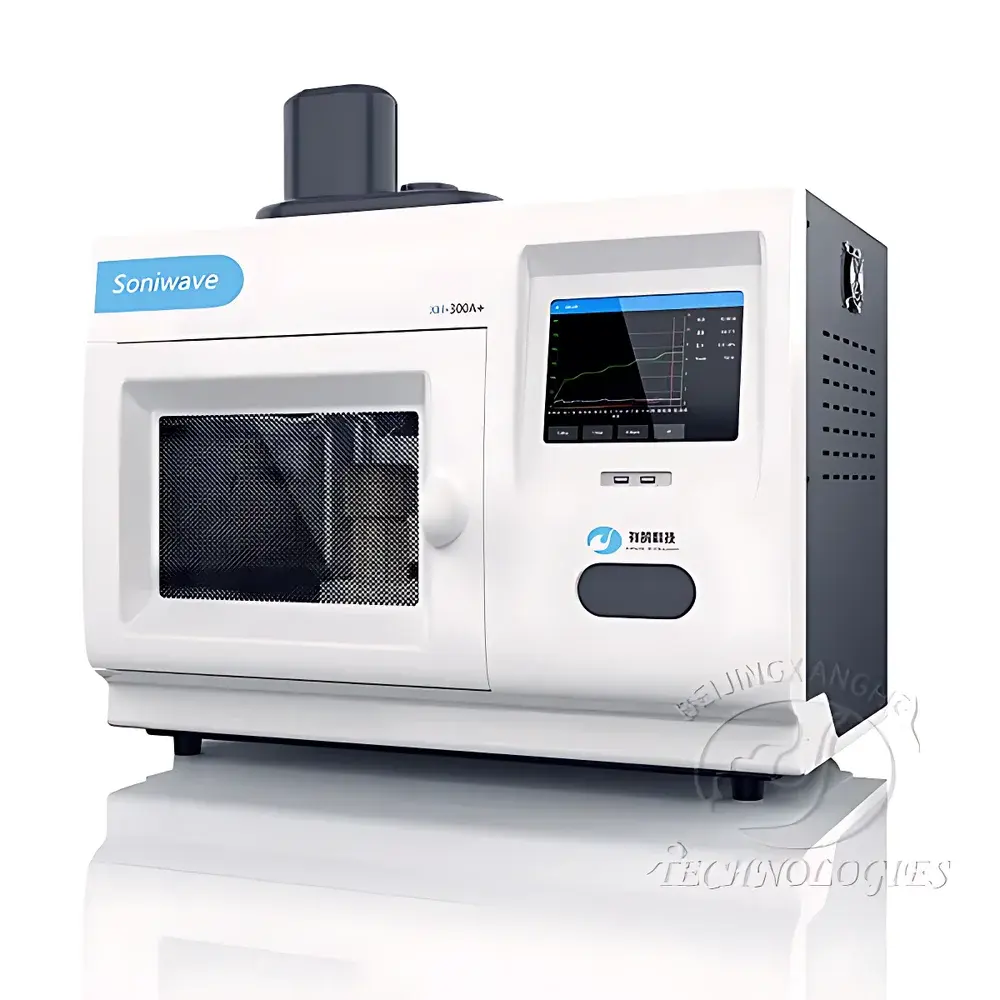
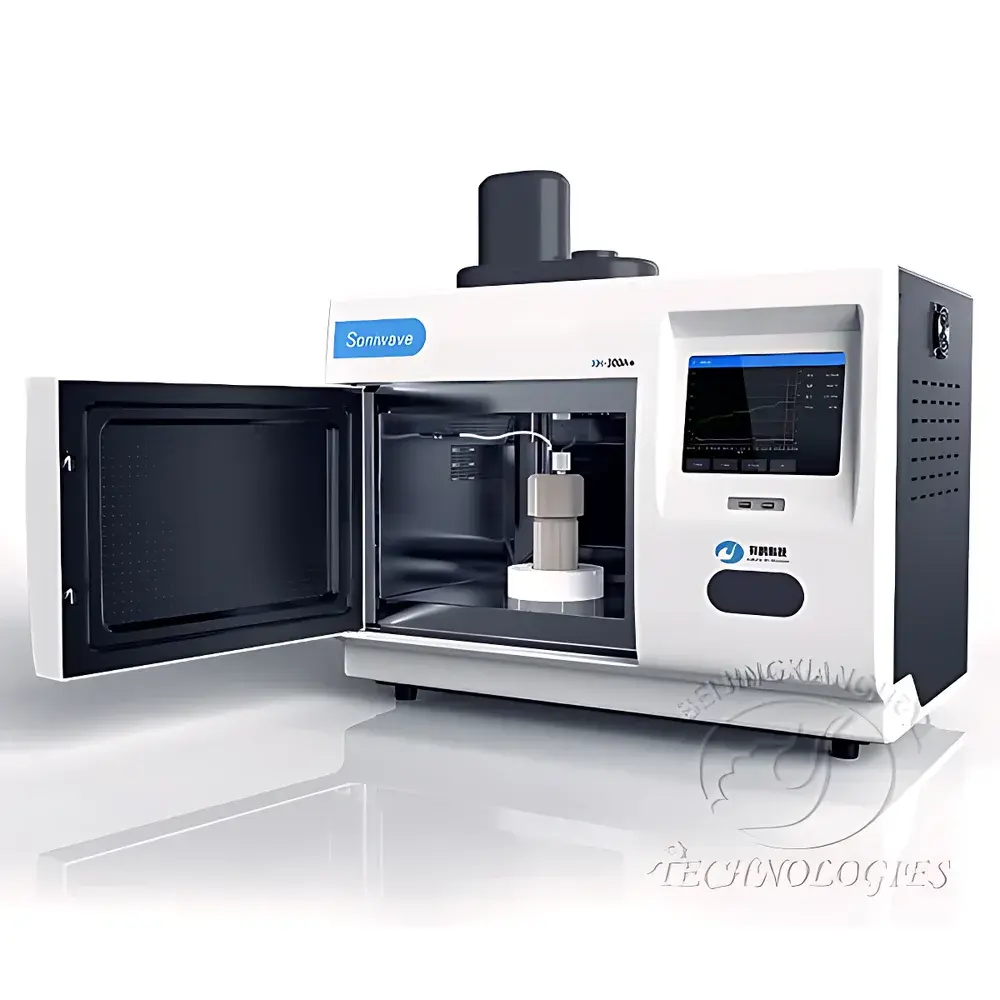
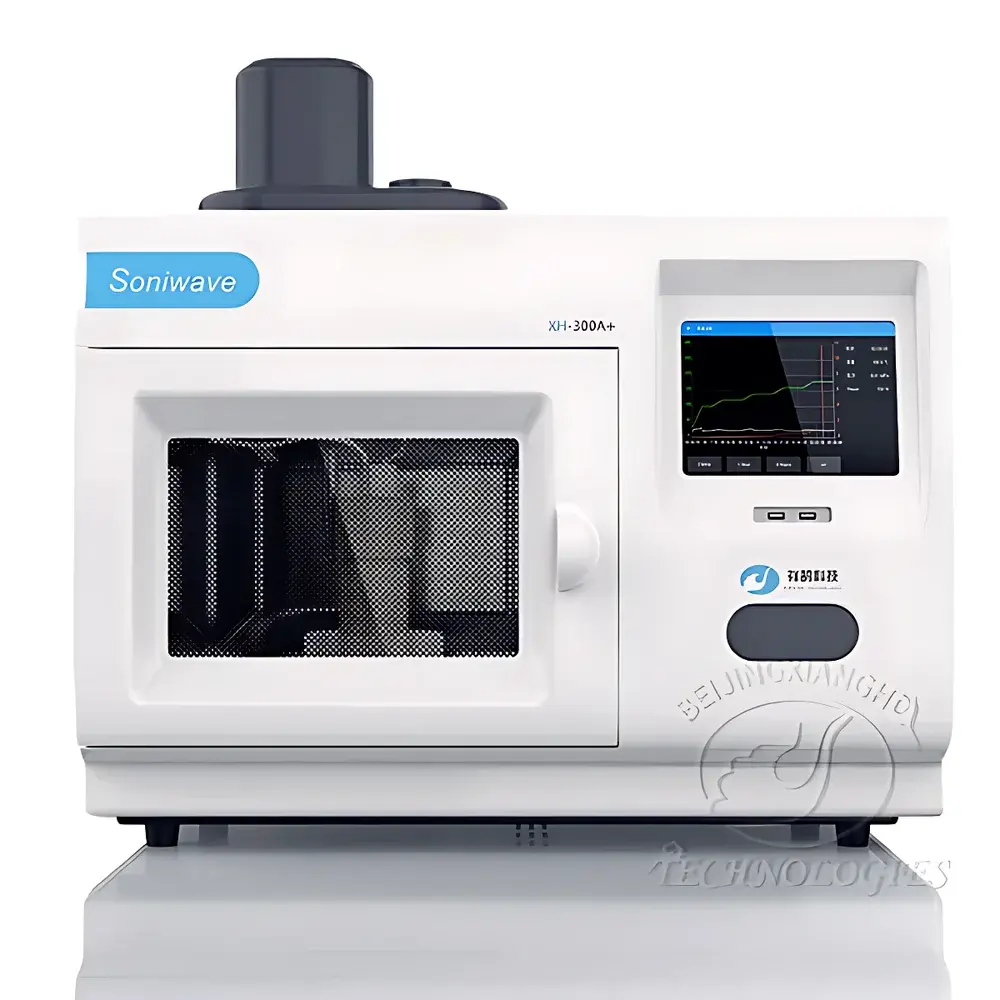
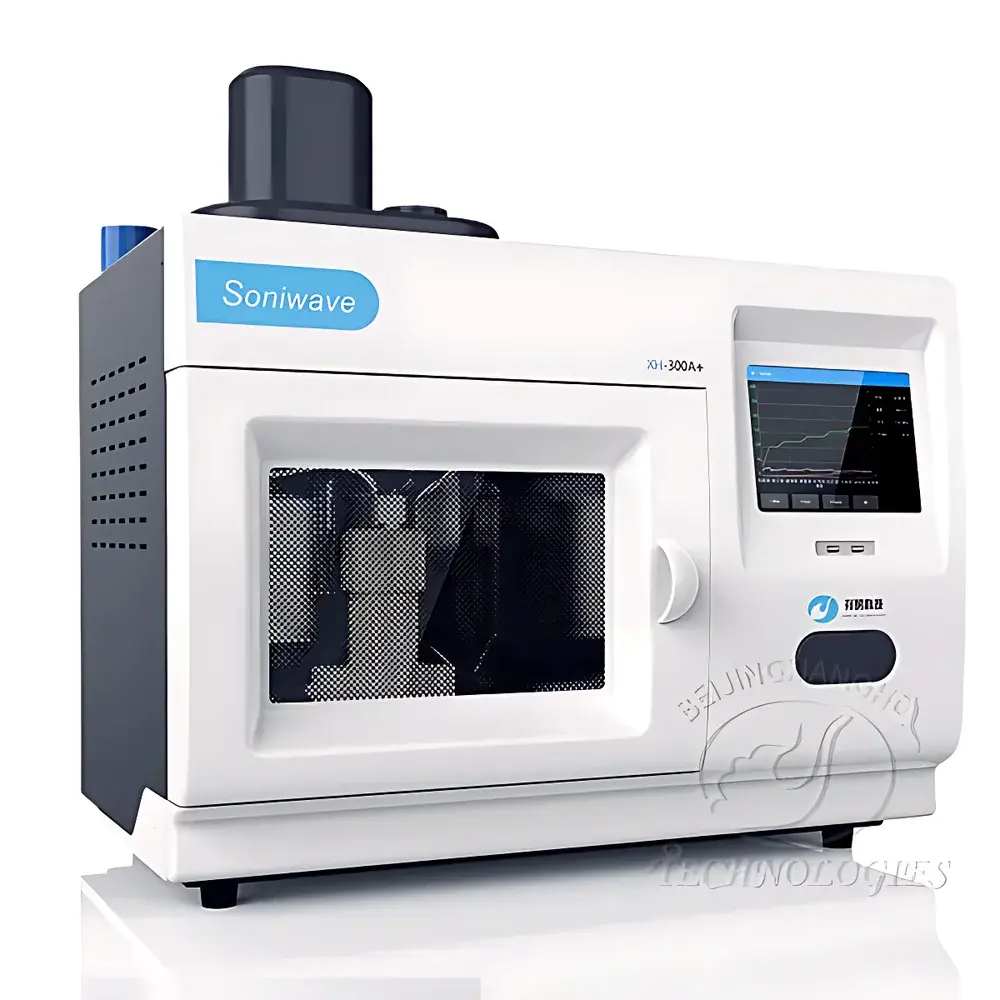
Xianghu Soniwave XH-300A+ Microwave-Ultrasound Hybrid Synthesis and Extraction System
| Brand | Xianghu |
|---|---|
| Origin | Beijing, China |
| Manufacturer Type | Direct Manufacturer |
| Region Classification | Domestic (China) |
| Model | XH-300A+ |
| Price Range | USD 14,000–28,000 |
| Temperature Range | 0–300 °C |
| Pressure Range | 0–6 MPa |
| Microwave Power Output | 0–1000 W (continuously adjustable) |
| Magnetron Frequency | 2450 MHz |
| Ultrasonic Power Output | 0–1500 W (manually adjustable) |
| Ultrasonic Frequency | 25 ± 1 kHz |
| Temperature Sensor | Pt1000 contact probe |
| Temperature Accuracy | ±0.1 °C (measurement), ±1 °C (control) |
| Pressure Accuracy | ±0.01 MPa |
| Reaction Volumes | 100 mL (high-pressure), 250 mL (medium-pressure), 500 mL (low-pressure) |
| Stirring | Built-in magnetic stirrer, 0–1400 rpm, infinitely variable |
| Cavity Material | Austenitic non-magnetic stainless steel |
| Safety Certifications | ISO 9001 certified, compliant with GB/T 18268 (Chinese safety standard for laboratory equipment) |
Overview
The Xianghu Soniwave XH-300A+ is an integrated microwave-ultrasound hybrid synthesis and extraction system engineered for reproducible, controlled, and scalable laboratory-scale chemical synthesis, catalytic reaction optimization, and solid-liquid extraction. It combines two complementary non-thermal energy modalities—microwave dielectric heating (2450 MHz) and high-intensity ultrasonic cavitation (25 ± 1 kHz)—within a single, rigorously shielded reaction platform. Microwave irradiation enables rapid, volumetric, and selective heating of polar molecules, while ultrasonic energy promotes mass transfer through acoustic streaming and transient cavitation bubble collapse—enhancing reagent diffusion, surface cleaning, and particle fragmentation. This dual-energy synergy significantly reduces reaction times, improves yield and selectivity, and expands the operational window for thermally sensitive or kinetically hindered transformations. The system is designed for use in academic research laboratories, pharmaceutical process development, and materials science labs where precise thermal and mechanical energy delivery, real-time process monitoring, and regulatory-compliant data integrity are required.
Key Features
- Simultaneous and independent control of microwave power (0–1000 W, continuously adjustable) and ultrasonic output (0–1500 W, manually tunable) to enable method optimization across diverse reaction chemistries.
- Pt1000 contact temperature sensor with ±0.1 °C measurement accuracy and intelligent self-learning temperature regulation—supporting ramp-hold, stepwise, and isothermal control modes up to 300 °C.
- High-fidelity pressure monitoring (0–6 MPa, ±0.01 MPa accuracy) with automatic overpressure cut-off and fail-safe venting protocols compliant with GB/T 18268 mechanical safety requirements.
- 8.0-inch IPS full-color touchscreen interface with real-time graphical overlay of temperature, pressure, microwave power, and ultrasonic amplitude—displaying synchronized time-series curves and enabling 10-segment programmable reaction protocols.
- Integrated 12-megapixel HD camera for non-invasive, real-time visual monitoring of reaction homogeneity, phase separation, or precipitate formation without opening the cavity.
- Modular reaction chamber accommodating three standardized PTFE-lined pressure vessels: 100 mL (rated to 6 MPa), 250 mL (4 MPa), and 500 mL (2 MPa), all sealed with reinforced PEEK outer jackets and compatible with reflux accessories (condenser, dropping funnel).
- Robust microwave cavity constructed from seamless austenitic stainless steel with optimized mode distribution and industrial-grade choke-door shielding—verified to meet IEC 61000-3-2 electromagnetic emission limits.
Sample Compatibility & Compliance
The XH-300A+ supports heterogeneous, homogeneous, and biphasic reaction systems—including organometallic catalysis, nanoparticle synthesis, biomass pretreatment, and natural product extraction. Its open-vessel configuration permits atmospheric reflux, while sealed-vessel operation enables high-temperature/pressure kinetics under inert or reactive atmospheres. All wetted components (PTFE inner vessels, titanium alloy ultrasonic probes Φ8 mm and Φ18 mm) resist corrosion by strong acids, bases, and organic solvents. The instrument complies with ISO 9001:2015 quality management standards and conforms to GB/T 18268.1–2010 (IEC 61326-1:2012), the Chinese national standard for electromagnetic compatibility and safety of laboratory electrical equipment. While not inherently 21 CFR Part 11–compliant, audit-ready data export (via USB) and timestamped parameter logging support GLP-aligned documentation workflows when deployed with validated SOPs.
Software & Data Management
All operational parameters—including temperature, pressure, microwave power, ultrasonic amplitude, stirring speed, and elapsed time—are logged at user-defined intervals (default: 1 s) and stored internally with time stamps. Data can be exported in CSV format via USB 2.0 for post-acquisition analysis in MATLAB, Origin, or Excel. The system does not include proprietary cloud software or remote desktop functionality; however, its deterministic data structure and human-readable file naming convention (e.g., XH300A+_20240522_142301.csv) facilitate integration into institutional LIMS or ELN platforms. No encryption or electronic signature capability is embedded; users requiring ALCOA+ compliance must implement external validation protocols per their internal QA policy.
Applications
- Accelerated synthesis of metal–organic frameworks (MOFs) and perovskite nanocrystals under controlled thermal–mechanical stress.
- Ultrasound-assisted microwave extraction (UAME) of polyphenols, alkaloids, and terpenoids from plant matrices—reducing solvent consumption by >40% versus conventional Soxhlet methods.
- Green catalysis studies involving Pd-, Ni-, or Cu-mediated cross-coupling reactions, where synergistic activation lowers required catalyst loading and improves turnover frequency (TOF).
- Hydrothermal carbonization and lignin depolymerization under subcritical water conditions (200–280 °C, 2–5 MPa).
- Preparation of functionalized graphene oxide dispersions via simultaneous exfoliation (ultrasound) and covalent grafting (microwave-triggered esterification).
FAQ
What safety certifications does the XH-300A+ hold?
It is certified to ISO 9001:2015 and meets GB/T 18268.1–2010 (equivalent to IEC 61326-1:2012) for electromagnetic compatibility and electrical safety. No CE or UL listing is provided.
Can the system operate under inert gas atmosphere?
Yes—sealed reaction vessels support nitrogen or argon purging prior to pressurization; gas inlet/outlet ports are standard on all PTFE-PEEK assemblies.
Is remote operation supported?
No native Ethernet/WiFi connectivity or remote desktop capability is included. Emergency stop is accessible only via front-panel button or optional wired remote switch (sold separately).
What maintenance is required for the ultrasonic transducer?
Titanium probes require periodic visual inspection for pitting or erosion; replacement is recommended after ~2000 hours of cumulative ultrasonic duty cycle or upon observed amplitude decay exceeding 15%.
Does the instrument support automated method transfer to production-scale reactors?
While not directly scalable, the XH-300A+ generates robust kinetic and thermodynamic datasets (e.g., Arrhenius plots, activation volumes) suitable for reactor modeling and scale-up via dimensional analysis or residence time distribution (RTD) mapping.



