
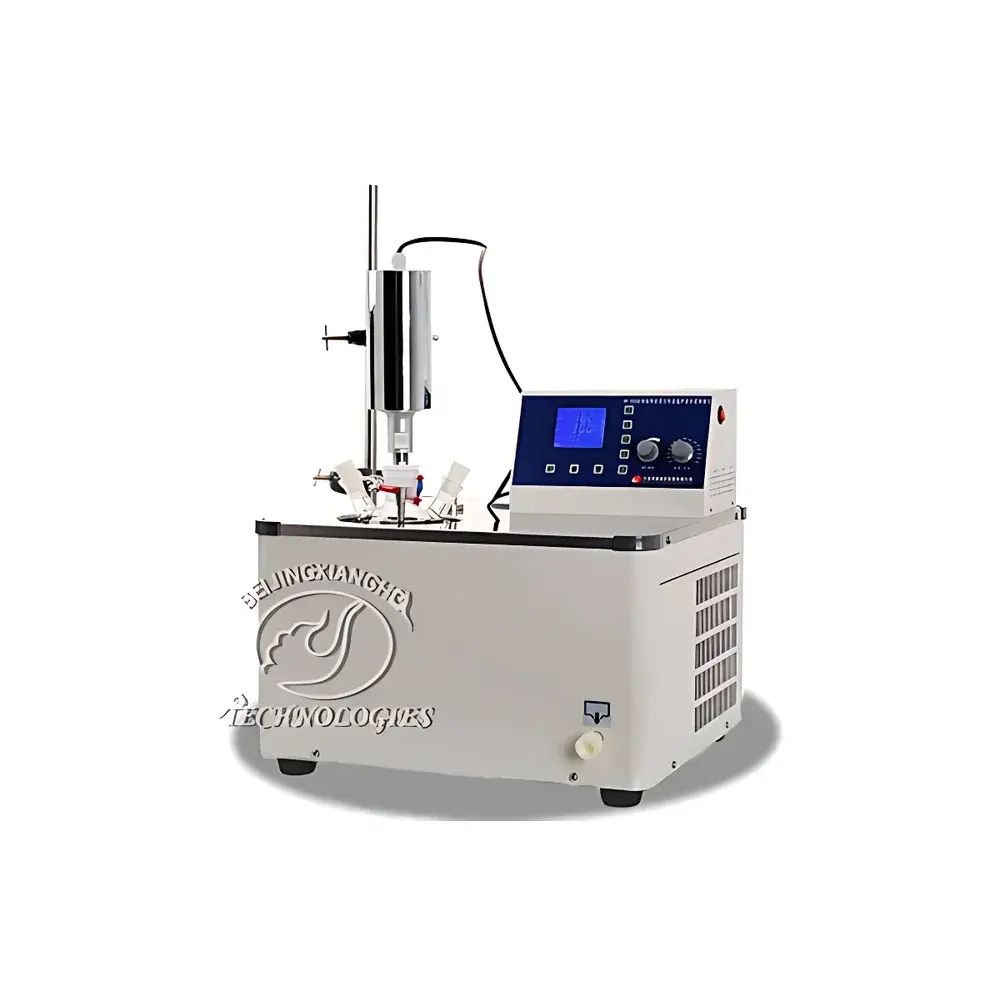
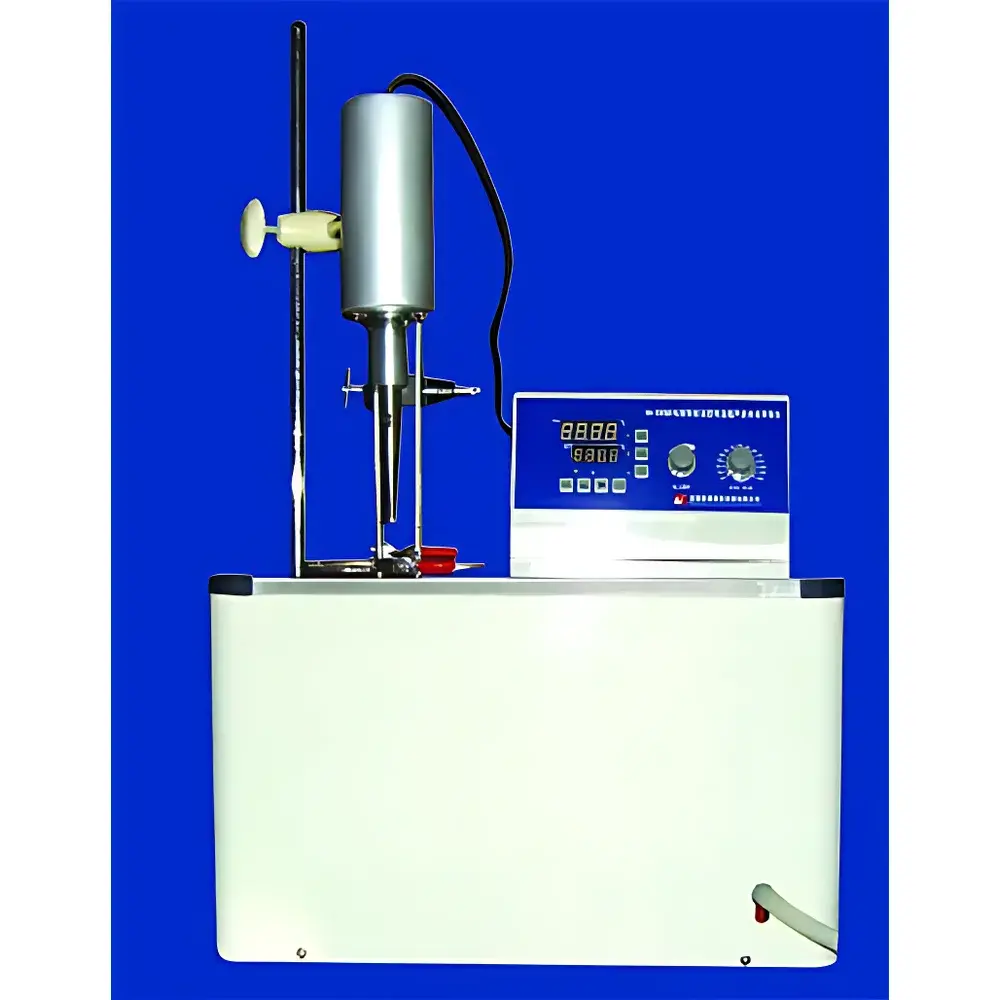
Xianghu XH-2008D Intelligent Temperature-Controlled Cryogenic Ultrasonic Synthesizer & Extractor
| Brand | Xianghu |
|---|---|
| Origin | Beijing, China |
| Manufacturer Type | Direct Manufacturer |
| Origin Category | Domestic (China) |
| Model | XH-2008D |
| Ultrasonic Power | 100–1500 W |
| Ultrasonic Frequency | 25 kHz |
| Max Heating Power | 500 W |
| Temperature Range | −20 to 99 °C |
| Chamber Volume | 10–500 mL |
| Probe Diameters | Ø8 mm, Ø18 mm |
| Cold Bath Volume | 2 L |
| Compressor Power | 500 W |
| Temperature Control Accuracy | ≤ ±1 °C |
| Magnetic Stirring | Variable-Speed Integrated |
Overview
The Xianghu XH-2008D Intelligent Temperature-Controlled Cryogenic Ultrasonic Synthesizer & Extractor is a precision-engineered laboratory platform designed for controlled sonochemical synthesis and solvent-based extraction under precisely regulated thermal conditions. It integrates high-intensity ultrasonic energy generation (25 kHz) with active cryogenic cooling (−20 °C minimum), resistive heating (up to 99 °C), real-time temperature feedback control, and auxiliary mechanical agitation—enabling reproducible reaction environments across a broad operational envelope. Its core transduction mechanism relies on acoustic cavitation: the propagation of high-frequency pressure waves in liquid media generates transient microbubbles that collapse violently, producing localized hotspots exceeding 5,000 K and pressures above 1,000 bar. This physical phenomenon enhances mass transfer, disrupts cell walls or matrix structures, accelerates dissolution kinetics, and promotes radical-mediated reaction pathways—without requiring aggressive reagents or elevated bulk temperatures. The system’s dual thermal capability—simultaneous subzero cooling and precise heating—makes it uniquely suited for thermally sensitive reactions, low-boiling-point solvent extractions, and protocols demanding strict thermal history control (e.g., enzymatic catalysis, natural product isolation, or metastable intermediate stabilization).
Key Features
- Adjustable ultrasonic output (100–1500 W) with digital power regulation and real-time amplitude monitoring for process repeatability
- Dual-mode thermal management: integrated compressor-based refrigeration (−20 °C minimum) and resistive heating (500 W max), both governed by PID-controlled Pt100 sensor feedback
- Temperature control accuracy of ≤ ±1 °C across the full −20 to 99 °C range, validated per ASTM E742 and ISO/IEC 17025 calibration guidelines
- Modular probe configuration: interchangeable Ø8 mm and Ø18 mm titanium alloy sonotrodes optimized for small-volume vials (10–50 mL) and larger jacketed reactors (250–500 mL)
- Integrated variable-speed magnetic stirring (0–1200 rpm) synchronized with ultrasonic activation to ensure homogeneous thermal distribution and particle suspension
- Dedicated cold bath reservoir (2 L capacity) compatible with external recirculating chillers or standalone operation
- Standardized threaded ports and clamping interfaces for seamless integration of reflux condensers, inert gas inlets, or sampling valves
- IP54-rated enclosure with reinforced insulation, leak-proof cold bath housing, and emergency thermal cutoff circuitry
Sample Compatibility & Compliance
The XH-2008D accommodates a wide range of sample formats—including glass vials, stainless-steel reactors, and jacketed round-bottom flasks—within its 10–500 mL working volume. Its sealed cold bath design prevents condensation ingress during low-temperature operation, while corrosion-resistant wetted materials (titanium sonotrodes, PTFE-coated stir bars, borosilicate glass compatibility) ensure long-term stability with organic solvents (e.g., ethanol, acetone, ethyl acetate), aqueous buffers, and mildly acidic/basic media. The instrument meets CE marking requirements for electromagnetic compatibility (EMC Directive 2014/30/EU) and low-voltage safety (LVD Directive 2014/35/EU). Its temperature logging and power-event timestamping support GLP-compliant documentation; optional audit-trail-enabled firmware upgrades align with FDA 21 CFR Part 11 data integrity expectations when paired with validated networked data acquisition systems.
Software & Data Management
Local operation is managed via a front-panel touchscreen interface with dedicated parameter pages for ultrasonic duty cycle, target temperature setpoint, ramp rate, hold time, and stirring speed. All operational parameters—including real-time temperature curves, cumulative ultrasonic energy delivery (J/mL), and compressor duty cycles—are logged internally with UTC timestamps and exportable via USB 2.0 to CSV format. Optional PC software (XH-Control Suite v3.2) provides remote monitoring, multi-step protocol programming, automated report generation (PDF/Excel), and trend analysis aligned with ISO 17025 method validation templates. Data files include embedded metadata (operator ID, instrument serial number, calibration expiration date) to satisfy traceability requirements in regulated QC/QA laboratories.
Applications
- Extraction of bioactive compounds (polyphenols, alkaloids, terpenes) from plant matrices under reduced thermal stress
- Sono-assisted synthesis of metal–organic frameworks (MOFs) and nanocatalysts with controlled crystallinity
- Accelerated leaching of heavy metals from environmental soil/sediment samples per EPA Method 3050B adaptations
- Low-temperature peptide coupling and esterification reactions minimizing racemization
- Cell disruption and intracellular metabolite release for untargeted metabolomics workflows
- Preparation of nanoemulsions and liposomal carriers using high-shear ultrasonic homogenization below critical micelle temperature
FAQ
What safety certifications does the XH-2008D carry?
It complies with CE directives for EMC (2014/30/EU) and Low Voltage (2014/35/EU), and conforms to IEC 61010-1:2010 for laboratory electrical equipment safety.
Can the system operate continuously at −20 °C?
Yes—the compressor-cooled bath maintains stable operation at −20 °C for up to 8 hours under nominal 100–300 W ultrasonic load; extended runs require periodic defrost cycles per maintenance manual Section 4.2.
Is probe replacement standardized across Xianghu models?
The Ø8 mm and Ø18 mm titanium probes use a universal M12×1.75 threaded interface compatible with all XH-series ultrasonic platforms manufactured after 2015.
Does the instrument support external temperature probe input for reactor wall monitoring?
No—temperature sensing is internal to the bath fluid only; external probe integration requires third-party DAQ hardware and custom scripting via the RS-232 communication port.
How is ultrasonic energy calibrated and verified?
Calibration is performed using calorimetric measurement per ASTM E2884-13; certified calibration reports are issued annually by Xianghu’s CNAS-accredited metrology lab (Certificate No. CNAS L8721).



