
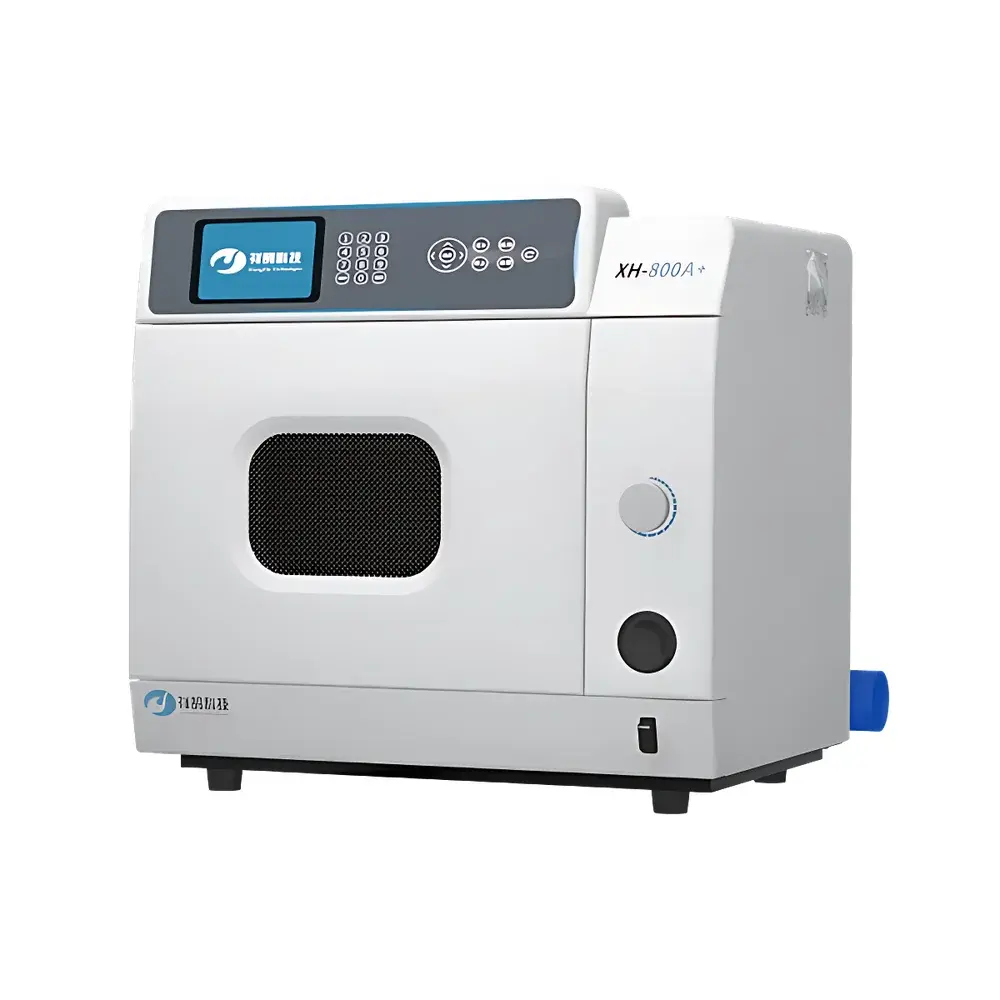
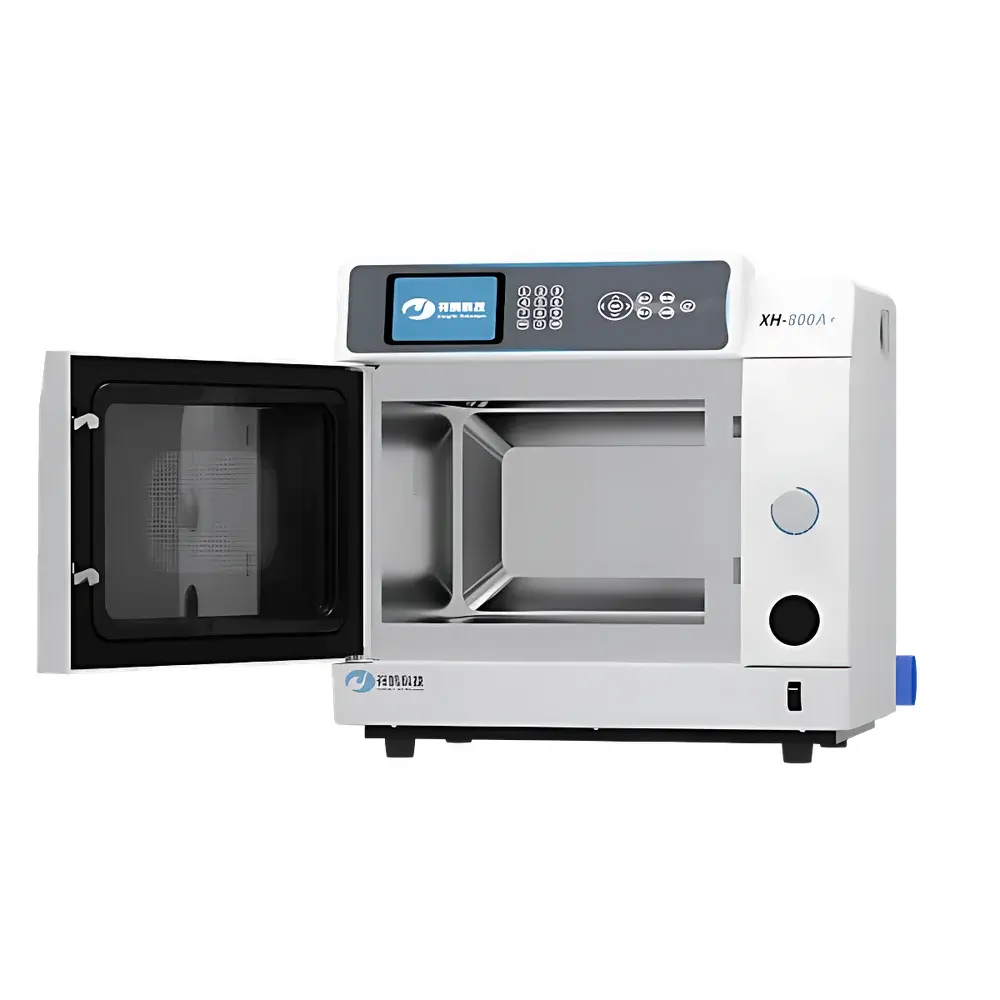
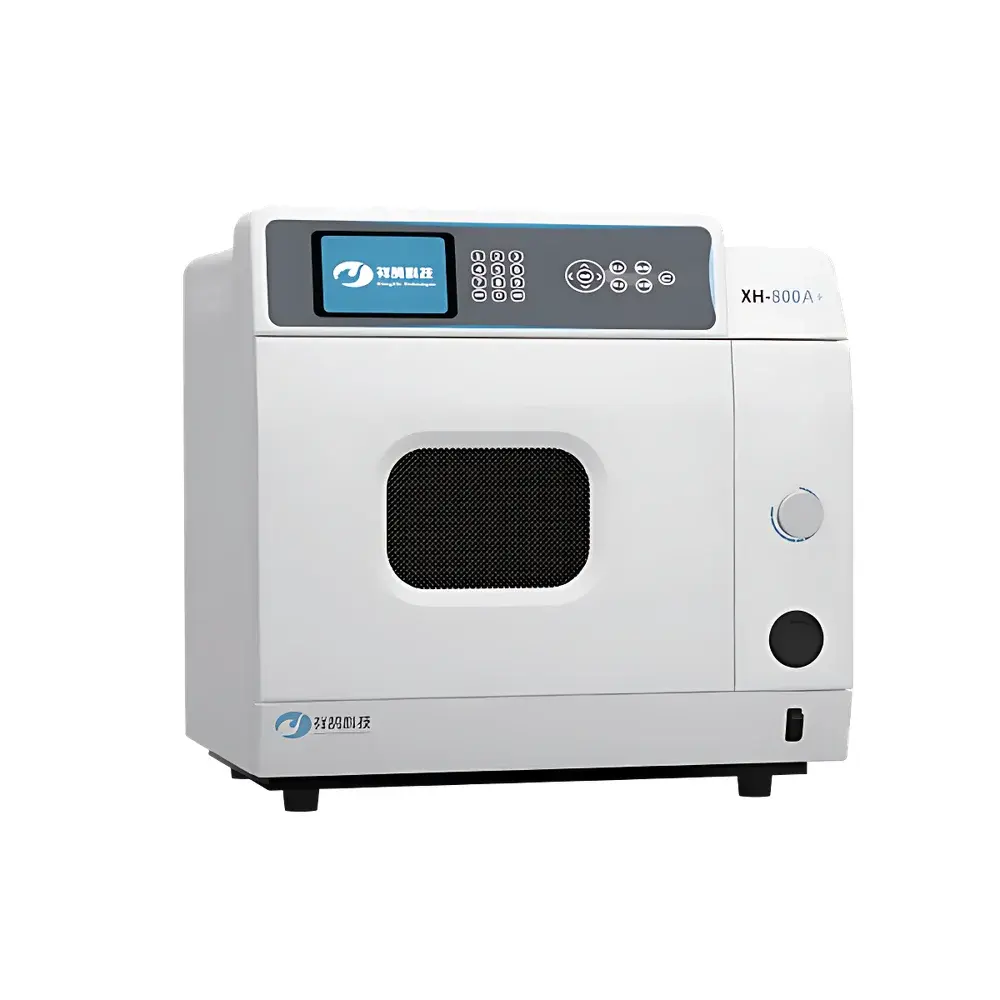
Xianghu XH-800A+ Multi-Mode Microwave Hydrothermal Synthesis System
| Brand | Xianghu |
|---|---|
| Origin | Beijing, China |
| Manufacturer Type | Direct Manufacturer |
| Instrument Category | Multi-Mode Microwave Synthesizer |
| Temperature Range | 0–300 °C |
| Pressure Range | 0–10 MPa |
| Microwave Output Power | 1000 W |
| Magnetron Frequency | 2450 MHz |
| Reaction Vessel Capacity | 100 mL (high-pressure configuration) |
| Vessel Material | PTFE/Teflon-lined stainless steel |
| Safety Certification | Dual-interlock door, multi-layer radiation-shielded cavity, real-time temperature & pressure monitoring |
Overview
The Xianghu XH-800A+ Multi-Mode Microwave Hydrothermal Synthesis System is an engineered platform for controlled, rapid, and reproducible hydrothermal synthesis under microwave irradiation. It operates on the principle of dielectric heating—where polar molecules (e.g., water, alcohols, or ionic solvents) absorb microwave energy at 2450 MHz, inducing molecular rotation and kinetic energy transfer that accelerates reaction kinetics far beyond conventional conductive heating. Unlike single-mode cavities limited to small-volume, focused-field applications, the XH-800A+ employs a multi-mode resonant cavity to ensure uniform field distribution across its large-volume stainless-steel chamber, enabling scalable and statistically robust synthesis protocols. Designed specifically for hydrothermal and solvothermal routes, it supports closed-vessel reactions under autogenous pressure up to 10 MPa and temperatures up to 300 °C—conditions essential for crystallization of metal oxides, perovskites, MOFs, quantum dots, and layered nanomaterials. Its integration of in-situ magnetic stirring further mitigates thermal gradients and concentration boundary layers, enhancing phase homogeneity and nucleation control.
Key Features
- Industrial-grade Toshiba magnetron with stable 1000 W output power and optimized waveguide coupling for consistent energy delivery
- Large-capacity cavity constructed from AISI 316L austenitic stainless steel—resistant to thermal cycling, acid/alkali corrosion, and high-pressure mechanical stress
- Dual-safety interlocked door with multi-layer composite shielding (copper-clad steel + mu-metal layer), certified to IEC 61000-4-3 for electromagnetic leakage <1 mW/cm² at 5 cm distance
- Real-time dual-parameter control: fiber-optic temperature sensor (±0.5 °C accuracy) and piezoresistive pressure transducer (±0.05 MPa resolution), both sampled at 10 Hz and displayed as synchronized time-series curves on a 7-inch TFT-LCD interface
- Standard 100 mL PTFE-lined SS316 reaction vessel rated for continuous operation at 260 °C / 6 MPa; optional vessels available in 250 mL and 500 mL capacities with identical liner chemistry and pressure rating
- Programmable reaction profiles with up to 10 user-defined segments (ramp-hold-cool), supporting GLP-compliant method storage and recall
Sample Compatibility & Compliance
The XH-800A+ accommodates aqueous, ethylene glycol, ethanol, DMF, and other polar solvent systems commonly used in hydrothermal nanomaterial synthesis. Reaction vessels comply with ISO 15190:2020 (laboratory safety—requirements for equipment) and ASME BPVC Section VIII Div. 1 for pressure containment design. All electronic controls adhere to IEC 61326-1 for EMC immunity and emission limits. The system supports audit-trail-enabled operation when connected to external LIMS or ELN platforms—meeting foundational requirements for FDA 21 CFR Part 11 compliance in regulated R&D environments where method traceability and operator accountability are required.
Software & Data Management
Data acquisition is performed via embedded ARM Cortex-M7 controller with onboard non-volatile memory (128 MB) for local storage of up to 1000 complete experiment logs—including timestamped T/P curves, power modulation history, and error flags. USB 2.0 host port enables export of CSV-formatted datasets for post-processing in MATLAB, Origin, or Python-based analysis pipelines. Optional PC software (XH-Control Suite v3.2) provides remote monitoring, multi-instrument fleet management, and automated report generation compliant with ISO/IEC 17025 documentation standards.
Applications
- Synthesis of transition metal oxide nanoparticles (e.g., TiO₂, Fe₃O₄, ZnO) for photocatalysis and battery anodes
- Controlled growth of layered double hydroxides (LDHs) and zeolitic imidazolate frameworks (ZIFs) under subcritical water conditions
- Rapid crystallization of perovskite precursors (e.g., MAPbI₃) for optoelectronic thin-film development
- Hydrothermal carbonization (HTC) of biomass derivatives into functional carbon materials
- Environmental remediation studies: in-situ formation of iron-based nano-adsorbents for arsenic or phosphate sequestration
FAQ
What is the maximum recommended operating pressure for routine use?
The standard 100 mL vessel is rated for continuous operation at 6 MPa and 260 °C; the full 10 MPa limit is reserved for short-duration, validated experimental protocols under engineering supervision.
Can the system be integrated into an automated lab workflow?
Yes—RS-485 Modbus RTU and optional Ethernet/IP interfaces support integration with PLC-based reactor farms or central lab automation systems.
Is calibration traceable to national standards?
Temperature and pressure sensors are factory-calibrated against NIST-traceable references; annual recalibration services are available through authorized service centers in EU and North America.
Does the instrument meet CE or UKCA marking requirements?
CE marking is applied for EMC Directive 2014/30/EU and Low Voltage Directive 2014/35/EU; UKCA compliance is achievable via notified body assessment upon request.
How is cooling managed after high-temperature runs?
Passive air convection cooling is standard; optional forced-air or compressed-air quench modules reduce cooldown time by ≥40% without compromising vessel integrity.



