
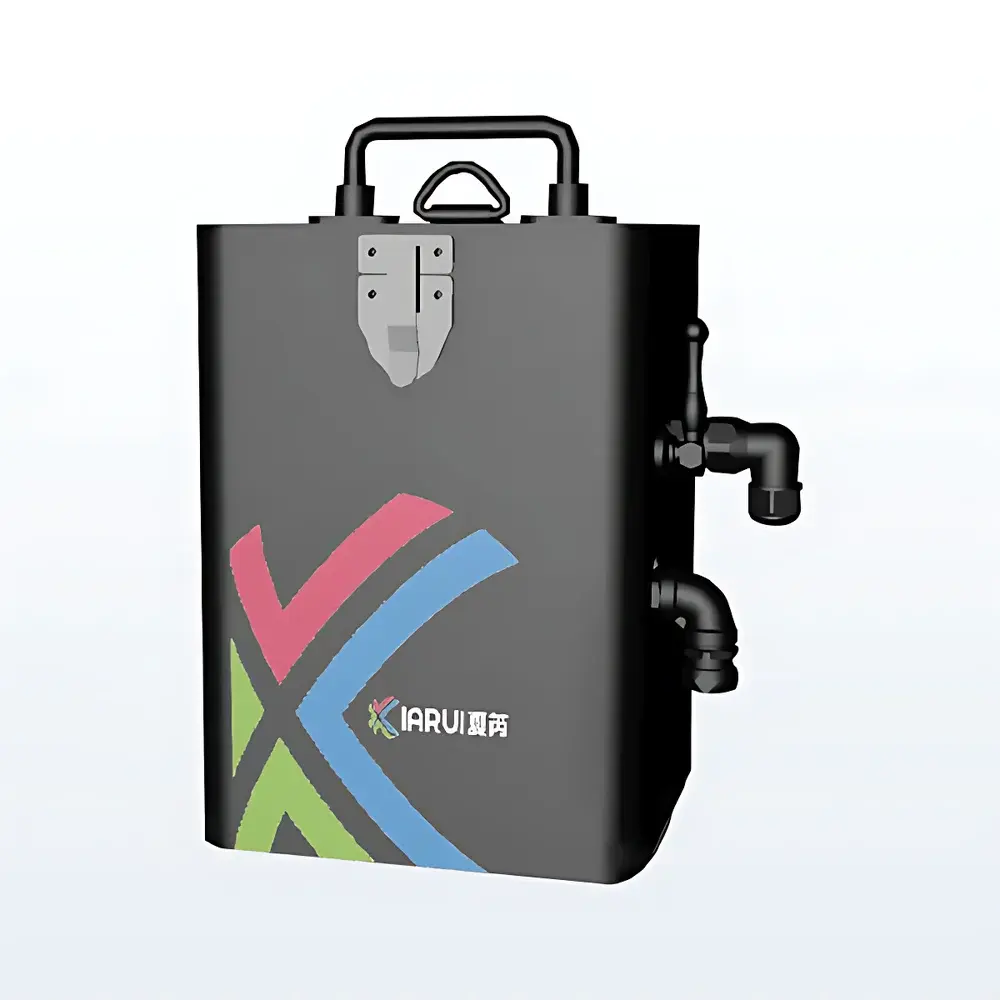
Xiarui DT-CR0300 Portable Submersible Wastewater Sampler
| Brand | Xiarui |
|---|---|
| Origin | Fujian, China |
| Manufacturer Type | Manufacturer |
| Country of Origin | China |
| Model | DT-CR0300 |
| Instrument Category | Automatic Water Sampler |
| Sampling Method | Time-Programmed & Volume-Controlled Sampling |
| Instrument Type | Portable Wastewater Sampler |
| Single Sample Volume | 1–999 mL (adjustable) |
| Sampling Volume Accuracy | ≤ ±1% |
| Sampling Interval | 1–999 min (adjustable) |
| Maximum Submersion Depth | ≥ 8 m |
| Vertical Sampling Height | ≥ 8 m |
| Horizontal Sampling Distance | ≥ 50 m |
| Enclosure Rating | IP67 |
| Unit Weight | ≤ 8 kg |
| Battery Runtime | ≥ 24 h (continuous operation) |
| Sampling Mode | Peristaltic Pump Suction with Microstepping Motor Drive |
| Water Level Adaptation | Auto-compensating for dynamic water level changes in confined spaces |
Overview
The Xiarui DT-CR0300 Portable Submersible Wastewater Sampler is an engineered solution for representative, traceable, and compliant sampling in challenging urban wastewater infrastructure environments—including manholes, sewer inspection chambers, discharge outfalls, and confined underground access points. Designed specifically to meet the technical requirements outlined in China’s *Technical Specification for Toxic Substance Monitoring in Wastewater* (HJ 978–2018), the DT-CR0300 operates on a peristaltic pump-driven suction principle, eliminating cross-contamination risks associated with piston or diaphragm-based systems. Its compact form factor and sub-8 kg mass enable single-operator deployment without lifting equipment, while its sealed IP67-rated housing ensures operational integrity under heavy rain, dust exposure, or temporary submersion during field deployment. The device supports programmable time-volume sampling protocols—critical for longitudinal trend analysis, forensic wastewater epidemiology, and regulatory compliance monitoring where temporal resolution and volumetric fidelity directly impact data defensibility.
Key Features
- Submersible architecture with ≥ 8 m rated vertical sampling depth and ≥ 50 m horizontal hose reach—validated for use in deep-sewer manholes and elevated outfall structures.
- High-precision peristaltic pumping system driven by microstepping stepper motor control, delivering ≤ ±1% volumetric accuracy across the full 1–999 mL range.
- Intelligent water-level adaptive sampling: real-time pressure-based depth sensing enables automatic adjustment of intake position relative to fluctuating wastewater levels—minimizing stratification bias in heterogeneous flows.
- Integrated sample tube rinse-and-purge cycle prior to each acquisition, ensuring carryover-free operation between discrete sampling events.
- Removable high-capacity lithium-ion battery pack supporting ≥ 24 hours of continuous scheduled sampling—field-replaceable without tools or system shutdown.
- Full internal logging of timestamp, sample volume, depth, ambient temperature, and pump actuation status—each entry cryptographically time-stamped and exportable via USB-C interface.
Sample Compatibility & Compliance
The DT-CR0300 is validated for sampling raw municipal wastewater, industrial effluents, and mixed stormwater-sewer overflows containing suspended solids up to 15 mm in diameter. Tubing materials (FDA-compliant silicone and PTFE-lined PVC) resist chemical degradation from common wastewater constituents including sulfides, chlorinated hydrocarbons, and low-pH acidic discharges. Device firmware and data handling workflows support audit-ready documentation aligned with GLP principles. While not certified to ISO/IEC 17025 as a testing laboratory instrument, its performance specifications conform to ASTM D3370 (Standard Practices for Sampling Water) and EPA Method 1664B (for hydrophobic organic compound preservation considerations). All metadata fields comply with minimum reporting requirements defined in HJ 978–2018 for toxicant surveillance programs.
Software & Data Management
Field configuration and post-sampling data retrieval are managed through Xiarui’s proprietary DT-Link desktop application (Windows/macOS compatible). The software enforces password-protected parameter locking, supports batch programming of multi-interval sampling schedules, and generates CSV- and PDF-formatted chain-of-custody reports with embedded digital signatures. Raw log files include SHA-256 hash verification for integrity validation—enabling forensic-grade data provenance tracking required in regulatory enforcement contexts. No cloud connectivity is implemented; all data remains resident on-device or local host systems—meeting data sovereignty requirements for sensitive environmental intelligence applications.
Applications
- Forensic Field Investigations: Rapid deployment into active manholes for evidentiary wastewater collection during illicit drug precursor or synthetic opioid metabolite monitoring campaigns.
- Wastewater-Based Epidemiology (WBE): Long-term unattended sampling at catchment-level interceptors to support public health surveillance of viral RNA, antimicrobial resistance markers, or pharmaceutical residues.
- Compliance Auditing: Scheduled grab sampling at NPDES-permitted discharge points to verify adherence to permit limits for priority pollutants under EPA or provincial regulatory frameworks.
- Source Tracking Studies: Paired with GIS-tagged sampling events and hydraulic modeling inputs to isolate contamination origins within complex sewer networks.
- Emergency Response: Immediate post-event sampling following chemical spills or infrastructure failures—leveraging IP67 ingress protection and rapid setup (< 90 s) for time-critical evidence collection.
FAQ
Is the DT-CR0300 suitable for potable water sampling?
No—it is explicitly designed and validated for raw wastewater and industrial effluent matrices. Potable water applications require NSF/ANSI 61-compliant wetted materials and separate certification pathways.
Can sampling parameters be modified remotely during field operation?
No. All scheduling and volume settings must be pre-programmed via DT-Link prior to deployment. This design eliminates wireless attack surfaces and ensures deterministic behavior in electromagnetically noisy infrastructure environments.
What maintenance intervals are recommended for sustained accuracy?
Peristaltic tubing should be replaced every 500 sampling cycles or quarterly—whichever occurs first. Calibration verification using gravimetric volume checks is advised before each high-stakes monitoring campaign.
Does the device support integration with SCADA or telemetry systems?
Not natively. It operates as a standalone, self-contained sampler. However, exported CSV logs can be ingested into third-party data lakes or LIMS platforms via automated ETL pipelines.
How is sample integrity preserved during extended battery operation?
The unit does not include refrigeration or preservative injection. Users must coordinate sample retrieval timelines with holding time requirements specified in analytical methods (e.g., EPA 600/R-93/109 for volatile organics).







