
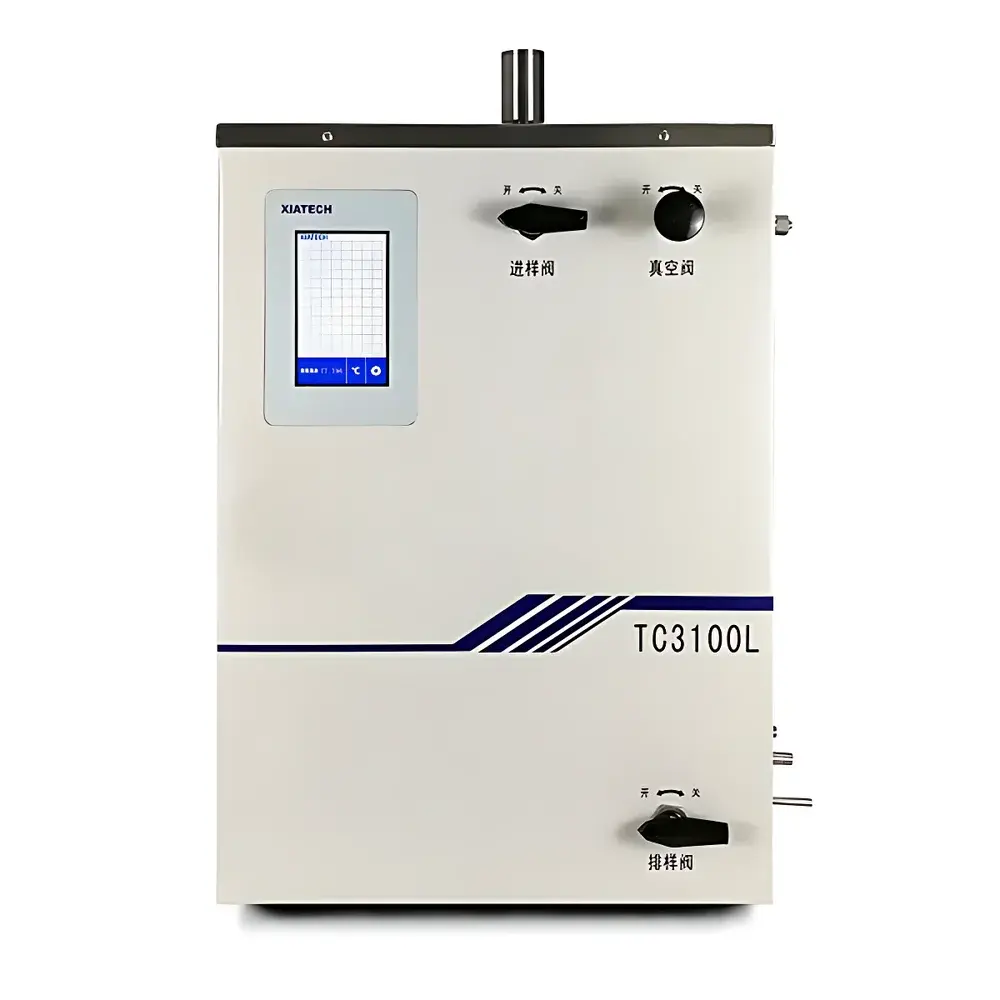
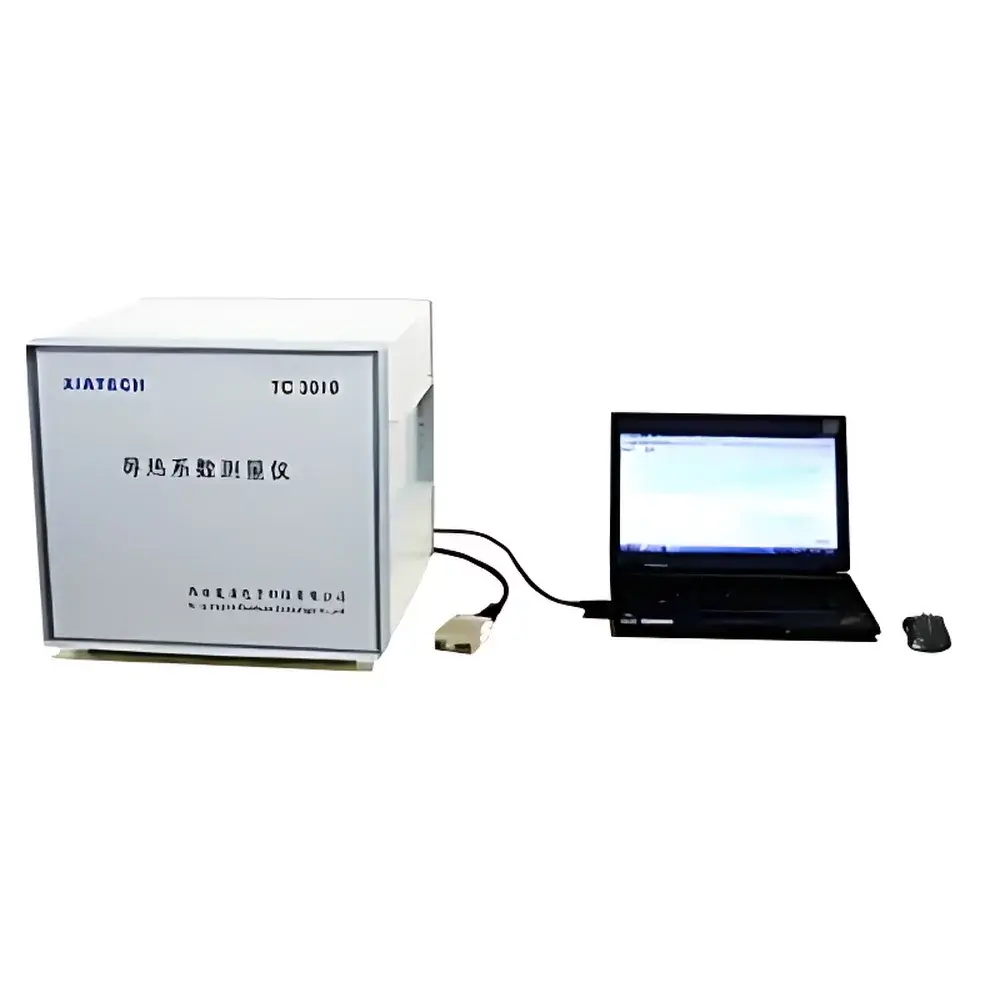
Xiatech TC3200L High-Temperature Transient Hot Wire Thermal Conductivity Analyzer
| Brand | Xiatech |
|---|---|
| Origin | Shaanxi, China |
| Model | TC3200L |
| Measurement Principle | Transient Hot Wire (THW) Method |
| Temperature Range | Ambient to 200 °C |
| Pressure Range | 0.1–15 MPa (optional pressure control) |
| Thermal Conductivity Range | 0.0005–5 W/(m·K) |
| Resolution | 0.0001 W/(m·K) |
| Accuracy | ±3% |
| Repeatability | ±3% |
| Sample Volume Requirement | ≥40 mL |
| Measurement Time | ≤2 s |
| Sample Forms | Liquids and gases |
| Test Atmospheres | Vacuum, air, inert gas |
| Dimensions (L×W×H) | 550×500×650 mm |
| Compliance Standards | ASTM D2717, ASTM D7896 |
| Data Interface | USB |
| Operating System | Windows |
Overview
The Xiatech TC3200L is a high-temperature transient hot wire (THW) thermal conductivity analyzer engineered for precise, rapid, and reproducible measurement of thermal transport properties in fluid-phase materials under elevated temperature and pressure conditions. Based on the well-established THW principle—where a thin, electrically heated platinum wire serves as both heater and sensor—the instrument determines thermal conductivity by analyzing the time-dependent temperature rise of the wire immersed in the sample. This method inherently minimizes convective interference due to its sub-second measurement window (≤2 s), making it especially suitable for low-viscosity liquids, nanofluids, and compressible gases where natural convection would otherwise compromise data integrity. The TC3200L extends the capabilities of the TC3000L series to operational temperatures up to 200 °C and pressures up to 15 MPa, enabling characterization of industrially relevant fluids—including refrigerants, heat transfer oils, ionic liquids, and fuel blends—under realistic process conditions.
Key Features
- Ultra-fast measurement cycle: Thermal conductivity values are acquired within ≤2 seconds, effectively suppressing buoyancy-driven convection and ensuring intrinsic property representation.
- High metrological fidelity: Validated against certified reference materials (e.g., toluene and deionized water), the system achieves an accuracy of ±3% across the full range (0.0005–5 W/(m·K)) and repeatability better than ±3% under controlled conditions.
- Broad operational envelope: Designed for continuous operation from ambient temperature to 200 °C and pressures from vacuum up to 15 MPa—configurable with optional active pressure regulation modules for isobaric studies.
- Minimal sample consumption: Requires only ≥40 mL of liquid or gaseous sample per test, reducing material cost and enabling analysis of scarce or synthetically demanding fluids (e.g., functionalized ionic liquids or nanoparticle-stabilized suspensions).
- Robust mechanical architecture: Engineered with vibration-damping structural elements and thermally stable sensor housing to maintain calibration integrity in non-laboratory environments such as pilot plants or quality control labs.
- Standards-compliant methodology: Fully aligned with ASTM D2717 (Standard Test Method for Thermal Conductivity of Liquids) and ASTM D7896 (Standard Test Method for Thermal Conductivity of Refrigerants), supporting regulatory reporting and inter-laboratory comparability.
Sample Compatibility & Compliance
The TC3200L accommodates a wide spectrum of fluid samples—including polar and non-polar liquids, supercritical fluids, and low-density gases—without requiring phase-specific hardware modifications. Compatible sample classes include hydrocarbon fuels (gasoline, diesel, kerosene), synthetic lubricants, organic heat transfer fluids, cryogenic coolants, aqueous and non-aqueous nanofluids (e.g., TiO₂, Al₂O₃, Fe₃O₄, ZrO₂ dispersions), refrigerant-oil mixtures (R134a, R22, R123, DME), molten salts, and room-temperature ionic liquids. All measurements are conducted in sealed, chemically resistant sample cells rated for high-pressure service. The instrument supports testing under controlled atmospheres (vacuum, dry air, N₂, Ar), minimizing oxidative degradation during high-temperature runs. Full traceability is maintained through embedded calibration logging and adherence to GLP-aligned data handling protocols.
Software & Data Management
The TC3200L operates via dedicated Windows-based acquisition and analysis software featuring real-time curve visualization, automated baseline correction, and built-in uncertainty propagation algorithms compliant with ISO/IEC Guide 98-3 (GUM). Raw voltage-time datasets are stored in vendor-neutral CSV format; metadata—including temperature setpoint, pressure reading, ambient humidity, and operator ID—is embedded in each file header. Audit trails record all parameter changes, calibration events, and user logins, satisfying FDA 21 CFR Part 11 requirements for electronic records and signatures when configured with password-protected user roles and digital signature workflows. Export options include PDF reports formatted to ASTM template conventions and direct integration with LIMS platforms via configurable API endpoints.
Applications
- Thermophysical property validation for next-generation refrigerants and low-GWP alternatives in HVAC&R system design.
- Quality assurance of heat transfer fluids used in concentrated solar power (CSP) plants and industrial waste-heat recovery loops.
- R&D of nanofluid formulations for enhanced thermal management in EV battery cooling systems and microelectronics packaging.
- Formulation screening of ionic liquids for electrochemical applications, including battery electrolytes and CO₂ capture solvents.
- Thermal stability assessment of aviation fuels and synthetic jet fuels under simulated high-altitude operating conditions.
- Supporting computational fluid dynamics (CFD) model development by providing experimentally derived thermal conductivity inputs at non-ambient states.
FAQ
What measurement standard does the TC3200L comply with?
The instrument implements the transient hot wire method in strict accordance with ASTM D2717 and ASTM D7896, with documented traceability to NIST-traceable reference fluids.
Can the TC3200L measure gases at high temperature?
Yes—it supports gaseous samples up to 200 °C and 15 MPa, provided the test cell is appropriately rated and the gas composition remains non-corrosive to platinum and stainless-steel components.
Is pressure control integrated or optional?
Pressure regulation (0.1–15 MPa) is available as a factory-configured option; base units operate at ambient or fixed overpressure using manual valves.
How is thermal drift compensated during extended high-temperature runs?
The system employs dual-sensor thermal referencing (wire resistance + external Pt100) and adaptive zero-point recalibration routines executed before each measurement sequence.
Does the software support multi-sample batch processing?
Yes—users can define sequential test protocols with variable temperature/pressure ramps, auto-save naming conventions, and post-acquisition statistical grouping by sample class or condition set.



