
Xinertel X-Launch IP Network Performance Testing Platform
| Brand | Xinertel |
|---|---|
| Origin | Beijing, China |
| Manufacturer | Yes |
| Domestic Product | Yes |
| Model | X-Launch |
| Pricing | Upon Request |
Overview
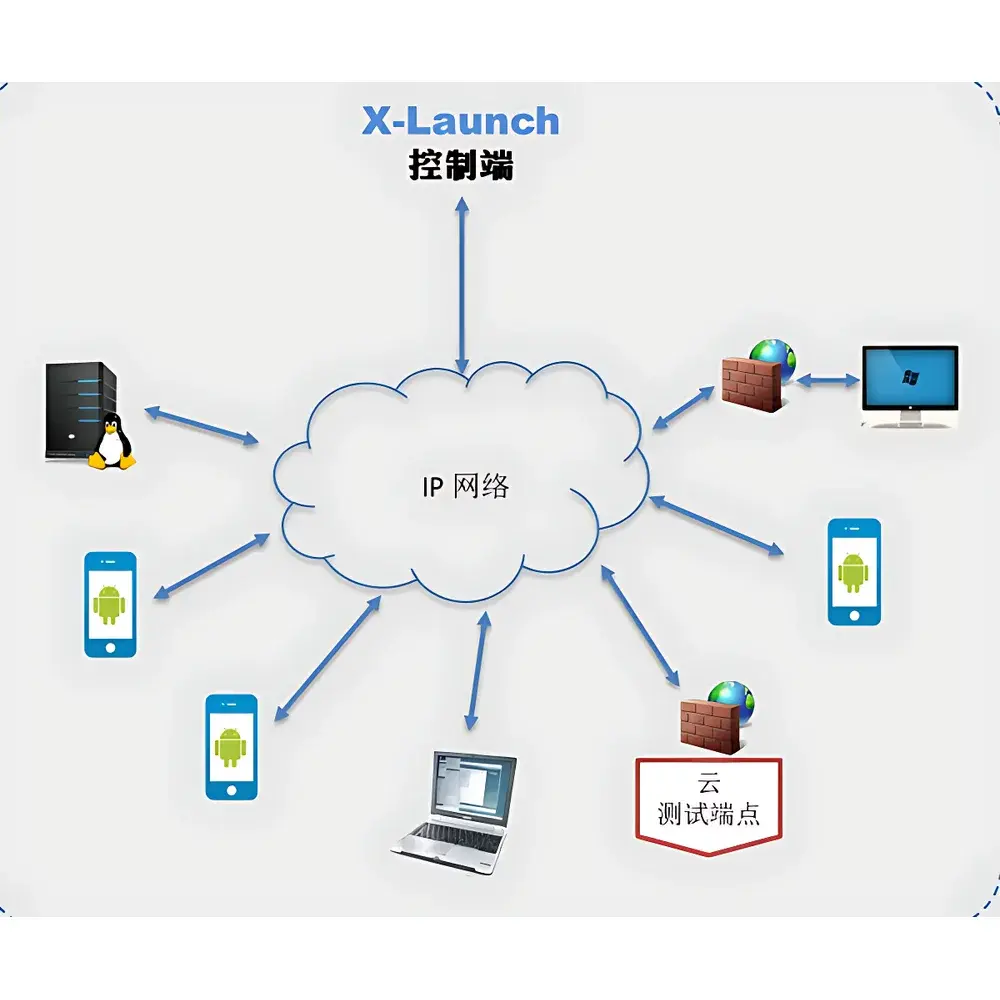
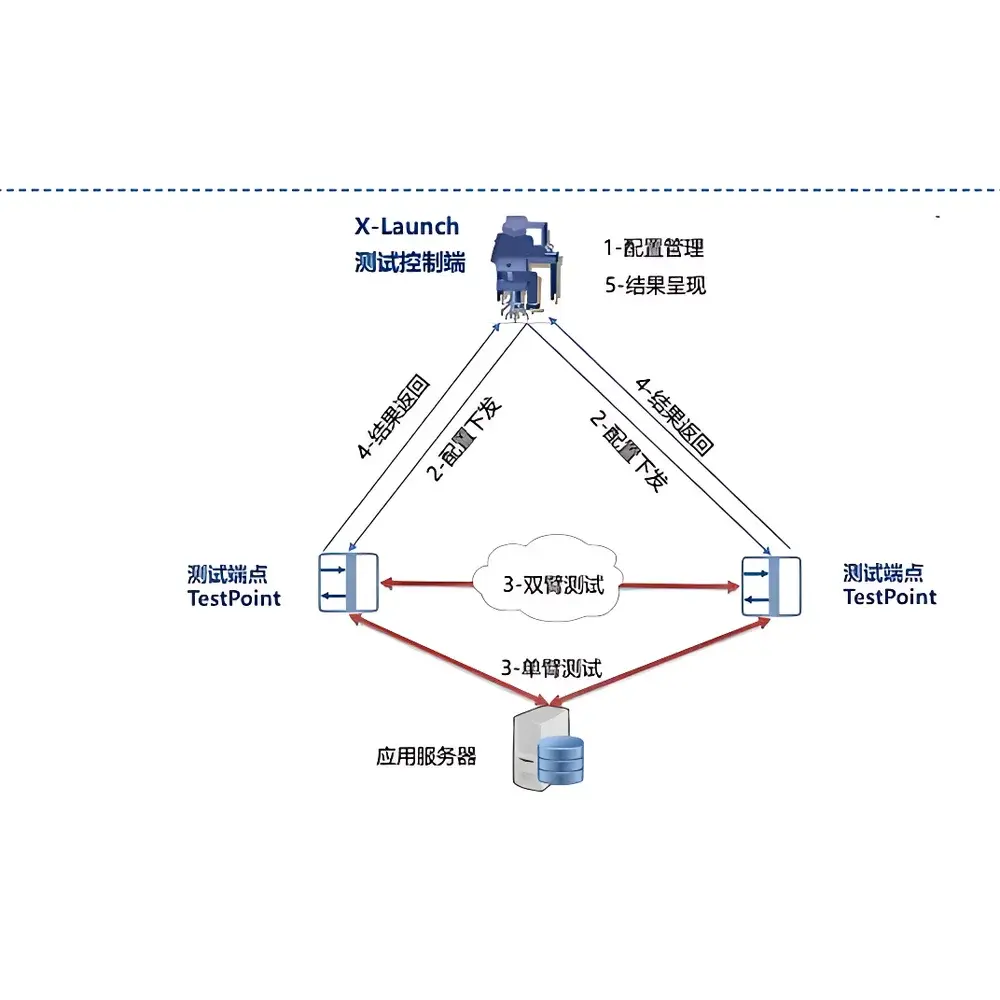
The Xinertel X-Launch IP Network Performance Testing Platform is a software-based, distributed network validation system engineered for end-to-end performance characterization of IP infrastructure and application-layer services. Unlike hardware-centric traffic generators, X-Launch leverages lightweight, cross-platform TestPoint agents to emulate real-world application protocols—including HTTP, FTP, SMTP/POP3, DNS, DHCP, VoIP, video streaming, and multicast—at scale across heterogeneous endpoints. It operates on the principle of controlled traffic injection and precise latency-aware measurement, enabling quantitative assessment of key service-level metrics such as connection establishment time, first/last byte latency, transaction success rate, throughput stability, and jitter under realistic load conditions. Designed for lab validation, pre-deployment verification, and production troubleshooting, X-Launch supports both two-arm (transparent inline) and one-arm (client-server) test topologies—making it suitable for evaluating routers, firewalls, SD-WAN gateways, CDN edge nodes, cloud load balancers, and SaaS application backends.
Key Features
- Software-defined architecture with centralized TestConsole control and distributed, lightweight TestPoint agents
- Multi-protocol application-layer traffic generation: TCP, UDP, ICMP (PING), HTTP/1.1, HTTPS, FTP, SMTP, POP3, DNS, DHCP, RTP/RTCP, and IGMPv2/v3
- Sub-millisecond (1 ms) timestamp resolution for accurate latency and jitter measurement in WLAN roaming validation scenarios
- Two-arm testing mode: full bidirectional path characterization with synchronized TestPoints on both sides of DUT (Device Under Test)
- One-arm testing mode: client-initiated validation against live production servers (e.g., web, email, DNS, or DHCP infrastructures)
- Cross-platform TestPoint support: Linux (x86_64, ARM64), Windows 7/10/11 (64-bit), Android (API 21+), VxWorks (7.x+), and certified domestic OS variants (e.g., Kylin, UOS)
- TestConsole system requirements: Windows 7/10/11 (64-bit), ≥4-core CPU, ≥8 GB RAM, ≥150 GB SSD storage
Sample Compatibility & Compliance
X-Launch is designed to integrate into diverse network environments without requiring proprietary hardware or deep packet inspection capabilities. Its agent-based deployment model ensures compatibility with virtualized, containerized, and bare-metal infrastructure—including VMware ESXi, KVM, Docker, and Kubernetes-managed workloads. While X-Launch itself does not enforce regulatory compliance, its measurement methodology aligns with industry-standard benchmarking practices referenced in RFC 2544 (network interconnect device performance), RFC 3393 (packet delay variation), and ITU-T Y.1564 (Ethernet service activation testing). All test logs, timestamps, and result exports are structured for traceability and can be archived in accordance with internal QA policies supporting ISO/IEC 17025 laboratory accreditation or internal GLP/GMP audit requirements.
Software & Data Management
X-Launch TestConsole provides a unified GUI for test plan creation, agent orchestration, real-time metric visualization (latency histograms, throughput timelines, error rate heatmaps), and automated report generation (PDF/CSV/XLSX). All test sessions include full metadata logging—start/stop timestamps, agent versions, OS kernel details, and configuration checksums—to ensure reproducibility. Result datasets retain millisecond-precision event sequencing and support post-hoc filtering by protocol, flow ID, or endpoint group. For enterprise deployments, X-Launch supports role-based access control (RBAC) via Windows Active Directory integration and optional TLS 1.2+ encrypted communication between Console and TestPoints. Audit trails of user actions, test execution history, and configuration changes are retained locally and exportable for external review—facilitating alignment with FDA 21 CFR Part 11 principles where electronic records integrity is required.
Applications
- Application Service Quality Validation: Emulating UDP-based video conferencing or VoIP flows across distributed probes to isolate network-induced degradation (e.g., packet loss bursts, bufferbloat-induced jitter) from endpoint software defects
- Server Infrastructure Benchmarking: Quantifying response SLAs for HTTP, FTP, DNS, SMTP, POP3, and DHCP services—including DNS resolution latency per domain, TCP handshake duration, TLS negotiation overhead, and transaction-level success/failure correlation
- Endpoint Health Monitoring: Deploying minimal-footprint TestPoints on Windows/Linux PCs to collect CPU utilization, memory pressure, and disk I/O metrics—enabling proactive identification of resource exhaustion before user-reported outages occur
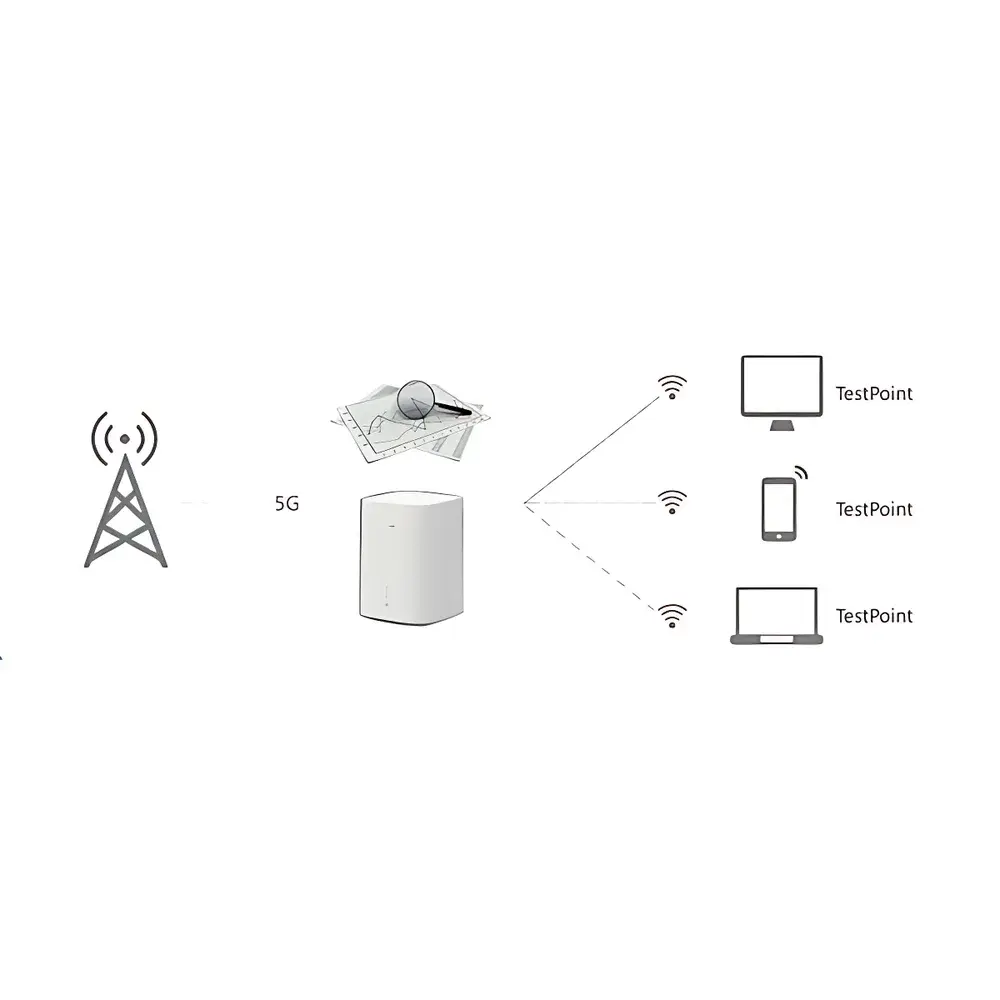
- WLAN Roaming Performance Analysis: Measuring handover latency, packet loss during AP transitions, and re-association consistency across vendor-agnostic Wi-Fi 6/6E deployments using synchronized 1-ms timestamped events
- SD-WAN & Cloud Gateway Validation: Validating policy-based path selection, failover timing, and QoS treatment consistency across hybrid WAN links using multi-flow, multi-application traffic profiles
FAQ
Does X-Launch require dedicated hardware appliances?
No. X-Launch is a pure software platform; all components run on standard COTS servers, VMs, or embedded devices meeting minimum OS and resource requirements.
Can TestPoints be deployed inside Docker containers?
Yes—Linux-based TestPoints support containerized deployment with proper network namespace configuration and host-level time synchronization.
Is there built-in support for IPv6 traffic generation and measurement?
Yes. X-Launch fully supports dual-stack IPv4/IPv6 operation, including IPv6-specific DNS queries, ICMPv6 ping, and application-layer protocol binding over IPv6 interfaces.
How are test results validated for repeatability?
Each test session includes deterministic traffic scheduling, synchronized NTP-based timestamps across all agents, and cryptographic hash verification of configuration files—ensuring identical test conditions across repeated runs.
Does X-Launch comply with FDA 21 CFR Part 11 for electronic records?
While X-Launch is not FDA-certified, its audit trail, electronic signature-ready reporting, and configuration change logging provide foundational capabilities for organizations implementing Part 11-compliant validation protocols.