Xingpu WISDOM-01 Automated Flux Weighing System
| Brand | Xingpu Technology |
|---|---|
| Model | WISDOM-01 |
| Origin | Imported |
| Weighing Range | 0.1000–20.0000 g |
| Resolution | 0.1 mg |
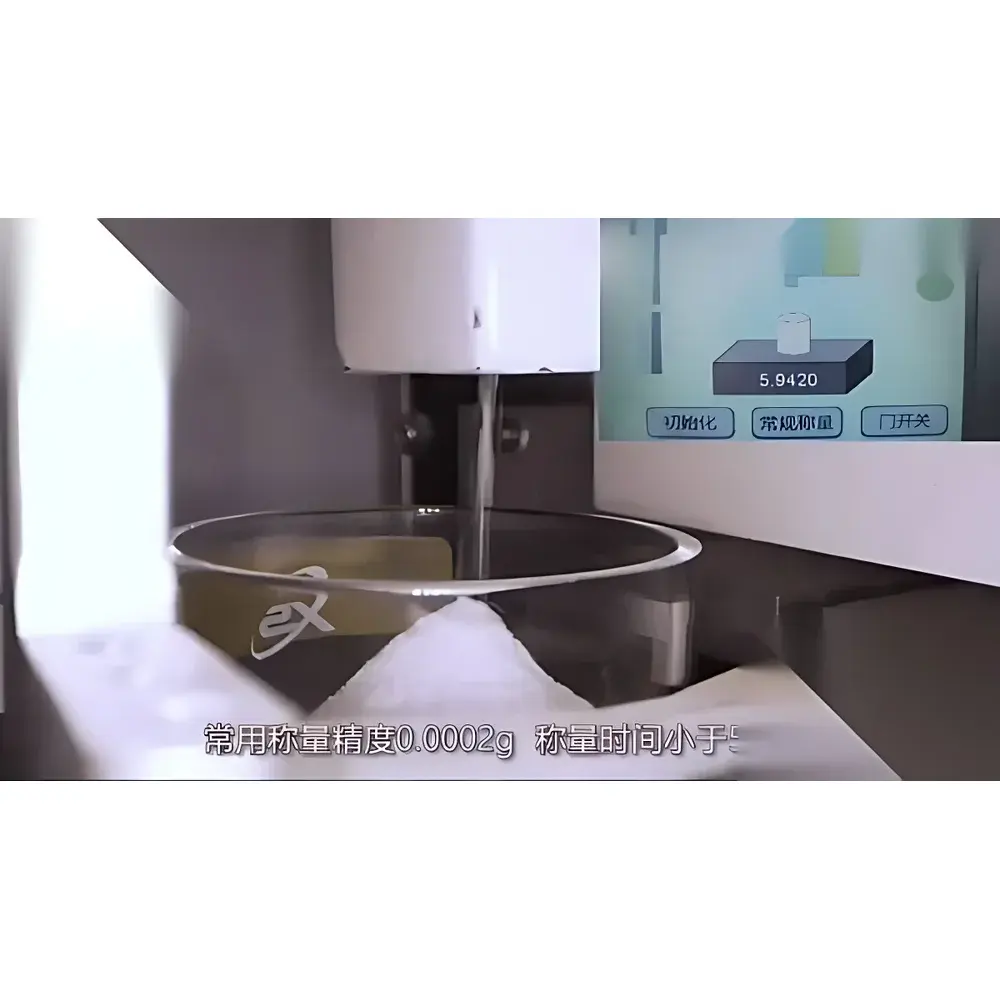
| Accuracy | ±0.0002 g |
| Sample Capacity | 21 positions per batch |
| Cycle Time | 45 s per sample (average) |
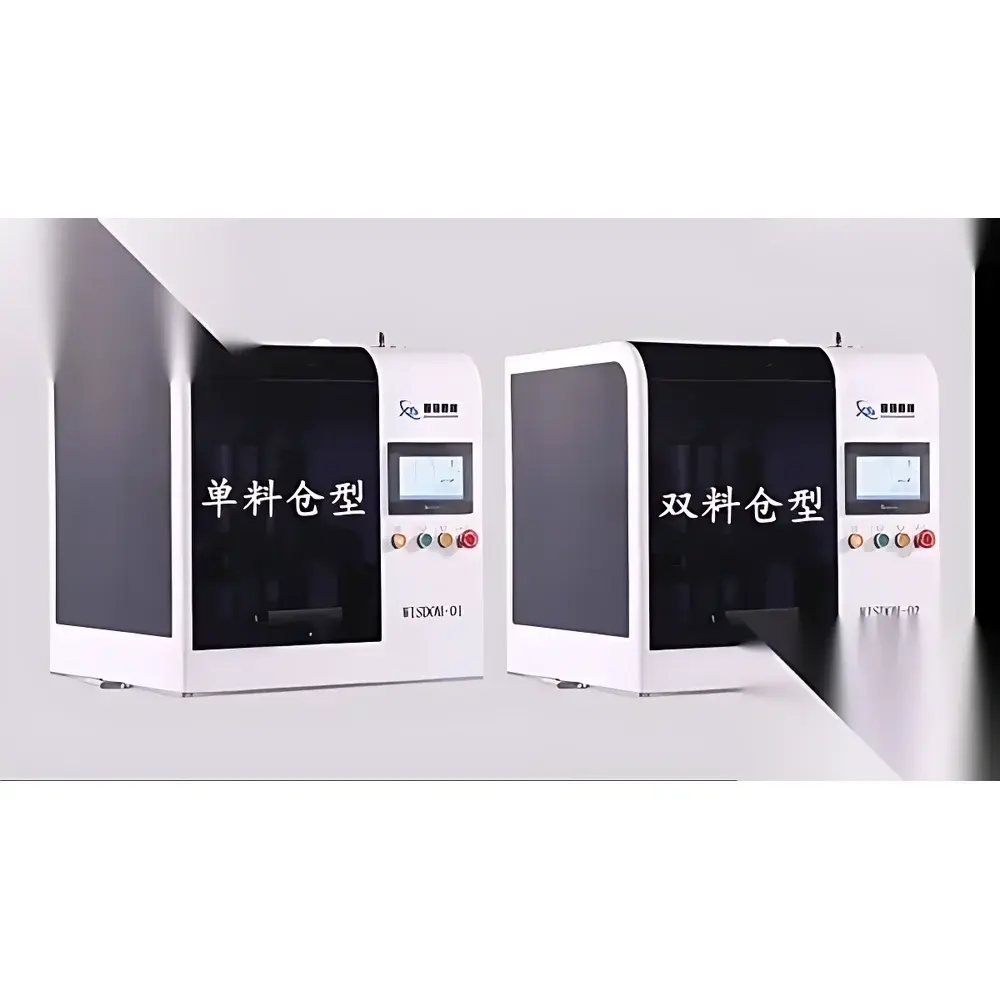
| Hopper Configuration | Dual independent hoppers |
| Weighing Modes | Manual, Fixed-mass, Ratio-based, and Dual-material sequential weighing |
| Sample Handling | Fully automated sampling, dispensing, and sorting |
| Dimensions (W×D×H) | 750 × 650 × 680 mm |
Overview
The Xingpu WISDOM-01 Automated Flux Weighing System is a precision laboratory instrument engineered for high-reproducibility mass measurement of powdered fluxes, metallurgical additives, and reference materials in demanding industrial and analytical environments. Designed around electromagnetic force compensation (EMFC) load cell technology and closed-loop digital control architecture, it delivers traceable, GLP-compliant weighing performance across variable environmental conditions—critical for compositional control in steelmaking, non-ferrous metallurgy, and advanced ceramic formulation. Unlike general-purpose balances, the WISDOM-01 integrates sample logistics with metrological rigor: its dual-hopper design enables parallel material staging while maintaining ISO/IEC 17025-aligned uncertainty budgets. The system operates under ambient temperature stability requirements (±2 °C) and complies with OIML R76-1 Class II accuracy specifications for laboratory use.
Key Features
- High-stability EMFC sensor with 0.1 mg resolution and ≤±0.0002 g absolute error at full scale—validated per ASTM E898 for analytical balance verification.
- Dual independent hoppers support simultaneous storage of two distinct flux types (e.g., CaF₂ and SiO₂), eliminating manual vial swaps and reducing cross-contamination risk.
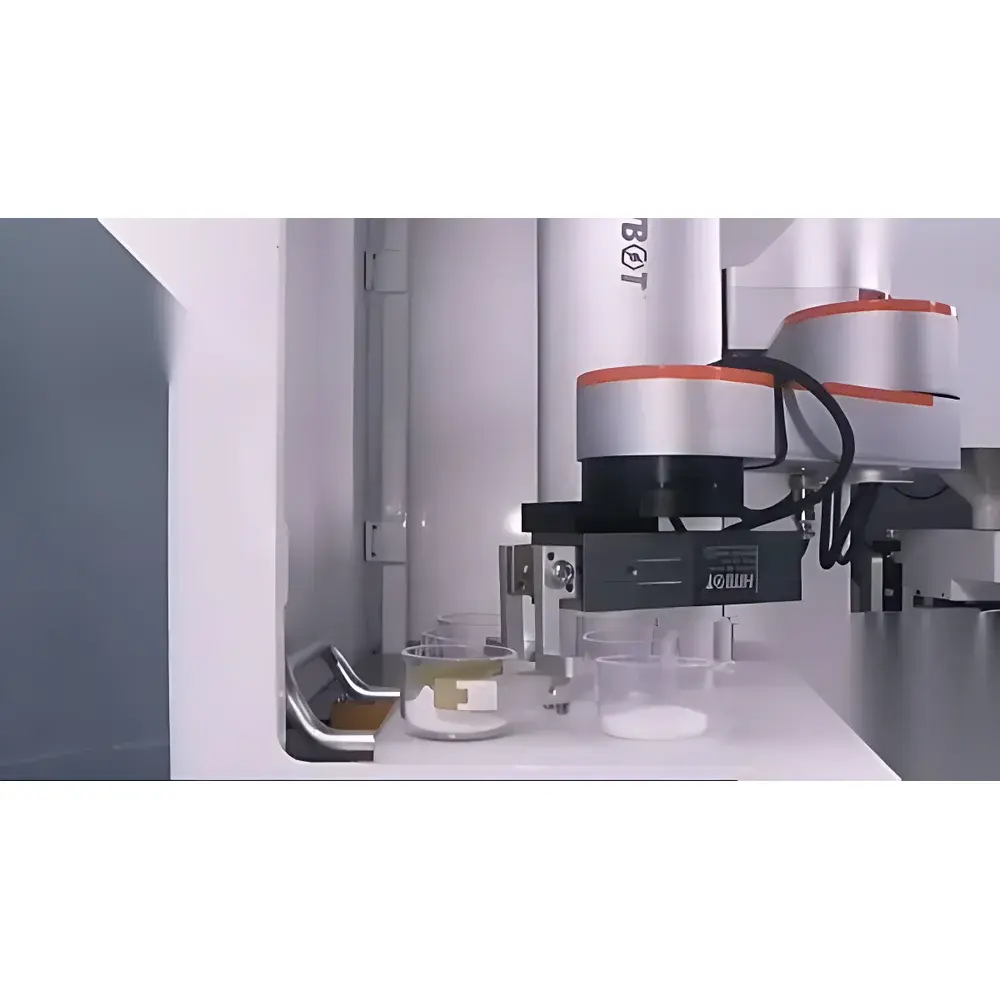
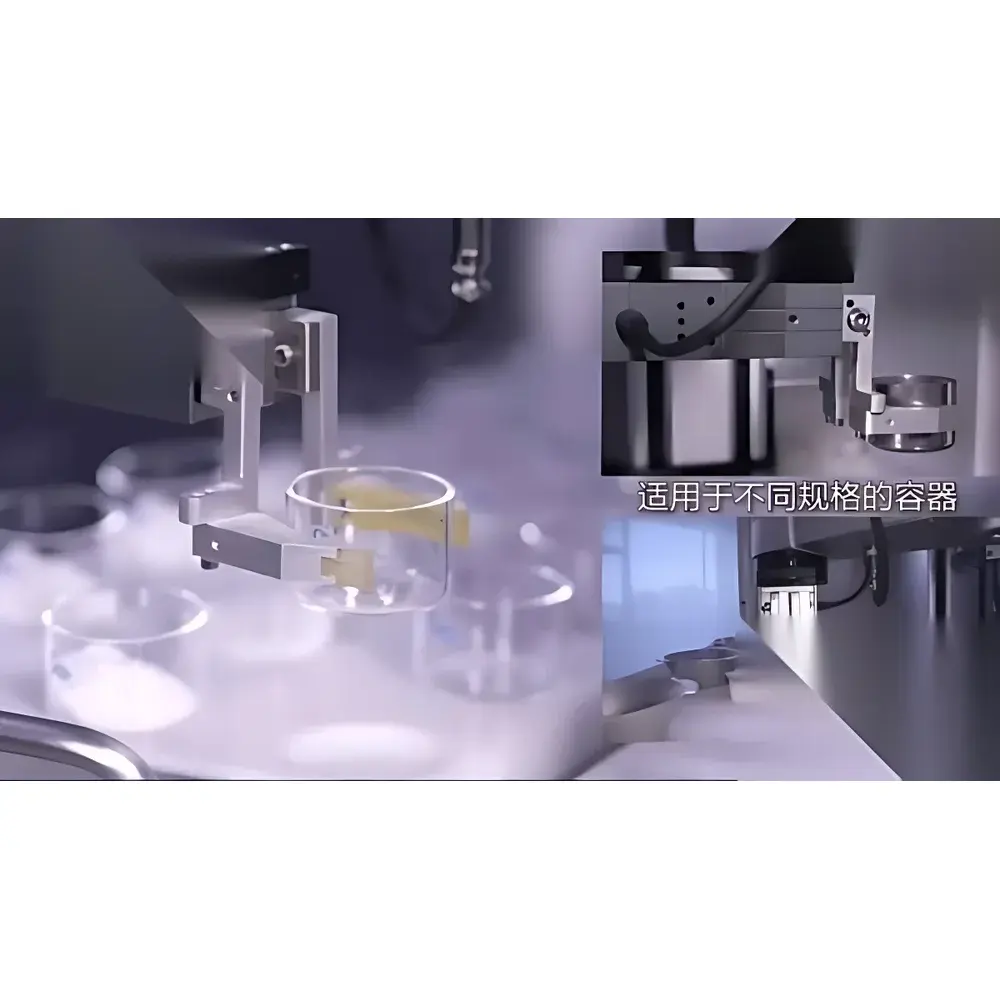
- Automated sample handling: robotic arm-driven vial positioning, gravity-fed dispensing, real-time mass feedback control, and intelligent over-limit rejection with segregated waste routing.
- Four operational modes—manual tare/weight, fixed-mass dispensing (e.g., 5.0000 g ±0.0002 g), ratio-based blending (e.g., 3:1 Al₂O₃:MgO), and continuous dual-material sequential weighing—programmable via front-panel interface or remote command.
- Integrated audit trail: timestamped weight records, operator ID logging, and change history—configured to meet FDA 21 CFR Part 11 electronic record requirements when paired with compliant LIMS.
Sample Compatibility & Compliance
The WISDOM-01 accommodates standard 10–25 mL screw-cap vials and custom powder containers (max height 120 mm, base diameter ≤45 mm). Its sealed hopper chutes and anti-static coating minimize adhesion of hygroscopic or cohesive fluxes (e.g., cryolite, borax, limestone fines). Calibration is traceable to NIST SRM 31a certified weights; routine verification follows USP <41> and ISO 17025 clause 6.5. The system meets CE Machinery Directive 2006/42/EC and EMC Directive 2014/30/EU. For GMP-regulated environments, optional 21 CFR Part 11 software modules provide electronic signatures, role-based access control, and immutable data export (CSV/Excel/XML).
Software & Data Management
Embedded firmware supports RS-232, USB-C, and Ethernet (TCP/IP) connectivity for bidirectional communication with LIMS, ELN, or MES platforms. Native protocol includes ASTM E1382-compliant data framing and Modbus TCP mapping for seamless integration into Industry 4.0 workflows. Local touchscreen interface stores up to 10,000 weight events with metadata (sample ID, method ID, environmental log). Data exports include ISO/IEC 17025-required uncertainty annotations and compliance flags for out-of-spec results. Optional cloud synchronization enables centralized fleet monitoring and predictive maintenance alerts based on actuator cycle counts and sensor drift trends.
Applications
- Steelmaking: Precise dosing of fluorospar, dolomite, and lime fluxes into slag-forming batches—ensuring consistent CaO/SiO₂ ratios and minimizing refractory erosion.
- Non-ferrous metallurgy: Weighing of boric acid, sodium carbonate, and lead oxide in copper/nickel matte smelting assays—supporting ISO 11573-compliant fire assay preparation.
- Ceramic & refractory R&D: Reproducible batching of alumina, zirconia, and silica powders for sintering trials—enabling DOE-based composition optimization with ≤0.05% RSD across 21-sample runs.
- Geochemical analysis: Accurate subsampling of pulverized rock standards (e.g., NIST SRM 278) for XRF and ICP-MS calibration—reducing heterogeneity-induced bias in major-element quantification.
- Chemical catalyst manufacturing: Controlled loading of promoter metals (e.g., Pt, Pd) onto support matrices—meeting ISO 18852 requirements for catalyst activity reproducibility.
FAQ
What calibration standards are required for initial setup?
NIST-traceable Class F1 or better weights (1 g to 20 g range) per ISO/IEC 17025 Annex C; internal calibration routine executes automatically at power-on and user-defined intervals.
Can the system handle moisture-sensitive fluxes?
Yes—optional inert gas purge kit (N₂ or Ar) maintains <5% RH inside hopper chambers during operation; desiccant trays integrated into base housing.
Is remote firmware update supported?
Yes—over-the-air updates via HTTPS-secured connection; version rollback capability and SHA-256 signature verification ensure integrity.
How is over-limit sample rejection executed?
Real-time deviation detection triggers pneumatic diverter valve; rejected vials are routed to dedicated quarantine tray with barcode-linked failure code (e.g., “MASS_OOR”, “STABILITY_FAIL”).
Does the system comply with metallurgical lab accreditation requirements?
Fully compliant with ISO/IEC 17025:2017 clauses 6.4 (equipment), 7.7 (results reporting), and ILAC-G8:2022 for automated weighing systems used in accredited testing.