
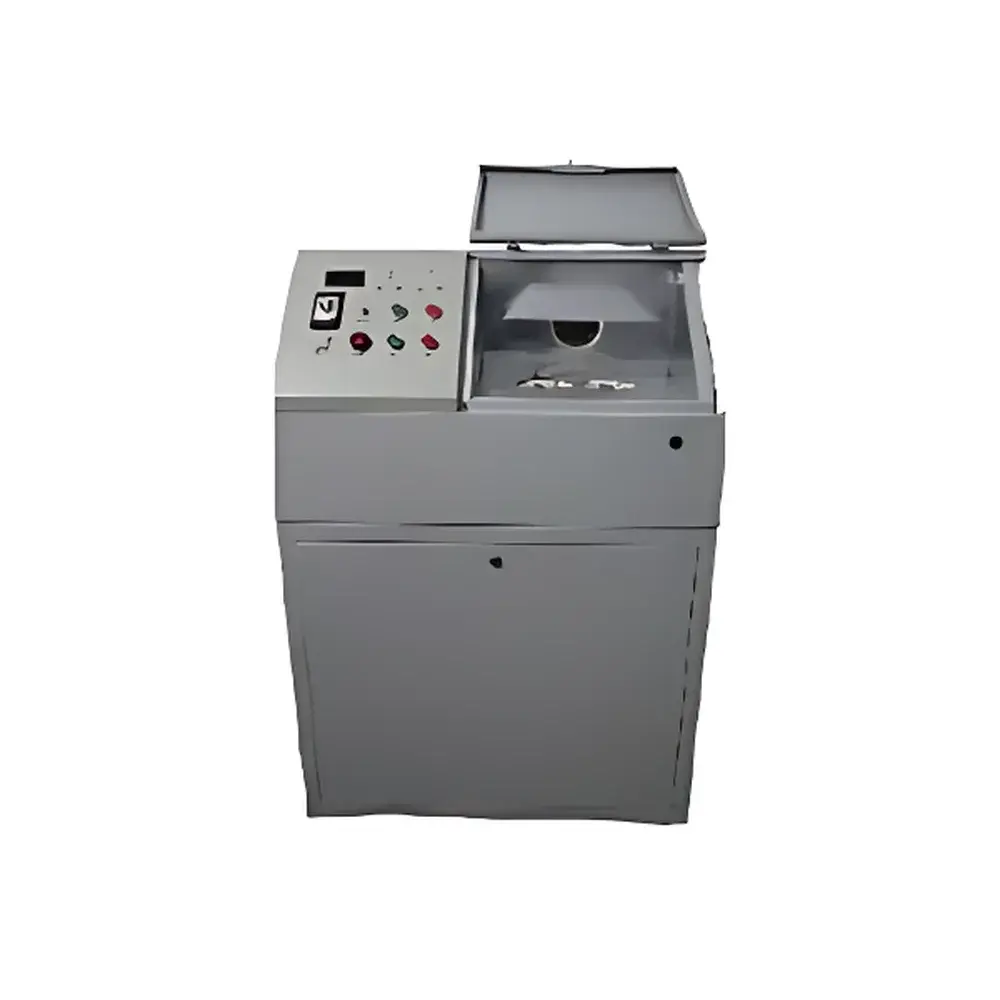
XQ Toptech-OX2.3 High-Frequency Fusion Machine for XRF Sample Preparation
| Brand | XQ |
|---|---|
| Origin | Liaoning, China |
| Manufacturer Type | Authorized Distributor |
| Country of Origin | China |
| Model | XQ Toptech-OX2.3 |
| Throughput | 16 samples/hour |
| Operating Temperature Range | 1100–1300 °C |
| Pre-oxidation Temperature Range | 600–800 °C |
| Dimensions (L×W×D) | 850×690×1210 mm |
| Heating Method | High-frequency induction |
| Crucible Material Compatibility | Pt–Au alloy crucibles |
| Cooling System | Integrated forced-air circulation cooling |
| Control System | PLC-based programmable logic controller |
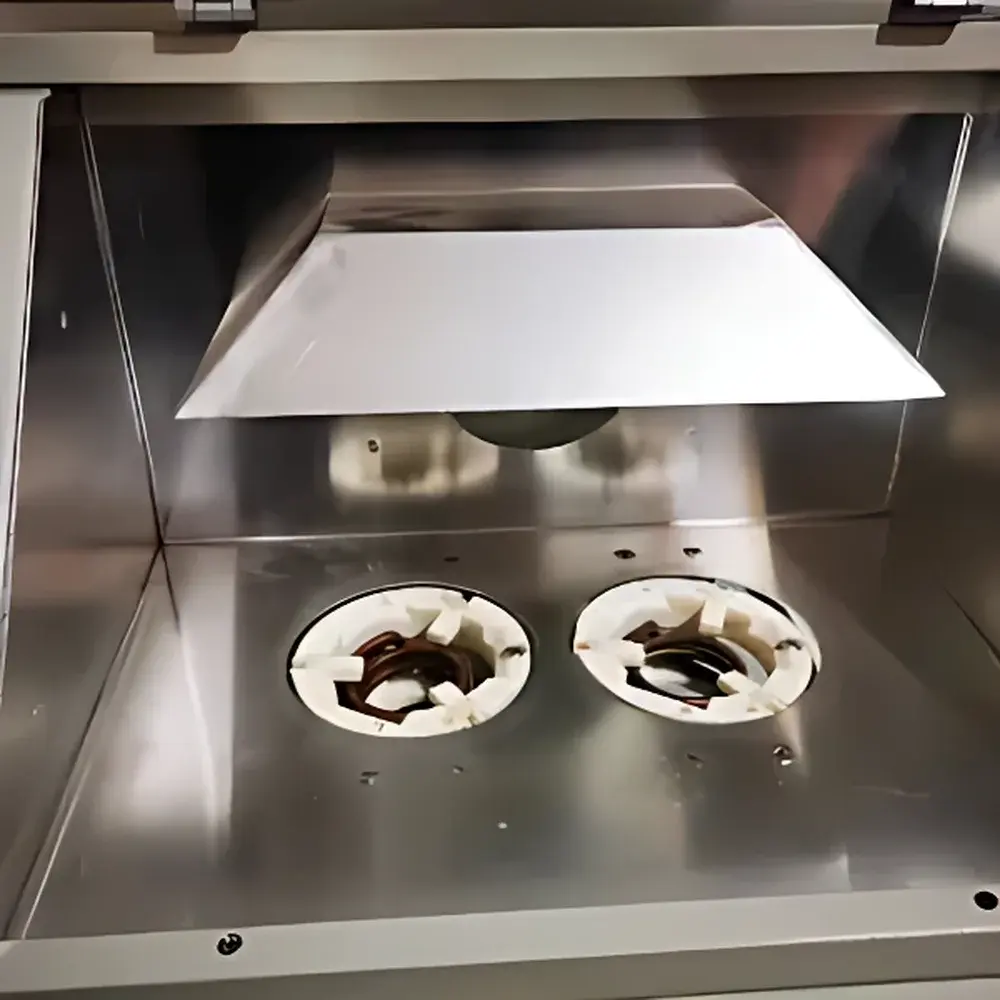
| Structural Design | Modular ceramic-insulated induction zone |
Overview
The XQ Toptech-OX2.3 is a high-frequency induction fusion machine engineered specifically for the preparation of homogeneous, bubble-free glass discs used in wavelength-dispersive (WDXRF) and energy-dispersive (EDXRF) X-ray fluorescence spectrometry. Unlike resistance-heated furnaces, this system employs solid-state high-frequency induction (typically 250–400 kHz) to generate rapid, localized heating within Pt–Au alloy crucibles—enabling precise thermal control across three distinct phases: pre-oxidation (600–800 °C), fusion (1100–1300 °C), and controlled quenching. The process ensures complete decomposition of silicates, oxides, and refractory matrices while minimizing volatile loss and crucible corrosion. Designed for routine laboratory environments, the Toptech-OX2.3 supports standardized fusion protocols aligned with ASTM D5630, ISO 29581-2, and GB/T 176-2017 for cement and mineral analysis.
Key Features
- Ceramic-insulated induction zone: First-of-its-kind domestic implementation using high-purity alumina ceramics—eliminates eddy-current losses and thermal drift associated with metallic shielding, improving temperature stability ±2 °C over extended cycles.
- PLC-integrated control architecture: Enables repeatable, parameter-locked method execution with real-time monitoring of coil current, thermocouple feedback, and cycle timing; supports up to 10 user-defined fusion programs with password-protected editing.
- Modular mechanical design: Separable crucible carriage, induction head, and cooling module allow field-level maintenance without full system disassembly or recalibration.
- Forced-air recirculation cooling: Dual-stage axial fans combined with ceramic thermal barriers reduce post-fusion cooldown time to <90 seconds per sample—critical for maintaining throughput at 16 samples/hour under continuous operation.
- Energy-efficient operation: Induction startup occurs in <3 seconds; standby power draw is <120 W. Average energy consumption per fusion cycle is ~0.45 kWh—approximately 35% lower than comparable resistive fusion units.
Sample Compatibility & Compliance
The Toptech-OX2.3 accommodates standard 32 mm or 40 mm Pt–Au crucibles and is validated for fusion of geological matrices including silicate rocks, coal ash, blast furnace slags, cement clinkers, and metallurgical ores. It supports common flux systems (e.g., Li₂B₄O₇, LiBO₂, NH₄NO₃ oxidant blends) and enables stoichiometric dilution ratios from 1:5 to 1:12. All thermal profiles comply with ISO/IEC 17025 requirements for method validation, and the PLC log retains timestamped cycle records—including setpoints, actual temperatures, and fault codes—for GLP audit trails. Optional RS-232/485 serial interface allows integration into LIMS environments supporting ASTM E1382-compliant data exchange.
Software & Data Management
The embedded HMI features a 7-inch TFT touchscreen with intuitive icon-driven navigation. Each fusion protocol stores ramp rates (°C/min), dwell times, gas purge intervals (if connected to external N₂ supply), and final quench parameters. Cycle logs are exportable via USB flash drive in CSV format, containing sample ID, start/stop timestamps, peak temperature achieved, and deviation alerts. For laboratories operating under FDA 21 CFR Part 11 requirements, optional firmware upgrade provides electronic signature capability, role-based access control, and immutable audit logs with SHA-256 hash verification.
Applications
- Geochemical laboratories performing major- and trace-element quantification in igneous and sedimentary rock standards (e.g., AGV-2, BCR-2).
- Cement and building materials QA/QC labs complying with ASTM C114 and EN 196-2 for oxide composition (SiO₂, Al₂O₃, Fe₂O₃, CaO, MgO, SO₃).
- Power generation facilities analyzing coal fly ash composition to assess slagging/fouling potential.
- Metallurgical R&D centers preparing fused beads from nickel laterites, bauxite residues, and copper concentrates prior to XRF calibration curve development.
- EPA-accredited environmental labs conducting TCLP leachate residue analysis requiring matrix-matched glass disc reference materials.
FAQ
What crucible types are supported?
Standard 32 mm and 40 mm Pt–Au (95% Pt / 5% Au) crucibles are fully compatible; Pt–Rh crucibles may be used but require reduced maximum temperature limits to prevent premature grain growth.
Is pre-oxidation programmable independently from fusion?
Yes—two-stage thermal programming allows separate ramp rates, dwell durations, and atmosphere control (air or N₂) for the pre-oxidation step (600–800 °C) and fusion stage (1100–1300 °C).
Does the system meet CE or UL safety standards?
The unit complies with IEC 61000-6-3 (EMC emission) and IEC 61000-6-2 (immunity); full CE marking requires site-specific installation verification per EN 61000-3-12. UL listing is available upon request for North American deployment.
Can the machine operate unattended overnight?
Yes—automatic batch sequencing, thermal runaway protection, and door-interlocked emergency shutdown enable safe unattended operation for up to 12-hour cycles when loaded with appropriate crucible carriers and cooling airflow clearance.
What maintenance intervals are recommended?
Ceramic insulation inspection every 500 cycles; induction coil impedance verification annually; fan filter cleaning every 200 hours; thermocouple calibration traceable to NIST standards every 6 months.



