
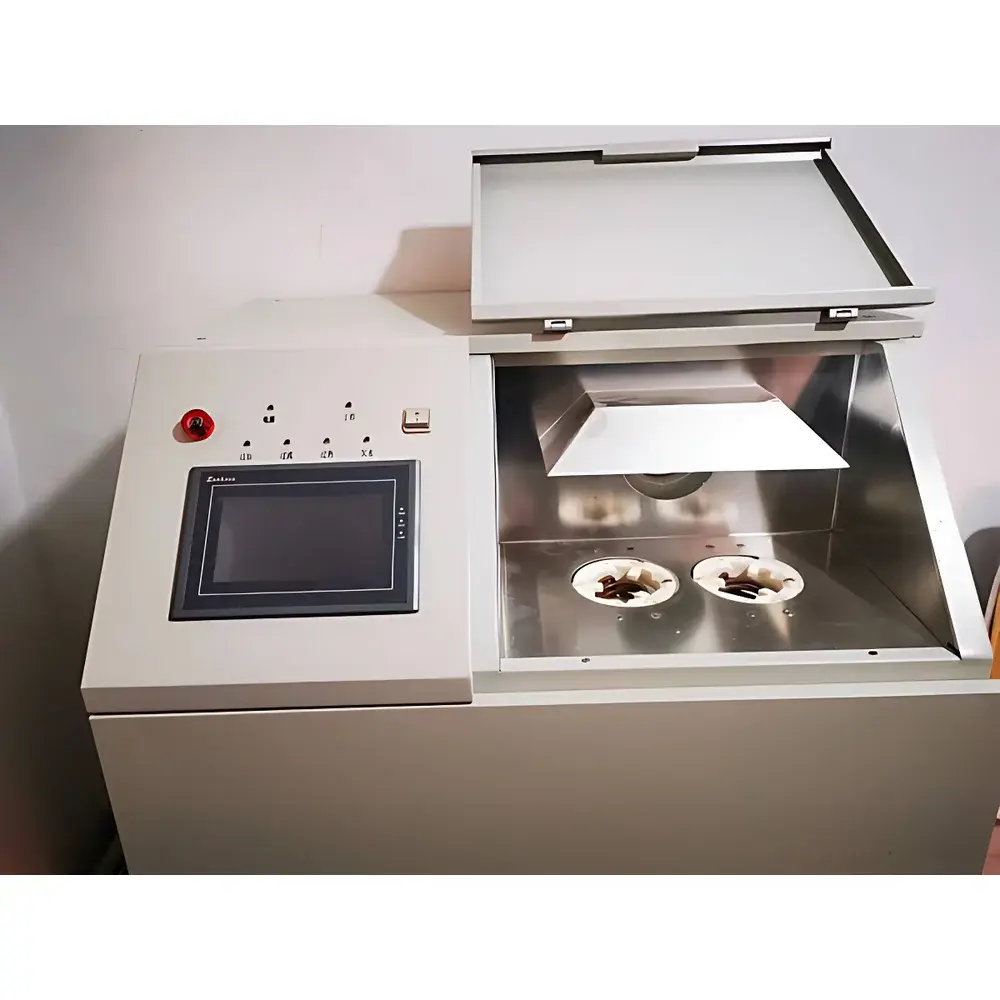
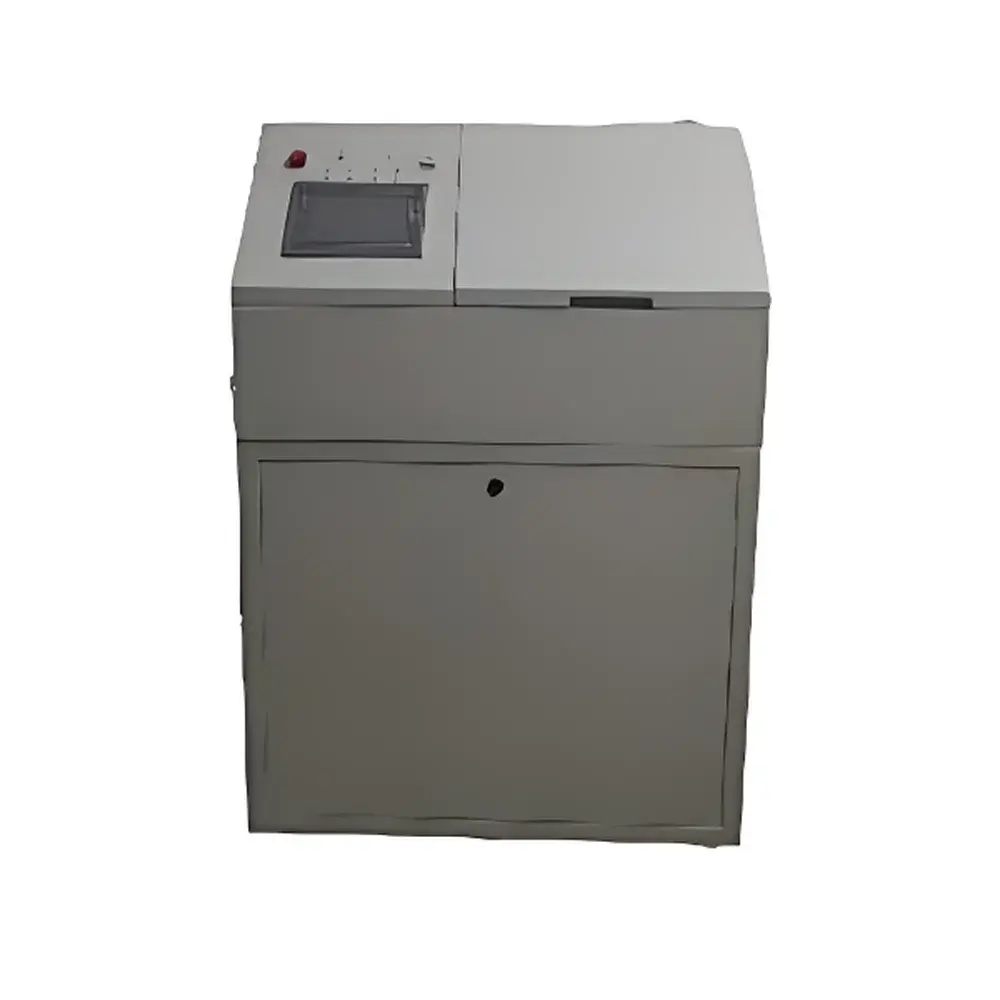
XQ3.0 High-Frequency Fusion Machine for XRF Sample Preparation
| Brand | XQ |
|---|---|
| Origin | Liaoning, China |
| Manufacturer Type | Authorized Distributor |
| Country of Origin | China |
| Model | XQ 3.0 |
| Throughput | 16 samples/hour |
| Operating Temperature Range | 1100–1300 °C |
| Dimensions (L×W×D) | 850×690×1210 mm |
Overview
The XQ3.0 High-Frequency Fusion Machine is a purpose-built, microprocessor-controlled instrumentation system engineered for the preparation of homogeneous, bubble-free glass beads used in wavelength-dispersive (WDXRF) and energy-dispersive (EDXRF) X-ray fluorescence spectrometry. It employs high-frequency induction heating—operating at frequencies typically in the 200–400 kHz range—to generate rapid, volumetric, and contactless thermal energy within platinum–gold (Pt–Au) or Pt–Au–Rh crucibles. This principle ensures uniform heat distribution across the sample–flux mixture, minimizing thermal gradients that lead to segregation, incomplete fusion, or crystallite formation. Unlike resistive-heating furnaces, the XQ3.0 achieves full operational temperature (up to 1300 °C) in under 90 seconds, enabling precise thermal profiling including programmable pre-oxidation (600–800 °C), controlled melt ramping, isothermal homogenization, centrifugal mold filling, and graded cooling—all critical for producing ISO/IEC 17025-compliant reference materials and routine geological, metallurgical, and environmental samples.
Key Features
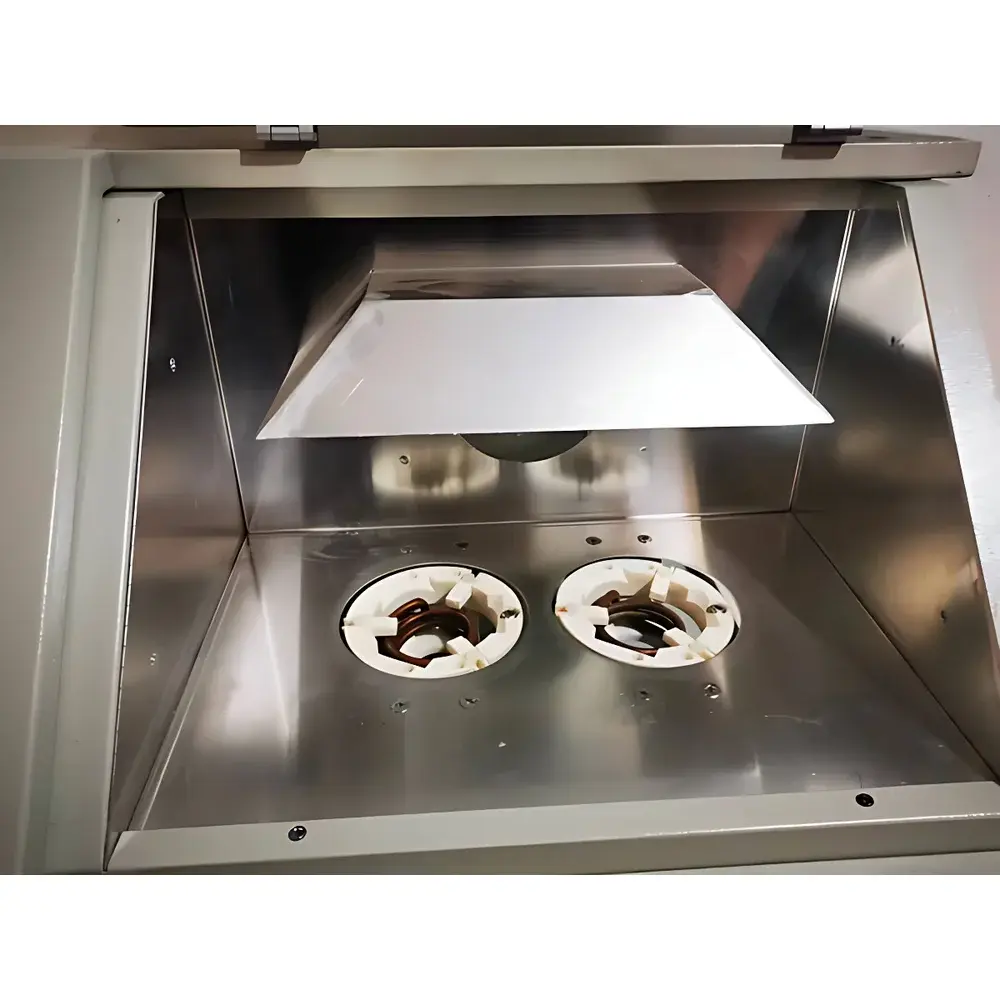
- High-frequency induction heating (200–400 kHz) with zero physical contact between coil and crucible, eliminating thermal lag and ensuring reproducible energy coupling.
- Programmable multi-stage thermal protocol: pre-oxidation → melt ramp → hold → mixing (via synchronized crucible rotation) → mold injection → controlled cooling → automatic bead ejection.
- Dual-zone temperature monitoring: independent thermocouple feedback from both crucible base and mold cavity enables closed-loop PID regulation with ±5 °C stability over 1200 °C holds.
- Low-voltage DC power supply (≤48 V) for all motion and control circuits—compliant with IEC 61000-6-2 immunity standards and reducing arc-risk during crucible handling.
- Eight user-definable fusion methods stored in non-volatile memory; each method includes up to four distinct mixing modes (static hold, orbital rotation, axial oscillation, or combined vortex generation).
- Integrated safety interlocks: door position sensors, overtemperature cutoff, emergency stop with hardware bypass, and real-time gas purge monitoring for inert atmosphere operation.
Sample Compatibility & Compliance
The XQ3.0 accommodates standard 32–40 mm diameter Pt–Au alloy crucibles and accepts common flux systems including lithium tetraborate (Li₂B₄O₇), lithium metaborate (LiBO₂), and mixed Li₂B₄O₇/LiBO₂ blends. It supports sample matrices ranging from silicate rocks and coal ash (ASTM D3174, D3176) to ferroalloys (ISO 11573), slags (ISO 12631), and environmental particulates (EPA Method 6010D). All thermal profiles are traceable via embedded audit trail compliant with FDA 21 CFR Part 11 requirements when paired with optional secure software licensing. The instrument meets CE marking criteria under Directive 2014/30/EU (EMC) and 2014/35/EU (LVD), and its mechanical design adheres to ISO 13857 safety distances for operator access zones.
Software & Data Management
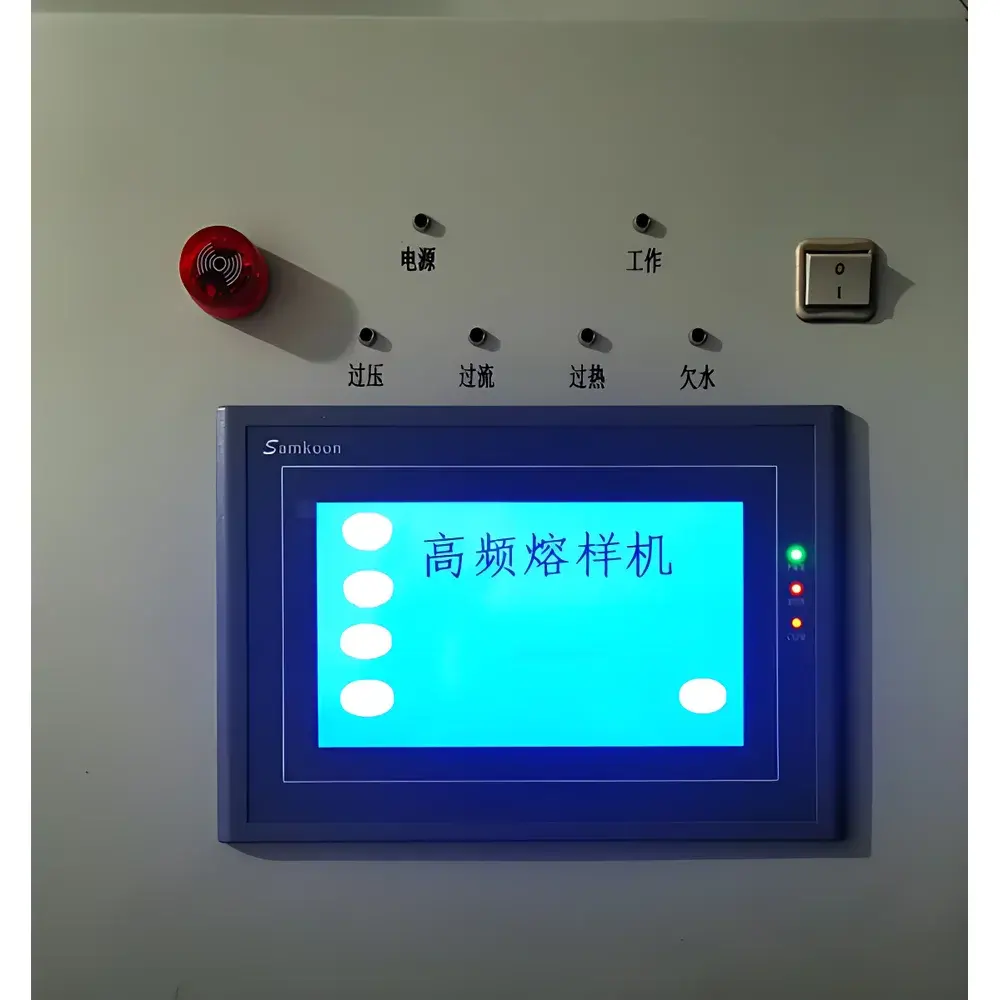
Control is executed via an embedded ARM Cortex-A9 processor running a deterministic real-time OS. The intuitive 7-inch capacitive touchscreen interface supports multilingual operation (English, Spanish, German, Chinese) and provides graphical real-time display of temperature curves, crucible rotation speed, and power consumption. All fusion runs are timestamped and logged with metadata—including operator ID, method name, crucible ID, ambient humidity, and final bead mass—exportable as CSV or XML for LIMS integration. Optional XQ-Link™ PC software enables remote diagnostics, method synchronization across multiple units, and statistical process control (SPC) charting per ASTM E2709 for fusion repeatability assessment.
Applications
- Geological survey laboratories preparing fused beads for major oxide analysis (SiO₂, Al₂O₃, Fe₂O₃, CaO, MgO, Na₂O, K₂O, TiO₂) per ISO 12631 and ASTM C114.
- Metallurgical QC labs processing stainless steel, nickel alloys, and refractory metals where borate fusion eliminates matrix interference in XRF quantification.
- Cement and fly ash testing facilities complying with ASTM C114 and EN 196-2 for clinker and pozzolanic material characterization.
- Environmental monitoring programs analyzing soil digests and airborne particulate filters using EPA-recommended LiBO₂ fusion prior to XRF screening.
- Reference material producers requiring GLP-aligned documentation for CRM certification (ISO Guide 34, ISO/IEC 17025).
FAQ
What crucible types are compatible with the XQ3.0?
Standard 32 mm and 40 mm diameter Pt–Au (95:5) or Pt–Au–Rh (94:5:1) crucibles conforming to ISO 80000-5 dimensional tolerances.
Does the system support inert gas purging during fusion?
Yes—integrated MFC-controlled argon or nitrogen inlet with pressure-sensor feedback and automatic shutoff upon chamber seal breach.
Can fusion methods be exported/imported between instruments?
Yes—via USB 2.0 port using encrypted .xqm method files with digital signature verification.
Is calibration traceable to national standards?
Temperature calibration is performed using NIST-traceable Pt/Pt–10%Rh thermocouples; annual verification kits and certified calibration reports are available upon request.
What maintenance intervals are recommended?
Daily visual inspection of crucible integrity; quarterly cleaning of RF coil housing and cooling ducts; biannual replacement of graphite crucible supports and mold gaskets.
Related Products



