
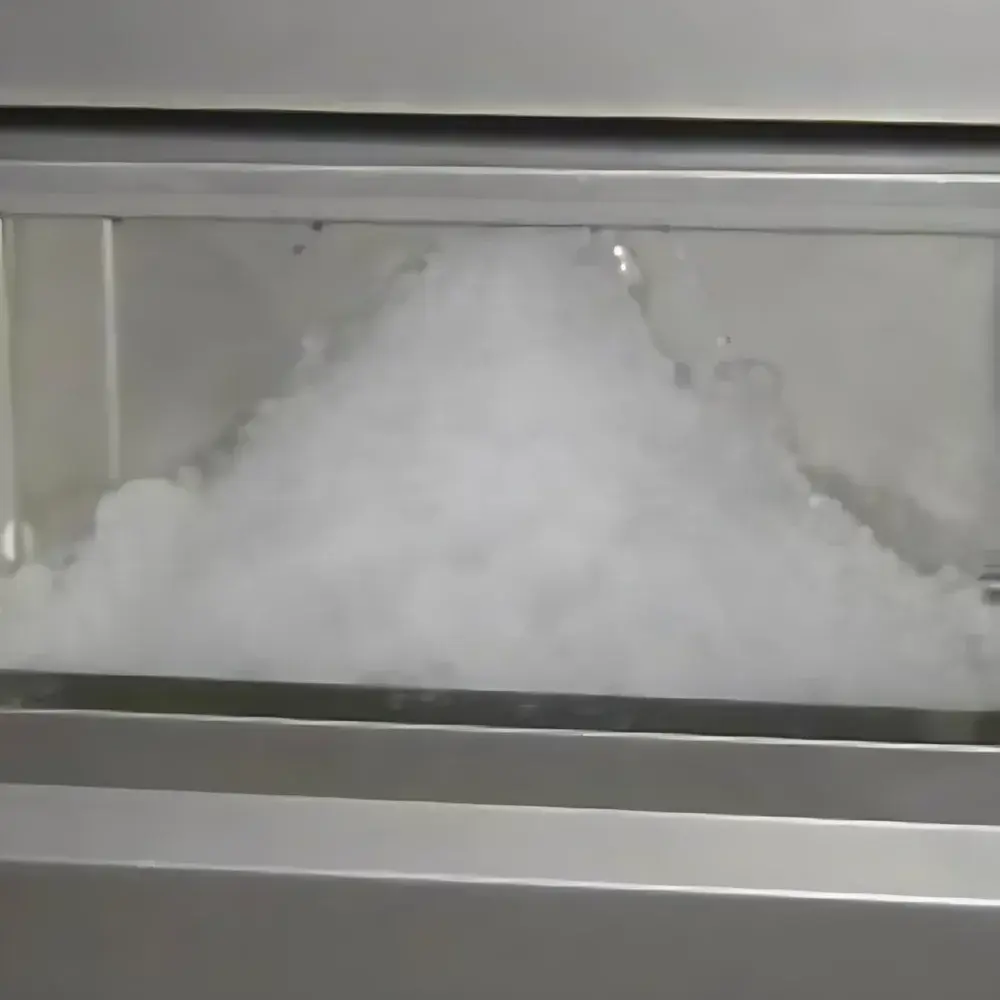
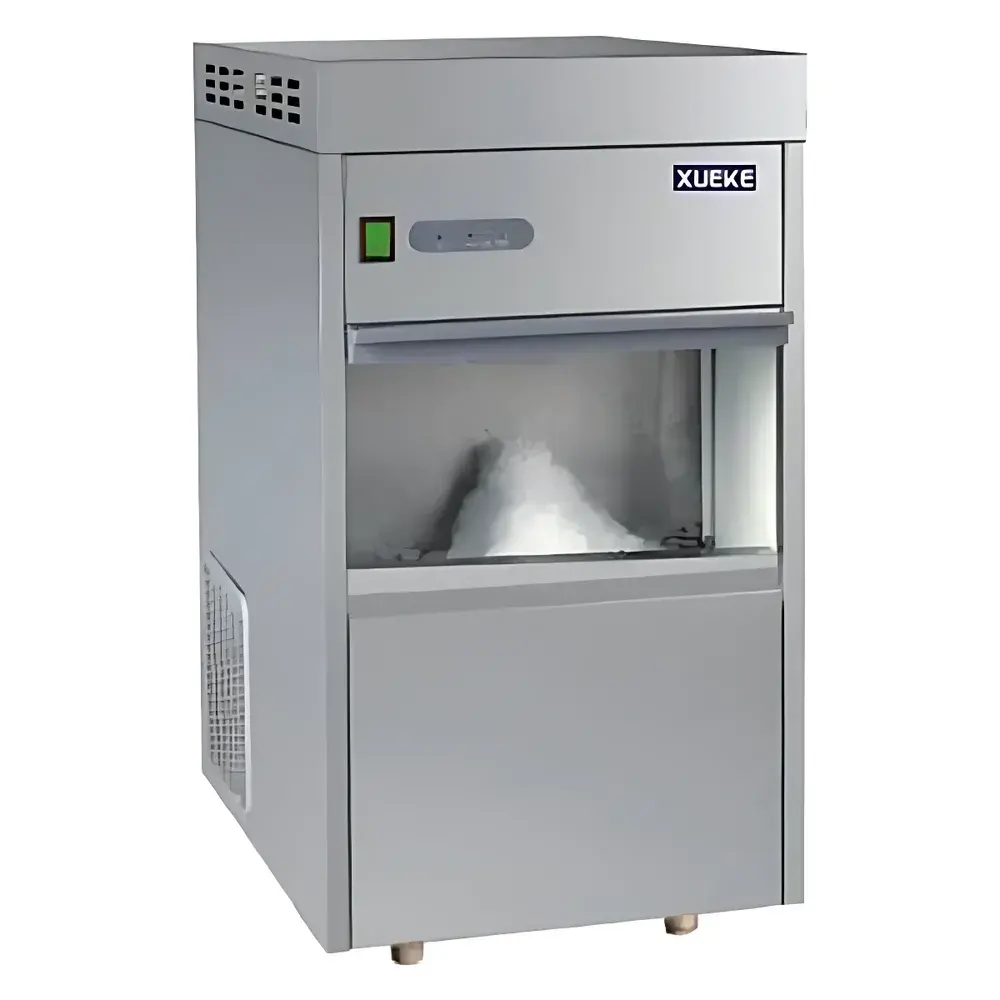
XUEKE IMS-130 Laboratory Biological Flake Ice Maker
| Brand | XUEKE |
|---|---|
| Origin | Jiangsu, China |
| Model | IMS-130 |
| Ice Production Capacity | 130 kg/24 h |
| Ice Storage Capacity | 35 kg |
| Water Consumption | ≤5.4 L/h |
| Cooling Method | Air-cooled |
| Power Consumption | 685 W |
| Dimensions (W×D×H) | 635 × 611 × 945 mm |
| Net Weight | 70 kg |
| Ice Type | Irregular flake ice (biological-grade, low-density, high-surface-area flakes) |
| Compressor | High-efficiency R290/R600a refrigerant-compatible hermetic compressor |
| Enclosure Material | 304 stainless steel |
| Control System | Fully automatic microprocessor-based controller with LED display and fault diagnostics |
Overview
The XUEKE IMS-130 Laboratory Biological Flake Ice Maker is an air-cooled, fully automated refrigeration system engineered for consistent, on-demand production of low-density, irregular flake ice—specifically optimized for biological and life science applications. Unlike cubed or nugget ice, flake ice offers superior thermal contact surface area, rapid cooling kinetics, and minimal mechanical stress on temperature-sensitive samples such as cell cultures, tissue specimens, enzymatic reagents, and PCR-ready nucleic acid preparations. The unit employs a hermetically sealed, high-efficiency compressor compatible with environmentally compliant hydrocarbon refrigerants (R290/R600a), eliminating ozone-depleting chlorofluorocarbons and aligning with ISO 50001 energy management principles. Its compact footprint (635 × 611 × 945 mm) and 304 stainless steel enclosure meet stringent laboratory hygiene standards—including resistance to corrosion from saline buffers, ethanol wipe-downs, and repeated sterilant exposure—making it suitable for ISO Class 5–7 cleanroom-adjacent environments and GLP-compliant sample preparation zones.
Key Features
- Fully automatic operation with intelligent microprocessor control: real-time monitoring of ice thickness, evaporator temperature, condenser airflow, and compressor load.
- Dual-sensor water level detection system prevents dry-run operation and ensures reliable ice formation cycle initiation.
- Self-diagnostic interface with LED status indicators for ice-full condition, low-water alarm, high-head pressure fault, and compressor thermal overload.
- Stainless steel ice bin (35 kg capacity) with insulated lid and antimicrobial coating to inhibit biofilm formation during extended storage.
- No external water connection required: integrated reservoir design supports batch-mode operation in mobile labs or biosafety cabinets with limited utility access.
- Low-noise fan-cooled condenser (≤58 dB[A] at 1 m) minimizes acoustic interference in quiet lab environments such as electrophysiology suites or stem cell culture facilities.
Sample Compatibility & Compliance
The IMS-130 produces biologically inert flake ice with no added minerals, chlorine residuals, or microbial contaminants when used with deionized or distilled feed water—a prerequisite for cryopreservation workflows and ISO 13485-certified medical device manufacturing support. Ice morphology is validated per ASTM D4178-22 (Standard Practice for Flake Ice Characterization) for particle size distribution (median flake diameter: 1.2–2.8 mm; thickness: 0.8–1.5 mm). The unit complies with IEC 61000-6-3 (EMC emission limits) and IEC 61000-6-2 (immunity to electrostatic discharge up to ±8 kV contact discharge), ensuring stable performance near sensitive analytical instruments including mass spectrometers and NMR consoles. Electrical safety conforms to UL 61010-1 and EN 61010-1 for laboratory equipment.
Software & Data Management
While the IMS-130 operates via embedded firmware without cloud connectivity, its controller logs operational history—including cumulative runtime, number of ice cycles, and fault event timestamps—for local auditability. All diagnostic data are exportable via USB port in CSV format, supporting traceability requirements under FDA 21 CFR Part 11 (when paired with validated lab information management systems). Optional RS-485 Modbus RTU interface enables integration into centralized facility monitoring platforms for predictive maintenance scheduling and energy consumption benchmarking against ISO 50001 KPIs.
Applications
- Cooling of centrifuged biological samples during fractionation and lysate preparation.
- Temperature stabilization of electrophoresis tanks, gel casting trays, and western blot transfer apparatus.
- Pre-chilling of pipette tips, microcentrifuge tubes, and PCR plates prior to cold-sensitive reaction setup.
- Transport conditioning of clinical specimens (e.g., CSF, bone marrow aspirates) adhering to CLSI GP44-A4 preanalytical guidelines.
- Supporting cryosectioning workflows by maintaining specimen block temperature below −10 °C during microtome sectioning.
FAQ
What distinguishes flake ice from other ice types in biological applications?
Flake ice provides maximal surface-to-volume ratio and conformal contact with irregular sample containers, enabling faster, more uniform heat extraction than cubes or crushed ice—critical for preserving enzyme activity and membrane integrity.
Can the IMS-130 be installed inside a biosafety cabinet?
Yes, provided minimum clearance of 100 mm around rear and top vents is maintained for unrestricted airflow; its air-cooled design eliminates need for external water drainage lines.
Is the ice output suitable for direct contact with primary cell cultures?
When fed with USP-grade purified water and operated under validated cleaning protocols (e.g., weekly citric acid descaling per manufacturer SOP), the ice meets ASTM E2315-21 criteria for non-pyrogenic, low-endotoxin biological cooling media.
Does the unit require annual calibration or certification?
No calibration is mandated; however, periodic verification of ice production rate (per ASTM D4178 Annex A1) and temperature stability (±0.5 °C at evaporator surface) is recommended for GLP/GMP alignment.



