
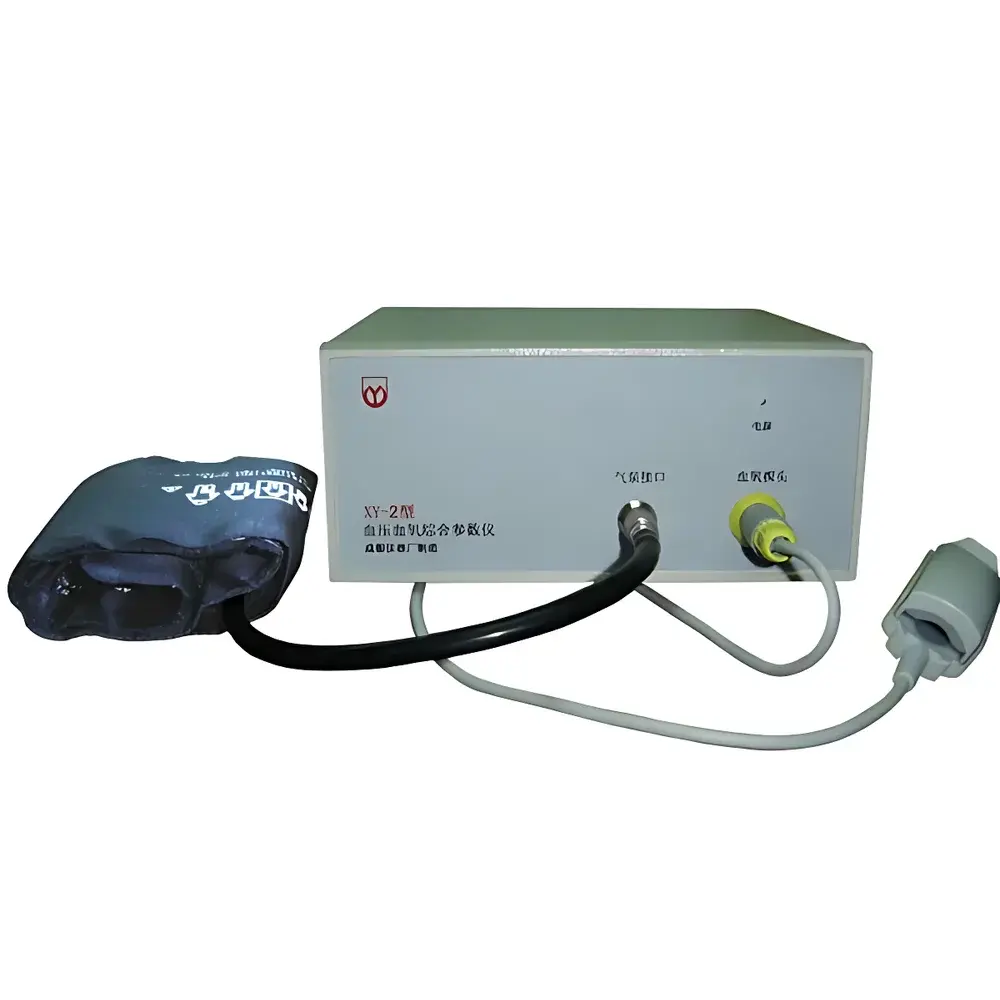
XY-2 Multi-Parameter Physiological Monitor for Animal Research
| Brand | SCChengyi |
|---|---|
| Model | XY-2 |
| Category | Animal Metabolism Detection System |
| Origin | Sichuan, China |
| Measurement Capabilities | Blood Pressure (Systolic/Diastolic), Peripheral Capillary Oxygen Saturation (SpO₂), Pulse Rate |
| Operating Modes | Manual, Automatic, Continuous Monitoring |
| SpO₂ Range | 0–99% |
| Pulse Rate Range | 0–255 bpm |
Overview
The XY-2 Multi-Parameter Physiological Monitor is a dedicated research-grade instrument engineered for non-invasive, real-time acquisition of core hemodynamic and oxygenation parameters in rodent and small-animal models. Designed specifically for integration within preclinical physiology workflows, the system employs photoplethysmography (PPG) for pulse waveform analysis and SpO₂ determination, combined with oscillometric or cuff-based pressure transduction for systolic and diastolic blood pressure quantification. Its architecture supports both standalone operation and synchronized data acquisition when interfaced with external physiological signal recorders—most notably the RM-6240 Multi-Channel Physiological Recorder—enabling concurrent monitoring of ECG, respiration, temperature, and other analog biosignals. The XY-2 is not intended for human clinical diagnosis or therapeutic use; it complies with functional safety expectations for laboratory animal instrumentation under ISO 10993-1 (biocompatibility of contact components) and IEC 61000-6-3 (EMC emissions for industrial environments).
Key Features
- Triple-parameter acquisition: Simultaneous real-time measurement of arterial blood pressure (systolic and diastolic), peripheral capillary oxygen saturation (SpO₂), and pulse rate from a single sensor interface.
- Flexible operational modes: Configurable for manual spot-checking, timed automatic sampling intervals, or continuous waveform recording—supporting longitudinal studies requiring stable baseline characterization.
- Modular signal output: Analog voltage outputs (±5 V, 0–10 V) and TTL-compatible trigger signals enable seamless synchronization with third-party data acquisition systems including National Instruments DAQ devices, ADInstruments PowerLab, and the RM-6240 recorder.
- Animal-adapted sensor design: Includes calibrated tail-cuff assemblies and reflective PPG probes optimized for murine and rat models (20–300 g), with adjustable occlusion pressure and thermal stabilization to minimize stress-induced hemodynamic artifacts.
- Ruggedized benchtop enclosure: IP20-rated housing with ESD-protected circuitry, front-panel LED indicators for signal quality and battery status, and internal lithium-polymer power management for up to 8 hours of cordless operation.
Sample Compatibility & Compliance
The XY-2 is validated for use in conscious, restrained, or lightly sedated rodents (C57BL/6, Sprague-Dawley, Wistar strains) and selected lagomorph models. Sensor placement follows standardized protocols aligned with the ARRIVE 2.0 guidelines and NIH Office of Laboratory Animal Welfare (OLAW) recommendations. While the device does not carry CE marking for medical devices or FDA 510(k) clearance, its measurement methodology adheres to principles referenced in ASTM F2665-22 (Standard Guide for Noninvasive Blood Pressure Measurement in Rodents) and ISO 80601-2-61:2017 (Particular requirements for basic safety and essential performance of pulse oximeter equipment). All firmware and calibration routines are traceable to NIST-traceable reference standards via documented internal verification procedures.
Software & Data Management
Data streams from the XY-2 are transmitted via USB 2.0 (CDC ACM class) or RS-232 serial interface to host software running on Windows 10/11 platforms. The included SCChengyi DataLink v3.2 application provides real-time waveform visualization, configurable alarm thresholds (e.g., SpO₂ 220 bpm), and CSV export with ISO 8601 timestamping. For GLP-compliant environments, the software supports audit trail logging (user login, parameter changes, calibration events) and optional 21 CFR Part 11–compatible digital signature modules upon request. Raw binary data files are structured for direct import into MATLAB, Python (via NumPy/Pandas), or LabChart for advanced spectral analysis of pulse wave morphology.
Applications
- Pharmacological evaluation of antihypertensive or vasodilatory compounds in chronic hypertension models.
- Assessment of hypoxia-reoxygenation injury in ischemia–reperfusion studies.
- Validation of genetic knockouts affecting autonomic regulation (e.g., β-adrenergic receptor subtypes).
- Longitudinal monitoring during metabolic cage experiments involving circadian rhythm disruption or diet-induced obesity.
- Method development for non-invasive BP validation against gold-standard telemetry implants (e.g., HD-X11 or TA-F10).
FAQ
Is the XY-2 suitable for use in conscious, freely moving animals?
No—the system requires temporary restraint or light sedation to ensure stable sensor contact and minimize motion artifact. For ambulatory monitoring, implantable telemetry systems are recommended.
Does the XY-2 provide mean arterial pressure (MAP) calculation?
Yes—MAP is derived algorithmically from systolic and diastolic values using the standard weighted formula (MAP ≈ DBP + 1/3[SBP − DBP]), and is displayed alongside primary metrics in real time.
Can SpO₂ measurements be validated against arterial blood gas (ABG) analysis?
While not a replacement for ABG, XY-2 SpO₂ readings demonstrate strong correlation (r² > 0.92) with PaO₂-derived SaO₂ in controlled normoxic/hypoxic challenges when calibrated per manufacturer protocol.
What maintenance is required for long-term reliability?
Cuff bladders should be inspected weekly for microtears; PPG probe LEDs require recalibration every 6 months using the supplied optical reference standard; firmware updates are issued biannually via secure download portal.






