
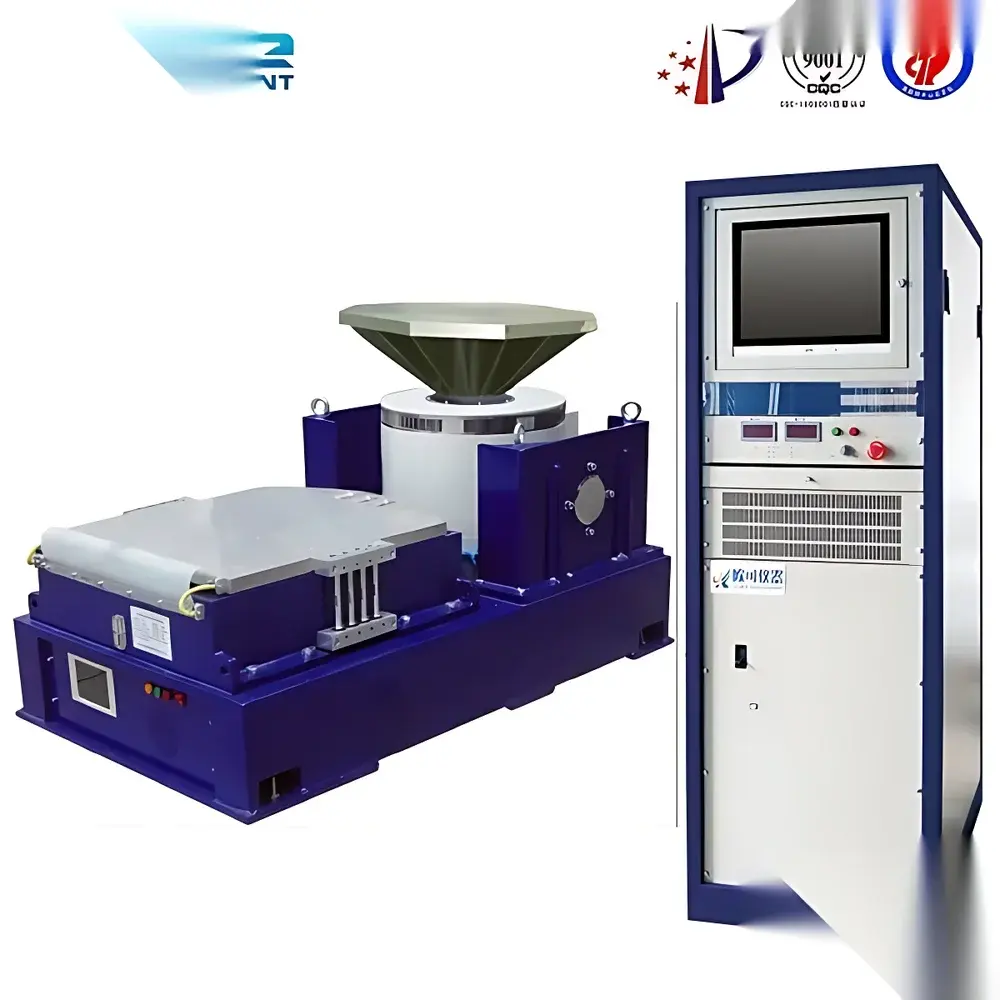
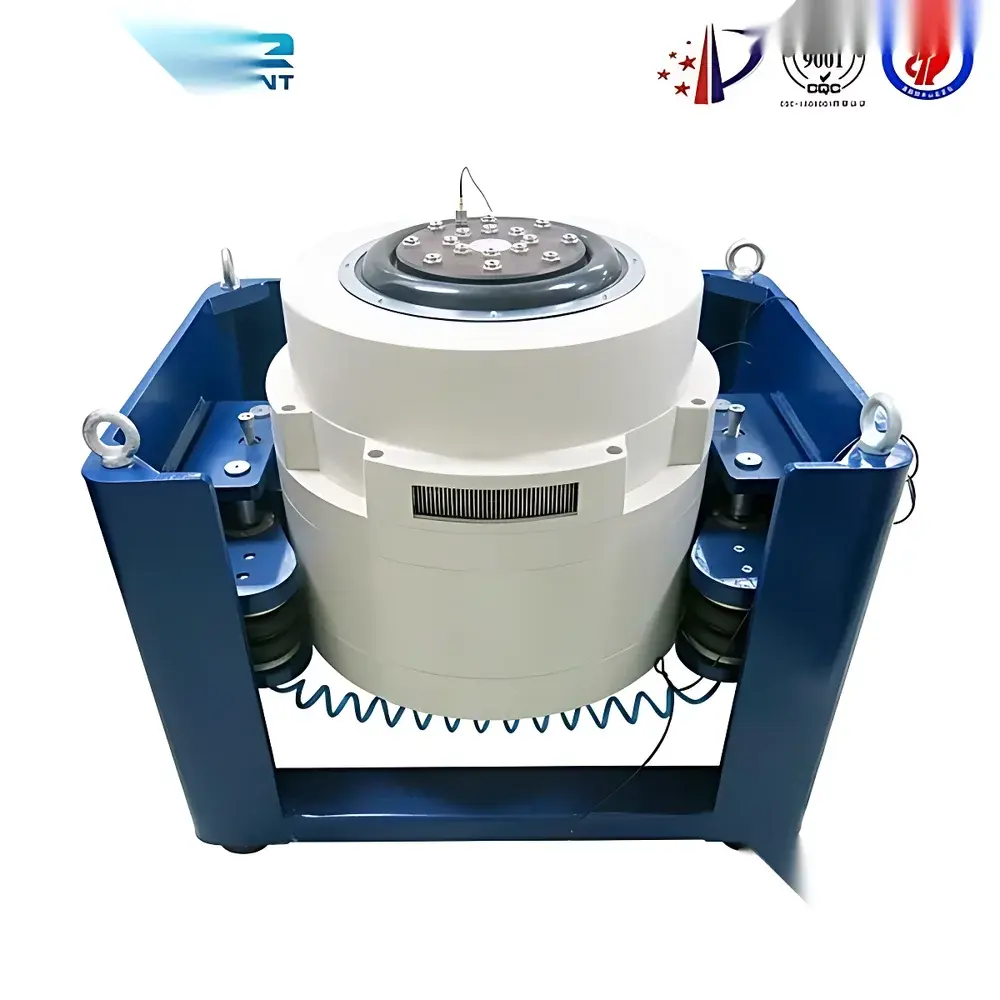
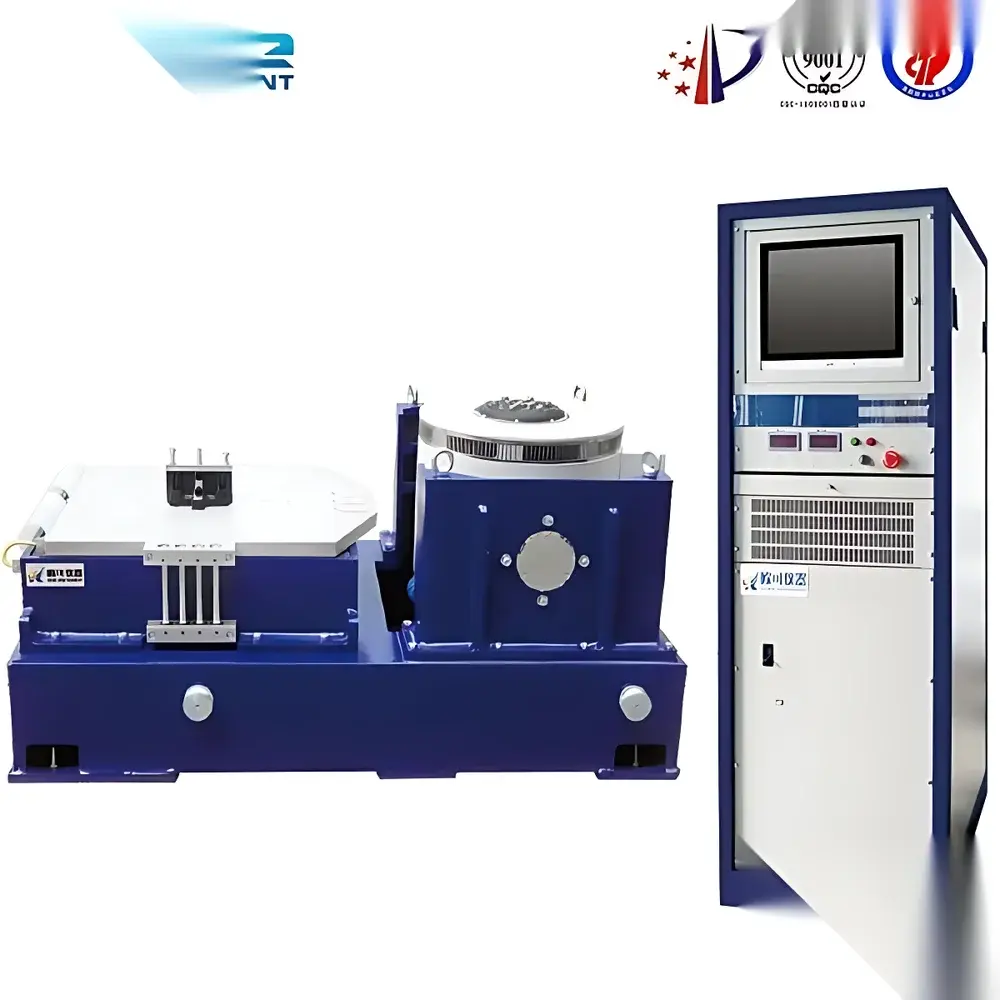
XYZ Three-Axis Electromagnetic Vibration Shaker
| Brand | Other Brands |
|---|---|
| Origin | Imported |
| Manufacturer Type | General Distributor |
| Price | USD 21,500 (approx.) |
| Model | OK-ES-10 |
| Max. Load Capacity | 70 kg |
| Effective Table Size | 1.2 m × 1.1 m |
| Stroke (Peak-to-Peak Amplitude) | 25.4 mm |
| Speed Range | 60–300 rpm |
| Speed Resolution | ±1 rpm |
| Drive Motor | 1 HP DC Motor with Smooth Start |
| Transmission | Synchronous Silent Belt |
| Control Mode | DC Speed Regulation |
| Timer Range | 0 s – 99 h |
| Power Supply | 220 V, 50 Hz |
| Net Weight | 230 kg |
| Base Construction | Heavy-Duty C-Channel Steel Frame with Anti-Vibration Rubber Mounts |
| Table Surface | Stainless Steel |
| Sample Fixation | Aluminum Fixture with Manual Knob Adjustment |
| Compliance Standards | ASTM D999, ISO 2247, EN 71-1, ISTA 3A/3E |
Overview
The XYZ Three-Axis Electromagnetic Vibration Shaker (Model OK-ES-10) is a precision-engineered electrodynamic vibration testing system designed for deterministic mechanical stress simulation in packaging integrity validation and product durability assessment. Unlike servo-hydraulic or pneumatic shakers, this unit employs electromagnetic actuation to generate controlled, repeatable sinusoidal motion across three orthogonal axes—X, Y, and Z—enabling comprehensive evaluation of dynamic response under transport-induced excitations. Its core operational principle relies on Lorentz-force-driven linear displacement, delivering high-fidelity low-frequency oscillation (60–300 rpm) with fixed amplitude (25.4 mm p-p), optimized for simulating road, rail, and maritime transit conditions. The system is not intended for high-frequency random vibration or shock pulse testing; rather, it serves as a robust, cost-effective solution for standardized package qualification per ASTM D999 (vibration testing of shipping containers), ISO 2247 (vibration testing of packaged products), and EN 71-1 (mechanical and physical properties of toys). Its design prioritizes mechanical stability, thermal management, and long-term repeatability—critical for GLP-aligned quality control laboratories and R&D facilities validating packaging performance prior to distribution.
Key Features
- Triple-axis synchronized electromagnetic drive mechanism enabling independent or coupled X/Y/Z excitation for realistic multi-directional transport simulation
- Heavy-duty C-channel steel base integrated with calibrated anti-vibration rubber mounts to isolate floor-borne resonance and ensure test repeatability
- Stainless-steel working surface (1.2 m × 1.1 m) offering corrosion resistance, dimensional stability, and ease of cleaning in regulated environments
- Modular aluminum sample fixture system with ergonomic hand-wheel clamping—designed for rapid, tool-free positioning of irregularly shaped items including electronics enclosures, automotive components, and consumer goods
- DC motor with soft-start circuitry and synchronous silent belt transmission—minimizing acoustic noise (<65 dB(A) at 1 m) and mechanical backlash during acceleration/deceleration cycles
- Digital timer with programmable range from 0 seconds to 99 hours, supporting extended endurance tests required by ISTA 3E (e-commerce parcel delivery simulation)
Sample Compatibility & Compliance
The OK-ES-10 accommodates a broad spectrum of packaged and unpackaged specimens—including but not limited to consumer electronics, household appliances, medical device kits, ceramic ware, furniture assemblies, and toy units—within its 70 kg load limit. Its large table area allows simultaneous testing of multiple SKUs or full pallet configurations (when used with optional pallet adapters). All mechanical and electrical subsystems conform to IEC 61000-6-2 (immunity) and IEC 61000-6-4 (emission) standards. Test protocols executed on this platform satisfy regulatory requirements for pre-shipment validation under FDA guidance for medical packaging (21 CFR Part 11-compliant data logging optional via external DAQ), EU RoHS Directive (lead-free soldering and halogen-free cabling), and CE marking prerequisites for machinery safety (EN 60204-1). Documentation packages include traceable calibration certificates (NIST-traceable speed verification), mechanical schematic diagrams, and standard operating procedures aligned with ISO/IEC 17025 clause 7.8.
Software & Data Management
While the OK-ES-10 operates via embedded digital controller with LED-based parameter display and manual keypad input, it supports integration with third-party data acquisition systems via analog voltage output (0–10 V) representing real-time speed and status signals. Optional RS-232 or USB-to-serial interface modules enable connection to PC-based platforms such as LabVIEW, MATLAB, or custom Python scripts for automated test sequencing, pass/fail logic execution, and audit-trail generation. When configured with compliant software, the system supports electronic signatures, user access levels, and 21 CFR Part 11–compliant audit trails—including timestamped operator ID, parameter changes, and runtime interruptions—for GMP-regulated pharmaceutical or diagnostic packaging validation workflows.
Applications
- Transport simulation for e-commerce fulfillment centers (ISTA 3E-compliant vertical/horizontal vibration profiles)
- Structural fatigue assessment of plastic housings, PCB assemblies, and solder joint integrity in automotive ECUs
- Package design optimization—evaluating cushioning efficacy, corrugated board compression resistance, and tape seal durability
- Pre-shipment qualification of Class II medical devices per ISO 11607-1 Annex C (aging and distribution simulation)
- Consumer product safety testing—verifying retention of fasteners, hinges, and internal components after simulated logistics exposure
- Educational labs conducting fundamentals of mechanical vibration, resonance phenomena, and damping coefficient estimation
FAQ
What standards does the OK-ES-10 directly support out-of-the-box?
It natively executes fixed-speed, constant-amplitude vibration per ASTM D999 Method A (sinusoidal sweep), ISO 2247 Section 6.2 (fixed-frequency dwell), and EN 71-1 Clause 8.11 (mechanical stress endurance). No firmware update or add-on module is required.
Can the shaker perform random vibration testing?
No. The OK-ES-10 is a deterministic, low-frequency electrodynamic shaker optimized for sinusoidal and swept-sine profiles only. Random vibration requires a dedicated electrodynamic shaker with closed-loop controller and power amplifier capable of broadband spectral shaping (e.g., 5–2000 Hz Gaussian distribution).
Is the stainless-steel table grounded for ESD-sensitive testing?
Yes—the entire table structure is electrically bonded to chassis ground via 4 mm² copper braid. An optional 1 MΩ current-limiting resistor kit is available for ANSI/ESD S20.20-compliant static-dissipative configuration.
What maintenance intervals are recommended for sustained accuracy?
Biannual inspection of belt tension, motor brush wear (if applicable), and rubber isolation mount compression set is advised. Calibration of speed feedback loop should be verified annually using a handheld tachometer traceable to NIST.
Does the system include test report generation capability?
Basic run logs (start time, duration, setpoint rpm, stop reason) are stored internally for up to 100 cycles. Full PDF/CSV reporting with metadata stamping requires integration with external software via serial interface.
Related Products



