
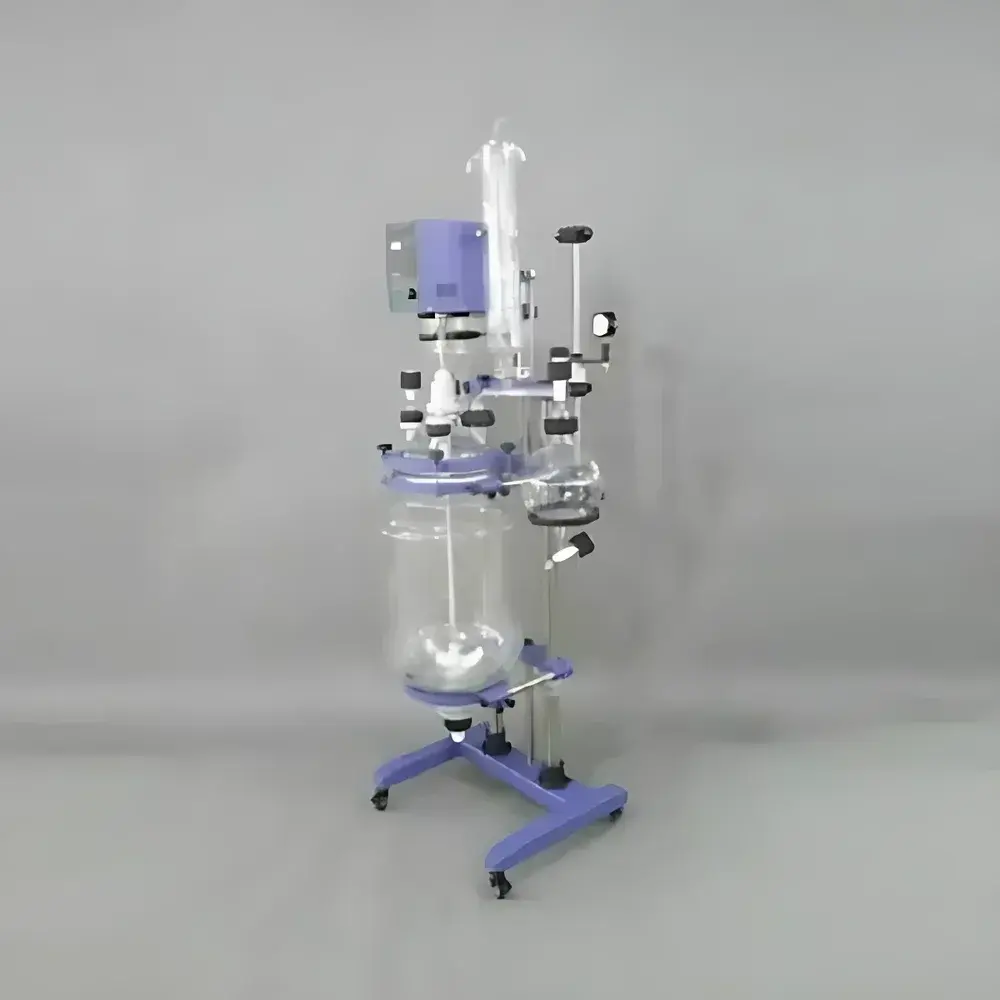
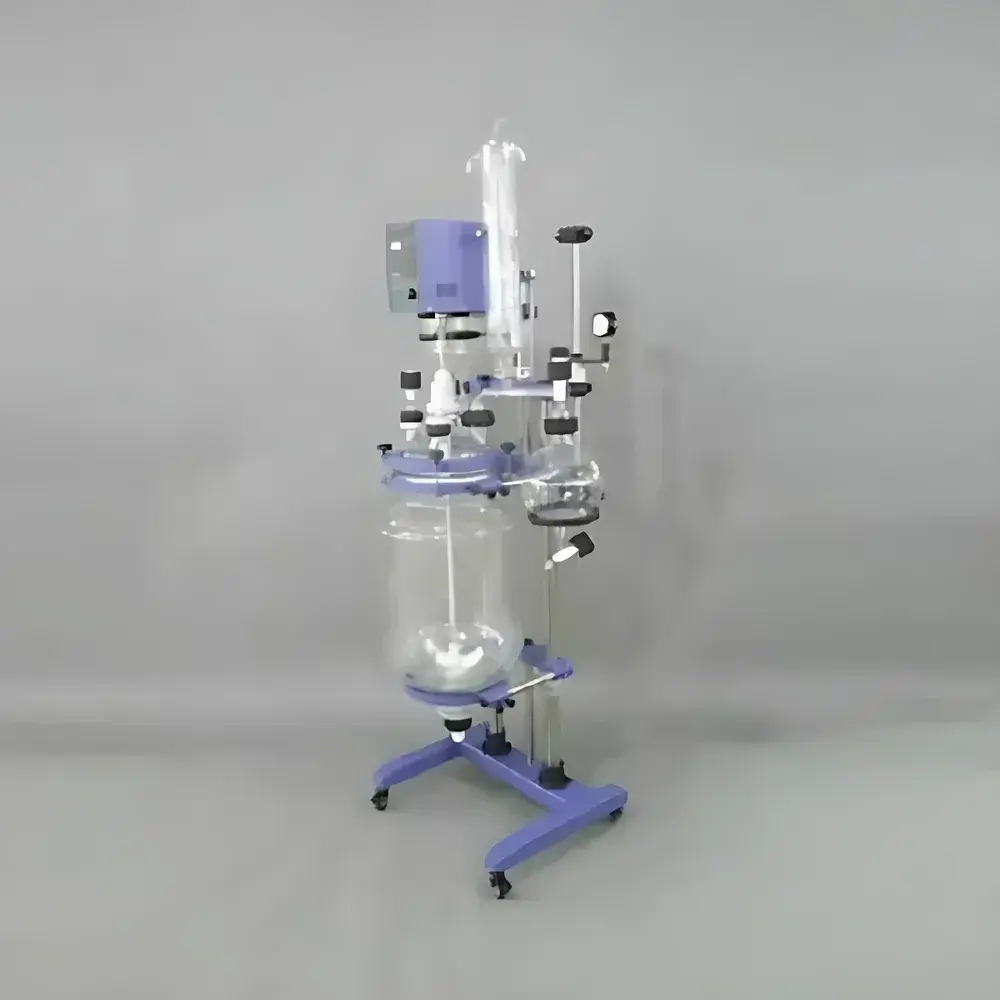
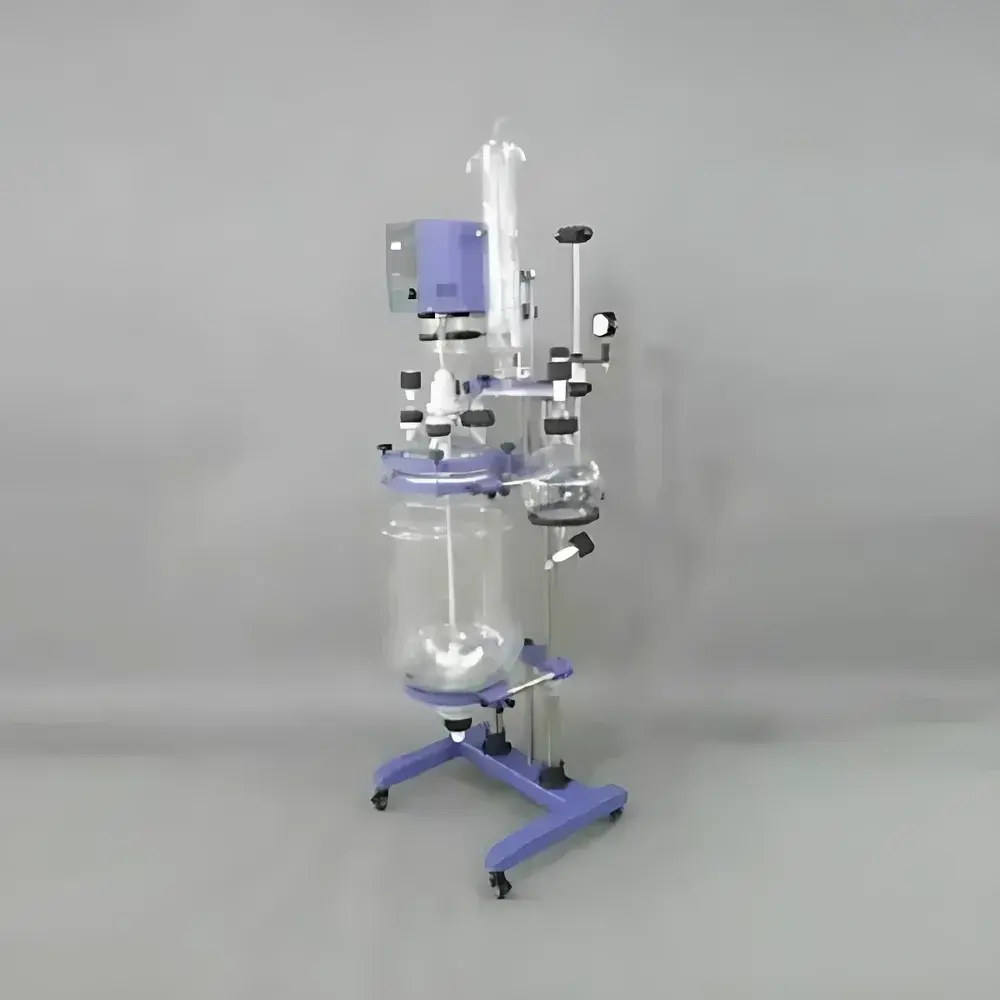
Yarong RV-620A Vacuum Jacketed Glass Reactor
| Brand | Yarong |
|---|---|
| Origin | Shanghai, China |
| Manufacturer Type | Authorized Distributor |
| Country of Origin | China |
| Model | RV-620A |
| Instrument Category | Jacketed Glass Reactor |
| Vessel Capacity | 20 L |
| Construction Material | GG17 Borosilicate Glass |
| Operating Pressure Range | Ambient to –0.1 MPa (Vacuum) |
| Jacket Type | Double-Walled Circulating Jacket |
| Stirring Speed Range | 100–1400 rpm |
| Motor Power | 250 W |
| Torque | 15,000 g·cm |
| Overall Dimensions | 62 × 50 × 180 cm |
| Temperature Control Method | External Circulating Fluid (Hot Oil / Coolant / Water) |
| Bottom Discharge | PTFE Valve with Flanged Interface |
| Lid Configuration | Four-Port Standard Taper (24/40, 29/32, etc.) |
| Compliance | Designed for GLP-compliant lab environments |
Overview
The Yarong RV-620A Vacuum Jacketed Glass Reactor is a fully integrated, bench-to-pilot-scale chemical reaction system engineered for precise temperature control, pressure flexibility, and reproducible mixing performance under inert or reduced-pressure conditions. Built around a seamless GG17 borosilicate glass vessel, the reactor operates on the principle of jacketed thermal management—where a circulating fluid (hot oil, chilled glycol, or tap water) flows through the annular space between inner and outer walls to maintain uniform, stable reaction temperatures across the entire 20 L working volume. Its vacuum-rated design supports operation from atmospheric pressure down to –0.1 MPa (≈750 torr), enabling solvent reflux, low-boiling-point distillations, moisture-sensitive syntheses, and controlled degassing protocols. The system is not a sealed high-pressure autoclave but rather a robust, transparent platform optimized for observation-driven process development in fine chemical synthesis, pharmaceutical intermediate preparation, polymerization screening, and nanomaterial nucleation studies.
Key Features
- 20 L double-jacketed GG17 glass vessel with optical clarity and high resistance to thermal shock, alkali, and organic solvents—certified per ASTM E438 Type I, Class A specifications.
- Brushless AC induction motor delivering continuous torque output (15,000 g·cm) across a wide speed range (100–1400 rpm), eliminating sparking hazards and ensuring long-term operational stability in Class I Division 2 environments.
- Four-port interchangeable lid assembly featuring standard taper ground-glass joints (24/40, 29/32, and custom configurations) for modular integration of condensers, addition funnels, thermowells, gas inlets, or pH probes.
- PTFE-lined bottom discharge valve mounted on a flanged interface—designed for zero dead-volume evacuation of slurries, precipitates, or viscous reaction mixtures without disassembling the main vessel.
- Thermally insulated jacket inlet/outlet ports with quick-connect fittings compatible with standard laboratory circulators (e.g., Huber, Julabo, LAUDA) operating from –40 °C to +200 °C.
- Integrated digital speed controller with real-time rpm display, soft-start functionality, and overload protection—calibrated traceable to NIST-traceable standards.
Sample Compatibility & Compliance
The RV-620A accommodates heterogeneous, multiphase, and air-sensitive reaction systems—including suspensions, emulsions, catalytic slurries, and organometallic intermediates—without risk of metal contamination. Its all-glass wetted path ensures compatibility with aggressive reagents such as concentrated HNO₃, anhydrous AlCl₃, and Grignard reagents when used within recommended temperature and pressure limits. The reactor meets essential safety and documentation requirements for regulated laboratories: it supports audit-ready operation under Good Laboratory Practice (GLP) and current Good Manufacturing Practice (cGMP) frameworks; its mechanical design aligns with ISO 7207-1 for glass apparatus strength classification; and its electrical components comply with IEC 61010-1 for laboratory equipment safety. While not intrinsically rated for explosion-proof use, the brushless motor and static-dissipative construction reduce ignition risks during solvent-based operations.
Software & Data Management
The RV-620A operates as a standalone analog-controlled instrument but is fully compatible with third-party data acquisition systems via 0–10 V analog output (speed signal) and optional RS-485 Modbus RTU interface (available upon request). When integrated with validated SCADA or LIMS platforms, the reactor supports electronic batch records, time-stamped parameter logging, and 21 CFR Part 11–compliant audit trails when paired with appropriate software validation packages. Temperature monitoring requires external PT100 or thermocouple probes inserted via dedicated ports—no embedded sensors are included. All control units feature password-protected configuration modes and factory-reset capability for calibration integrity maintenance.
Applications
- Fine chemical synthesis requiring precise stoichiometric control and exotherm management (e.g., nitration, sulfonation, diazotization).
- Pharmaceutical process development including crystallization optimization, API salt formation, and controlled hydrogenation under nitrogen or argon blanket.
- Polymer chemistry workflows such as step-growth polycondensation, free-radical bulk polymerization, and RAFT-mediated reactions.
- Materials science applications including sol-gel processing, quantum dot synthesis, and MOF crystallization under reduced pressure.
- Extraction and concentration protocols using rotary evaporation-compatible reflux/distillation setups.
- Educational use in advanced organic and physical chemistry labs for demonstrating reaction kinetics, phase equilibria, and mass transfer phenomena.
FAQ
Is the RV-620A suitable for high-pressure hydrogenation?
No. It is rated for vacuum and ambient pressure only (max working pressure: 0.1 MPa gauge). For hydrogenation above atmospheric pressure, a certified stainless-steel autoclave is required.
Can the glass vessel be customized with additional ports or non-standard joint sizes?
Yes—custom porting and joint adaptation (e.g., 34/45, DIN, or ISO-KF) are available as OEM options subject to minimum order quantity and lead time confirmation.
What cooling fluids are compatible with the jacket system?
Ethylene glycol/water mixtures (down to –30 °C), silicone oils (up to +200 °C), and deionized water (for rapid ambient heat removal) are all verified for use with standard circulation pumps.
Does the system include temperature control hardware?
No—the RV-620A is a reactor-only platform. External temperature circulators, probes, and controllers must be sourced separately based on application-specific thermal requirements.
How is cleaning and maintenance performed between runs?
The four-port lid allows full access to the interior; the PTFE valve and flange interface enable complete disassembly for ultrasonic cleaning or passivation. GG17 glass surfaces resist residue buildup and tolerate standard lab-grade detergents and acetone rinses.



