
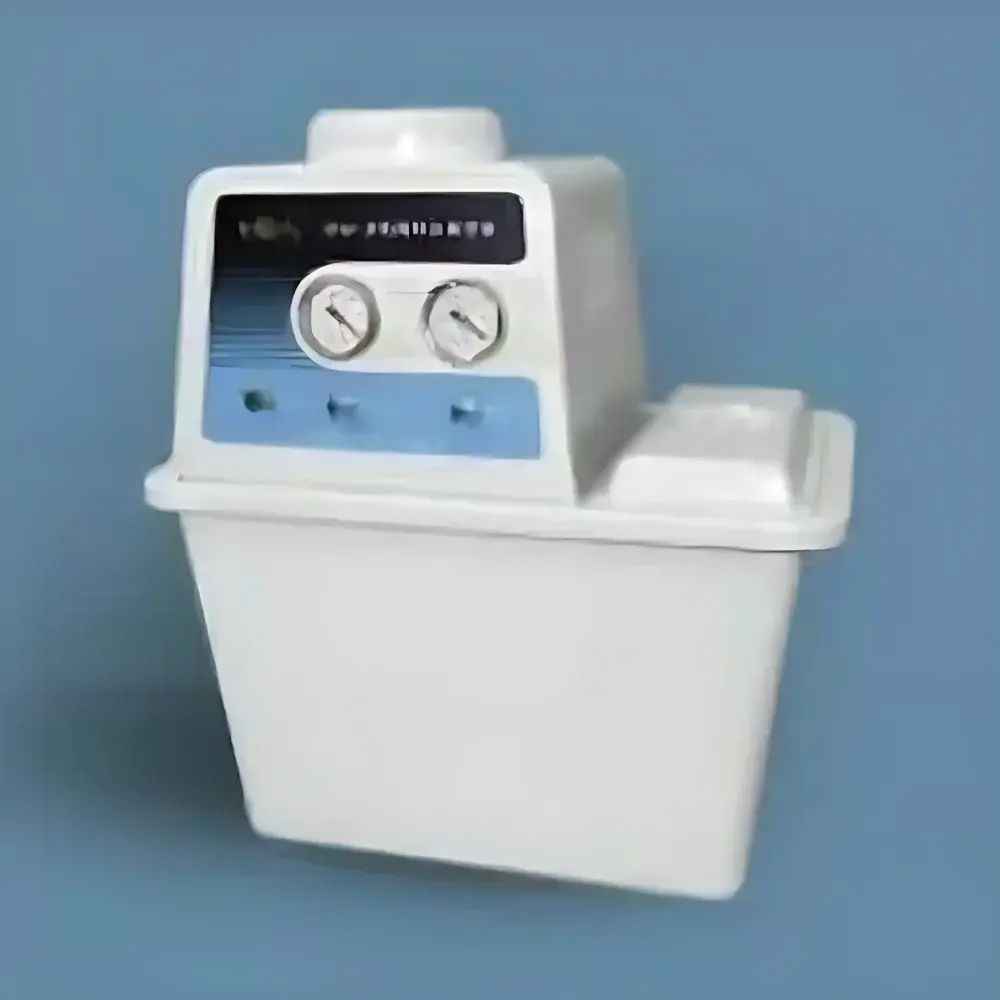
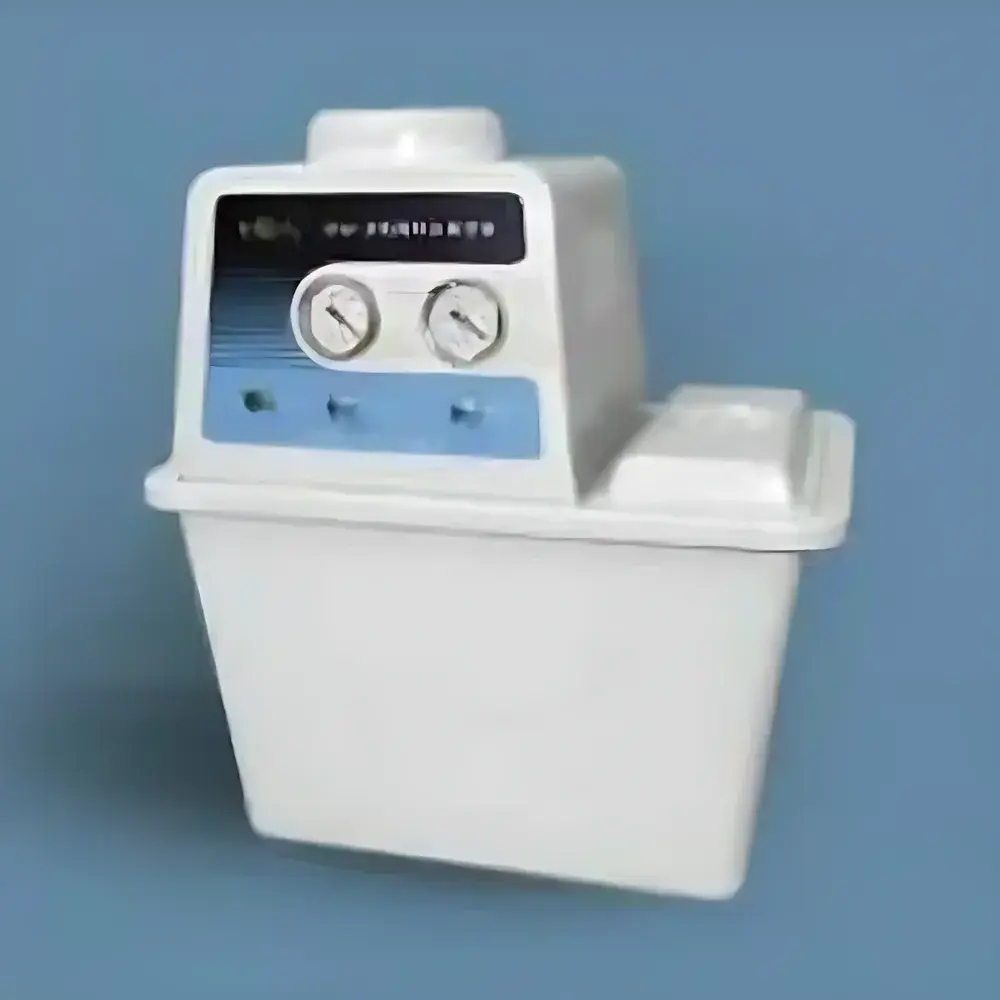
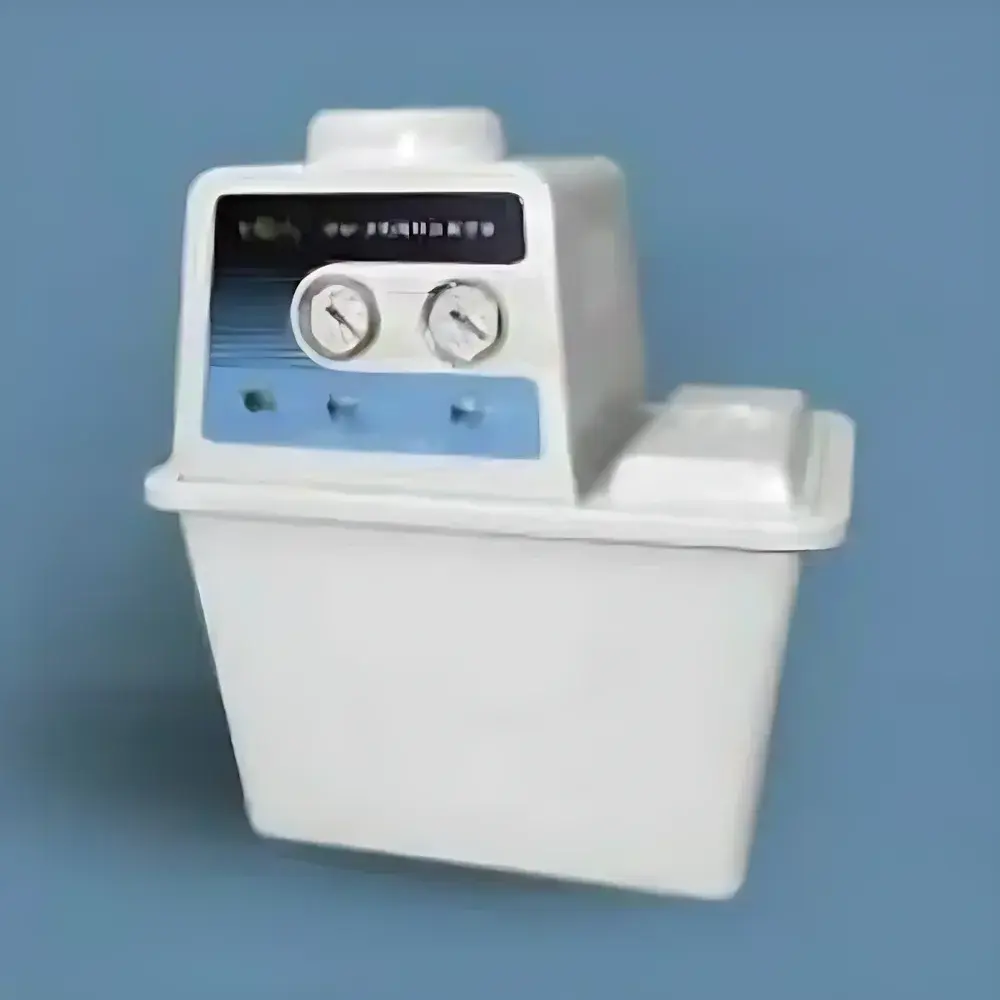
Yarong SHZ-III Circulating Water Vacuum Pump
| Brand | Yarong |
|---|---|
| Origin | Shanghai, China |
| Model | SHZ-III |
| Pump Type | Oil-Free Circulating Water Vacuum Pump |
| Air Displacement (per port) | 10 L/min |
| Maximum Vacuum | 0.098 MPa |
| External Dimensions | 40 × 39 × 45 cm |
| Weight | 10.5 kg |
| Motor Power | 180 W |
| Voltage | 220 V AC / 50 Hz |
| Water Tank Capacity | 15 L |
| Number of Vacuum Ports | 2 |
| Material | PP (polypropylene) housing and impeller |
| Flow Rate | 60 L/min (total system circulation) |
| Lift Height | 8 m |
Overview
The Yarong SHZ-III Circulating Water Vacuum Pump is an oil-free, water-cooled vacuum generation system engineered for precision laboratory applications requiring stable, low-maintenance negative pressure. Unlike mechanical or diaphragm vacuum pumps, the SHZ-III operates on the principle of fluid jet aspiration—using a high-velocity circulating water stream to induce vacuum via the Venturi effect within integrated ejector nozzles. This thermodynamically efficient design eliminates the need for lubricating oil, thereby preventing hydrocarbon contamination of sensitive samples and vacuum lines. The pump delivers a maximum vacuum level of 0.098 MPa (equivalent to ~29.5 inHg or ~75 kPa absolute), making it suitable for moderate-vacuum processes including rotary evaporation, vacuum filtration, vacuum drying, and inert-atmosphere sample handling. Its compact footprint (40 × 39 × 45 cm) and lightweight construction (10.5 kg) reflect its optimization for space-constrained benchtop environments typical in academic, pharmaceutical, and analytical laboratories.
Key Features
- Dual independent vacuum ports with individual analog vacuum gauges—enabling simultaneous operation of two instruments (e.g., a rotary evaporator and a vacuum desiccator) or redundant backup during extended runs.
- Corrosion-resistant architecture: housing and impeller fabricated from chemically inert polypropylene (PP); primary internal fluid pathways constructed from grade 304 stainless steel to withstand prolonged exposure to organic solvents, acidic vapors, and aqueous media.
- Integrated 15-liter water reservoir with overflow protection and transparent level indicator—designed for continuous operation without frequent refilling under standard ambient conditions.
- Low-noise motor assembly (≤55 dB(A) at 1 m) and vibration-damped mounting—minimizing acoustic interference in shared lab spaces and improving long-term operator comfort.
- Energy-efficient 180 W induction motor operating at 220 V AC / 50 Hz—compliant with IEC 60034 standards for general-purpose industrial motors.
- No oil changes, no carbon brushes, no seals requiring periodic replacement—reducing total cost of ownership and supporting GLP-compliant maintenance logs.
Sample Compatibility & Compliance
The SHZ-III is compatible with a broad range of volatile and semi-volatile compounds commonly encountered in extraction, concentration, and purification workflows—including ethanol, acetone, ethyl acetate, dichloromethane, and aqueous buffers. Its corrosion-resistant wetted path ensures operational integrity when used with mildly acidic or alkaline solutions (pH 3–11). While not certified to ISO 8573 (compressed air purity) or ATEX directives (as it generates vacuum—not compressed gas), the unit conforms to basic electrical safety requirements per GB 4706.1 (China’s national implementation of IEC 60335-1) and carries CE-marked electromagnetic compatibility (EMC) compliance per EN 61326-1. It is routinely deployed as auxiliary vacuum source for RE-52 series rotary evaporators—equipment widely referenced in ASTM E260 and USP methods for solvent removal under reduced pressure.
Software & Data Management
The SHZ-III is a standalone analog device with no embedded microcontroller, digital interface, or data logging capability. Vacuum level monitoring is performed visually via dual calibrated Bourdon-tube vacuum gauges (0–0.1 MPa range, ±1.6% FS accuracy). As such, it does not support FDA 21 CFR Part 11 electronic record requirements or audit trail functionality. However, its deterministic mechanical behavior and absence of firmware make it inherently suitable for validated environments where instrument qualification focuses on performance verification (IQ/OQ/PQ) rather than software validation. Users may integrate external pressure transducers and DAQ systems (e.g., LabVIEW or MATLAB-compatible sensors) for time-stamped vacuum profiling where process documentation is required.
Applications
- Vacuum-assisted rotary evaporation of heat-sensitive natural product extracts and synthetic intermediates using RE-52-series evaporators.
- Continuous vacuum filtration of cell lysates or precipitated proteins in biochemistry workflows.
- Controlled-rate vacuum drying of hygroscopic pharmaceutical actives prior to lyophilization or packaging.
- Gas-phase purging of reaction flasks during Schlenk-line–type manipulations in air-sensitive synthesis.
- Supporting vacuum distillation setups in food chemistry labs analyzing flavor volatiles or lipid oxidation byproducts.
- Providing stable suction for aspirators in clinical microbiology labs performing membrane filtration of water samples per ISO 9308-1.
FAQ
Is the SHZ-III suitable for use with aggressive solvents like chloroform or concentrated nitric acid?
The PP housing and stainless steel internal piping provide resistance to many common organics and dilute mineral acids, but prolonged exposure to strong oxidizers (e.g., >10% HNO₃) or halogenated solvents at elevated temperatures may compromise material integrity. Consult the chemical compatibility chart for PP and 304 SS before deployment.
Can the pump operate continuously for 24 hours?
Yes—provided ambient temperature remains below 35°C, water level is maintained above the minimum mark, and inlet water temperature does not exceed 25°C. Continuous duty cycle is supported per IEC 60034-1 S1 rating.
Does the SHZ-III require a dedicated water chiller?
Not inherently; however, for extended operation (>4 hrs) or high ambient temperatures, recirculating chillers (e.g., 10–15°C setpoint) significantly improve vacuum stability and extend water reservoir service intervals.
What is the expected service life under routine academic lab usage?
With biannual visual inspection of impeller wear and annual replacement of the water reservoir gasket, field experience indicates mean time between failures exceeding 8 years at 20 hrs/week average utilization.
Are spare parts such as vacuum gauges or PP impellers available through authorized distributors?
Yes—Yarong maintains a standardized spare parts catalog (P/N SHZ-III-SP-KIT) covering gauges, impellers, O-rings, and stainless steel nozzle inserts, with lead times typically under 10 business days for EU/US distribution hubs.



