
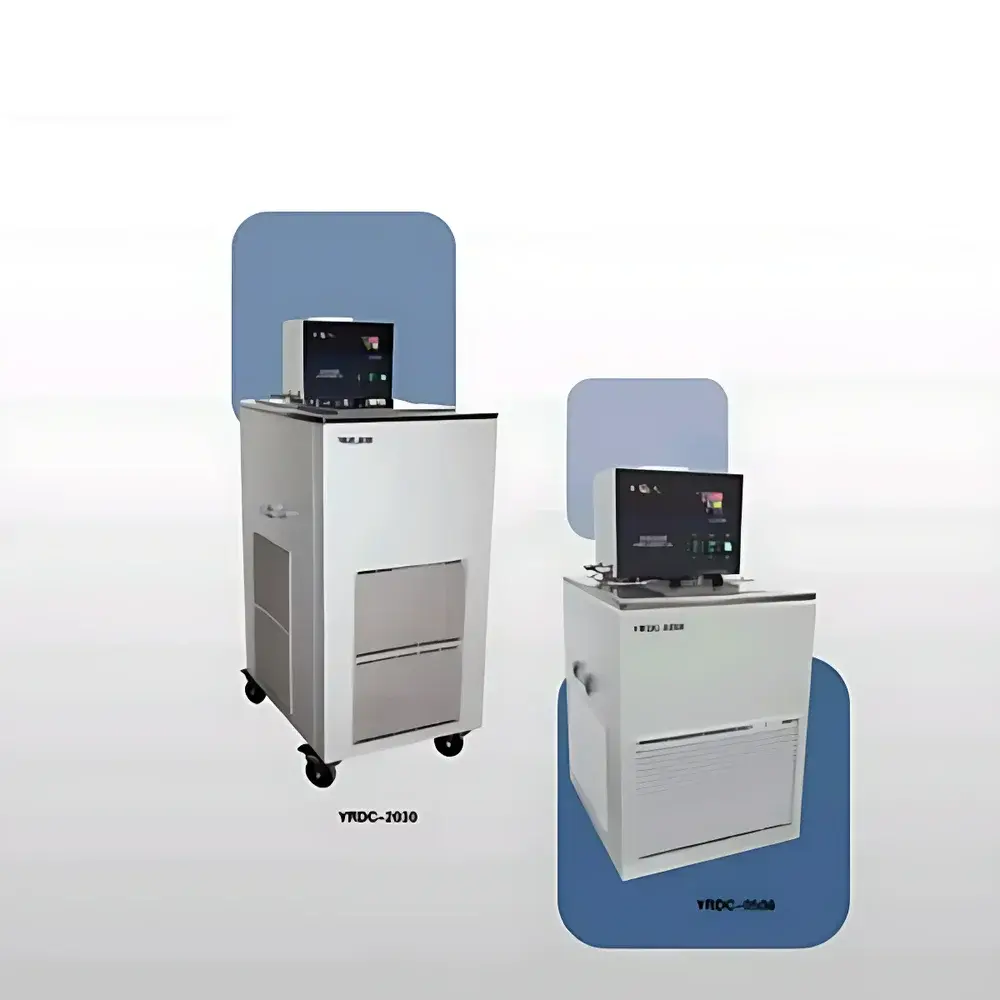
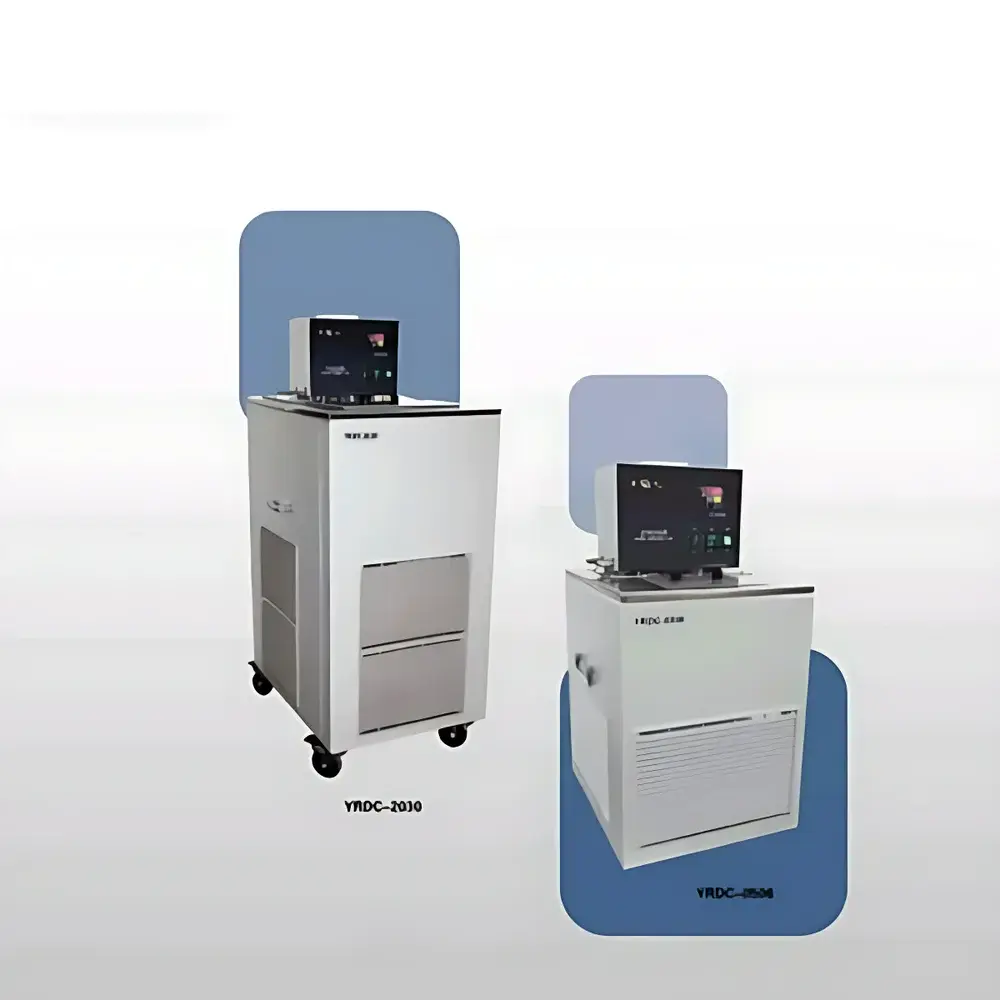
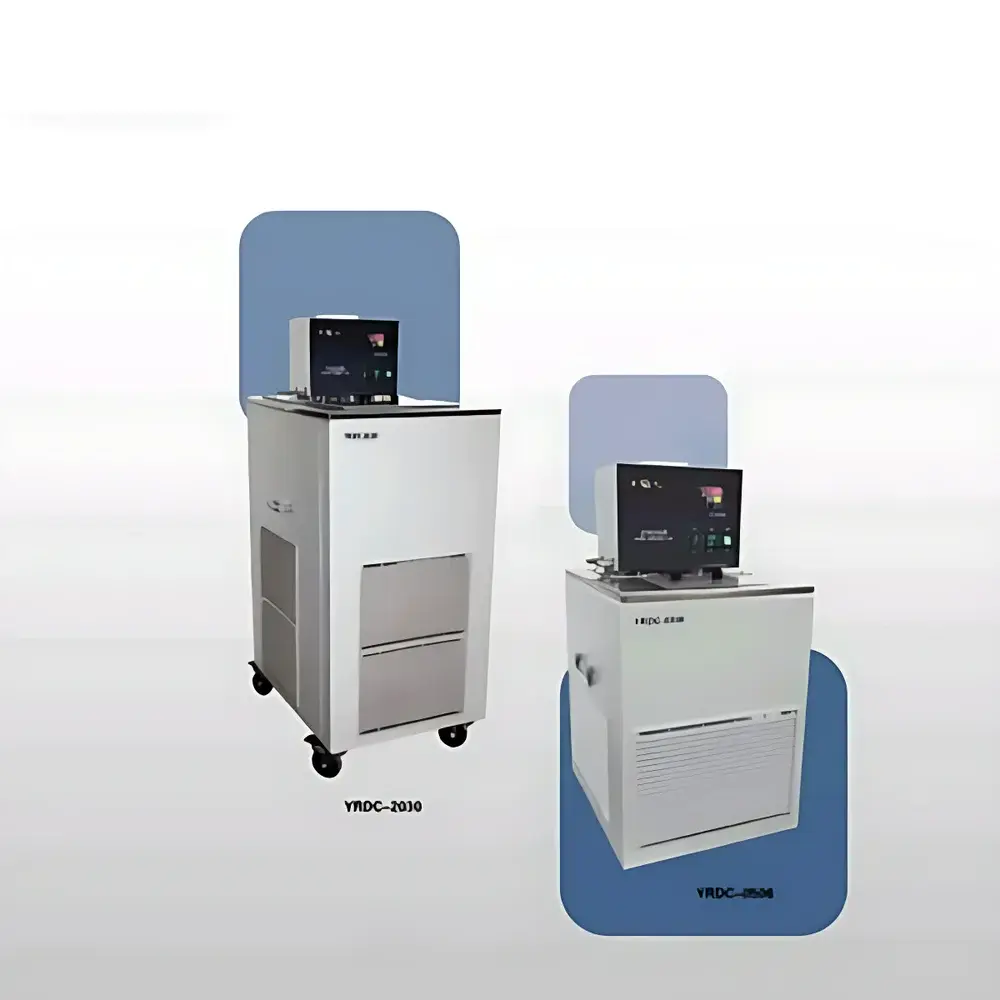
Yarong YRDC-6506 Vertical Cryogenic Circulating Thermostat
| Brand | Yarong |
|---|---|
| Origin | Shanghai, China |
| Model | YRDC-6506 |
| Temperature Range | −65 °C to 100 °C |
| Temperature Stability | ±0.05 °C |
| Temperature Uniformity | ±0.05 °C |
| Setpoint Resolution | 0.01 °C |
| Bath Volume | 6 L |
| Circulating Medium | Heat-transfer oil or antifreeze solution |
| Vibration Stability | Low-vibration operation compliant with laboratory-grade thermal instrumentation standards |
| Instrument Type | Vertical |
Overview
The Yarong YRDC-6506 is a vertically oriented, high-stability cryogenic circulating thermostat engineered for precise temperature control in analytical, materials science, and quality assurance laboratories. It operates on a closed-loop refrigeration–heating system incorporating a dual-stage cascade compressor, PID-controlled electric heating element, and high-efficiency circulation pump—enabling continuous, stable thermal regulation across a broad operational range from −65 °C to +100 °C. Unlike immersion-only chillers or simple water baths, the YRDC-6506 delivers active temperature homogenization via forced convection of thermally conductive fluid (e.g., silicone oil or ethylene glycol–water mixtures) through an external jacketed vessel or reaction apparatus. Its design emphasizes long-term thermal repeatability, minimal drift under load, and compatibility with externally connected systems such as spectrophotometer cells, viscometers, calorimeters, and environmental test chambers.
Key Features
- Ultra-stable temperature control: ±0.05 °C stability and uniformity—validated under steady-state conditions per ISO 17025-aligned internal calibration protocols
- Precision setpoint resolution of 0.01 °C, supporting fine-grained method development and compliance-critical SOP execution
- 6-liter stainless-steel liquid bath with corrosion-resistant interior surface and optimized flow geometry to minimize thermal stratification
- Low-vibration pump assembly certified to meet IEC 60068-2-64 mechanical vibration requirements for sensitive optical and microgravimetric instrumentation
- Intelligent dual-mode control architecture: automatic transition between refrigeration and heating modes without user intervention
- Over-temperature, low-level, and dry-run protection circuits compliant with IEC 61010-1 safety standards for laboratory electrical equipment
- Front-panel LED display with real-time monitoring of bath temperature, setpoint, pump status, and fault codes
Sample Compatibility & Compliance
The YRDC-6506 supports integration with a wide spectrum of external devices via standard 1/4″–3/8″ NPT or G1/4″ threaded fluid ports. Its non-pressurized open-bath configuration permits direct immersion of probes, sensors, or small-volume sample holders; alternatively, it functions as a primary thermal source in external recirculation loops. The unit is compatible with common heat-transfer media—including Dow Corning PMX series oils, Shell Thermia oils, and aqueous antifreeze solutions—ensuring chemical inertness and viscosity stability over the full operating range. While not certified to UL or CE as a standalone medical device, the thermostat meets general-purpose laboratory equipment requirements under GB/T 29895–2013 (Chinese national standard for thermostats) and aligns with functional expectations of ASTM E2877–22 (Standard Guide for Selection and Use of Constant-Temperature Liquid Baths). For GLP/GMP environments, optional audit-trail-capable digital interfaces (RS485/Modbus RTU) support integration into validated data acquisition systems.
Software & Data Management
The YRDC-6506 operates autonomously via its embedded microcontroller-based controller; no proprietary PC software is required for basic operation. However, it supports optional serial communication (RS485) for remote setpoint adjustment, real-time temperature logging, and alarm event reporting. When integrated into a validated laboratory information management system (LIMS) or electronic lab notebook (ELN), timestamped temperature records—including deviation alerts and maintenance logs—can be archived in accordance with FDA 21 CFR Part 11 requirements, provided the host system implements appropriate user authentication, electronic signature, and audit trail functionality. Firmware updates are performed locally via USB port using signed binary files; version history and change logs are retained in non-volatile memory.
Applications
- Calibration of temperature-sensitive transducers (RTDs, thermistors, infrared sensors) across extended sub-zero ranges
- Thermal conditioning of polymer melts prior to rheological testing or DSC sample loading
- Stabilization of laser diodes, photomultiplier tubes, and CCD detectors requiring cryogenic baseline control
- Accelerated aging studies of pharmaceutical formulations under controlled low-temperature stress conditions
- Viscosity measurement of high-viscosity lubricants and bituminous materials at −40 °C to −60 °C
- Supporting low-temperature electrochemical cell testing, including Li-ion battery electrolyte characterization
- Environmental simulation for electronics reliability testing (e.g., MIL-STD-810H, Method 502.7)
FAQ
What types of circulating fluids are recommended for operation at −65 °C?
Silicone-based heat-transfer oils with pour points below −70 °C (e.g., DC-704, APiezon CL-20) or specialized low-temperature synthetic blends are strongly advised. Aqueous glycol solutions are unsuitable below −20 °C due to freezing risk and increased viscosity.
Can the YRDC-6506 maintain temperature stability during continuous external flow?
Yes—when paired with appropriately sized external tubing and heat exchangers, the unit maintains ±0.05 °C stability under flow rates up to 12 L/min, provided total system thermal mass remains within design limits.
Is external temperature probe input supported for cascade control?
No—the YRDC-6506 relies exclusively on its internal PT100 sensor for feedback; it does not feature an auxiliary sensor input port for external process temperature referencing.
Does the unit comply with electromagnetic compatibility (EMC) directives for use in regulated labs?
It meets Class B emission limits per CISPR 11 and immunity levels per IEC 61326-1 for laboratory use, though formal CE marking is not applied due to regional distribution model.
What maintenance intervals are recommended for long-term reliability?
Compressor oil inspection every 12 months; refrigerant pressure verification annually; bath fluid replacement every 24 months or after contamination events; pump impeller inspection every 36 months under continuous operation.



