
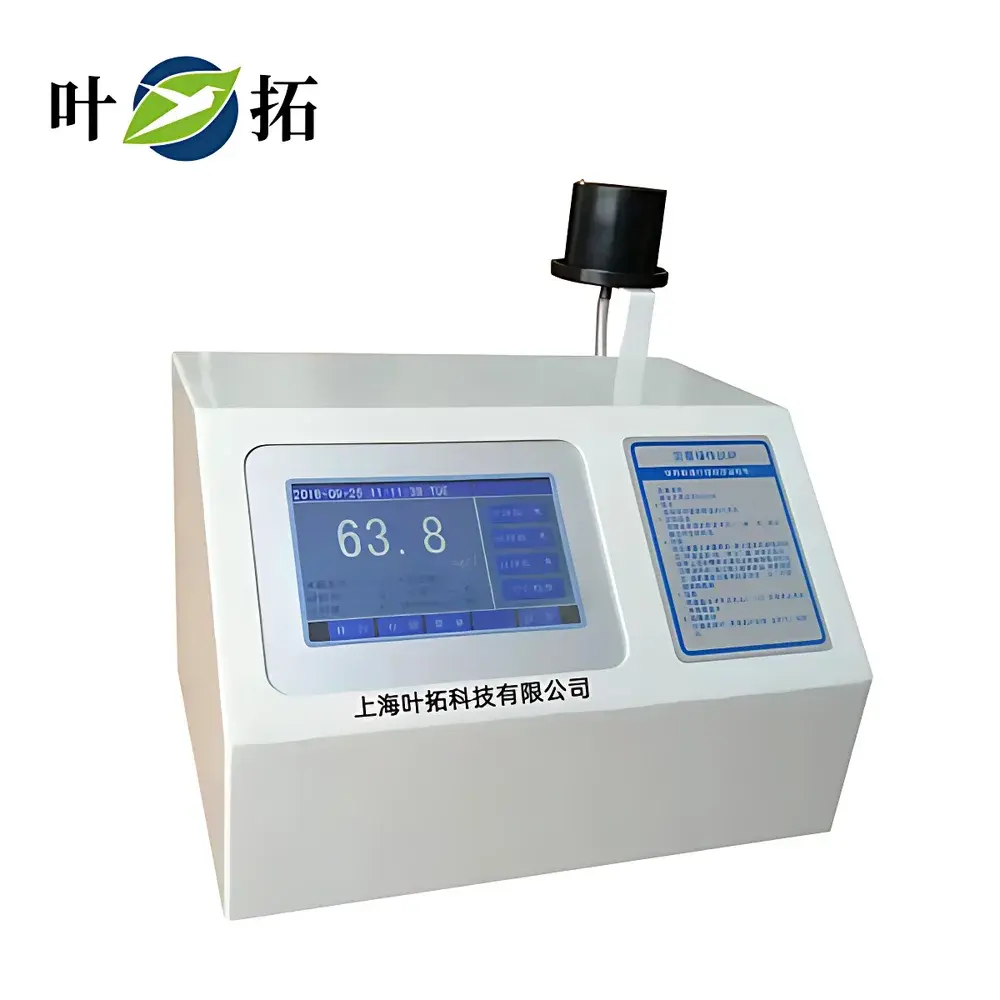
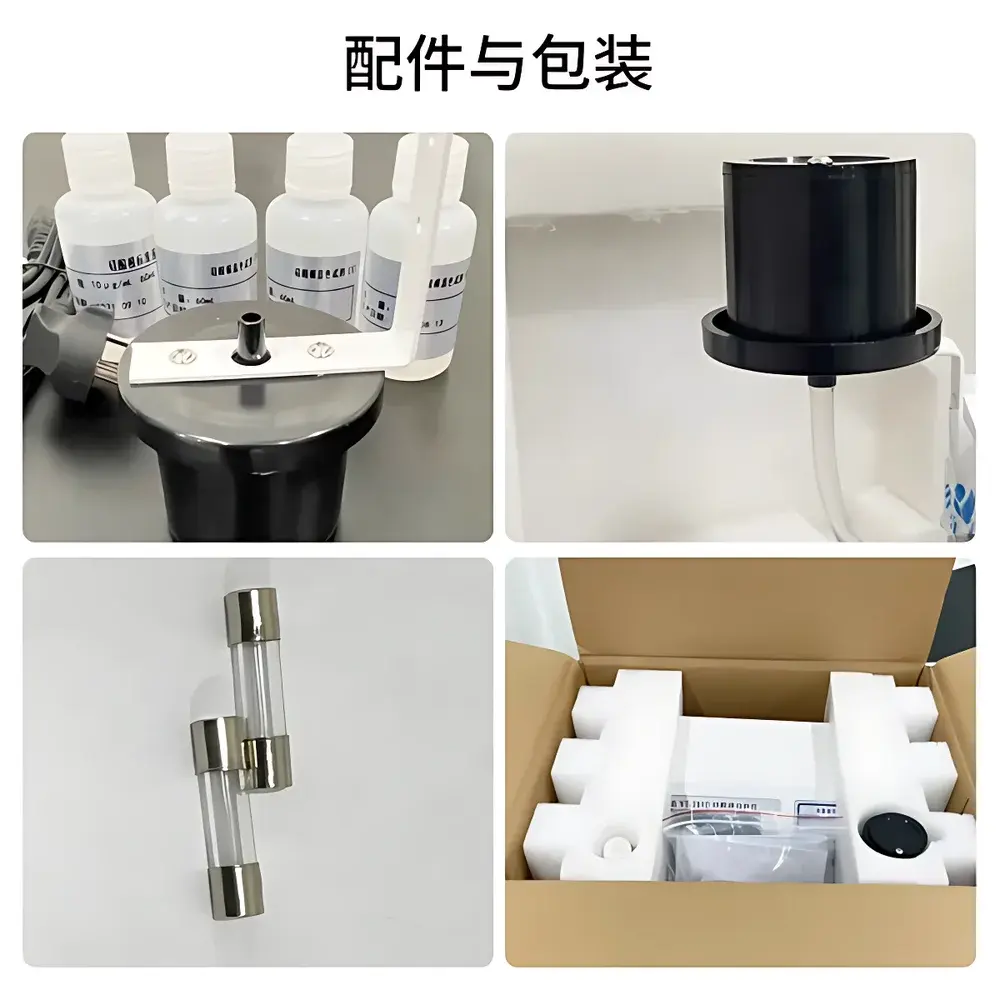
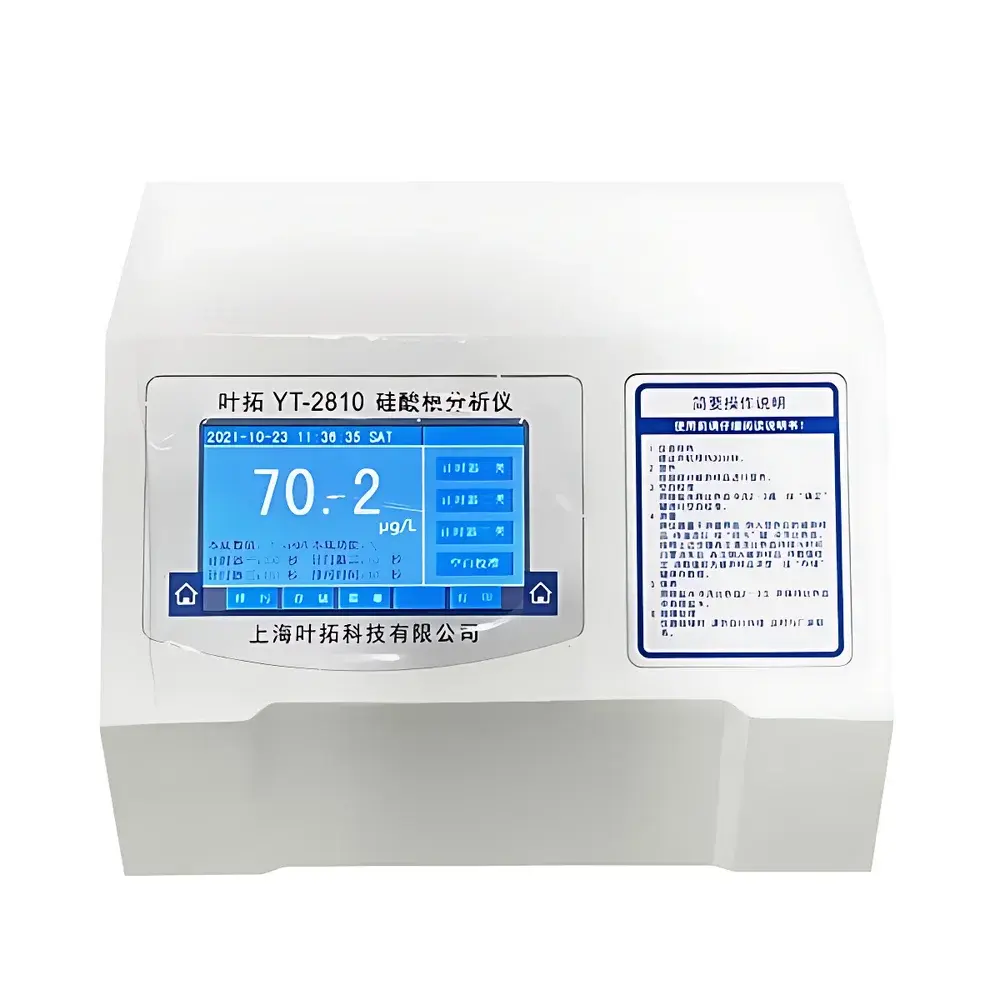
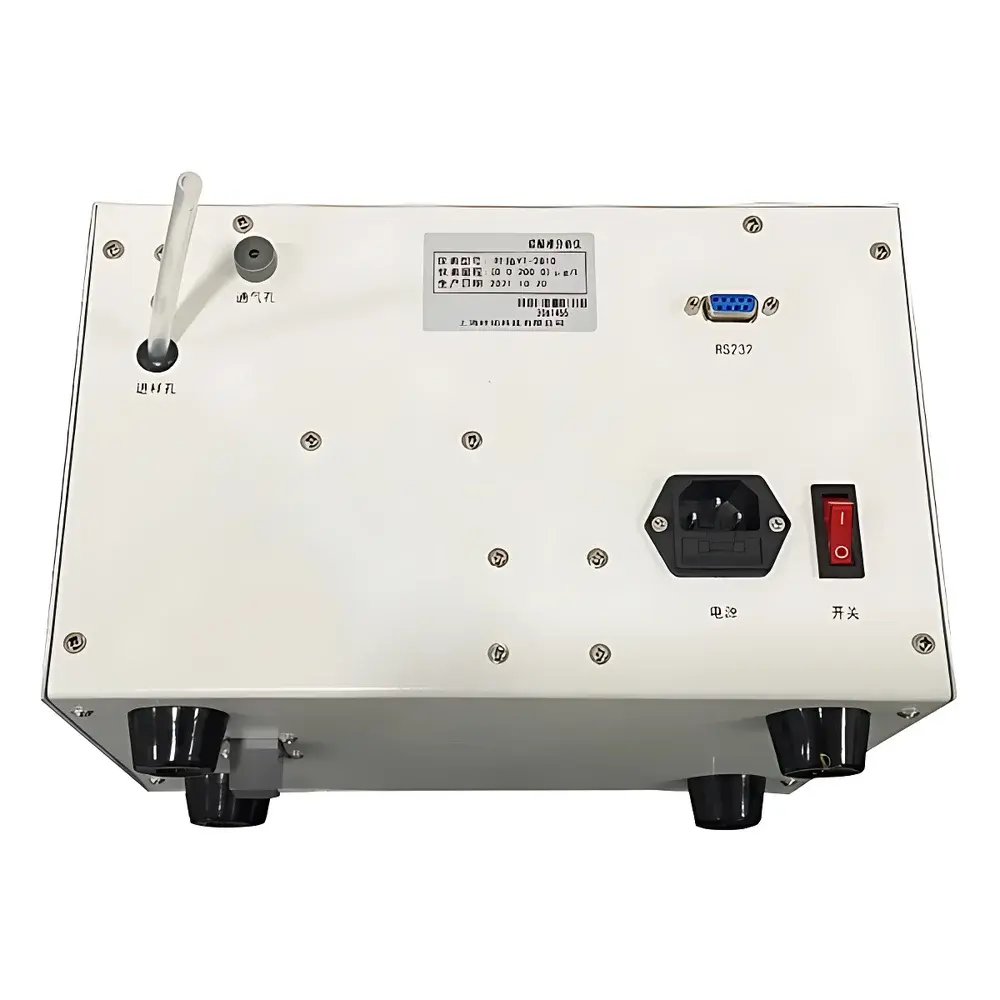
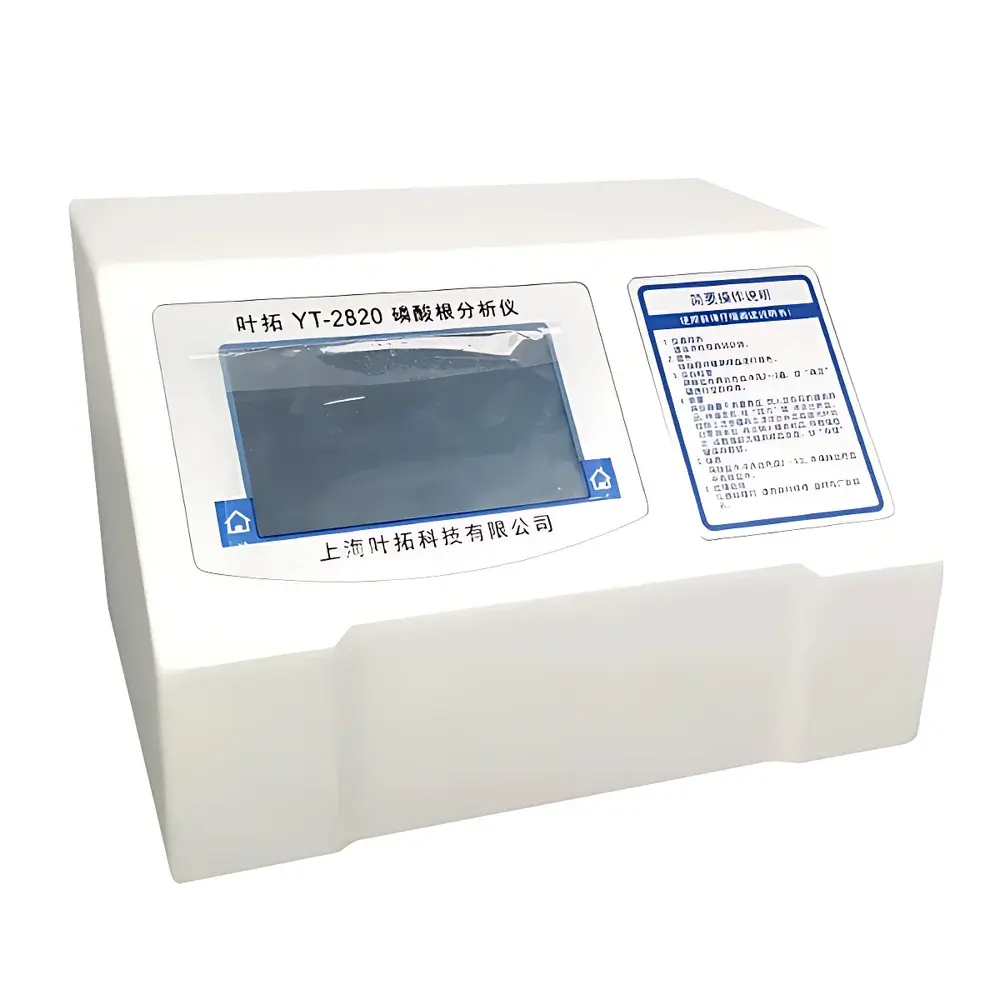
Yetuo YT-2810 Phosphate and Silicate Monitor for Ultra-Pure Water Analysis
| Brand | Yetuo |
|---|---|
| Origin | Shanghai, China |
| Manufacturer Type | Direct Manufacturer |
| Product Category | Domestic |
| Model | YT-2810 |
| Instrument Type | Laboratory Benchtop Analyzer |
| Display | 5.0-inch color TFT touchscreen (Chinese UI) |
| Measurement Range | 0–200 µg/L or 0–2000 µg/L (selectable) |
| Accuracy | ±2% of Full Scale |
| Resolution | 0.1 µg/L |
| Repeatability | ≤1% |
| Drift | ±1% F.S./4 h |
| Light Source | Imported monochromatic cold LED |
| Method | Standard colorimetric analysis per Chinese national standard (1,10-phenanthroline method for phosphate |
| Dimensions | 270 mm × 200 mm × 190 mm |
| Power Supply | AC 220 V ±10%, 50 Hz ±1 Hz |
| Power Consumption | 30 W |
| Operating Temperature | 5–45 °C |
| Operating Humidity | <90% RH (non-condensing) |
| Weight | 4 kg |
Overview
The Yetuo YT-2810 Phosphate and Silicate Monitor is a dedicated benchtop photometric analyzer engineered for trace-level quantification of phosphate (PO43−) and silicate (SiO32− or SiO2-equivalent) ions in high-purity and ultrapure water systems. Designed specifically for power plant boiler feedwater, semiconductor rinse water, pharmaceutical purified water (PW), and laboratory-grade deionized water applications, the instrument employs standardized colorimetric principles—1,10-phenanthroline complexation for phosphate and the molybdenum blue reduction method for silicate—to deliver reliable, interference-resistant measurements at sub-ppb to low-ppb concentrations. Its optical architecture integrates a temperature-stabilized, long-life monochromatic cold LED light source with precision photodiode detection, minimizing thermal drift and spectral noise. The system operates on a fixed-wavelength absorbance principle, eliminating the need for wavelength scanning while ensuring consistent path-length geometry and photometric linearity across the specified dynamic range.
Key Features
- 5.0-inch capacitive touchscreen display with native Chinese graphical user interface (GUI), enabling intuitive navigation, real-time curve visualization, and parameter configuration without external PC dependency
- High-integration PCB design using surface-mount technology (SMT), delivering enhanced electromagnetic compatibility (EMC), thermal stability, and long-term operational reliability in laboratory environments
- Dedicated microcontroller unit (MCU) architecture optimized for low-power operation (<30 W) and deterministic timing control—critical for reproducible reaction incubation and endpoint detection
- Automatic timing function with audible/visual alerts synchronized to colorimetric reaction kinetics, supporting standardized ASTM D859 (for silica) and DL/T 952 (Chinese power industry standard for phosphate) protocols
- One-step blank calibration using only high-purity water (≥18.2 MΩ·cm resistivity), eliminating reagent-based zero adjustment and reducing procedural variability
- Circular buffer memory storing up to 500 measurement records with timestamp, sample ID, and operator tag; auto-overwrite logic prevents data loss during continuous monitoring
- Rugged ABS+PC enclosure with IP20-rated front panel, designed for benchtop deployment in controlled lab settings compliant with IEC 61010-1 safety requirements
Sample Compatibility & Compliance
The YT-2810 accepts aqueous samples with conductivity < 1 µS/cm and total organic carbon (TOC) < 50 ppb—typical of Type I ultrapure water per ISO 3696 and ASTM D1193. It is validated for use with pretreated samples from steam condensate, demineralized makeup water, and recirculated cooling loops where phosphate is dosed as a corrosion inhibitor and silicate serves as an indicator of resin exhaustion or heat exchanger fouling. While not certified to FDA 21 CFR Part 11, its audit-ready data log structure—including immutable timestamps, user login tracking (via optional password lock), and manual entry fields for batch/lot identifiers—supports GLP-aligned documentation practices. The instrument conforms to GB/T 5750.6–2023 (Chinese standard for phosphate in drinking water) and DL/T 502.8–2019 (thermal power plant water chemistry testing methods).
Software & Data Management
Data output is accessible via USB 2.0 port in CSV format for post-acquisition analysis in Excel or LIMS-compatible platforms. No proprietary software installation is required. The embedded firmware supports manual calibration curve input (up to 5-point linear or quadratic fit) and allows slope/intercept override for method-specific validation. All stored results include metadata: measurement date/time, selected range mode (0–200 or 0–2000 µg/L), calibration status flag, and ambient temperature reading. For regulated environments, users may implement external electronic notebooks or integrate exported logs into validated document management systems meeting ISO/IEC 17025 clause 7.11 requirements for result reporting integrity.
Applications
- Real-time phosphate monitoring in drum boiler feedwater to maintain optimal residual inhibitor concentration (typically 2–10 µg/L) and prevent caustic embrittlement
- Early detection of silicate breakthrough in mixed-bed ion exchange polishing units—indicative of anion resin saturation or silica gel formation
- Verification of phosphate removal efficiency in reverse osmosis pretreatment skids serving semiconductor fab ultrapure water (UPW) plants
- QC release testing of purified water used in parenteral drug manufacturing per USP <1231> and EP 2.2.42
- Field-deployable verification of phosphate scavenger performance in closed-loop HVAC systems
FAQ
Does the YT-2810 support simultaneous dual-analyte measurement (phosphate + silicate) in a single run?
No. The instrument performs sequential single-analyte analysis: users must select either phosphate or silicate mode prior to sample introduction. Each mode uses dedicated reagent kits and optical filters calibrated to respective absorption maxima (510 nm for phosphate–phenanthroline complex; 815 nm for silicomolybdate blue).
Is the 1,10-phenanthroline method applicable to seawater or wastewater matrices?
No. The method is validated exclusively for ultrapure and high-purity freshwater matrices. High chloride, iron, or suspended solids interfere with complex formation and are outside the instrument’s scope of use per manufacturer specifications.
Can the calibration curve be imported from external spectrophotometers?
Yes. Users may manually enter slope, intercept, and R² values derived from reference instrument validation studies, enabling cross-platform method equivalence verification.
What maintenance intervals are recommended for long-term accuracy?
Optical path cleaning every 3 months using lint-free swabs and >99.9% isopropanol; annual verification of LED intensity decay against factory baseline using supplied reference standards.
Related Products







