
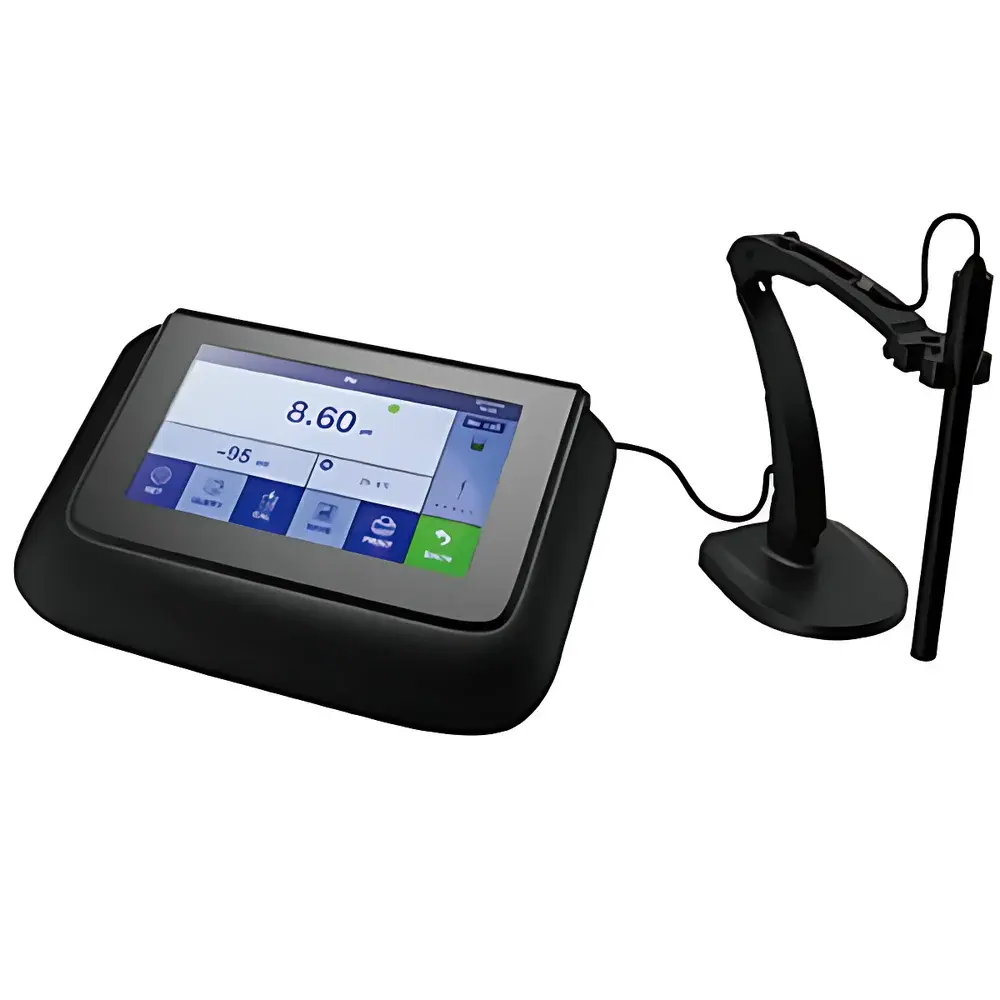
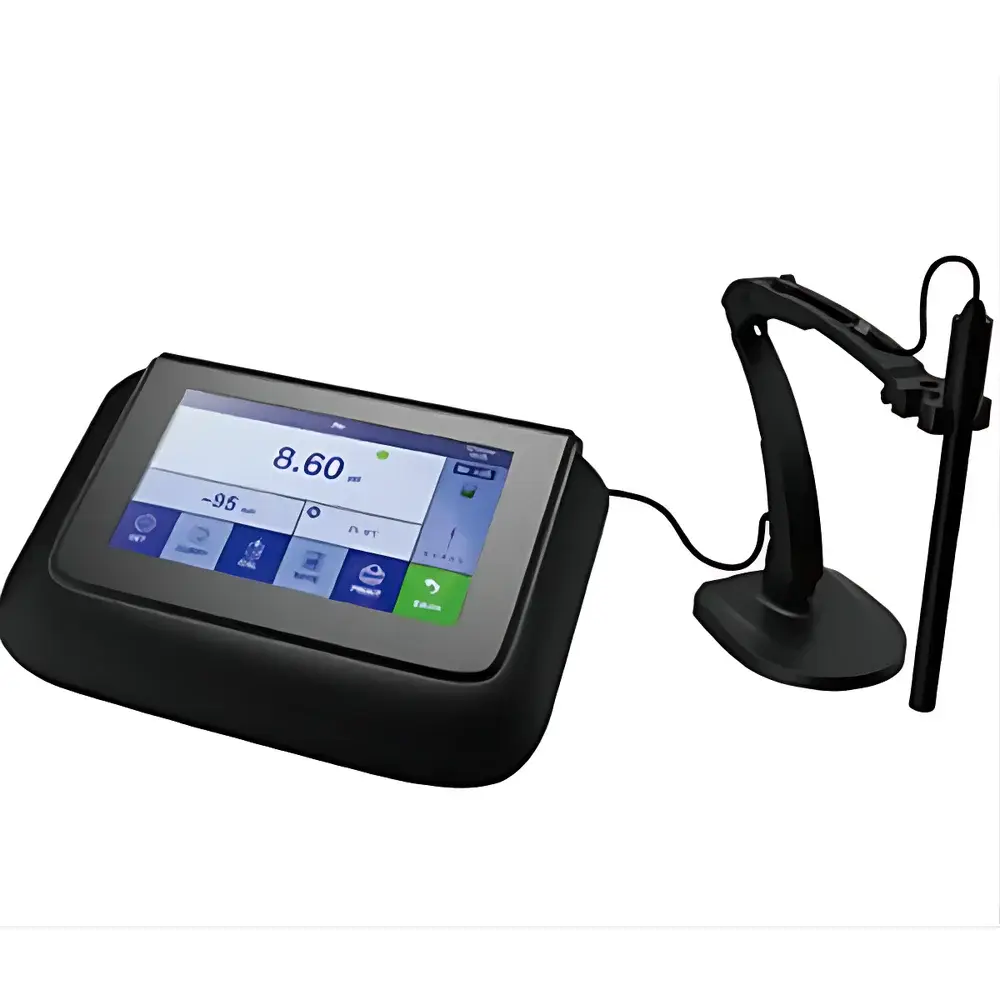
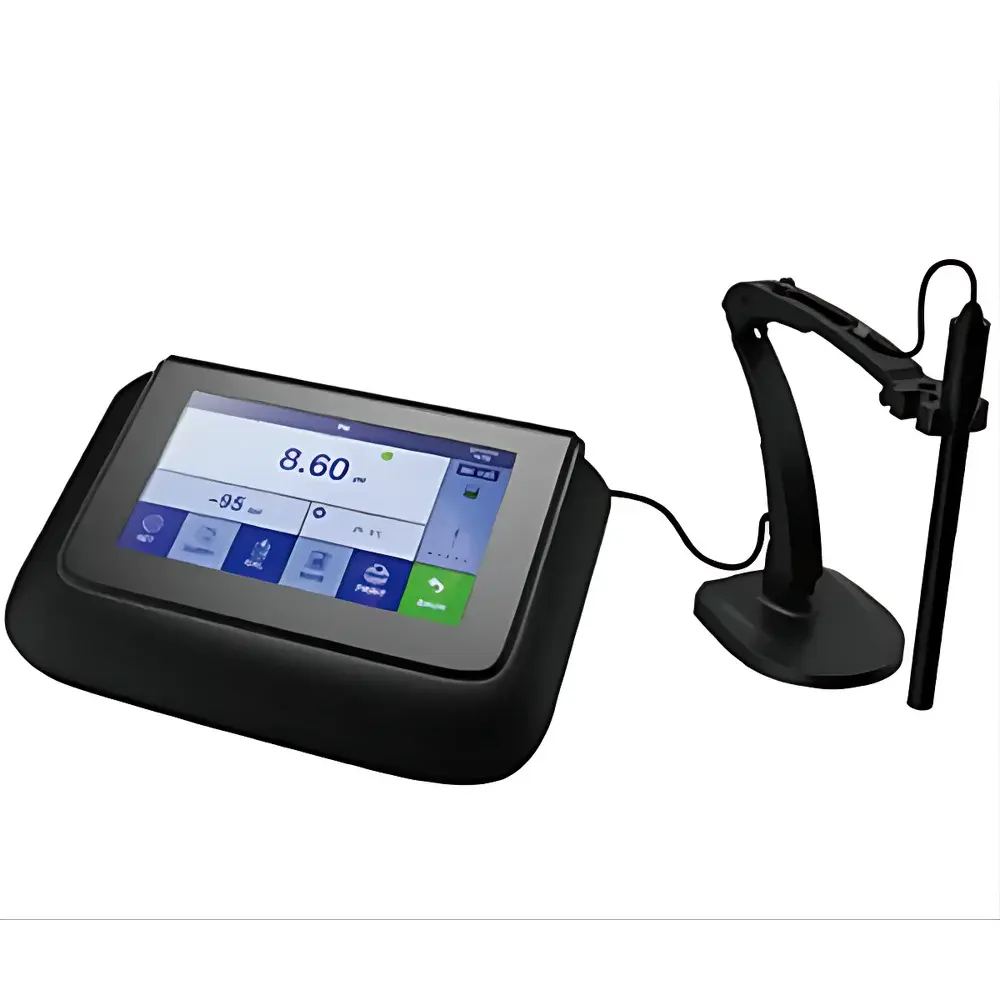
Yoke L-231 Portable Multi-Parameter Water Quality Analyzer
| Brand | Yoke |
|---|---|
| Origin | Shanghai, China |
| Model | L-231 |
| Instrument Type | Portable |
| Measurement Principle | Fluorescence-based Dissolved Oxygen (DO), Potentiometric pH, Conductivity (4-electrode or 2-electrode, selectable) |
| DO Range | 0–99.00 mg/L |
| DO Accuracy | ±0.2 mg/L |
| DO Detection Limit | 0.01 mg/L |
| pH Accuracy | ±0.01 pH |
| pH Range | −2.00 to 20.00 pH |
| pH Resolution | 0.001 / 0.01 / 0.1 pH (user-selectable) |
| mV Resolution | 0.01 / 0.1 / 1 mV (user-selectable) |
| Conductivity Accuracy | ±0.5% FS |
| Conductivity Detection Limit | 0.01 µS/cm |
| Conductivity Calibration | Built-in 8 standard solutions (ISO/ASTM-compliant), 1-point user calibration supported |
| Repeatability | DO ≤ ±0.1 mg/L |
| Temperature Compensation | Automatic (NTC 30kΩ) and manual modes |
| Data Management | Onboard statistical analysis (min/max/avg/stdev), audit-trail-capable storage, GLP/GMP-compliant data logging with timestamp, user ID, and electrode status metadata |
| Enclosure Rating | IP54 |
| Display | 7-inch capacitive color touchscreen with glove-compatible operation, UV-resistant, scratch-resistant surface, adjustable brightness and auto-dimming |
| Power | Rechargeable Li-ion battery (≥16 h continuous use), AC adapter included |
| Compliance | Meets ISO 5814 (DO by optical method), ASTM D888, USP <643>, and relevant Chinese national standards (e.g., HJ 506-2009 for DO |
Overview
The Yoke L-231 Portable Multi-Parameter Water Quality Analyzer is an integrated field-deployable instrument engineered for simultaneous, high-fidelity measurement of dissolved oxygen (DO), pH, oxidation-reduction potential (ORP/mV), conductivity, resistivity, total dissolved solids (TDS), salinity, and temperature in aqueous environmental and process water samples. Its core DO sensing module employs a solid-state optical fluorescence quenching principle—per ISO 5814 and ASTM D888—eliminating membrane fouling, electrolyte depletion, and oxygen consumption inherent to Clark-type electrochemical sensors. The pH and conductivity modules utilize precision potentiometric and conductometric transduction, respectively, with real-time NTC-based temperature compensation and automatic electrode diagnostics. Designed for regulatory-aligned field and laboratory workflows, the L-231 delivers metrologically traceable results under variable ambient conditions, supporting routine monitoring, compliance verification, and method validation per EPA, ISO, and pharmacopeial guidelines.
Key Features
- Fluorescence-based DO sensor with 0.01 mg/L detection limit and ±0.2 mg/L accuracy across 0–99.00 mg/L range—ideal for low-oxygen environments including wastewater effluents, aquaculture systems, and anaerobic digesters.
- Triple-resolution pH/mV measurement: user-selectable resolution (0.001/0.01/0.1 pH; 0.01/0.1/1 mV) enables optimized precision for both ultra-pure water (e.g., USP ) and aggressive industrial effluents.
- Intelligent conductivity system with built-in 8 standardized calibration solutions (including KCl 0.01 mol/L, 0.1 mol/L, and 1.0 mol/L per ISO 7888), supporting 1-point calibration and seamless unit conversion among µS/cm, mS/cm, TDS (ppm), resistivity (MΩ·cm), and salinity (ppt).
- 7-inch industrial-grade capacitive touchscreen with anti-UV, scratch-resistant glass—fully operable with nitrile or latex gloves and compliant with ISO 13485 cleanroom handling requirements.
- Onboard GLP/GMP-compliant data management: time-stamped records include operator ID, electrode serial numbers, calibration history, slope/% deviation, temperature, and diagnostic flags—exportable via USB to CSV or PDF for FDA 21 CFR Part 11–aligned review.
- Rugged IP54-rated housing with shock-absorbing elastomer frame, integrated electrode holder, and auto-dimming display—validated for continuous outdoor deployment in temperatures from 0 to 50 °C and relative humidity up to 90% non-condensing.
Sample Compatibility & Compliance
The L-231 is validated for direct immersion or flow-cell measurement of freshwater, seawater, wastewater, drinking water, boiler feedwater, and pharmaceutical process water (PW/WFI). It meets critical regulatory benchmarks: DO measurements comply with ISO 5814:2012 and ASTM D888-22; pH performance aligns with USP and ISO 17025-accredited calibration protocols; conductivity accuracy satisfies USP and EP 2.2.38 requirements for purified water testing. All calibration and measurement data include full audit trails—supporting inspection readiness for FDA, EMA, and NMPA GMP audits. The instrument’s firmware architecture supports secure user role assignment (admin/operator/auditor) and encrypted local storage—essential for controlled-environment laboratories operating under 21 CFR Part 11 or Annex 11.
Software & Data Management
Embedded firmware v3.2+ provides intuitive graphical navigation, multilingual UI (English/Chinese), and context-sensitive help. Measurement data are stored in a relational onboard database with configurable retention policies (up to 10,000 records). Statistical functions include real-time calculation of mean, standard deviation, min/max, and trend analysis per parameter group. Data export supports USB mass-storage mode (no proprietary drivers required) and generates ISO/IEC 17025–compliant reports with embedded calibration certificates, uncertainty budgets (based on NIST-traceable standards), and electronic signatures. Firmware updates are delivered via signed .bin files with SHA-256 verification—ensuring integrity during remote maintenance.
Applications
- Environmental field surveys: stream/river DO profiling, lake stratification studies, wetland health assessment.
- Wastewater treatment plant (WWTP) operations: aeration basin optimization, denitrification monitoring, effluent compliance reporting per EU Urban Wastewater Directive.
- Pharmaceutical water systems: PW/WFI conductivity verification per USP , TOC correlation support, and bioburden risk assessment via DO stability trends.
- Aquaculture and hydroponics: real-time DO/pH/EC control for recirculating aquaculture systems (RAS) and nutrient film technique (NFT) farms.
- Educational labs: hands-on instruction in electrochemical principles, sensor calibration theory, and environmental data interpretation aligned with AP Environmental Science and university-level limnology curricula.
FAQ
What calibration standards are preloaded for conductivity measurement?
The L-231 includes eight factory-loaded calibration solutions per ISO 7888 and GB/T 11007, covering KCl concentrations from 0.001 mol/L to 1.0 mol/L—enabling accurate calibration across ultrapure water (≤0.1 µS/cm) to brine (≥200 mS/cm).
Does the instrument support external probe connectivity beyond the bundled electrodes?
Yes—it features a standardized BNC + mini-DIN 6-pin interface compatible with third-party pH, ORP, and conductivity probes meeting IEC 60746-1 electrical specifications; DO sensor replacement requires Yoke-certified optical modules to maintain ISO 5814 conformance.
How is data integrity ensured during power interruption?
The device implements non-volatile FRAM memory with automatic save-on-event (calibration, measurement, configuration change) and battery-backed real-time clock—ensuring zero data loss during unexpected shutdowns or battery swaps.
Is the fluorescence DO sensor subject to drift over time?
No—optical sensors exhibit negligible long-term drift (<0.5% signal change/year) when operated within specified temperature and fouling limits; the L-231 performs daily self-diagnostic checks of LED intensity, photodiode response, and reference decay lifetime to flag degradation prior to impact on accuracy.
Can measurement units be customized per regional regulatory requirements?
Yes—users may configure conductivity units (µS/cm, mS/cm, % NaCl), salinity (ppt, PSU), and temperature (°C/°F/K) independently per test protocol, with unit labels automatically appended to exported reports to meet jurisdiction-specific documentation mandates.







