
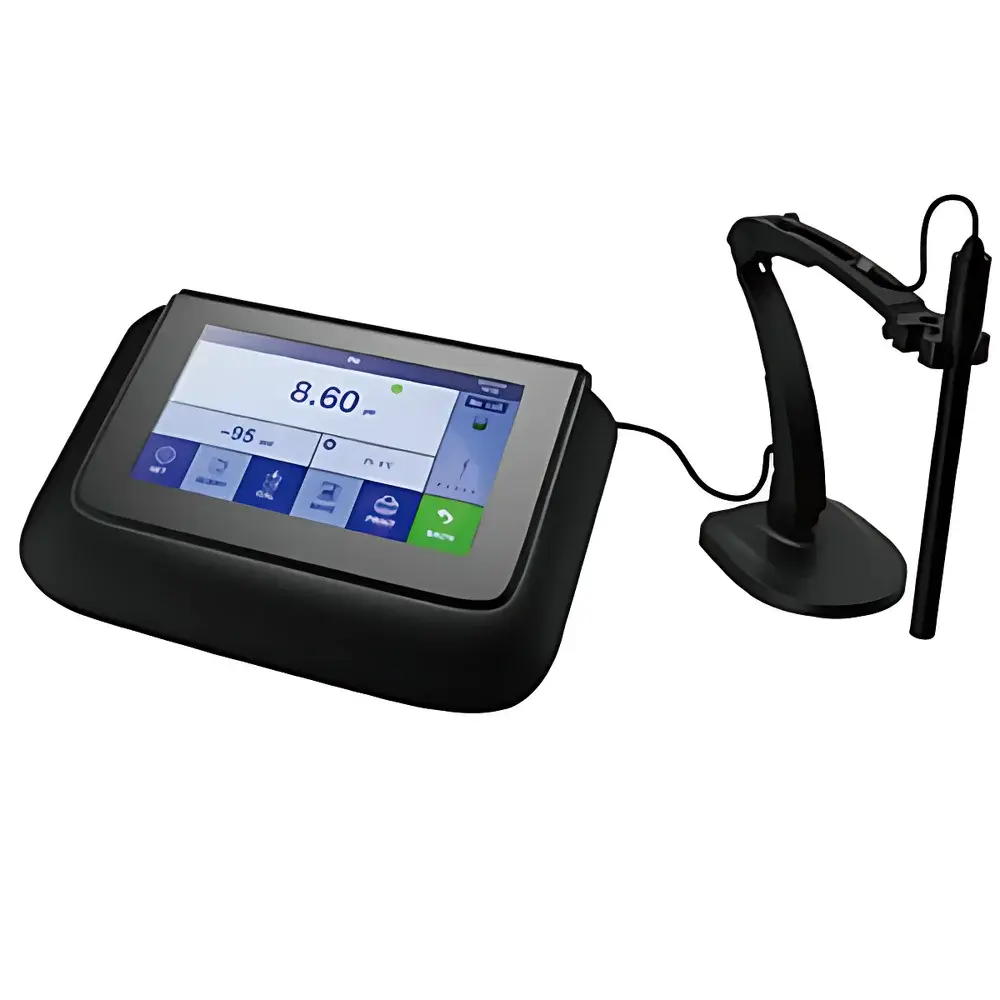
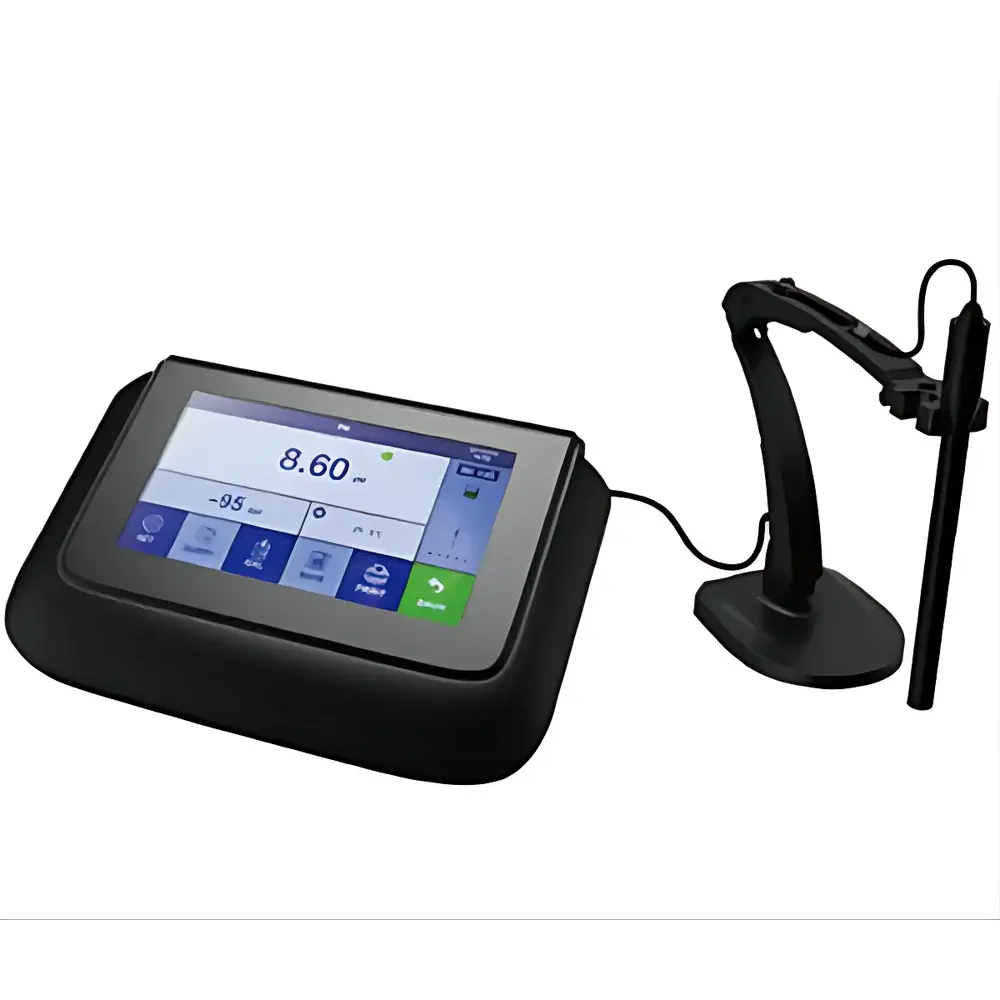
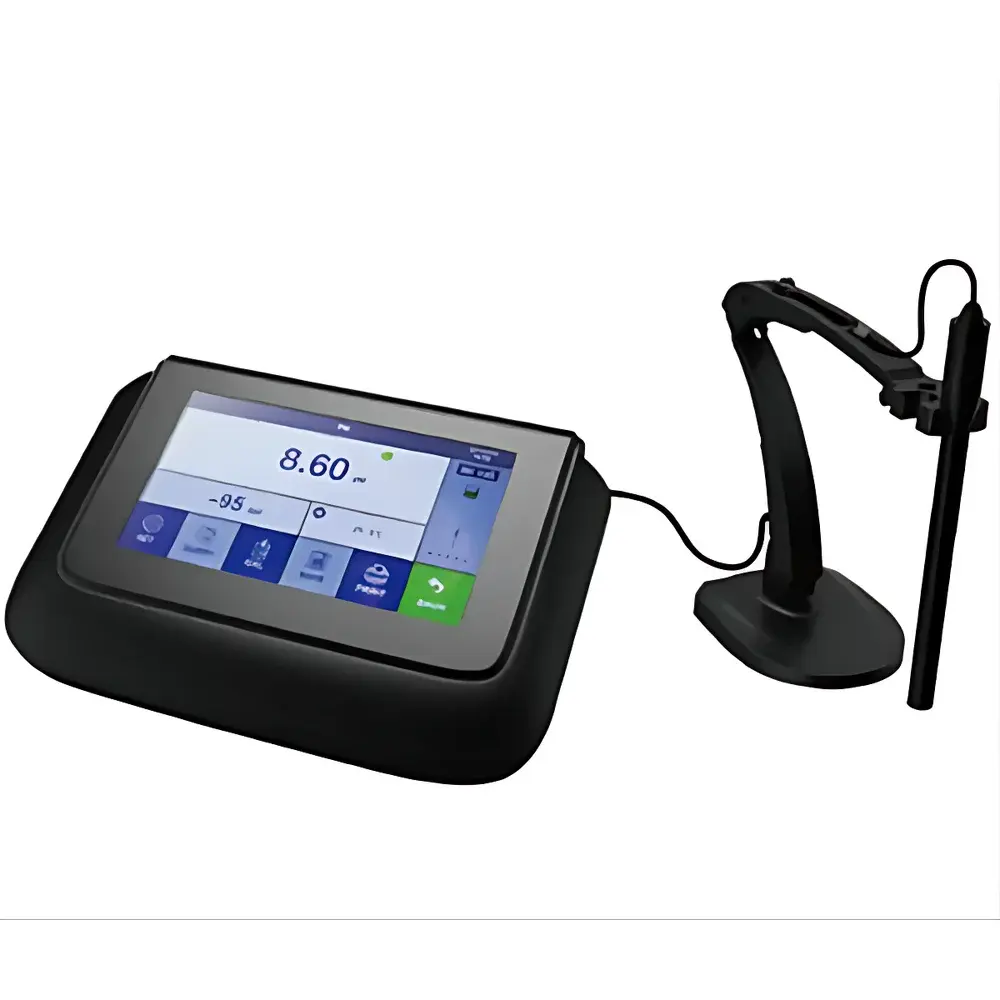
Yoke L-241 Portable Multi-Parameter Water Quality Analyzer
| Brand | Yoke |
|---|---|
| Origin | Shanghai, China |
| Model | L-241 |
| Instrument Type | Portable |
| Measurement Principles | Potentiometric (pH/mV), Electrochemical Polarographic (Dissolved Oxygen), Conductometric (Conductivity) |
| pH Range | −2.00 to 20.00 pH |
| pH Accuracy | ±0.01 pH |
| pH Repeatability | ≤±0.01 pH |
| Dissolved Oxygen Range | 0.00–99.00 mg/L |
| Dissolved Oxygen Accuracy | ±0.2 mg/L |
| Dissolved Oxygen Detection Limit | 0.01 mg/L |
| Conductivity Range | 0.00 µS/cm–200.0 mS/cm |
| Conductivity Accuracy | ±0.5% FS |
| Conductivity Detection Limit | 0.01 µS/cm |
| Temperature Range | −5.0 to 55.0 °C |
| Temperature Accuracy | ±0.2 °C |
| IP Rating | IP54 |
| Display | 7-inch color TFT capacitive touchscreen |
| Data Management | Onboard statistical analysis, timestamped storage, export via USB, GLP-compliant audit trail support |
| Calibration | Auto-buffer recognition (15 built-in buffers across 3 groups), 1–3-point user-defined pH calibration with slope & status display, automatic DO salinity & atmospheric pressure compensation, ATC/MTC |
Overview
The Yoke L-241 Portable Multi-Parameter Water Quality Analyzer is an integrated field-deployable instrument engineered for simultaneous, real-time measurement of critical water quality parameters—pH, dissolved oxygen (DO), electrical conductivity (EC), and temperature—in freshwater, wastewater, aquaculture systems, environmental monitoring sites, and laboratory-prepared standards. It employs three distinct electroanalytical methodologies: potentiometric sensing for pH and redox potential (mV), polarographic amperometry for dissolved oxygen quantification, and four-electrode conductometric measurement for high-accuracy conductivity across a wide dynamic range (0.01 µS/cm to 200 mS/cm). Designed for operational robustness in variable ambient conditions, the L-241 conforms to IP54 ingress protection standards—ensuring resistance to dust ingress and splashing water during outdoor sampling or mobile lab use. Its embedded microprocessor architecture supports automatic temperature compensation (ATC) for all measured parameters, as well as intelligent, algorithm-driven salinity and barometric pressure compensation specifically optimized for DO calculations per ISO 5814 and ASTM D888 standards.
Key Features
- 7-inch full-color capacitive touchscreen with glove-compatible responsiveness, UV-resistant anti-scratch surface, and adjustable brightness—enabling legible operation under direct sunlight or low-light field conditions.
- Modular sensor interface supporting interchangeable, pre-calibrated pH, DO, and conductivity electrodes—each with plug-and-play digital identification and auto-recognition of calibration history.
- Three selectable pH resolution modes (0.001 / 0.01 / 0.1 pH) and dual mV resolution settings (0.01 / 0.1 mV), configurable per application requirement without hardware modification.
- Comprehensive calibration suite: 15 factory-loaded buffer standards across three customizable groups; support for 1–3 point user-defined pH calibration with real-time electrode slope calculation (%), offset diagnostics, and health status flagging.
- Integrated DO sensor provides concurrent measurement of DO concentration (mg/L), % saturation, and temperature—leveraging built-in thermistor and pressure-compensated Clark-type cell technology compliant with ISO 5814:2012.
- On-device data management includes timestamped storage of ≥5,000 measurement records, statistical functions (mean, SD, min/max), selective deletion, USB mass-storage export (CSV format), and GLP-compliant audit trail logging—including operator ID, calibration events, and firmware version stamps.
Sample Compatibility & Compliance
The L-241 is validated for use with liquid aqueous samples across diverse matrices: natural surface waters (rivers, lakes, estuaries), treated effluents, drinking water distribution systems, hydroponic nutrient solutions, and bioreactor broths. It excludes non-aqueous, highly viscous, or suspended-solid-laden samples (>50 mg/L TSS) without prior filtration. Regulatory alignment includes conformance with ISO 7888 (conductivity), ISO 5814 (dissolved oxygen), and ISO 3696 (laboratory water specifications) for methodological rigor. While not FDA 21 CFR Part 11 certified out-of-the-box, its audit-trail-capable firmware architecture supports validation protocols required under GMP/GLP environments when deployed with documented SOPs and electronic signature workflows.
Software & Data Management
Data acquisition, review, and export are fully managed onboard—no proprietary PC software required. Measurements are stored with UTC-synchronized timestamps, sensor IDs, calibration metadata, and environmental context (e.g., compensated pressure value used in DO calculation). USB-C interface enables direct file transfer to external drives or networked workstations. CSV exports contain column headers compatible with LIMS integration (e.g., “Timestamp, pH, mV, DO_mg_L, DO_Saturation_Pct, EC_mS_cm, Temp_C, Pressure_kPa, Salinity_ppt”). Firmware updates are performed via signed binary files loaded from USB media, preserving configuration integrity and enabling traceable version control per ISO/IEC 17025 clause 5.9.
Applications
- Environmental field surveys: Rapid assessment of eutrophication indicators (DO depletion, pH shifts, conductivity anomalies) in watershed monitoring programs.
- Wastewater treatment plant (WWTP) process control: Spot-checking aeration basin DO levels, influent/effluent pH stability, and conductivity-based salinity tracking in membrane bioreactors (MBRs).
- Aquaculture and hatchery management: Daily verification of dissolved oxygen thresholds critical for fish respiration, coupled with pH buffering capacity evaluation in recirculating aquaculture systems (RAS).
- Educational laboratories: Teaching core principles of electrochemical sensing, calibration theory, temperature compensation models, and water quality parameter interdependence.
- Drinking water safety verification: Field confirmation of disinfection byproduct precursors (e.g., alkalinity-linked pH stability) and post-treatment conductivity consistency per WHO Guidelines for Drinking-water Quality.
FAQ
Does the L-241 support automatic calibration verification (ACV) or electrode health diagnostics?
Yes—the instrument continuously monitors electrode impedance, response time, and asymmetry potential during calibration and measurement cycles. A visual health indicator (green/yellow/red) appears alongside slope percentage for pH electrodes; DO sensors display membrane integrity warnings based on zero-current baseline drift.
Can the device store calibration data for multiple electrodes independently?
Yes—each electrode is assigned a unique ID upon first connection. Calibration records, including date, buffer IDs, slope, offset, and temperature, are stored per sensor ID and recalled automatically upon reconnection.
Is the conductivity measurement two- or four-electrode?
The L-241 uses a four-electrode (tetrapolar) conductivity cell to eliminate polarization errors and contact resistance effects—essential for accurate low-conductivity (10 mS/cm) measurements.
What is the maximum allowable sample temperature for continuous immersion of the DO probe?
The polarographic DO sensor is rated for continuous operation at temperatures up to 50 °C. For extended exposure above 45 °C, periodic recalibration is recommended due to accelerated electrolyte diffusion rates.
Does the instrument meet any formal regulatory certification for pharmaceutical water testing?
While the L-241 meets technical requirements outlined in USP for conductivity and for pH, formal compliance with pharmacopeial monographs requires site-specific IQ/OQ/PQ validation using documented procedures, reference standards, and qualified personnel—beyond the scope of factory certification.







