
Yoke i-301 Portable Conductivity Meter
| Brand | Yoke |
|---|---|
| Origin | Shanghai, China |
| Model | i-301 |
| Portability | Portable |
| Intended Use | Laboratory |
| Conductivity Range | 0.000 µS/cm to 200 mS/cm |
| TDS Range | 0–100 g/L |
| Resistivity Range | 0–10 MΩ·cm |
| Salinity Range | 0–80 ppt |
| Temperature Range | −5 to 55 °C |
| Accuracy | ±0.5% FS (conductivity), ±0.1 °C (temperature) |
| Minimum Resolution | 0.01 µS/cm (conductivity), 0.1 °C (temperature) |
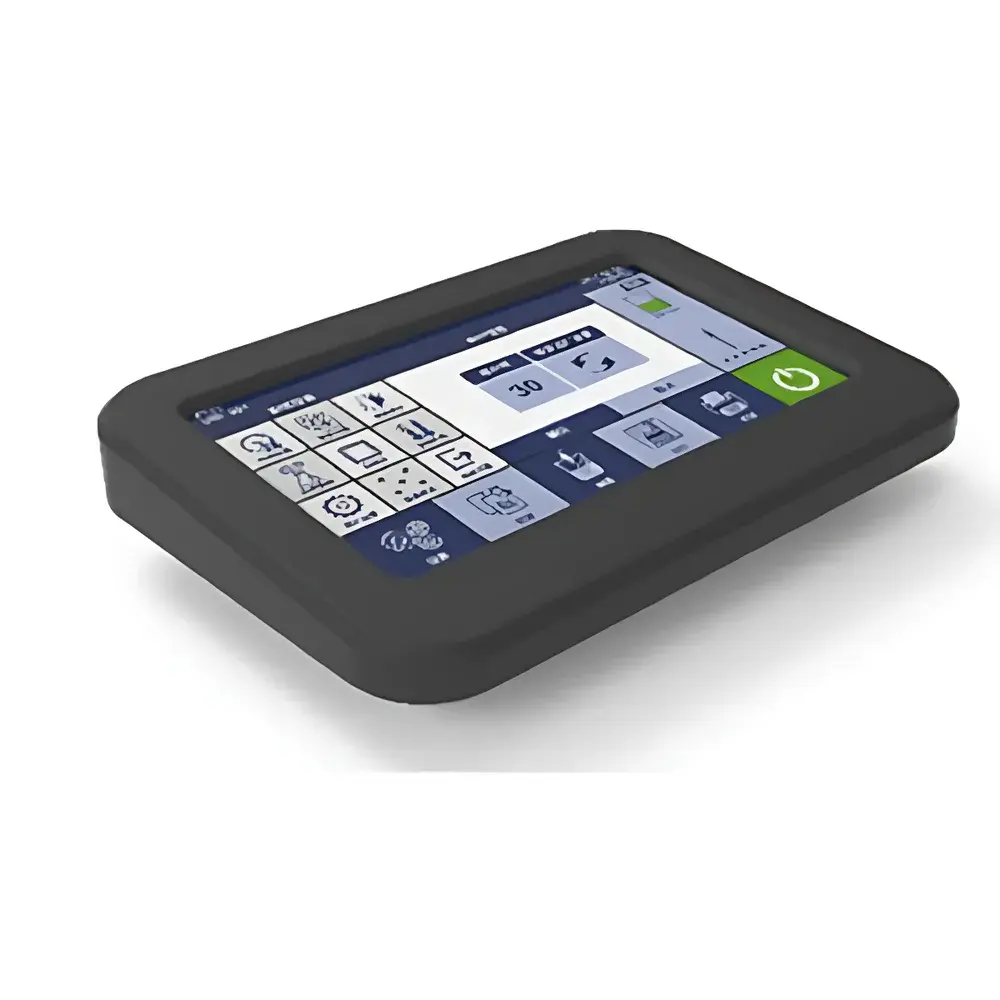
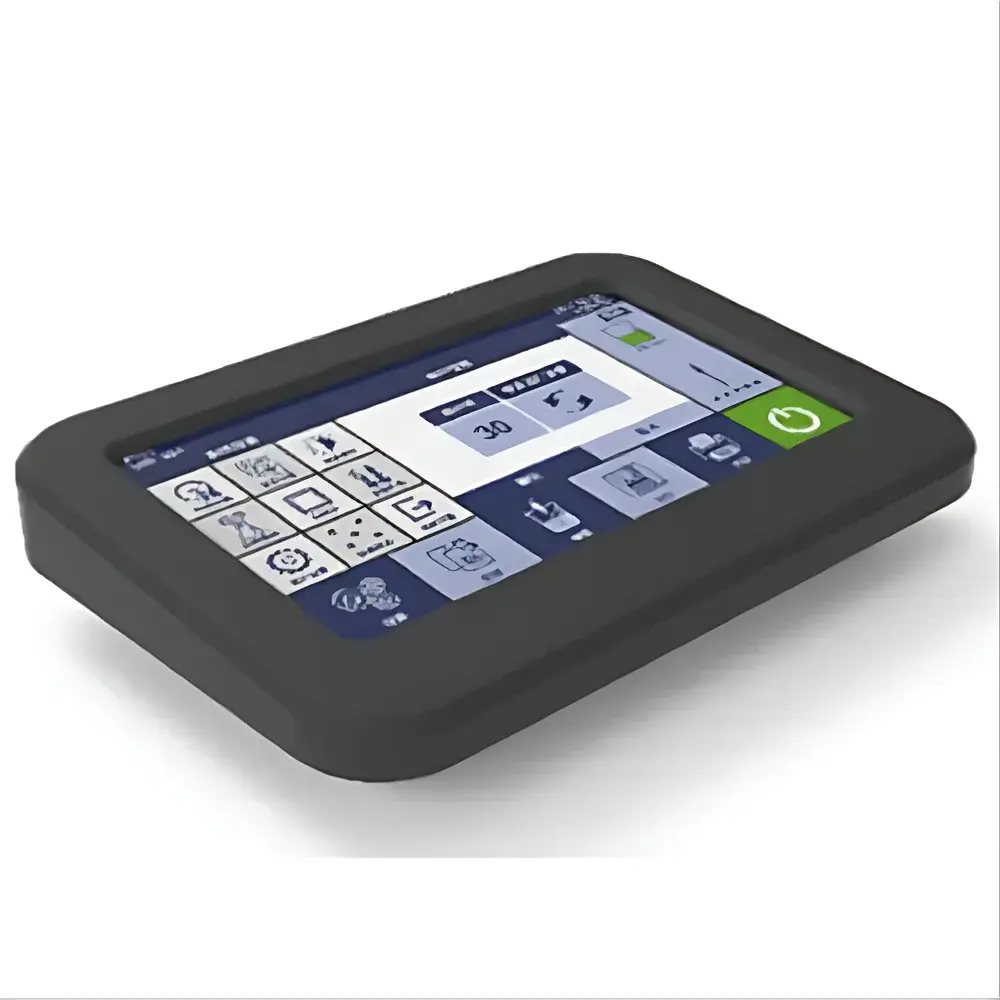
| Display | 7-inch color TFT capacitive touchscreen |
| Calibration | Auto-identification of standard solutions |
| cell constant options | 0.01, 0.1, and 1.0 cm⁻¹ |
| Compliance | IP54 ingress protection |
Overview
The Yoke i-301 Portable Conductivity Meter is an engineered solution for precise, field-ready and laboratory-based electrochemical measurement of aqueous ionic strength. Operating on the principle of two-electrode or four-electrode AC conductance (depending on selected sensor configuration), the instrument measures the electrical conductivity of liquid samples by applying a low-frequency alternating current across a pair of electrodes immersed in the solution. The resulting current is inversely proportional to the solution’s resistivity and directly related to its ionic concentration. Built around a robust, microprocessor-controlled architecture, the i-301 delivers high reproducibility across diverse sample matrices—including ultrapure water, process streams, environmental samples, and pharmaceutical buffers—while maintaining compliance with fundamental metrological requirements for routine QC and GLP-aligned workflows.
Key Features
- 7-inch full-color capacitive touchscreen display with glove-compatible operation, UV-resistant surface coating, and anti-scratch glass—designed for durability in controlled laboratory environments.
- Intuitive graphical user interface supporting dual-language operation (English/Chinese), adjustable screen brightness, configurable time/date stamping, and selectable temperature units (°C/°F).
- Integrated automatic temperature compensation (ATC) using either built-in NTC thermistor or external Pt100 probe; manual temperature offset adjustment also supported for non-standard calibration conditions.
- Smart electrode diagnostics: real-time status feedback including contamination detection, aging indicators, and conductivity cell constant validation.
- Eight pre-programmed conductivity standard solutions (including ISO 7888, ASTM D1125, and GB/T 6682 references) enable rapid, traceable calibration without manual entry of reference values.
- Multi-parameter conversion engine: seamless switching between conductivity (µS/cm, mS/cm), TDS (g/L, ppm), salinity (ppt), and resistivity (MΩ·cm) using user-selectable conversion factors (e.g., NaCl, KCl, or linear 0.65–0.75 TDS coefficients).
Sample Compatibility & Compliance
The i-301 accommodates a broad range of aqueous samples—from deionized water (0.055 µS/cm at 25 °C) to concentrated brines (up to 200 mS/cm). Its modular electrode support allows interchangeable use of 0.01 cm⁻¹ (for ultra-low-conductivity applications such as semiconductor rinse water), 0.1 cm⁻¹ (for purified water and boiler feed), and 1.0 cm⁻¹ (for wastewater, seawater, and industrial effluents) conductivity cells. All measurements adhere to internationally recognized methodologies: conductivity determinations follow ISO 7888:2019 and ASTM D1125–22; TDS calculations conform to USP guidelines where applicable. The device meets IP54 rating for dust and splash resistance and supports audit-trail-enabled data management compliant with FDA 21 CFR Part 11 requirements when used with validated software export protocols.
Software & Data Management
- Onboard data storage capacity for ≥2,000 measurement records with timestamp, temperature, unit, and operator ID fields.
- Statistical functions include mean, standard deviation, min/max, and trend analysis per dataset; data can be reviewed, exported via USB, or printed directly to compatible thermal printers.
- Supports firmware updates over USB; includes factory reset, power-loss recovery, and self-diagnostic routines for sensor integrity and system stability verification.
- Export formats include CSV and plain-text log files—structured for integration into LIMS platforms or Excel-based QA reporting systems.
- Complies with GMP Annex 11 principles through secure user authentication (password-protected access levels), electronic signature readiness, and immutable record generation.
Applications
The Yoke i-301 serves critical roles across multiple regulated and research-driven domains. In pharmaceutical manufacturing, it verifies conductivity specifications of Water for Injection (WFI) and Purified Water (PW) per USP and EP 2.2.38. Environmental laboratories deploy it for surface water quality monitoring (e.g., EPA Method 120.1), while food & beverage facilities apply it to assess cleaning-in-place (CIP) rinse efficacy and brine concentration control. Academic researchers utilize its high-resolution low-range capability (0.001 µS/cm) for colloidal stability studies and electrolyte diffusion modeling. Its portability further enables mobile QC during equipment qualification (IQ/OQ/PQ) and field-based validation of distribution loops.
FAQ
What cell constants are supported, and how do I select the appropriate one?
The i-301 accepts conductivity cells with constants of 0.01 cm⁻¹, 0.1 cm⁻¹, and 1.0 cm⁻¹. Selection depends on expected sample conductivity: 0.01 cm⁻¹ for ultrapure water (100 µS/cm).
Does the meter support GLP-compliant data archiving?
Yes—when configured with password-protected user accounts and enabled audit trail logging, all measurements retain immutable timestamps, operator IDs, calibration history, and environmental metadata required for GLP audits.
Can I perform calibration outside the built-in standard list?
Yes—manual calibration mode permits entry of custom reference values and cell constants, enabling traceability to certified secondary standards or in-house reference materials.
Is temperature compensation mandatory, or can it be disabled?
ATC is enabled by default but may be manually overridden for comparative isothermal studies or method-specific protocols requiring fixed-temperature reporting.
How often should the conductivity cell be cleaned and recalibrated?
Cleaning frequency depends on sample fouling potential; daily rinsing with deionized water is recommended. Recalibration is advised before each analytical session or after exposure to aggressive matrices (e.g., high-Ca²⁺, organic solvents, or suspended solids).
Related Products






