
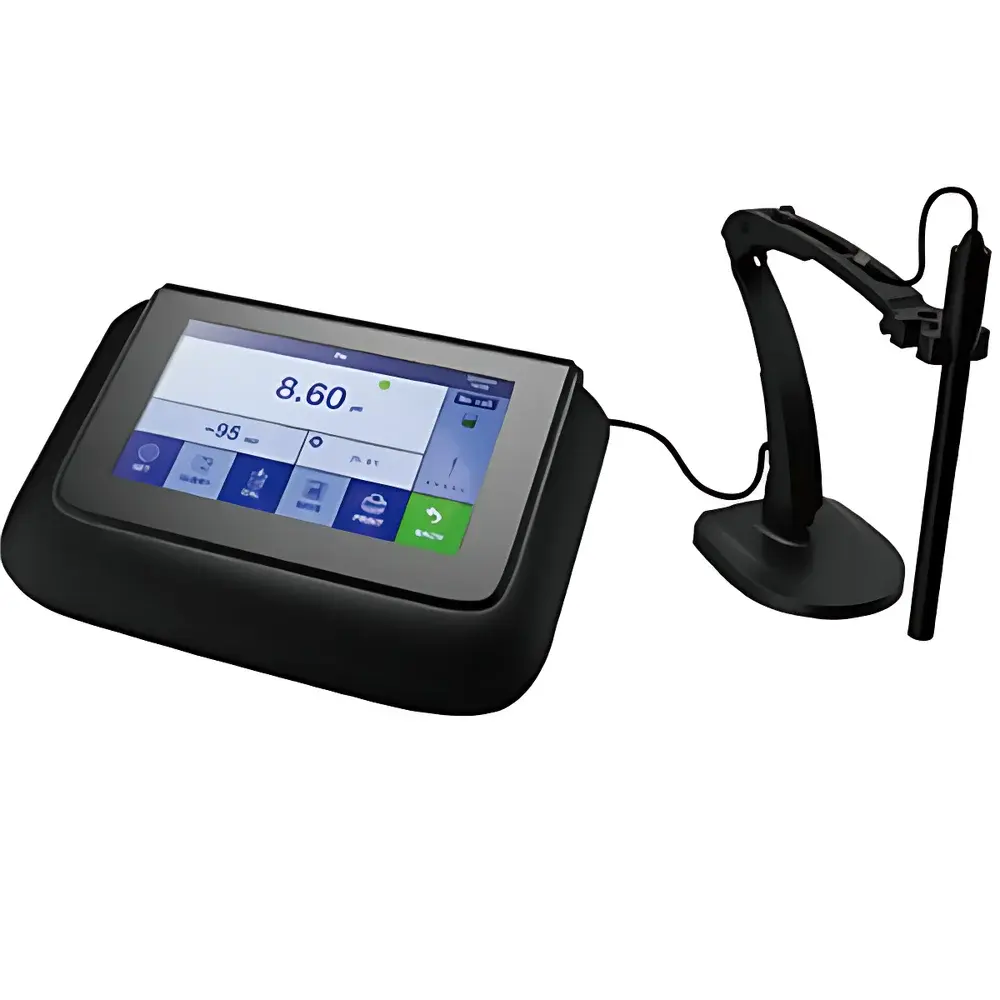
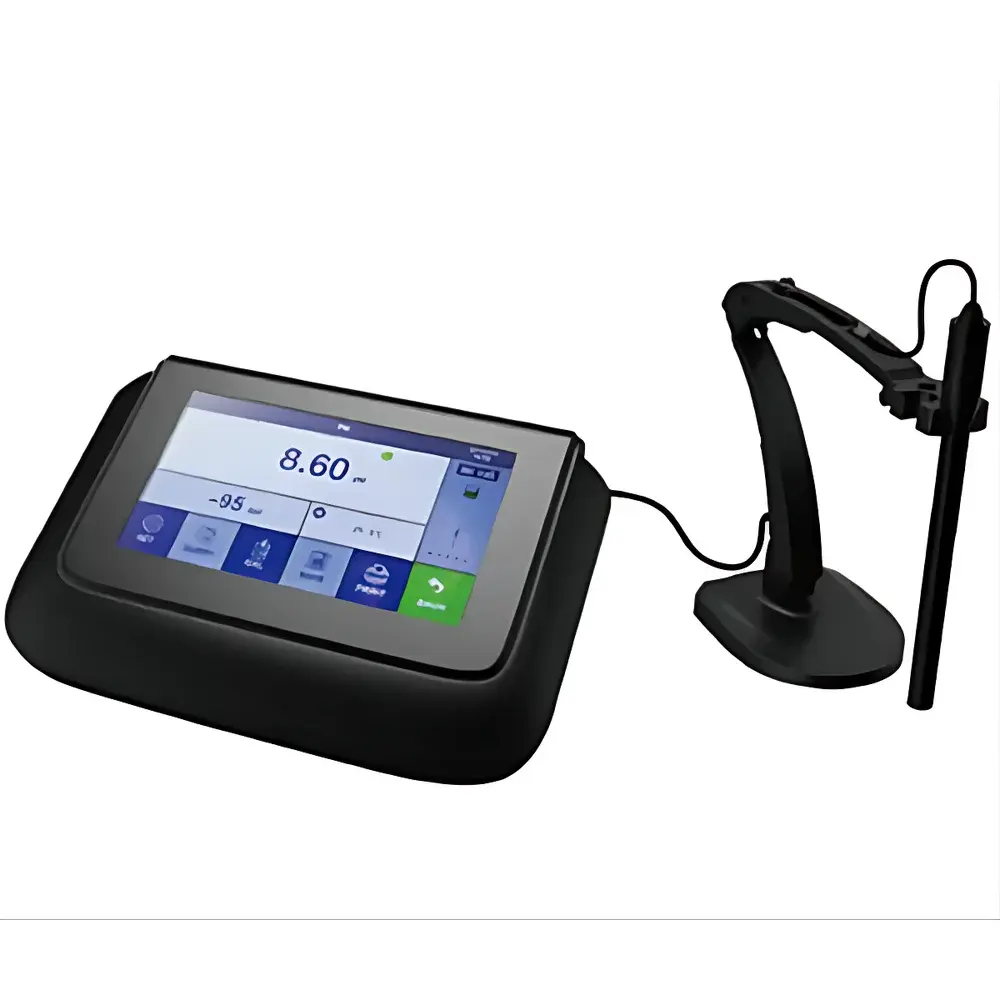
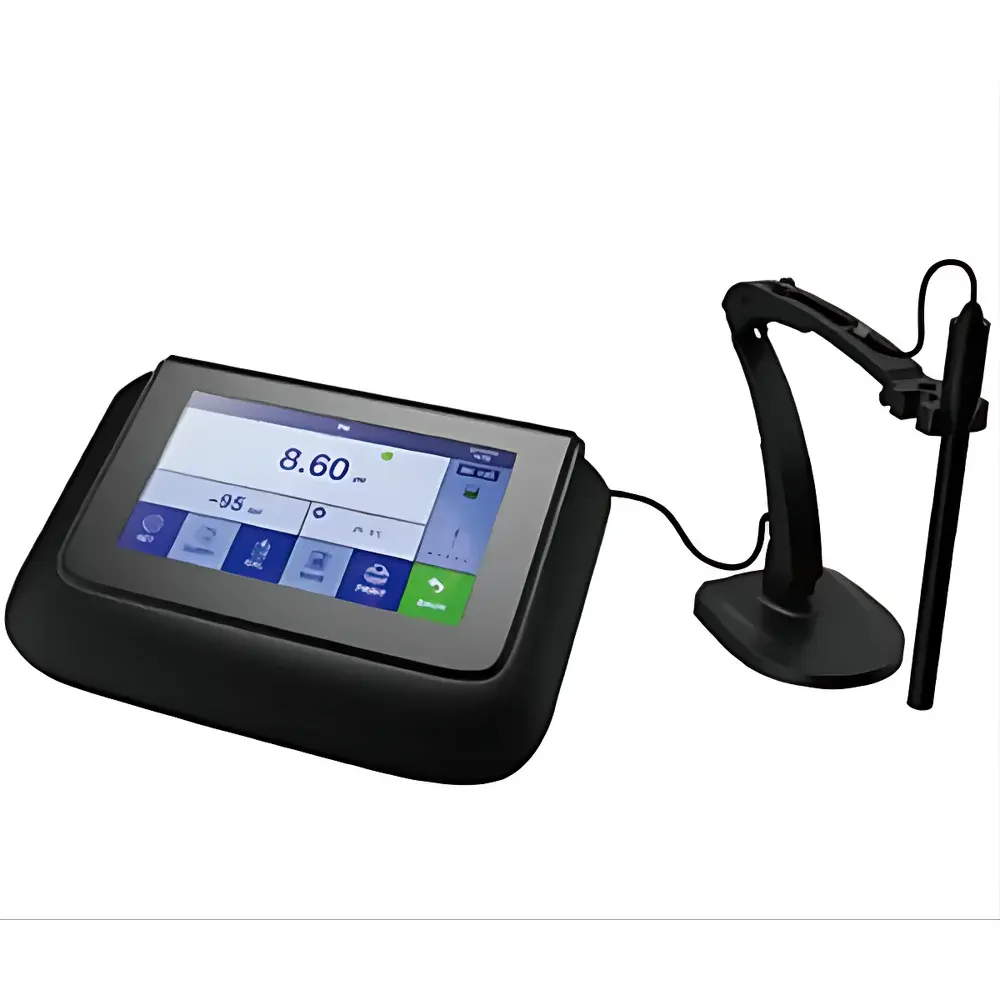
Yoke L-341 Portable Multi-Parameter Water Quality Analyzer
| Brand | Yoke |
|---|---|
| Origin | Shanghai, China |
| Model | L-341 |
| Instrument Type | Portable |
| Measurement Principles | Potentiometric (pH/mV), Galvanic Cell (Dissolved Oxygen), Conductivity Bridge (Conductivity/TDS/Salinity/Resistivity) |
| pH Range | 0.00–14.00 |
| pH Accuracy | ±0.01 |
| pH Repeatability | ≤±0.01 |
| Conductivity Range | 0.000 μS/cm – 2000 mS/cm |
| Conductivity Accuracy | ±0.5% FS |
| Conductivity Repeatability | ≤±0.2% |
| Conductivity Detection Limit | 0.01 μS/cm |
| Dissolved Oxygen Range | 0.00–50.00 mg/L |
| Dissolved Oxygen Accuracy | ±0.2 mg/L |
| Dissolved Oxygen Repeatability | ≤±0.1 mg/L |
| Dissolved Oxygen Detection Limit | 0.01 mg/L |
| Temperature Compensation | Automatic & Manual |
| Display | 7-inch TFT color touchscreen |
| IP Rating | IP54 |
| Compliance | Supports GMP data integrity requirements (audit trail, user access control, data export, firmware update log) |
Overview
The Yoke L-341 Portable Multi-Parameter Water Quality Analyzer is an integrated field-deployable instrument engineered for simultaneous, high-fidelity measurement of critical water quality parameters—including pH, oxidation-reduction potential (mV), dissolved oxygen (DO), conductivity, resistivity, total dissolved solids (TDS), salinity, and temperature. It employs three distinct electrochemical measurement principles: potentiometric sensing for pH and mV, a galvanic cell-based amperometric sensor for dissolved oxygen, and a four-electrode conductivity bridge architecture for wide-range conductance analysis. Designed for routine monitoring in municipal water supply networks, wastewater treatment plants, environmental field surveys, aquaculture facilities, and educational laboratories, the L-341 delivers laboratory-grade precision in a ruggedized portable form factor. Its architecture supports real-time multi-parameter correlation—enabling users to assess interdependent relationships such as DO saturation vs. temperature or conductivity–TDS conversion under varying ionic strength conditions—without requiring external software or manual recalculations.
Key Features
- 7-inch high-resolution TFT color touchscreen with glove-compatible capacitive touch interface, UV-resistant anti-scratch surface, and auto-dimming functionality for extended battery operation.
- Integrated dual-sensor capability: single DO probe simultaneously measures dissolved oxygen concentration (mg/L) and temperature, eliminating thermal lag errors during saturation calculations.
- Multi-standard conductivity calibration support—eight preloaded international and Chinese standard solutions (e.g., KCl 0.01 mol/L, 0.1 mol/L, 1.0 mol/L; NaCl 35 g/kg) with flexible one-point, two-point, or multi-point calibration routines.
- Modular electrode compatibility: accepts conductivity cells with cell constants of 0.01 cm⁻¹, 0.1 cm⁻¹, and 1.0 cm⁻¹—ensuring optimal resolution across ultrapure water (≤1 μS/cm) to brine (≥200 mS/cm) applications.
- Comprehensive data governance: built-in statistical engine computes mean, SD, min/max, and CV% for batch measurements; all records include timestamp, operator ID, electrode serial number, calibration history, and environmental metadata.
- Robust environmental resilience: IP54-rated enclosure protects against dust ingress and water splashes; operating temperature range: 0–50 °C; storage humidity: ≤85% RH non-condensing.
Sample Compatibility & Compliance
The L-341 is validated for use with natural waters (surface, groundwater, seawater), treated effluents, process streams, and laboratory standards per ASTM D1125 (electrical conductivity), ASTM D888 (dissolved oxygen), and ISO 5814 (electrochemical DO determination). Its pH and conductivity modules conform to IUPAC recommended practices for electrode calibration traceability. Data handling functions—including electronic signature support, audit trail logging, user-level permission settings (admin/operator/viewer), and encrypted CSV export—align with FDA 21 CFR Part 11 and EU Annex 11 expectations for regulated environments. While not certified for GLP/GMP production release, it meets documentation and traceability prerequisites for QC screening, environmental compliance reporting (e.g., EPA Method 360.1, ISO 7888), and internal method validation studies.
Software & Data Management
All measurement, calibration, and diagnostic operations are managed through an embedded Linux-based OS with bilingual (English/Chinese) UI and configurable time/date stamping. The system maintains persistent memory with automatic power-loss recovery and factory reset safeguards. Raw and processed data are stored locally on internal flash memory (≥10,000 records) with optional USB mass-storage mode for direct transfer to LIMS or spreadsheet platforms. Firmware updates are performed via signed .bin files loaded from USB drive, with version rollback protection and checksum verification. Diagnostic logs capture electrode impedance trends, membrane integrity alerts (for DO sensor), and calibration drift warnings—facilitating predictive maintenance scheduling.
Applications
- Field-based assessment of eutrophication indicators in lakes and rivers via concurrent DO, pH, and conductivity profiling.
- Verification of disinfection byproduct formation potential through pH–chlorine residual correlation studies.
- Monitoring of reverse osmosis permeate quality using ultra-low conductivity (≤1 μS/cm) and resistivity (≥1 MΩ·cm) modes.
- Salinity-driven DO saturation modeling in estuarine and marine ecosystems.
- Educational demonstration of water chemistry equilibria (e.g., CO₂–HCO₃⁻–CO₃²⁻ buffering, ionic strength effects on activity coefficients).
- Pre-compliance screening for ISO 14001 environmental management systems or local discharge permit requirements.
FAQ
Does the L-341 support automatic temperature compensation for all measured parameters?
Yes—ATC is applied independently to pH, conductivity, and DO channels using integrated NTC thermistors within each probe. Manual temperature override is available for comparative studies or reference temperature corrections.
Can the instrument store calibration data for multiple electrodes?
Yes—up to five unique electrode profiles (including serial numbers, calibration dates, slope/mV offset values, and expiration reminders) can be saved and recalled per parameter type.
Is the DO sensor polarographic or galvanic?
The standard DO probe is a self-polarizing galvanic cell with gold cathode and lead anode, requiring no warm-up time and offering stable zero-current output in deoxygenated media.
What file formats are supported for data export?
CSV only—structured with column headers, UTC timestamps, and SI unit annotations; compatible with Excel, R, Python pandas, and most LIMS ingestion protocols.
How often should the conductivity cell be cleaned and recalibrated?
Cleaning frequency depends on sample matrix—daily for wastewater, weekly for drinking water; calibration is recommended before each measurement session or after exposure to fouling agents (e.g., oils, biofilms, suspended solids).







