
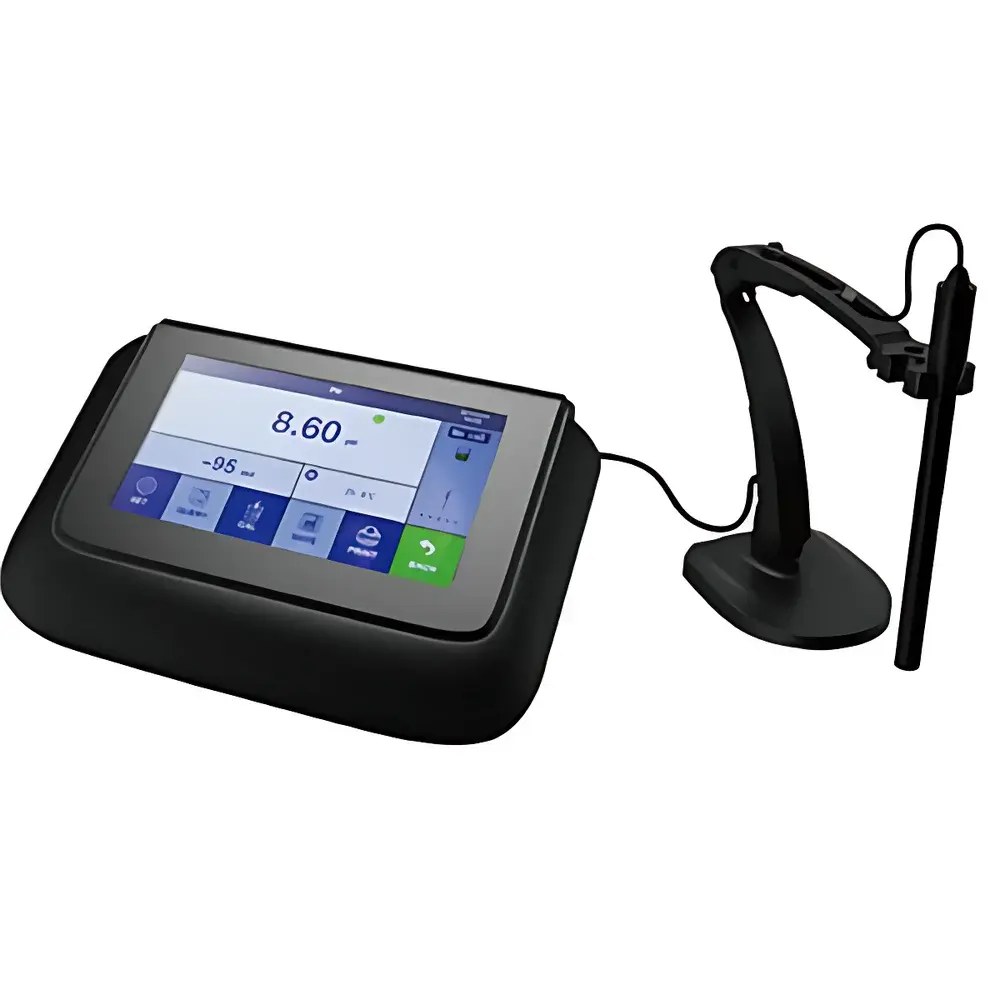
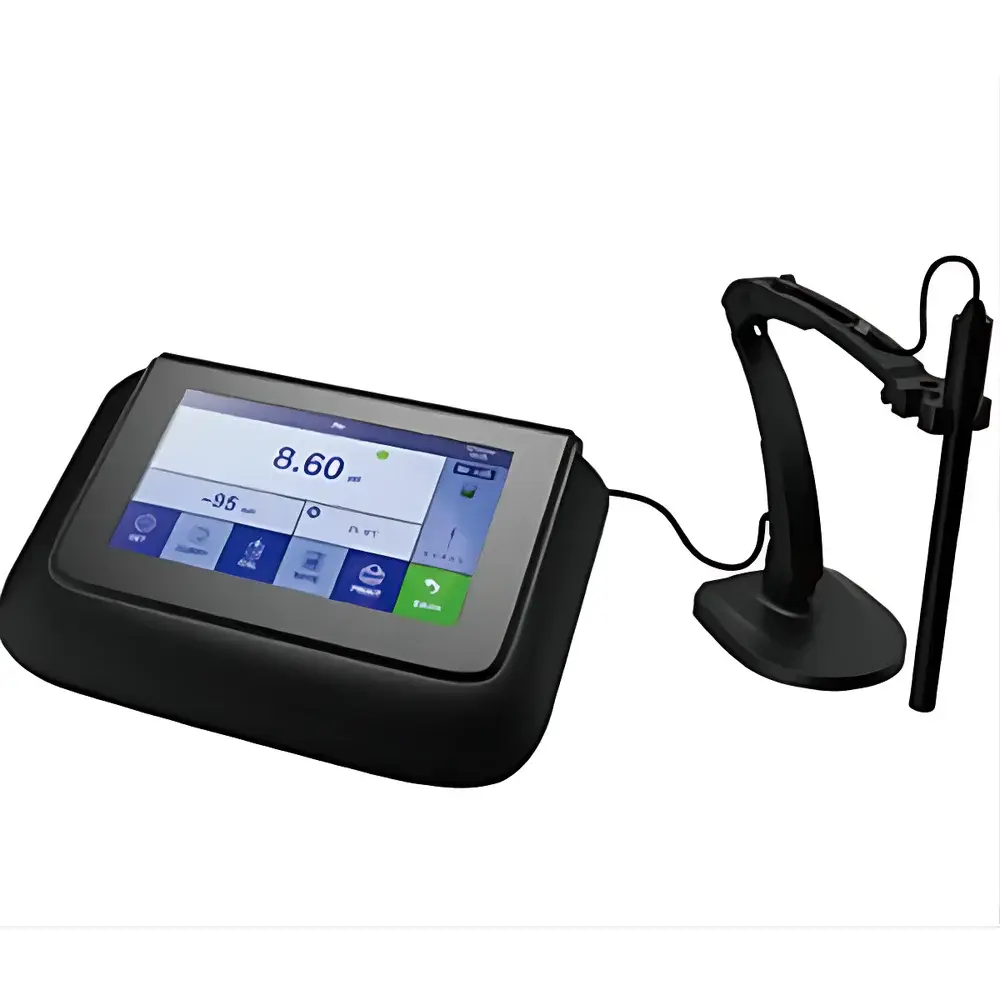
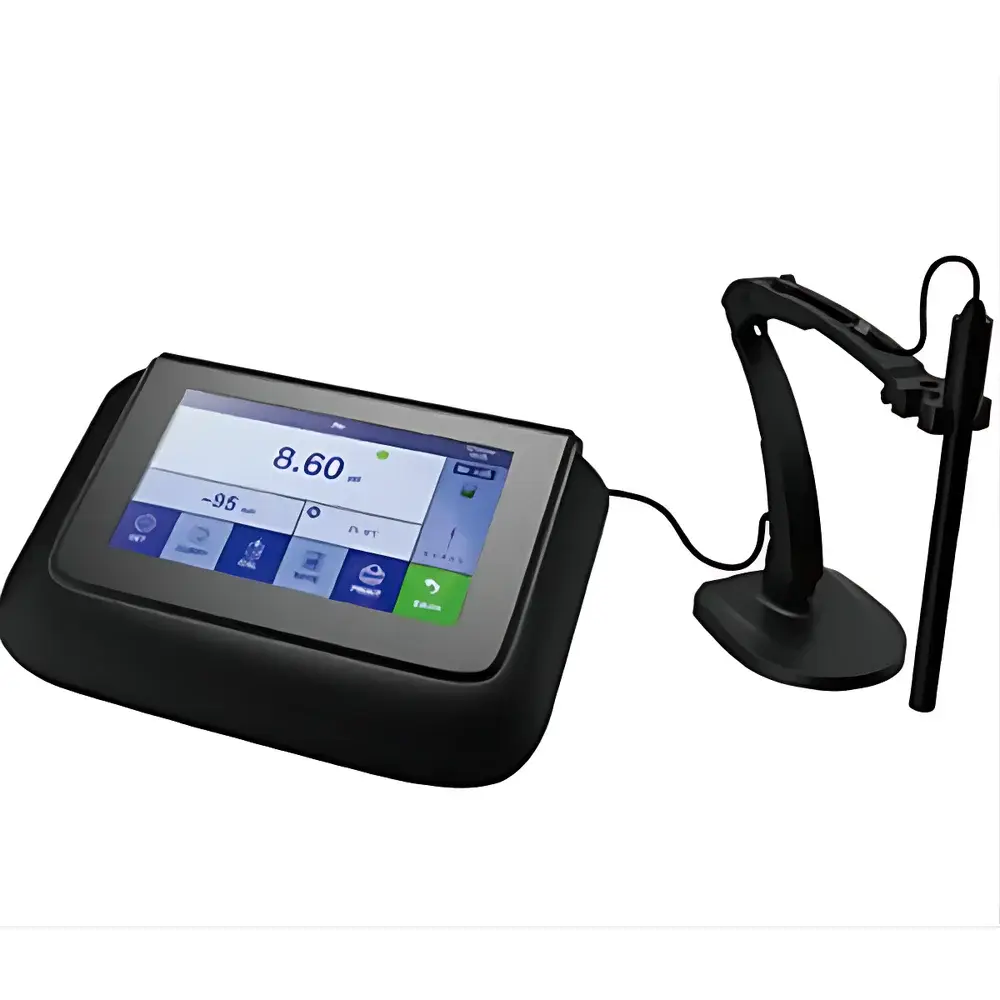
Yoke L-401 Portable Fluorescence-Based Dissolved Oxygen Meter
| Brand | Yoke |
|---|---|
| Origin | Shanghai, China |
| Model | L-401 |
| Instrument Type | Portable |
| Measurement Principle | Fluorescence Quenching |
| Range | 0.00–99.00 mg/L |
| Accuracy | ±0.2 mg/L |
| Repeatability | ≤±0.1 mg/L |
| Detection Limit | 0.01 mg/L |
| Display | 7-inch capacitive touchscreen |
| Resolution | 0.01/0.1 mg/L |
| Temperature Compensation | Automatic and manual modes supported |
| Language Options | English and Chinese UI |
| Units | mg/L and % saturation selectable |
| Operating Temperature | 0–50 °C (standard ambient range for field-portable DO meters) |
Overview
The Yoke L-401 is a portable, fluorescence-based dissolved oxygen (DO) meter engineered for high-reliability field and laboratory water quality assessment. Unlike traditional electrochemical Clark-type sensors—prone to membrane fouling, electrolyte depletion, and oxygen consumption during measurement—the L-401 employs optical fluorescence quenching technology. In this method, a blue LED excites a ruthenium-based luminophore immobilized on the sensor cap; molecular oxygen in the sample quenches the resulting red phosphorescent emission in a quantifiable, non-consumptive manner. This principle delivers inherent stability, eliminates calibration drift associated with membrane aging, and ensures long-term sensor integrity without routine electrolyte replacement or polarizing voltage maintenance. Designed for compliance-driven environments—including municipal wastewater monitoring, aquaculture management, environmental impact assessments, and drinking water distribution system verification—the L-401 meets foundational performance expectations aligned with ASTM D888-22 (Standard Test Methods for Dissolved Oxygen in Water) and ISO 5814:2012 (Water Quality — Determination of Dissolved Oxygen — Electrochemical Probe Method), with fluorescence methodology offering comparable traceability under method validation protocols.
Key Features
- 7-inch high-brightness capacitive touchscreen display with anti-scratch, UV-resistant tempered glass—optimized for gloved operation and rapid visual interpretation of real-time DO concentration (mg/L), saturation (%), and temperature (°C/°F).
- Intelligent electrode health diagnostics: automatic detection of sensor response decay, photodiode signal integrity, and cap contamination status—reducing false readings caused by physical degradation or biofilm accumulation.
- Dual temperature compensation architecture: factory-calibrated automatic compensation across 0–50 °C, supplemented by user-selectable manual offset adjustment for site-specific thermal profiling where reference thermistors are deployed.
- Modular electrode design with integrated stainless-steel support stand—enabling stable immersion in open containers, flow-through cells, or shallow surface waters without external clamping hardware.
- Firmware-upgradable platform supporting future regulatory enhancements, including audit-trail logging and timestamped calibration event recording compatible with GLP-compliant documentation workflows.
Sample Compatibility & Compliance
The L-401 is validated for use across freshwater, seawater (with salinity compensation enabled), wastewater effluents, and process streams with turbidity up to 1000 NTU and suspended solids ≤ 500 mg/L. Its optical sensing element is insensitive to hydrogen sulfide, chlorine residuals, and low-level heavy metal ions that commonly interfere with amperometric DO probes. While not certified to IEC 61000-6-2/6-3 for industrial electromagnetic immunity, it conforms to CE marking requirements for portable environmental instrumentation (2014/30/EU EMC Directive and 2011/65/EU RoHS). Data output supports CSV export via USB-C interface for integration into LIMS platforms compliant with ISO/IEC 17025:2017 Clause 7.7 (Results Reporting).
Software & Data Management
The embedded operating system provides dual-language (English/Chinese) navigation, configurable screen brightness, adjustable auto-off delay (1–30 min), and user-defined unit preferences (mg/L or % saturation). All measurements are time-stamped with internal RTC (real-time clock) and stored in non-volatile memory (≥10,000 data points). Export functionality includes USB mass-storage mode—no proprietary drivers required—and optional PC software (Yoke DataLink v2.1) enabling batch calibration certificate generation, trend visualization, and deviation flagging per USP guidelines for analytical instrument qualification.
Applications
- Routine monitoring of DO in activated sludge basins and secondary clarifiers per EPA Method 4500-O G.
- In-situ profiling of hypolimnetic oxygen depletion in stratified reservoirs and lakes.
- Validation of aeration efficiency in pilot-scale bioreactors and membrane bioreactor (MBR) systems.
- Regulatory reporting for NPDES discharge permits requiring quarterly DO verification at outfall points.
- Educational use in undergraduate environmental engineering laboratories emphasizing sensor physics and method validation principles.
FAQ
Does the L-401 require zero-oxygen calibration?
No—fluorescence-based DO sensors do not require zero-point calibration. A single-point air-saturation calibration at known barometric pressure and temperature is sufficient for routine operation.
Can the sensor be used in high-salinity seawater?
Yes, when salinity value (ppt) is manually entered, the firmware applies the Garcia & Gordon (1992) solubility correction algorithm to report accurate mg/L values.
Is the electrode cap replaceable independently of the transducer body?
Yes—the optical cap is a field-replaceable consumable with a rated service life of ≥24 months under typical field use conditions.
What is the recommended recalibration interval?
Per ISO 5814:2012 Annex B, recalibration is advised before each sampling campaign or every 72 hours of continuous operation, whichever occurs first.
Does the device support Bluetooth or Wi-Fi connectivity?
No—wireless transmission is intentionally omitted to maintain electromagnetic compatibility in electrically noisy field environments and ensure data integrity via direct USB-C transfer.
Related Products







