
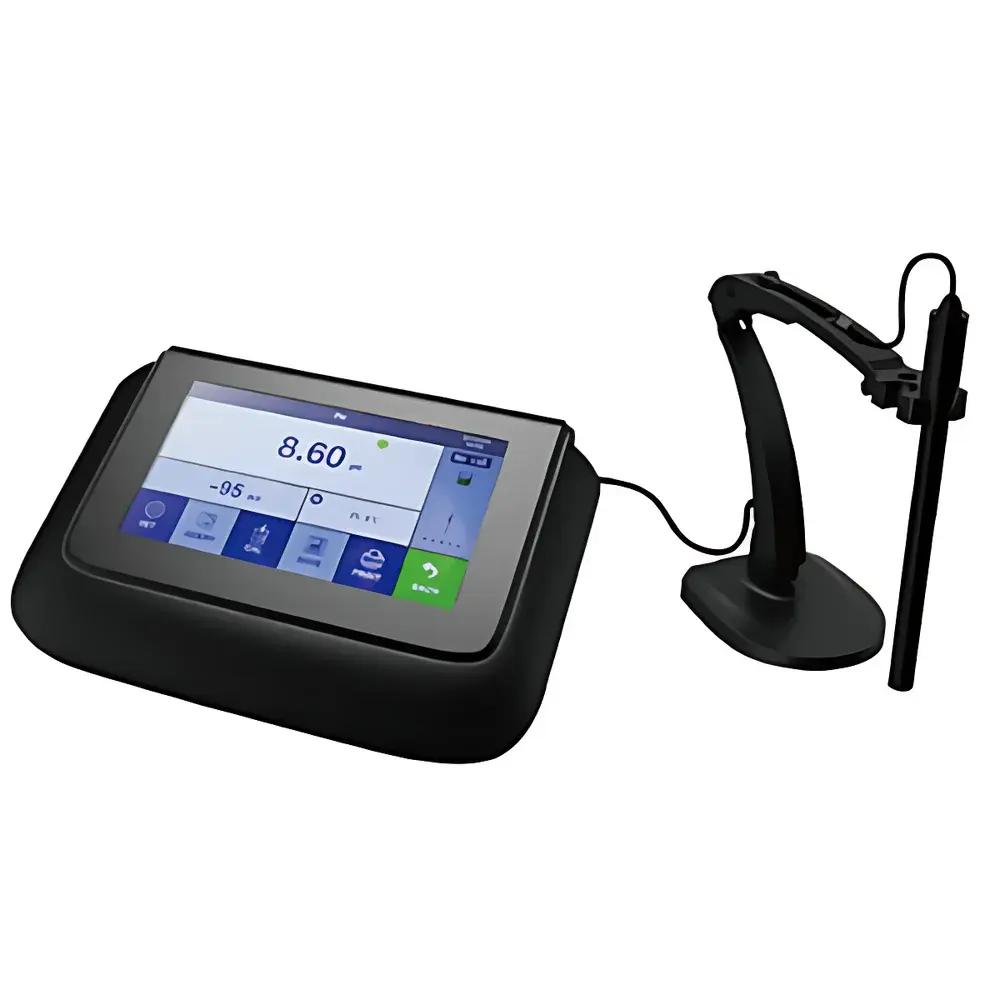
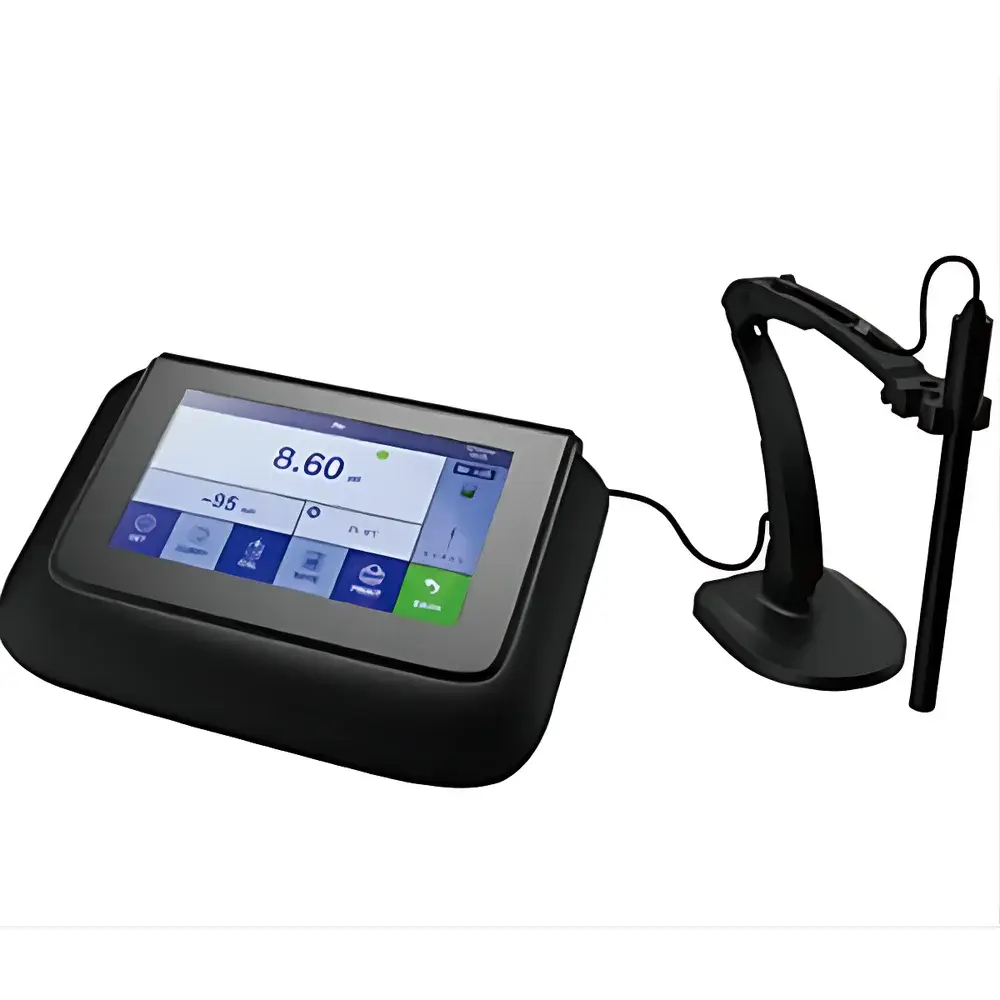
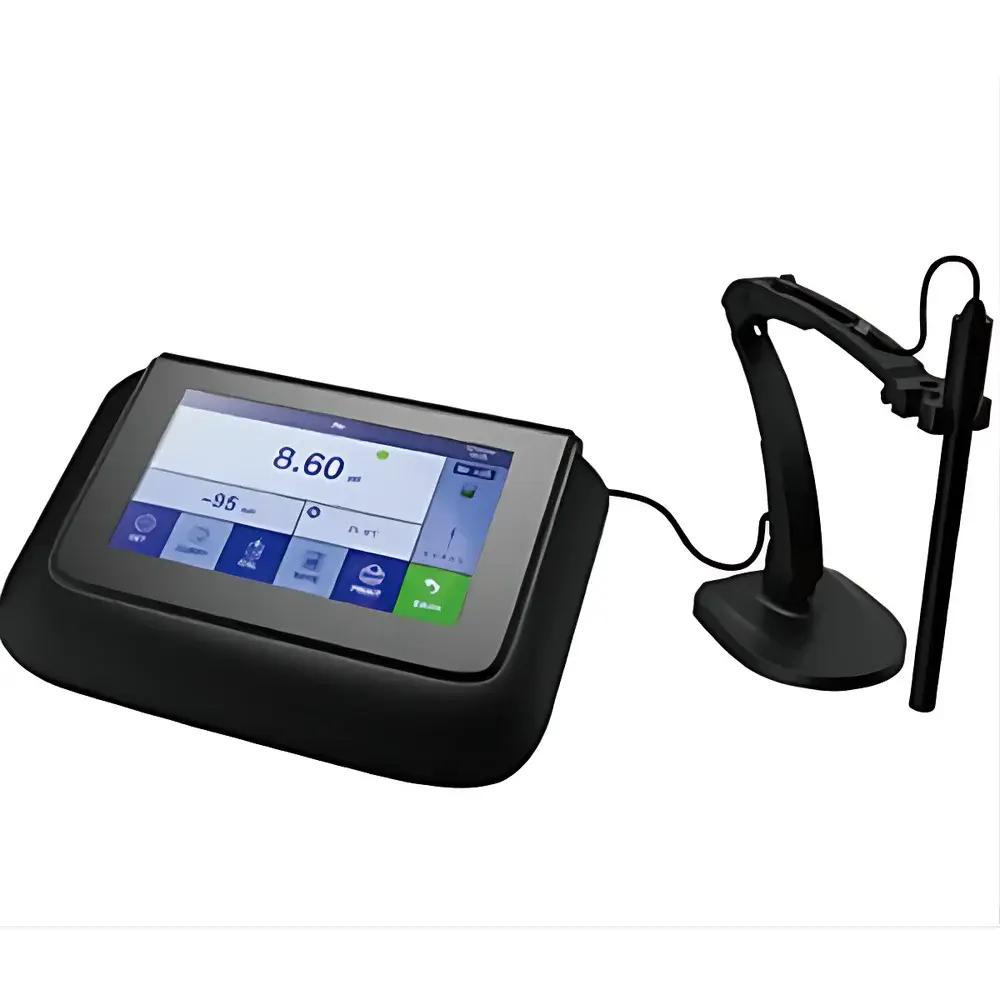
Yoke L-501 Fluorescence-Based Dissolved Oxygen Meter
| Brand | Yoke |
|---|---|
| Origin | Shanghai, China |
| Manufacturer Type | Authorized Distributor |
| Product Category | Domestic |
| Model | L-501 (Fluorescence Method) |
| Instrument Type | Portable |
| Measurement Principle | Fluorescence Quenching |
| Measurement Range | 0–99.00 mg/L |
| Accuracy | ±0.1 mg/L |
| Repeatability | ≤±0.05 mg/L |
| Detection Limit | 0.01 mg/L |
| Display | 7-inch Color Touchscreen |
| Parameters Displayed | DO Concentration (mg/L), Saturation (%), Temperature (°C/°F) |
| Temperature Compensation | Automatic & Manual |
| Electrode Status Monitoring | Intelligent Diagnostic Algorithm |
| Sensor Design | Solid-State Fluorescent Cap, No Electrolyte, No Polarization Required |
| Cap Replacement | Tool-Free, Quick-Swap Mechanism |
Overview
The Yoke L-501 Fluorescence-Based Dissolved Oxygen Meter is a portable, laboratory- and field-grade analytical instrument engineered for high-reliability measurement of dissolved oxygen (DO) in aqueous environments. It employs optical fluorescence quenching technology—where molecular oxygen modulates the intensity and lifetime of fluorescent emission from a ruthenium-based luminophore immobilized on a polymer matrix—to deliver stable, drift-free readings without electrochemical polarization or membrane diffusion limitations. Unlike traditional Clark-type amperometric sensors, the L-501 eliminates dependence on sample flow rate, electrolyte refills, cathode cleaning, or warm-up time. Its solid-state sensing architecture ensures consistent performance across variable salinity, pressure, and turbidity conditions typical in wastewater effluent, surface water monitoring, aquaculture systems, and bioreactor process control. Designed for routine compliance testing and research-grade data acquisition, the instrument meets foundational operational requirements aligned with ASTM D888–22 (Standard Test Methods for Dissolved Oxygen in Water) and supports method validation under ISO 5814:2012 (Water Quality — Determination of Dissolved Oxygen — Electrochemical Probe Method), though its optical principle extends applicability beyond electrochemical constraints.
Key Features
- 7-inch high-resolution color touchscreen with glove-compatible capacitive interface, UV-resistant tempered glass, and automatic screen dimming to conserve battery life during extended deployments.
- Integrated electrode stand with compact, self-supporting mechanical design—optimized for benchtop stability and one-handed probe positioning during grab sampling or in-situ profiling.
- True dual-language firmware (English/Chinese) with configurable date/time stamping, adjustable screen brightness, and selectable temperature units (°C or °F).
- Fluorescent sensor cap requires no electrolyte, zero polarization time, and is insensitive to hydrogen sulfide or chloride interference—enabling long-term deployment in aggressive matrices without recalibration drift.
- Intelligent electrode diagnostics continuously assess cap integrity, photodiode response linearity, and LED excitation stability—flagging degradation prior to measurement error onset.
- Automatic temperature compensation algorithm applies Nernst-derived correction curves per IUPAC-recommended solubility models; manual override available for calibration verification protocols.
Sample Compatibility & Compliance
The L-501 is validated for use with freshwater, seawater (up to 35 ppt salinity), treated wastewater, activated sludge, and low-conductivity ultrapure water streams. Its non-consumptive optical detection mechanism avoids fouling-related signal attenuation common in membrane-covered electrodes. The instrument complies with general electrical safety standards (IEC 61010-1:2010) and environmental operating specifications (IP67-rated housing for temporary submersion and dust resistance). While not certified for Class I Div 1 hazardous locations, it satisfies routine QA/QC documentation needs under GLP frameworks when paired with traceable calibration records. Data output formats support CSV export via USB-C interface for integration into LIMS environments compliant with 21 CFR Part 11 audit-trail requirements—provided external software enforces electronic signature and version control policies.
Software & Data Management
Internal memory stores up to 5,000 timestamped measurement records with full metadata (DO value, saturation %, temperature, user ID, calibration ID, and ambient pressure if connected to optional barometric module). Real-time data streaming is supported via Bluetooth 5.0 to companion mobile applications (iOS/Android) for geotagged field logging. USB-C enables direct file transfer without proprietary drivers; exported .csv files include column headers compliant with EPA STORET schema conventions. Firmware updates are delivered via signed binary packages through Yoke’s secure customer portal—requiring SHA-256 hash verification prior to installation to ensure integrity. All calibration events—including zero-point and span adjustments—are logged with operator ID, reference standard lot number, and environmental conditions, fulfilling minimum ALCOA+ data governance criteria.
Applications
- Regulatory wastewater discharge monitoring per NPDES permit requirements.
- In-process dissolved oxygen control in aerobic biological treatment systems (e.g., activated sludge, MBRs, SBRs).
- Aquaculture pond management—tracking diurnal DO fluctuations to prevent hypoxia-induced mortality.
- Environmental impact assessments of riverine and estuarine ecosystems.
- Validation of oxygen transfer efficiency (OTE) in diffused aeration systems.
- Academic research involving microbial respiration kinetics, sediment-water interface flux studies, and hypolimnetic oxygen demand assays.
FAQ
Does the L-501 require daily calibration?
No—fluorescence-based sensors exhibit minimal drift; calibration is recommended before each sampling campaign or after cap replacement, following a two-point (zero-oxygen and air-saturated water) protocol.
Can the instrument measure dissolved oxygen in high-turbidity samples?
Yes—the optical sensor is unaffected by suspended solids; however, biofilm accumulation on the cap surface must be cleaned weekly using isopropyl alcohol and lint-free wipes.
Is pressure compensation supported?
Barometric pressure input is manually configurable; automatic compensation requires an optional external digital barometer interfaced via RS-485.
What is the expected service life of the fluorescent cap?
Under typical field use (8 hrs/day, 5 days/week), the cap maintains metrological integrity for ≥12 months; accelerated aging occurs above 45°C continuous exposure.
How is traceability ensured during calibration?
Each calibration event logs the reference standard’s certified value, uncertainty budget, and expiration date—exportable as part of the raw data package for regulatory submission.
Related Products







