
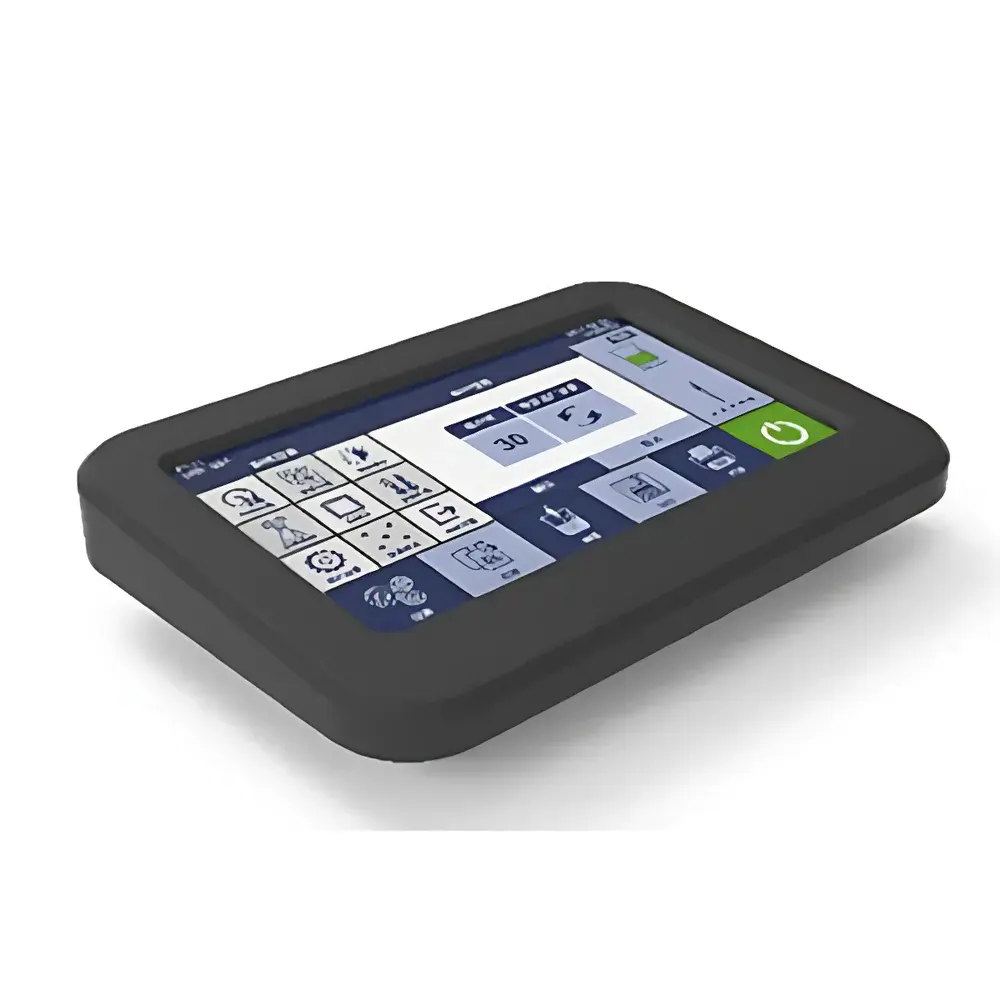
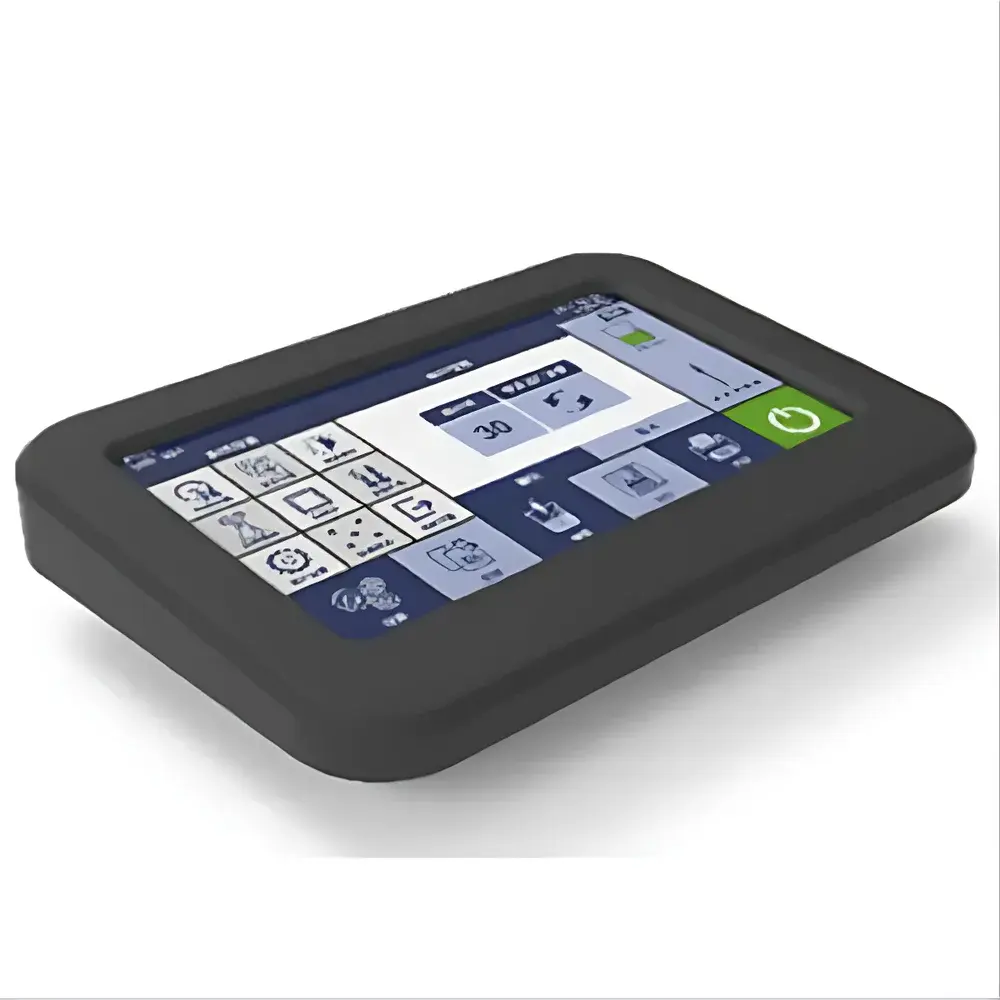
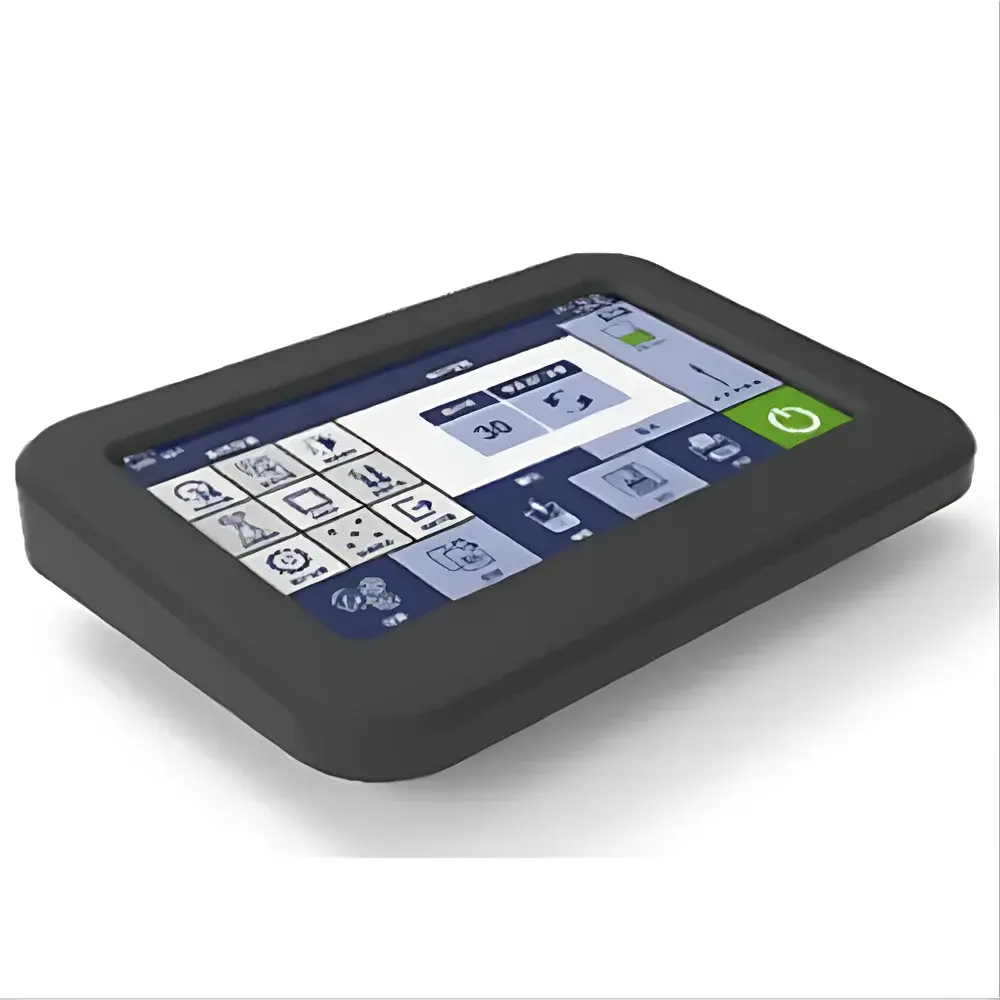
Yoke i-501 Portable Fluorescence-Based Dissolved Oxygen Meter
| Brand | Yoke |
|---|---|
| Origin | Shanghai, China |
| Model | i-501 |
| Instrument Type | Portable |
| Measurement Principle | Fluorescence Quenching (Optical) |
| DO Range | 0–50.00 mg/L |
| Accuracy | ±0.1 mg/L |
| Repeatability | ≤±0.05 mg/L |
| Detection Limit | 0.01 mg/L |
| Display | 7-inch color capacitive touchscreen |
| DO Resolution | 0.01 mg/L (at <10 mg/L), 0.1 mg/L (at ≥10 mg/L) |
| Temperature Compensation | Automatic & Manual |
| IP Rating | IP54 |
| Data Management | Onboard statistics, audit trail, firmware update, power-fail recovery, factory reset |
| Compliance | Designed for GLP/GMP-aligned workflows |
Overview
The Yoke i-501 is a portable, optical dissolved oxygen (DO) meter engineered for field-deployable and laboratory-based water quality analysis. It employs fluorescence quenching technology — a solid-state, membrane-based optical detection method in which molecular oxygen modulates the intensity and lifetime of fluorescent emission from a ruthenium-based luminophore embedded in a gas-permeable polymer matrix. Unlike traditional electrochemical Clark-type sensors, the i-501 requires no electrolyte solution, zero polarization time, and exhibits negligible flow dependence — ensuring stable, drift-free measurements across variable sampling conditions (e.g., stagnant ponds, slow-flowing streams, or stirred bioreactors). Its measurement range spans 0–50.00 mg/L with a detection limit of 0.01 mg/L, supporting high-resolution quantification in both low-oxygen environments (e.g., anaerobic digesters) and supersaturated surface waters. The instrument is calibrated using a two-point method (zero O₂ and air-saturation standards) and features automatic temperature compensation based on integrated thermistor readings from the same sensor body, eliminating inter-sensor thermal lag.
Key Features
- 7-inch high-brightness color capacitive touchscreen with glove-compatible responsiveness, UV-resistant glass overlay, and anti-scratch coating — optimized for outdoor use and cleanroom environments.
- Integrated dual-parameter probe: simultaneously acquires dissolved oxygen concentration (mg/L) and temperature (°C/°F) within a single compact sensor housing.
- Fluorescence-based sensing architecture eliminates consumables such as electrolytes, cathodes, or anodes; sensor cap replacement is tool-free and completed in under 30 seconds.
- Robust mechanical design compliant with IP54 ingress protection — resistant to dust and low-pressure water spray during transport or field deployment.
- On-device data management suite includes statistical functions (mean, SD, min/max), timestamped measurement logging, user-defined sample ID tagging, and export-ready CSV formatting via USB-C interface.
- Firmware upgradability, power-loss recovery, diagnostic self-checks, and configurable auto-sleep mode extend operational uptime and reduce maintenance overhead.
Sample Compatibility & Compliance
The i-501 is validated for aqueous matrices including freshwater, seawater (with salinity compensation enabled), wastewater effluents, aquaculture systems, and process water in pharmaceutical manufacturing. It meets functional requirements outlined in ASTM D888-22 (Standard Test Methods for Dissolved Oxygen in Water) for optical methods and supports documentation practices aligned with FDA 21 CFR Part 11 when paired with validated data export protocols. While not certified as GMP-compliant hardware per se, its audit-trail-capable memory, tamper-evident timestamps, and factory-reset traceability enable compliance with GLP and internal quality system requirements for environmental monitoring programs.
Software & Data Management
All measurement data are stored locally in non-volatile memory with full metadata (date/time, operator ID, calibration status, temperature, DO value, saturation %). The onboard interface supports real-time graphing of continuous DO trends over user-defined intervals (1 s to 60 min). Data export is performed via USB-C to standard mass-storage devices; no proprietary software installation is required. For enterprise integration, exported CSV files conform to ISO/IEC 17025 reporting conventions and include column headers compatible with LIMS platforms. Firmware updates are delivered as signed binary packages, preserving cryptographic integrity and rollback capability.
Applications
- Environmental field surveys: stream health assessments, wetland restoration monitoring, and EPA Region-specific TMDL compliance sampling.
- Wastewater treatment plant operations: aeration basin optimization, nitrification/denitrification control, and sludge respiration rate evaluation.
- Aquaculture and hatchery management: dissolved oxygen profiling in recirculating aquaculture systems (RAS) and live transport containers.
- Pharmaceutical water system validation: routine checks of purified water (PW) and water for injection (WFI) distribution loops per USP .
- Educational laboratories: undergraduate chemistry and environmental science curricula requiring robust, low-maintenance DO instrumentation.
FAQ
Does the i-501 require daily calibration?
No — due to the inherent stability of fluorescence quenching sensors, calibration is recommended before each field campaign or at 24-hour intervals during continuous lab use. A single-point air-saturation verification suffices for routine checks.
Can the sensor be used in seawater?
Yes, provided salinity is manually entered (0–70 ppt); the instrument applies the Garcia & Gordon (1992) solubility correction algorithm to report mg/L values referenced to actual sample conditions.
Is the probe compatible with third-party data loggers?
The i-501 does not support analog output or RS-232; it operates exclusively in standalone mode with USB-C data retrieval. Integration with external SCADA or IoT gateways requires intermediary USB host emulation hardware.
What is the expected service life of the optical sensor cap?
Under typical field use (≤4 hrs/day exposure to sunlight and ambient humidity), the manufacturer specifies a minimum functional lifespan of 12 months; performance degradation is monitored via built-in signal-to-noise diagnostics.
Does the device support multi-point calibration?
No — the i-501 implements a two-point (zero and air-saturation) calibration protocol consistent with ISO 5814:2012 for optical DO sensors; deviation from this method voids accuracy specifications.
Related Products







